







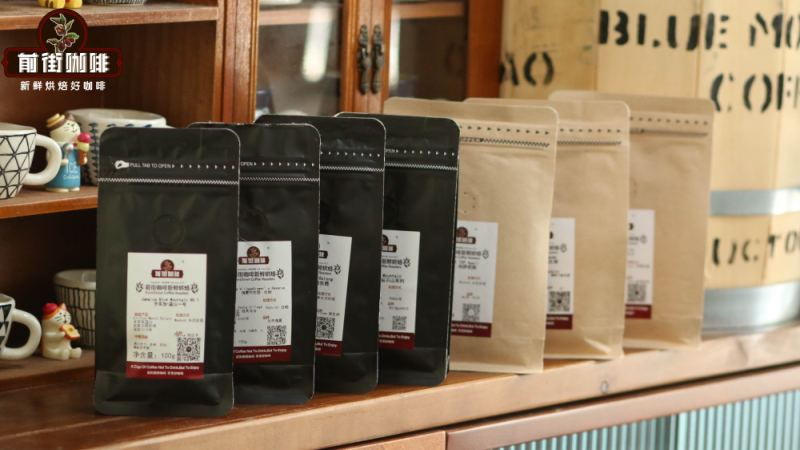

Some friends have mentioned, "Why doesn't Front Street's coffee beans have a roast level indicated?" In response, Front Street plans to share knowledge about coffee roast levels with everyone through an article.
I believe everyone's understanding of coffee bean roast levels is basically that if it's sour, it's a light roast, and if it's bitter, it's a dark roast. Of course, within the industry, such a simple classification is not used. Currently, a more scientific distinction uses the Agtron color value (caramelization analysis value) as the basis for coffee roast level.


The lightest roast level is called Light Roast, with an Agtron color value of 95, and the removal time is approximately when the first crack is密集 (the beans are still crackling as they are removed). Generally, the coffee's flavor will exhibit bright acidity.
With an Agtron color value of 85, it is Cinnamon Roast, and the removal time is around the end of the first crack (when the cracking sound has just stopped, or only sporadic cracking remains). Generally, coffee beans at this level will have a flavor profile dominated by acidity, with a sweet and fragrant note.

With an Agtron color value of 75, it is called Medium Roast, and the removal time is approximately after the first crack ends (when the cracking sound completely stops). At this level, the coffee's flavor will be mainly sweet, with a slight fruity acidity.
With an Agtron color value of 65, it is called High Roast, and the removal time is approximately after the first crack ends and before the second crack begins (about a 1-2 minute silent period). The flavor will exhibit nutty and caramel notes, balanced, with no sourness.
With an Agtron color value of 55, it is called City Roast, and the removal time is approximately when the second crack begins (after a period of silence, one or two faint cracking sounds appear). At this point, the flavor is more bitter, with a heavier caramel aroma.

With an Agtron color value of 45, it is called Full City Roast, and the removal time is approximately before the second crack密集 (before the crackling sound is heard). At this point, the coffee is already quite dark, and the taste is more burnt, bitter, and rich.
With an Agtron color value of 35, it is called French Roast, and the removal time is approximately during the second crack密集 (when the crackling sound is heard again, but deeper than the first). At this point, the coffee beans have begun to exude oil.
With an Agtron color value of 25, it is called Italian Roast, and the removal time is approximately at the end of the second crack (after the密集 sounds). At this point, the coffee beans are pitch black and shiny, with oil already seeping out onto the bean surface.

If this set of industry roast level distinction standards were passed on to consumers unchanged, it would undoubtedly increase the learning pressure on consumers: "What? So dark roast isn't the darkest?" "I just want to drink coffee that isn't sour, and you're telling me about dark roast, city roast, full city roast—I don't understand either." Indeed, some terms cannot be understood at all without deeper knowledge. If labeled this way, it would increase consumer confusion.

Front Street believes that the simplest way to distinguish roast levels is based on the degree of sourness, sweetness, and bitterness of the coffee, so that consumers can better understand what kind of coffee beans they actually need. Front Street will classify all coffees with sourness as medium-light roast, and coffees mainly bitter as medium-dark roast. In this way, we can determine the coffee's roast level through the flavor description on the coffee label.
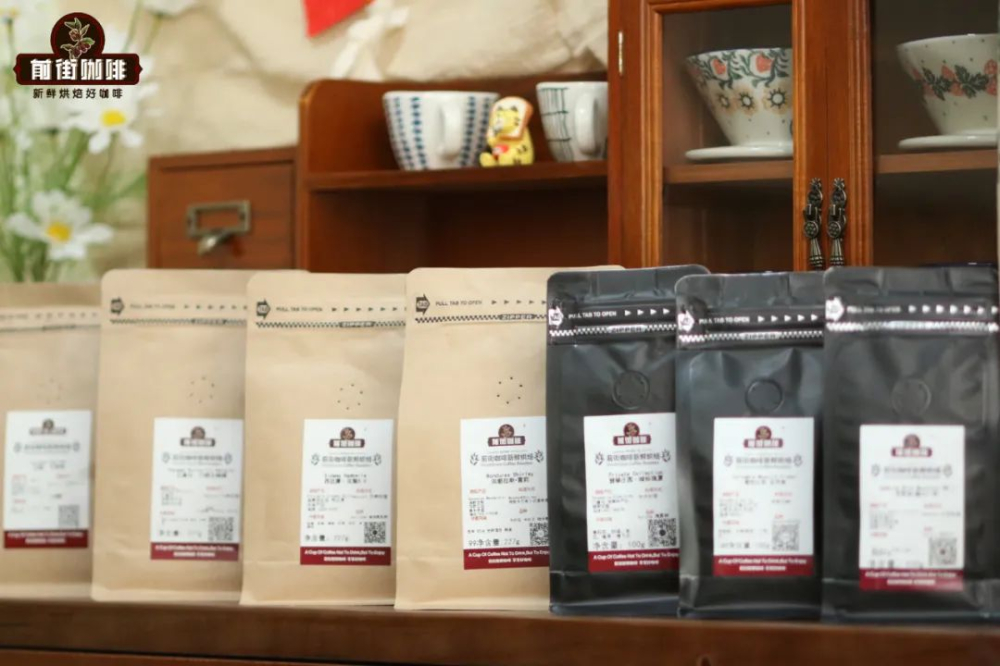
This also corresponds to the brewing parameters recommended by Front Street: for medium-light roast, use a water temperature of 90-93°C, and a grind size with a 75-80% pass rate through a No. 20 sieve. For more acidic flavors, choose the higher water temperature and finer grind within this range; for sweeter flavors, choose the lower water temperature and coarser grind within this range. For medium-dark roast, use a water temperature of 86-89°C, and a grind size with a 70-75% pass rate through a No. 20 sieve. For more bitter flavors, use the lower water temperature and coarser grind within this range.

 。
。The above content is compiled by CoffeeHunters, a coffee news website.

