








Coffee green beans cannot be directly roasted and brewed for drinking right after being picked from the tree; achieving good flavor requires many steps. People often assume that coffee flavor depends on variety, growing environment, and cultivation methods, but little do they know that between planting and roasting there is an important step called "coffee bean processing." Which processing method is used generally depends on the local productivity level or the direction of flavor being pursued. If you want to know what common processing methods coffee has, just follow in the footsteps of Front Street Coffee to find out~
Processing method = coffee cherry → green coffee beans
If you cut a harvested coffee cherry crosswise, you can see that from outside to inside there are the skin, pulp, pectin layer, parchment, silver skin, and finally the seed (coffee bean). So-called processing is the process of extracting the inner seed from the ripe fruit.

At the very beginning, there were only two ways to process green coffee beans: "wet" processing (Wet process) and "dry" processing (Dry process). Among them, Dry process is also sun-dried processing: the coffee cherries are placed under the sun to dry, and finally the seeds are obtained by crushing and hulling. Wet process, also called Washed process, broadly refers to what we know as the washed method.
What is sun-dried processing?
Friends who have studied coffee processing methods should know that the coffee beans we taste and drink are the seeds inside the fruit. After coffee cherries are harvested, they need to go through a series of steps of peeling and drying to obtain the coffee beans we want. Sun drying is the oldest traditional processing method and also the most common way of processing green beans, and it is still used in many countries today.

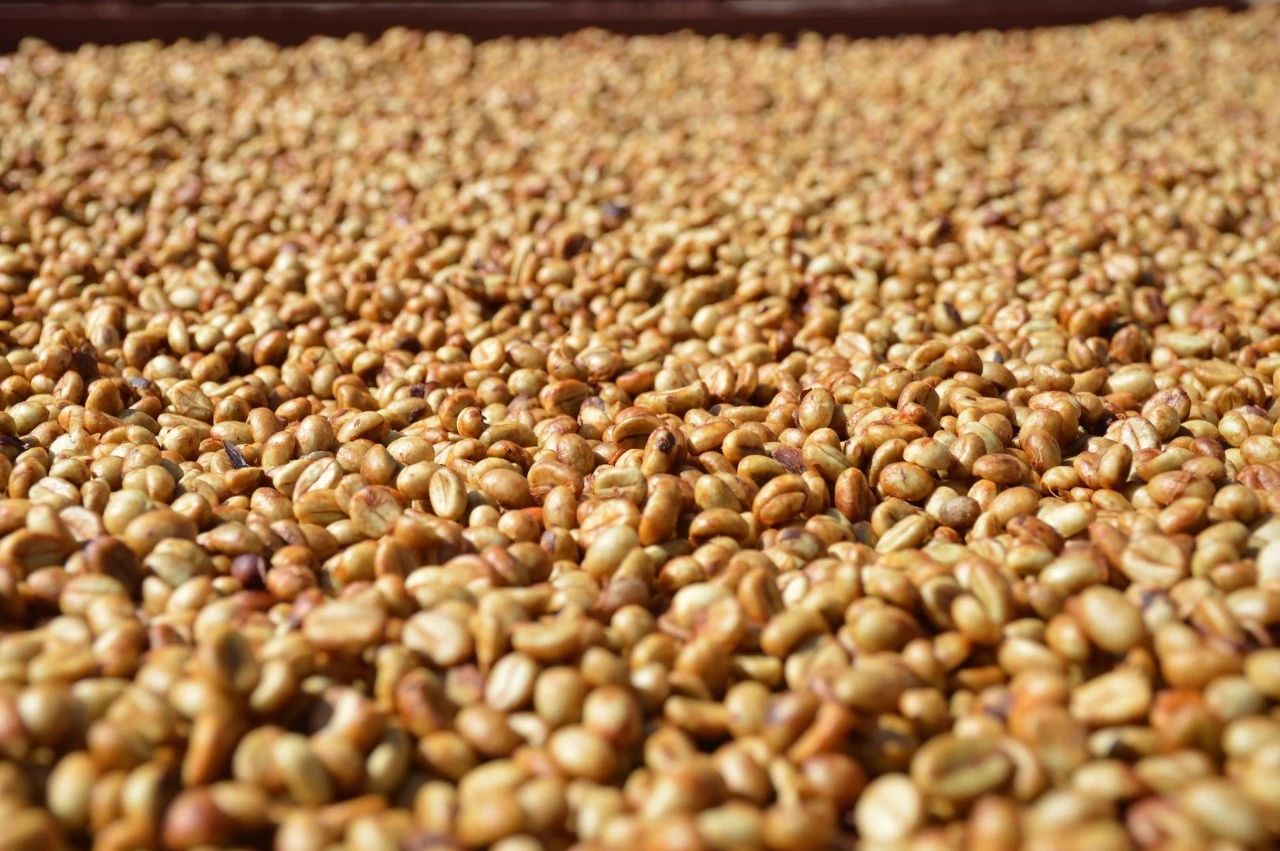
So-called sun drying is spreading the harvested fresh coffee cherries under the sun and using sunlight to evaporate the moisture from the pulp outside the beans. Once the target moisture content is reached, the outer shell can be crushed by machine to take out the parchment-covered coffee beans. Because sun-dried processing does not require much technical skill, basically every smallholder farmer can handle it themselves. The entire drying process only needs to use the sunlight of clear days, so production costs are relatively low, and it is most common in high-altitude coffee-producing regions.
Regions pursuing refined flavors will first float the coffee cherries to remove underripe green fruits and debris such as stones, then spread them on raised drying beds to dry, with the aim of keeping them away from the ground so the coffee cherries are not infected by crawling insects, dust, or bacteria. During sun drying, dedicated personnel will also check the drying degree of the coffee cherries and remove insect-damaged fruits, burst fruits, and moldy fruits to prevent these bad fruits from affecting the other coffee.

Because the inner bean of sun-dried coffee is wrapped in pulp throughout the drying process, the coffee cherry ferments for longer, and the reaction between microorganisms and pulp is greater. When the fruit begins to ferment, microorganisms produce more volatile compounds, especially esters. These aromatic substances provide more floral and tropical-fruit fermentation aromas to the roasted coffee beans, such as furan compounds, giving sun-dried coffee a broader flavor range and making it taste sweeter. For example, the Panama Hacienda La Esmeralda Red Label Geisha, Ethiopia Huakui, Red Cherry, and Brazil Queen Estate on Front Street Coffee’s bean list all use sun-dried processing.
How are coffee beans washed?
Simply put, after harvesting, washed coffee cherries are first float-washed to remove impurities such as branches, leaves, and bad fruits. Then they are poured into a machine for peeling (with pulp and a tiny bit of pectin still attached). At this point, the beans that have had their outer layer removed are still covered with pectin and feel slippery to the touch.

Next, these beans are poured into a fermentation tank and left to sit for one night or longer for fermentation with or without water, with the aim of letting microorganisms ferment and decompose the pectin on the outer shell. After fermentation is complete, the coffee beans are rinsed with clean water to wash away the pectin. Finally, the clean-surfaced parchment beans are dried in the sun or machine-dried until the moisture content drops to 11% to 13%.

Because the pulp and pectin are removed before drying, the moisture content is greatly reduced, and the drying time is significantly shortened compared with sun drying, greatly reducing dependence on weather and also improving processing efficiency. From the producer’s perspective, coffee beans produced by washed processing perform more consistently, and the short drying time makes it very suitable for producing large quantities of coffee with respectable quality.
The steps of traditional wet processing are not complicated: flotation → peeling → fermentation → washing → drying → hulling → packaging. However, its implementation requires an adequate water supply, and because it relies heavily on mechanical assistance, producers who adopt washed processing must also have sufficient funds to invest in purchasing machinery. The rise of the washed method happened to coincide with the early American plantations built by capital, which had enough operating funds, plus the invention of pulpers/hullers created in response to the needs of the times, which together drove the widespread popularity of the washed method throughout the Americas.
Usually, washed coffee shows a clear sense of cleanliness and a crisp mouthfeel. When medium-light roasting is used, it often carries elevated and more intense fruit acidity, reminiscent of certain fruits you have tasted, such as green oranges and lemons. So when we buy coffee beans in daily life, if we like acidic flavors, we will also intentionally choose from the washed series. Taking Front Street Coffee’s bean list as an example, you can prioritize washed coffees such as Yirgacheffe Goudingding, Kenya Asaliya, and Panama Boquete Geisha.
Besides sun drying and washing, there is also honey processing
When many people first hear the term honey processing, they think it is a method of using honey to process green coffee beans, in order to make the coffee taste as sweet as honey, but in fact this is not the case.Honey processing can be said to be a compromise between the two methods mentioned above by Front Street Coffee, and it is most common in Central and South American countries, with Costa Rica in Central America being the most famous.
Around the mid-1990s, in order to improve the drying time when processing large batches of green coffee beans, Brazilian merchants invented the pulped natural method, locally called "Cereja Descascada." This is a method of sun drying only after removing the skin. It is very suitable for Brazil’s dry climate. First, it can shorten the number of drying days; second, it also solves the undesirable fermented off-flavors caused by Brazilian sun-dried beans on the patio, greatly improving the flavor and quality of the coffee beans.
With the birth of this new coffee post-processing technology, some estate owners in Central and South American countries also began to imitate and experiment, and adapted Brazil’s pulped natural technique to local climate conditions. By removing different amounts of pectin, they made the dried green coffee beans have different sugar contents, thereby subdividing processing schemes into white honey, yellow honey, red honey, and black honey.

When honey processing is used, coffee farmers first pour fresh coffee cherries into a water tank for flotation, removing defective fruits that are not fully ripe as well as impurities such as stones. After using specialized equipment to remove the outermost skin, the beans with some pulp still attached undergo a period of "dry fermentation," and then enter the drying process. The so-called "honey" is the sticky state presented after the sugary substances in the pectin ferment, which reminds people of honey, hence the name "honey processing."
Compared with the washed method, honey processing can reduce freshwater use by about 40%, and it also avoids the negative defective flavors brought by long exposure to the sun. Coffee using honey processing generally presents full, delicate fruit sweetness and acidity and a refined, complex floral aroma in cupping, with an overall fresh and clean mouthfeel. In this way, water-saving, environmentally friendly, and excellent in flavor, honey processing began to prevail in Central and South America, and honey-processed coffee flavors have become especially beloved in the specialty market.

For example, the Guatemala New Oriental Geisha coffee launched by Front Street Coffee uses this honey processing method to process the green beans. After roasting and brewing, the coffee presents round fruit sweetness and toffee-like characteristics.
The above content is compiled by CoffeeHunters, a coffee news website.


