







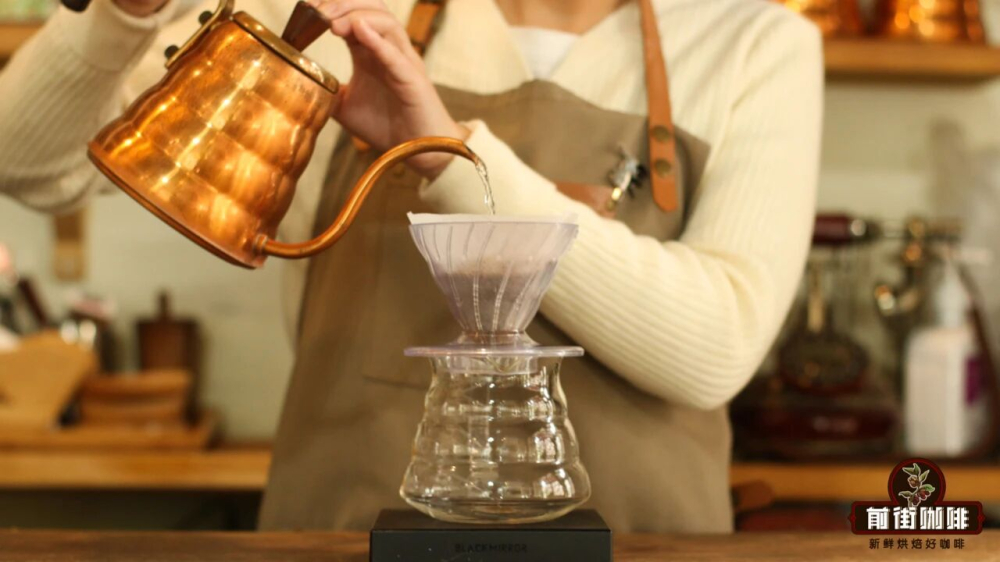
Many friends have complained to Front Street Coffee that "pour-over coffee is so hard to learn" and "I've been brewing for so long but still can't get it right." For those in this situation, Front Street suggests trying a French press instead.
Compared with pour-over coffee, the biggest feature of brewing with a French press is that it involves far fewer manual actions and reduces many uncertain factors. Therefore, as long as we master the brewing parameters of the French press, we can handle almost any coffee bean and make a delicious cup of coffee with ease.
1. Grind size
Whenever it comes to brewing coffee, grind size is the most important parameter. Just like with pour-over coffee, many people's problems with brewing come from the wrong grind size.
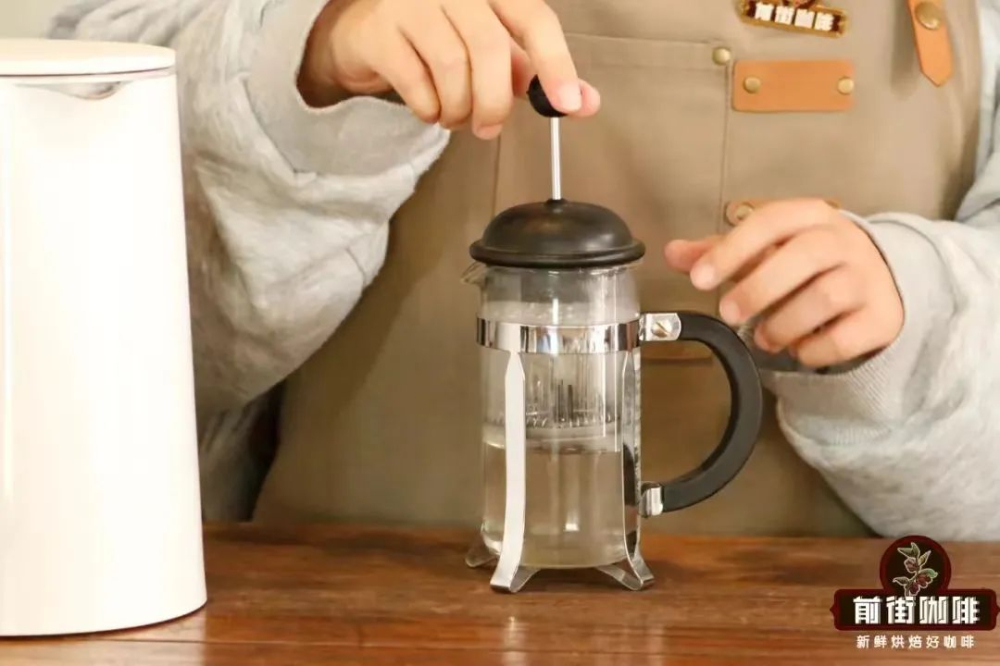
The grind size for a French press is slightly coarser than for pour-over. Judged with a No. 20 sieve, it is a coarseness with a 70% passing rate, which is what everyone often calls the size of coarse granulated sugar.

Many friends ask, for example, in pour-over coffee, light-roast beans are ground finer and dark-roast beans are ground coarser. Does a French press also need to be operated this way? No, and this is exactly the advantage of the French press. Many people get confused when there are more beans about how fine to grind this coffee bean and how fine to grind that coffee bean. A French press can standardize the grind size regardless of roast level. This is because the French press is an immersion-type extraction and the immersion time can be controlled freely (explained in detail below). Pour-over coffee, however, is a drip coffee, and the grind size must be used to indirectly control the extraction time, so the French press is very forgiving when it comes to grind size.
2. Ratio
Front Street generally recommends brewing with a 1:16 coffee-to-water ratio. For example, if using 15 grams of coffee, then 240 ml of water should be poured. Coffee brewed with this ratio will have a concentration of about 1.1-1.2%, which is a very comfortable concentration range. If some friends prefer it stronger, they can also use a 1:15 ratio.
3. Water temperature
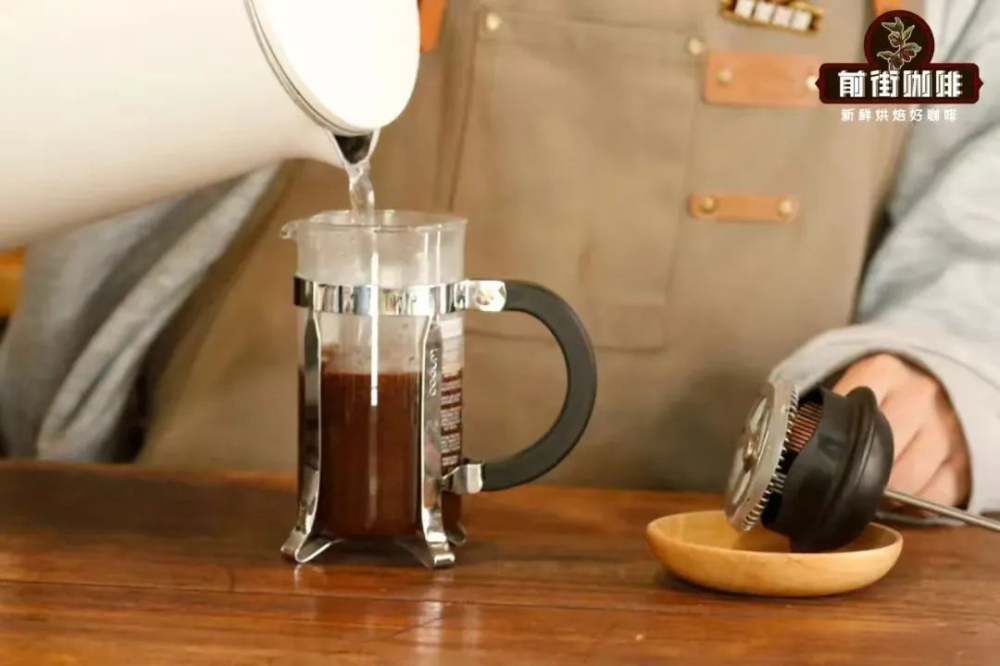
Because the French press pouring method is to pour all the water in at the beginning, and the actual extraction temperature will gradually decrease over time, the required water temperature is slightly higher than for pour-over. If brewing light-to-medium roast coffee beans with acidity, such as Front Street Huakui, Front Street Guodingding, and Front Street Little Tomato, 93-94°C can be used; for brewing medium-to-dark roast coffee beans without acidity, such as Front Street Jamaica Blue Mountain, Front Street Colombia Huila, and Front Street Golden Mandheling, 89-90°C can be used.
4. Time
Time is a parameter that can be freely adjusted with a French press. Because brewing coffee with a French press does not require artificial stirring to accelerate extraction, a longer time than pour-over coffee is needed to let the substances in the coffee grounds slowly seep out. Front Street recommends an immersion time of 3 minutes 30 seconds to 4 minutes for a French press. Medium-light roast coffee can be steeped for up to 4 minutes, and medium-dark roast coffee for 3 minutes 30 seconds. Steeping too long can easily produce bitter and muddy flavors.

4. Specific operation
Front Street chose Front Street Brazil Queen's Estate Yellow Bourbon coffee beans for the demonstration. This coffee is a medium-dark roast. Prepare 15 grams of coffee beans, grind using an EK43s at setting 11, and the resulting coarseness is a 70% passing rate on a No. 20 sieve.

Then pour the ground Front Street Brazil Queen's Estate into the pot, then pour in 240 ml of hot water (90°C). Pull up the plunger, cover with the lid, and wait 3 minutes 30 seconds. When the time is up, slowly press down the plunger to push the coffee grounds floating on the surface down. Finally, pour out all the coffee liquid at once, because if the coffee liquid remains in the pot, the coffee grounds can still release bitter substances and make the coffee bitter.
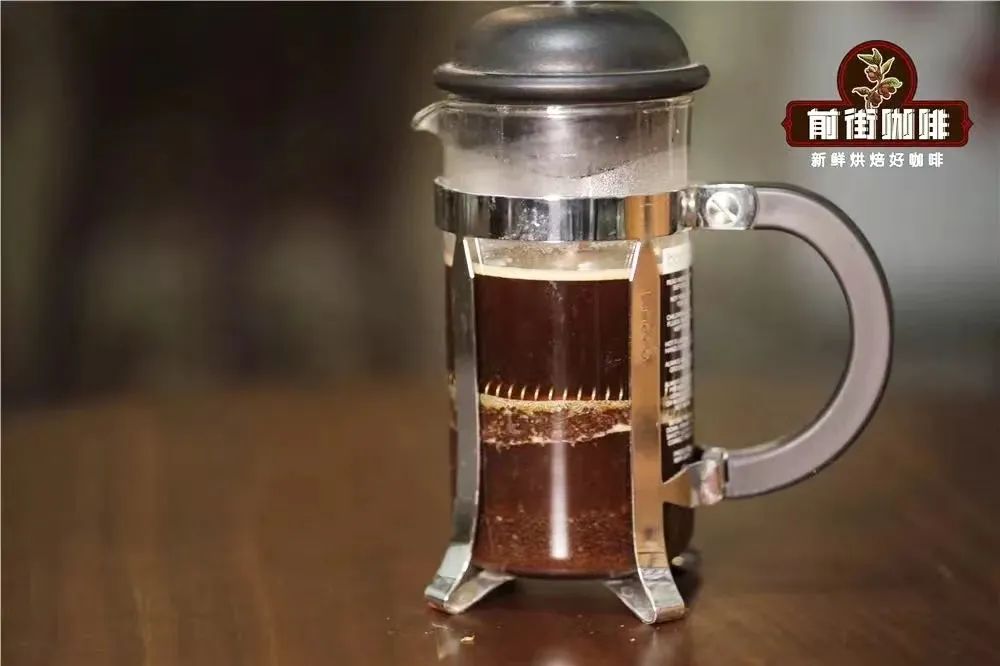
Coffee made with a French press will have fine oils floating on the surface, as well as a small amount of coffee ground residue. These are normal phenomena, because the metal filter of the French press has relatively large gaps, allowing fine coffee particles and oils to pass through smoothly. The oils can enrich the coffee's mouthfeel, and the issue of fine coffee particles can be improved by letting it settle slightly before drinking.
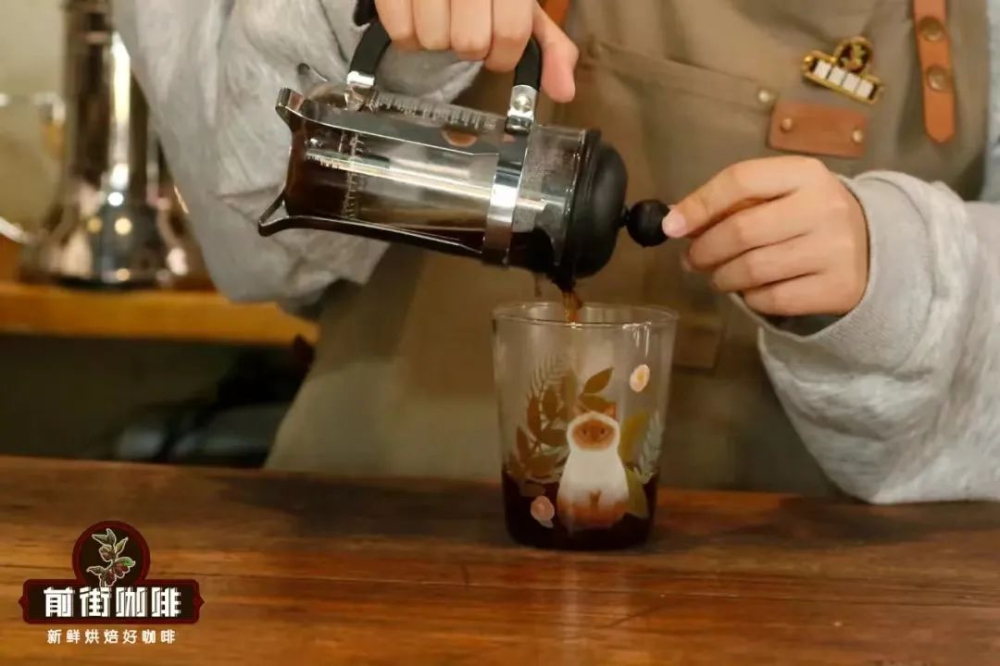
Making coffee with a French press is just this simple. As long as the parameters are right, the remaining steps are "add grounds, add water, wait, press the plunger, pour the coffee."
The above content is compiled by CoffeeHunters, a coffee news website.


