







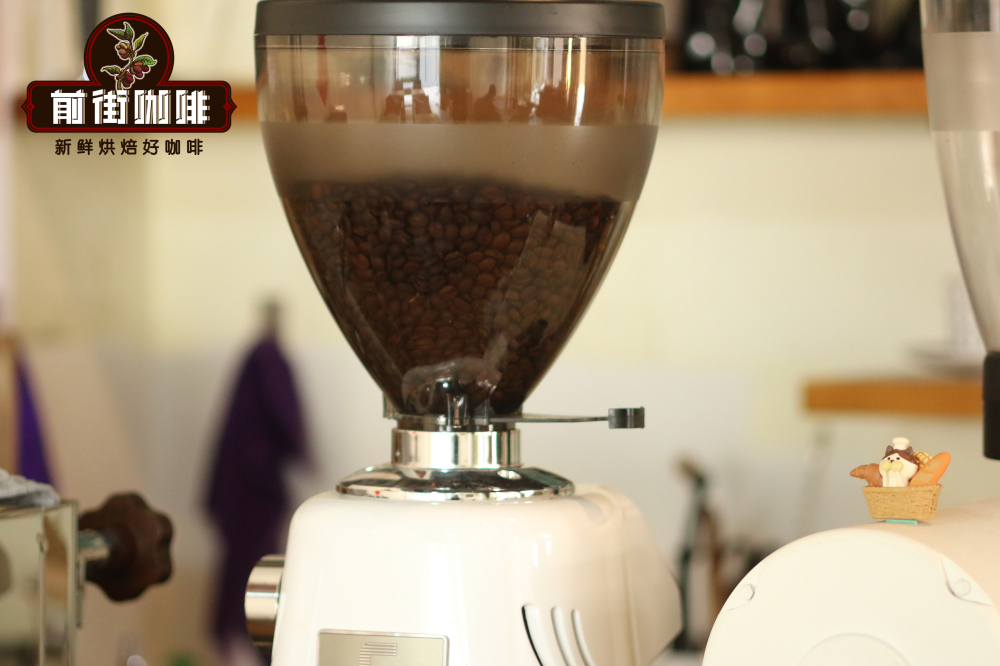
When brewing coffee, we all know that the coarseness of the grind is very important. If we're not careful and don't find the right grind setting, or if the grind is uneven, the coffee can easily end up under-extracted or over-extracted. Compared with methods like pour-over and cold brew, espresso grounds are ground much finer and require more precise adjustment to get the flavor of the espresso just right.
How fine is an espresso grind?
Regarding the coarseness of pour-over coffee, Front Street uses the Chinese No. 20 standard sieve, which can be calibrated by how much coffee grounds pass through the fixed-size mesh. But because espresso is extracted under pressure in a short time, it also means that everything gets amplified—the positive flavors get amplified, and the defects get amplified too. So the demands on the grind are even more exacting. Espresso grounds are finer than fine salt; the naked eye simply cannot observe the degree of coarseness or evenness, and using a sieve is even more unrealistic.
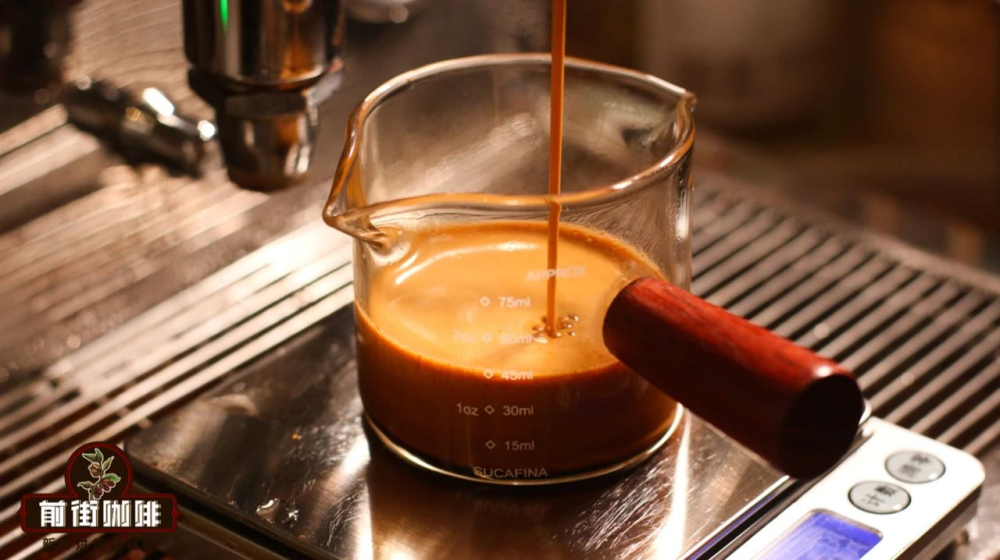
If the grind is slightly too fine, water passes through the coffee bed more slowly, making over-extraction likely. If the grind is slightly too coarse, water passes through the coffee bed easily, making under-extraction likely. Such a deviation might come down to a difference of just 0.1 on the grind setting. So we usually judge the suitable range of coarseness by observing the flow rate and taste of the espresso during the brewing process.
Choosing the right coffee beans
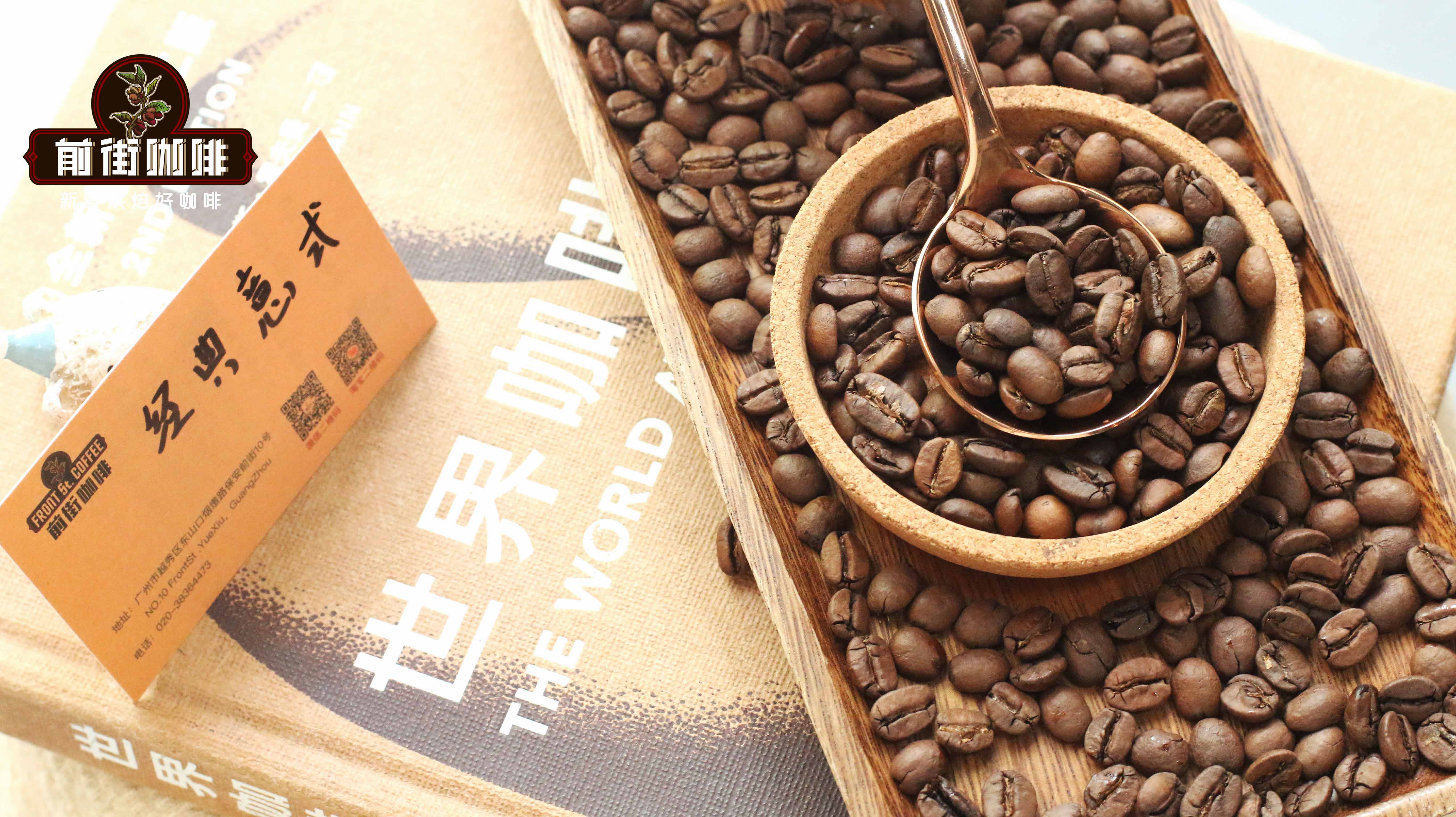
In fact, when making espresso, besides getting all the parameters right, Front Street believes that choosing the right coffee beans is also very important, because that is the key to whether the coffee tastes good or not. If you want to recreate the same espresso you get at a café at home, we recommend using Front Street's Classic Espresso Blend. This is a recipe combining beans from three origins—Brazil, Indonesia, and Vietnam—so it has both the caramel notes of American coffee and the wild character of Asian coffee. To highlight the coffee's rich aroma to the greatest extent and to let everyone easily extract abundant, velvety crema, Front Street Coffee uses a dark roast. It's perfect whether you're making an Americano diluted with water or a latte paired with milk. You can place an order at the Front Street Taobao store or the Front Street Tmall flagship store.
How do you first determine the suitable grind range?
When we get a bag of unfamiliar coffee beans, if we want to brew a delicious cup, the first thing we need to do is determine the grind size. If our grinding equipment has never been used before and we don't know how to determine the suitable range of settings, we can first use a small amount of coffee beans to test at different settings. When the coffee grounds are ground to a fineness resembling the feel of flour, you can judge by touch—if it feels soft and smooth with no grittiness, that's fine.
At this point, we can start extracting using the common espresso formula. Front Street suggests a coffee-to-liquid ratio of 1:2, meaning 1 gram of coffee grounds extracts about 2 grams of coffee liquid, with a time between 20 and 30 seconds. For example, Front Street uses a 20-gram capacity portafilter basket, so it holds 20 grams of coffee grounds and extracts 40 grams of coffee liquid. If the time is less than 20 seconds, the flow rate is too fast; if the espresso flow exceeds 30 seconds, the flow rate is too slow.

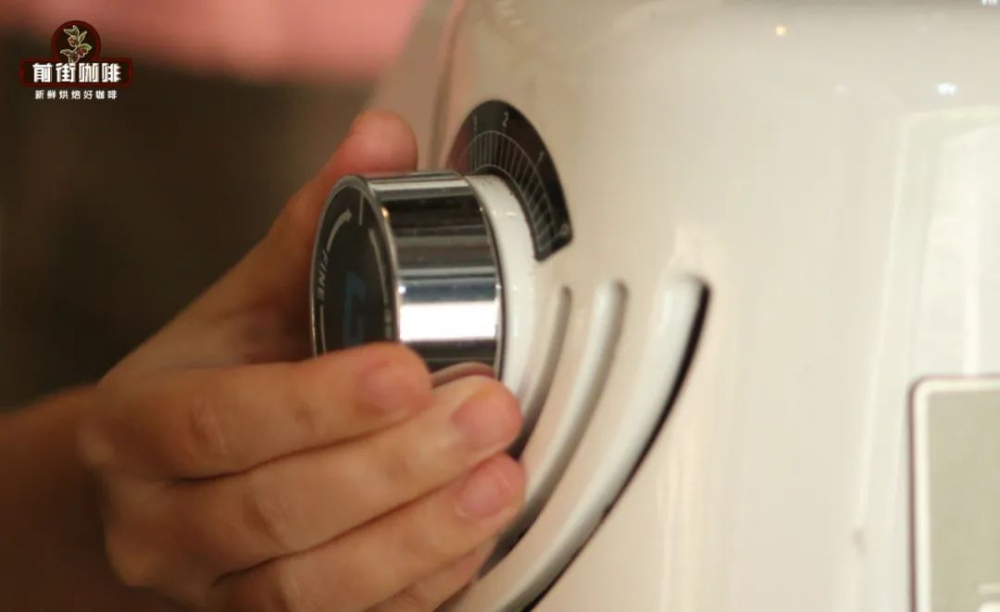
A fast flow rate means the water passes through the coffee grounds in too little time, and the coffee often tastes weak or somewhat sour. In this case, you need to grind finer. Adjusting the grind setting usually relies on experience accumulated day by day. If the gap from the target time is less than 5 seconds, you can adjust by 0.2 of a setting each time; if the gap is too large, you can be bolder and adjust by 0.5–1 setting. Even if it goes from taking too long to taking too short, you can still lock in this grind setting range and gradually narrow it down. Similarly, too slow a flow rate means the coffee grounds are too fine and the water struggles to pass through the coffee bed, making the coffee taste bitter and astringent, so you need to grind coarser.
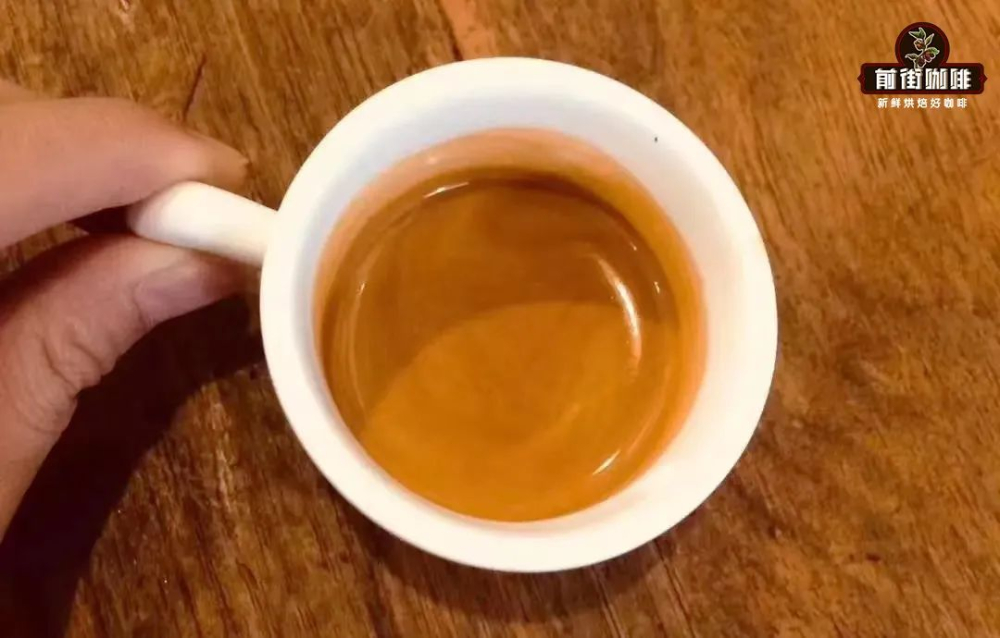
How do you find the correct grind setting?
The formula Front Street mentioned above is only meant to help us quickly find a suitable grind range; it doesn't mean the espresso extracted this way will necessarily taste good. In the end, we still need to judge whether the extraction is up to standard based on the characteristics and taste of the coffee beans.
If the espresso has an obvious burnt-bitter taste but the strength is moderate, it may be because the time was too long, causing excessive release of bitter substances—you can grind slightly coarser. If the crema on top of the coffee liquid is pale and thin, it may be that the tail end of the extraction went on too long; you can reduce the weight of the coffee liquid, meaning extract less, and it's suggested to raise the coffee-to-liquid ratio to between 1:1.5 and 1:1.7. When the espresso has fairly rich flavor but a short finish, you can appropriately extract a bit more coffee liquid and try adjusting the ratio to 1:2.5.

Finally, the extraction formula is only a reference. If you get boxed in by it, it becomes hard to adjust for good flavor, and in the end you can only keep adjusting the grind setting, wasting coffee beans. The 1:2 ratio is not necessarily the golden ratio that perfectly suits a given coffee bean—sometimes 1:1.7 tastes good, and sometimes 1:2.5 tastes good. The time doesn't have to be confined to 25–30 seconds either; sometimes 36 seconds or 24 seconds is the state in which this coffee bean tastes best. Front Street produces drinks daily in its stores, so parameter adjustments are based on accumulated daily experience. If we're making a low volume of cups at home, it's harder to get a handle on it. Front Street suggests keeping records and summarizing the relationship between extraction parameters and flavor performance, which will help us adjust quickly and also save unnecessary waste.
How do you drink espresso?
Before the formal tasting, it's best to take a sip of ice water first. That's because the flavor of espresso is indeed too concentrated; taking a sip of ice water before the formal tasting can cleanse the palate, thereby enhancing our perception of the coffee's flavors.

After taking a sip of ice water and rinsing your mouth, first take out a spoon and stir the espresso! There are two reasons for this. One is that as the coffee drips, the concentration is not uniform, and we need to stir so that the coffee's concentration is evenly dispersed; otherwise the coffee liquid at the bottom will be very rich while the surface is very thin.
The second is to let the crema blend into the coffee! The reason many friends take a small sip and taste something very bitter is that the crema contains certain fine particles. These fine particles not only make the coffee bitter but also make it full-bodied. Stirring not only better blends the crema's strengths perfectly into the coffee liquid, but also disperses the bitterness brought by the fine particles.

Of course, not stirring is also fine—that way you get a richer layered experience. But if you're a beginner who's just getting into it, Front Street still recommends stirring, to reduce the bitter stimulation from the crema.

Then, we need to take a big sip, letting the evenly stirred espresso rush into the mouth, filling and wrapping around the tongue. This lets us fully feel the silky touch brought by the crema—very comfortable! If you're not using dark-roasted beans but a light-roasted SOE, then because the beans are roasted lighter, less crema is extracted and the mouthfeel will be relatively thinner.
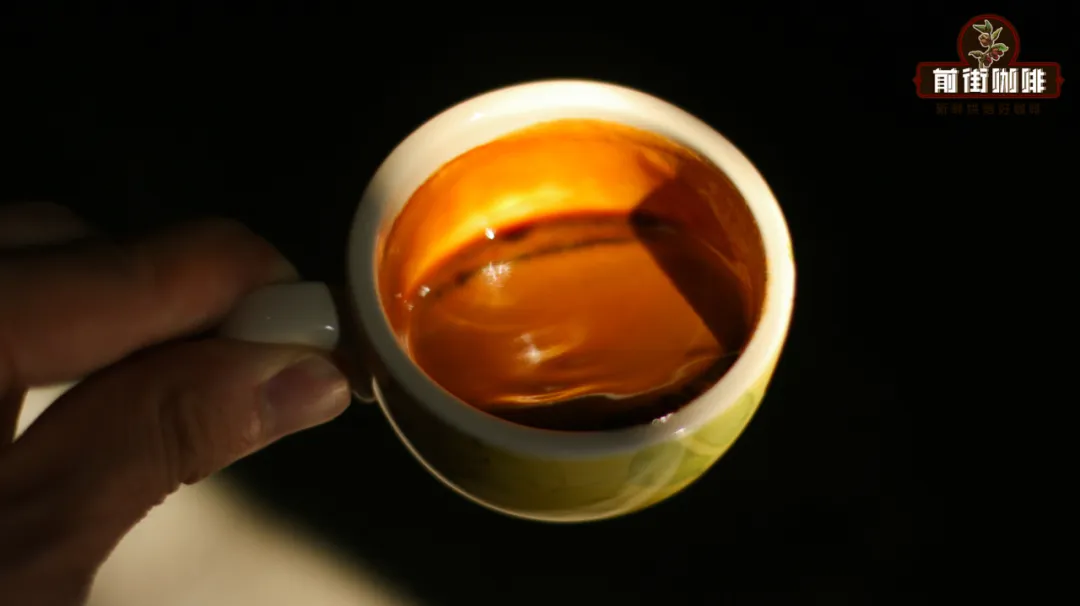
Then begin to feel the coffee's finish. After swallowing, close your mouth and exhale, freely enjoying the flavor that comes back up from the throat, as well as the coffee aroma that keeps blooming in the mouth! Finally, take another sip of clear water and feel the coffee's sweet aftertaste on the taste buds. It simply couldn't be more relaxing!!
The above content is compiled by CoffeeHunters, a coffee news website.


