







Having a cup of coffee in the morning to kick off work has become a habit for many friends. With the development of the coffee industry, more and more novel coffee processing methods have emerged. Front Street Coffee (FrontStreet Coffee) currently has several anaerobic and wine-barrel processed coffee beans, which are also very popular among customers in stores and on Tmall. In addition to the diversity of processing methods, coffee categories are also becoming increasingly subdivided, such as what Front Street Coffee (FrontStreet Coffee) will introduce today—decaf coffee. For some sensitive people, even a little caffeine is enough to cause negative effects. At this time, decaf coffee is a good choice for these sensitive people, or for those who deliberately quit caffeine.
Some customers asked Front Street Coffee (FrontStreet Coffee),Can decaf coffeealso be specialty grade? If you take micro-lot selected beans through a decaffeination process, will they still taste just as good? And how is caffeine removed? Regardingdecaf coffee, there are many misconceptions about its quality and health effects. Today Front Street Coffee (FrontStreet Coffee) will discuss with everyone what decaf coffee is.
The Story of Decaf Coffee
It is said that the famous German poet "Goethe" was also a coffee lover, but he suffered from being unable to sleep after drinking coffee. The feeling of liking it yet being unable to get close to it led Goethe to ask his friend Runge to analyze the components of coffee beans and find out why coffee interfered with sleep. Around 1820 AD, Runge identified that the factor affecting sleep was caffeine, and he developed a method to separate coffee beans from caffeine. Therefore, Runge became the originator of decaffeinated coffee.
Although Runge had found the factor in coffee that affected sleep at that time, the caffeine extraction technology could not mass-produce decaffeinated coffee. It was not until 1903 AD that German coffee bean importer Ludwig Roselius discovered that once coffee beans were soaked in seawater, the caffeine content would be greatly reduced. So he asked a group of chemists to research and develop caffeine extraction technology, which led to an important breakthrough in extraction technology, and decaffeinated coffee began to be mass-produced.
What Is Decaf Coffee?
Decaf coffeeDecaf is the abbreviation for decaffeinated coffee. There are many methods to remove caffeine from coffee beans. Apart from caffeine content, decaffeinated coffee should have almost the same nutritional value as regular coffee. However, depending on the method used, the taste and aroma may become slightly milder and the color may change. This can make decaffeinated coffee more pleasant for those who are sensitive to the bitterness and aroma of regular coffee.
Does decaf coffee bean mean it has no caffeine at all? It does not.Decaf coffeeactually only removes about 97% of the caffeine, not completely. Although caffeine will still be present, compared with regular espresso,decaf coffee's caffeine will not have any effect on the vast majority of people.

Decaf coffeeis not a need that only emerged in the 21st century
The stimulating effect of caffeine can be said to be the main reason people cannot do without it. Caffeine is a central nervous system stimulant. Consuming caffeine can make people less likely to feel tired, and it also has effects such as improving concentration and reducing pain.
In fact, decaffeinated coffee was not a need that only emerged in the 21st century. As early as the beginning of the 20th century, Kaffee Hag, a German company and the world's first enterprise to sell decaf coffee, had already developed this product. It was just that not many people drank decaf coffee at the time. It was not until after the end of World War II that a coffee bean with higher caffeine content—Robusta beans (Robusta; Coffea canephora)—rose to prominence. However, due to the large-scale use of Robusta beans, many people could not stand high-caffeine beverages, which greatly increased the demand fordecaf coffee.
▲Science Monthly
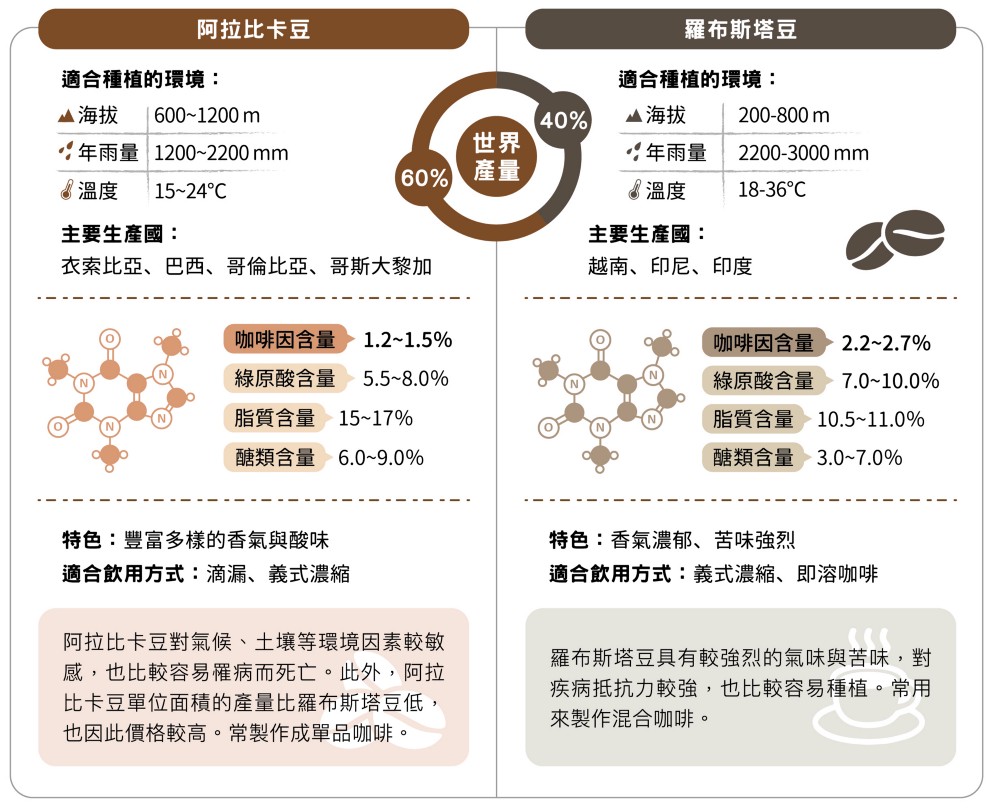
Most of the coffee we commonly see in our lives comes from Arabica beans (Coffea arabica), which account for about 60% of global production. Because the coffee brewed from them has diverse aromas and rich acidity, they are mostly made into various specialty coffees.
Robusta beans have a strong smell and bitterness, so they are often made into blended coffee or instant coffee, and their global production is nearly 40%. In addition, Arabica beans contain about 1.2–1.5% caffeine, while Robusta beans contain nearly twice that, about 2.2–2.7%. After World War II, more and more coffee products were made with Robusta beans, but because of their high caffeine content, they easily made consumers feel uncomfortable, so many producers began to invest resources in developing decaf coffee products.

Generally speaking, among coffee beans, Arabica coffee beans contain 1.1%–1.7% caffeine, while Robusta coffee beans contain 2%–4.5% caffeine.
How Caffeine Is Removed
Common methods of removing caffeine all use "extraction." Generally, green coffee beans are first extracted to remove caffeine, and then dried and roasted. Common extraction methods can be roughly divided into three major categories: solvent decaffeination, carbon dioxide processing, and water processing.

Solvent Extraction Method
Depending on the processing steps, solvent extraction can be divided into two types: "direct solvent extraction" and "indirect solvent extraction." Because caffeine in the beans is bound with chlorogenic acid (CGA), before extraction begins, the dried coffee beans need to absorb enough water to separate the two, so that caffeine molecules can be effectively dissolved out.
Direct Extraction MethodThis directly steams dried green coffee beans with water vapor until they are soaked through, then soaks the green beans in solvent. After the caffeine is dissolved out, they are removed and heated so that the solvent and water evaporate. Andindirect extractionplaces the green beans into hot water to boil, dissolving out caffeine and various aroma molecules. The water used to boil the coffee beans is then thoroughly mixed separately with solvent so that the caffeine dissolves into the solvent. After removing the solvent, the remaining water is used to rinse the green beans so that the aroma molecules can return to the beans again. Finally, they are drained and dried.

Speaking of caffeine extraction solvents, dichloromethane could be said to dominate the decaf coffee industry before the 1970s and was recognized as the best solvent to use. In addition to having quite good extraction results, its characteristics of being colorless, having a boiling point of 39.6°C so it evaporates easily, and being not easily flammable made the process quite efficient and safe. But ironically, the reason dichloromethane was eventually abandoned was not because it was found to possibly be carcinogenic, but because at the time it was suspected of being one of the culprits in the hole in the ozone layer.
After dichloromethane fell out of fashion, it was replaced by ethyl acetate. Ethyl acetate is naturally produced in nature, and many fruits themselves contain a certain proportion of it, so there are relatively few safety concerns. In 1982, the U.S. Food and Drug Administration (FDA) permitted ethyl acetate for decaffeination. However, because many foods contain ethyl acetate, its health effects cannot be directly investigated, so no permitted residue standard was explicitly established.
Carbon Dioxide Processing Method
The carbon dioxide processing method is similar to the direct solvent method. Coffee beans are soaked in warm water, and then high-pressure liquefied carbon dioxide replaces the solvent to extract caffeine. Afterwards, the carbon dioxide returns to room temperature and becomes a gas. Coffee made using carbon dioxide decaffeination places a lower burden on the human body, and according to research, this method extracts more caffeine than the direct solvent method. However, the cost of this method is much higher than the direct solvent method.
Water Processing Method
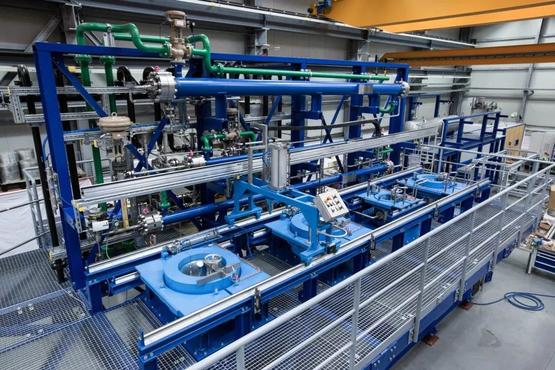
In addition to the costly supercritical fluid method, at that time another group of people developed a method using water as a solvent that could extract caffeine without losing coffee aroma. The cost of this type of method is much lower than the supercritical fluid method, and it is simpler to operate. The most common water processing method is the Swiss water process developed by the Swiss company Coffex in the late 1970s.
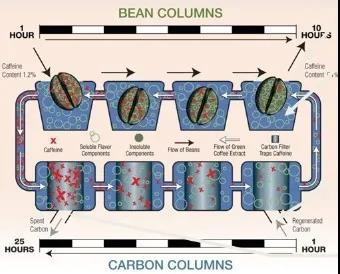
Swiss Water ProcessGreen coffee beans are soaked in hot water, and the soaking stage has actually already partially removed caffeine. The soaked solution is then filtered with activated carbon, and finally the solution is returned to the coffee beans. This series of steps more effectively removes caffeine. In addition to not requiring chemical solvents, the soaked solution can also be reused in different batches of processing. However, the coffee will still lose a lot of flavor during the filtration process.

The disadvantage of this processing method is that the production cost is much higher than the above two solvent methods, and the extracted caffeine is directly filtered out and cannot be used for other commercial purposes.
Mountain Spring Water Processing Method
This uses another special kind of water, taken from glaciers, to extract caffeine. The company Descamex states that they use some kind of special filtration device to remove caffeine. After processing, a water-based solution without caffeine is obtained. This solution also simultaneously dissolves the solid substances of coffee and can be reused in the decaffeination process. This processing method, like the Swiss water process, is a processing method that does not use chemical solvents, so some consumers regard it as a safer and healthier choice.
Can decaf coffeealso be specialty coffee?
People often think that decaf coffee has a flat and uninteresting flavor. Although caffeine itself has no aroma, the processing procedures often cause coffee beans to lose their most important flavor substances. Losing flavor is not related to the act of removing caffeine. The biggest challenge for companies making decaf coffee is finding a method that can extract caffeine without sacrificing the flavor of the coffee beans. In the specialty coffee world, this has always been a highly controversial topic.

The most common processing method is to directly remove caffeine with solvent. This method directly destroys the flavor of the coffee, because it is impossible for the removal target to be limited only to caffeine. Those substances that bring deliciousness to coffee will be heavily consumed during the processing procedure, causing a huge negative impact on coffee flavor. Lower-quality coffee beans often use the solvent processing method because the beans themselves do not taste very good.
But these statements do not mean that there is no decaf specialty coffee. By using good-quality coffee beans and a processing method that causes less flavor loss to remove caffeine, coffee of good quality can still be obtained. Decaf coffee beans obtained using the Swiss water process will have their flavor damaged to a lesser extent, but its processing cost is higher, so it is less often used to process decaf coffee.
The Swiss water process retains the solid dissolved substances of the coffee beans. This technology extracts caffeine through "activated carbon specifically used to filter out caffeine." This step preserves the flavor of the coffee's origin and the flavor of the batch processing. To prove that the flavor has been preserved, Swiss Water conducts cupping before and after the decaffeination process.

How Should Decaf Coffee Be Roasted?
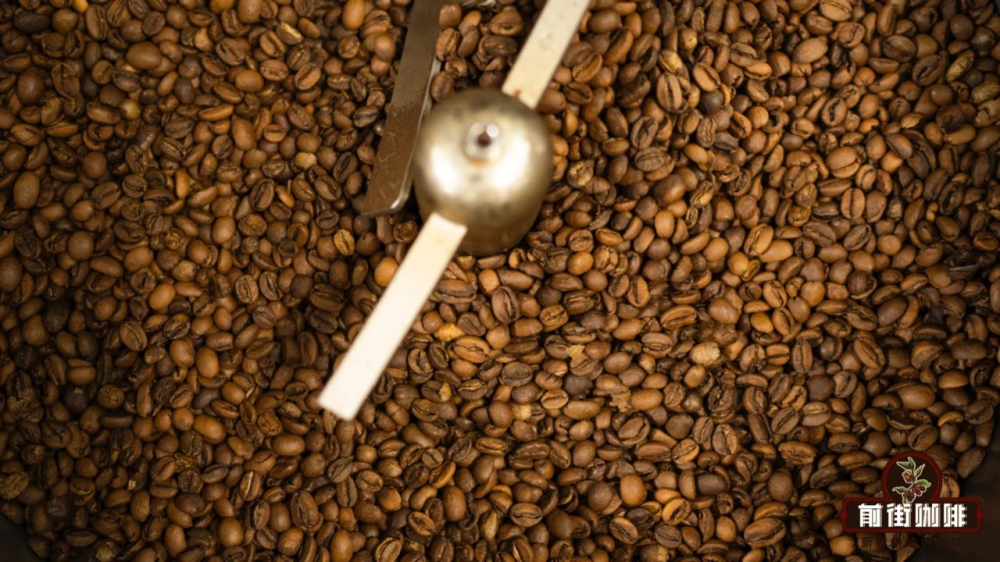
How do you roast decaf coffee to bring out sweetness? The decaf coffee process includes adding water to green coffee beans to extract caffeine, and then drying them again. During the decaffeination process, it is carried out as gently and carefully as possible, removing caffeine while affecting the flavor as little as possible. This means that the roasting process before first crack needs to use a gentler method. During roasting, decaf coffee will follow a similar temperature curve, but the rate of temperature rise is a bit different, because decaf coffee has also undergone decaffeination processing, so the degree to which the coffee beans retain heat is also different.
It is necessary to adjust the batch size and roaster preheating time for decaf coffee. Decaf coffee is usually roasted using a gentler roasting curve than usual, such as a lower and slower rate of rise, and then a curve that gradually declines after the rate of rise reaches its maximum until the end of roasting. There are two keys to maximizing sweetness in decaf coffee roasting: extending time and lowering temperature. The goal is slight caramelization before first crack.
When roasting reaches first crack, the reaction of decaf coffee will be very different from regular coffee. Once decaf coffee begins to release heat, development will differ, and the energy maintained in the coffee beans will not be very tense. The special cellular characteristics of decaf coffee may pose challenges to roasters. On the one hand, the beans can easily be over-roasted and over-developed; on the other hand, because it cannot maintain as much heat inside the beans, it cannot simply be dropped like regular coffee and left to cool.
So, look for high-quality green beans. Make sure there is enough but not excessive caramelization at first crack, and skillfully manage roasting after first crack to achieve the correct balance of sweetness, acidity, and bitterness. To roast delicious and sweet coffee still requires continuous roasting to accumulate experience.
For more specialty coffee beans, please add the private WeChat Front Street Coffee (FrontStreet Coffee), WeChat ID: kaixinguoguo0925
The above content is compiled by CoffeeHunters, a coffee news website.

