








For more specialty coffee knowledge, please follow the WeChat official account: Front Street Coffee (FrontStreet Coffee)
In modern society, coffee is not only used to refresh oneself, but more of a lifestyle. The emergence of decaf coffee on the market is undoubtedly a great choice for those who have sleep issues due to caffeine intake or who like coffee but don't want to consume caffeine.
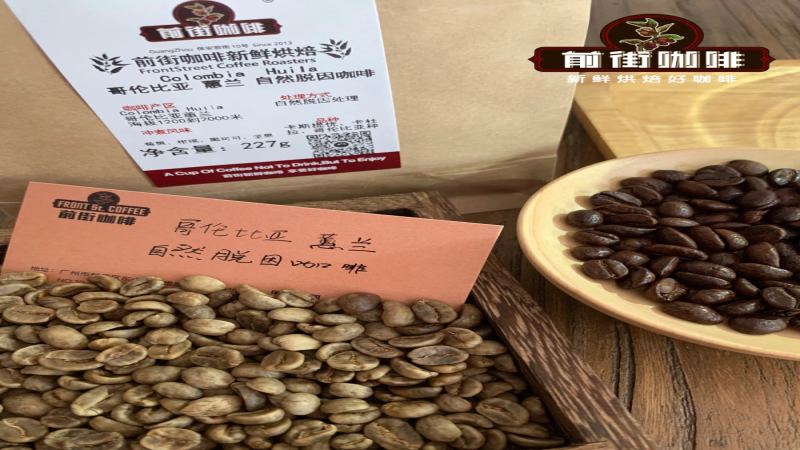
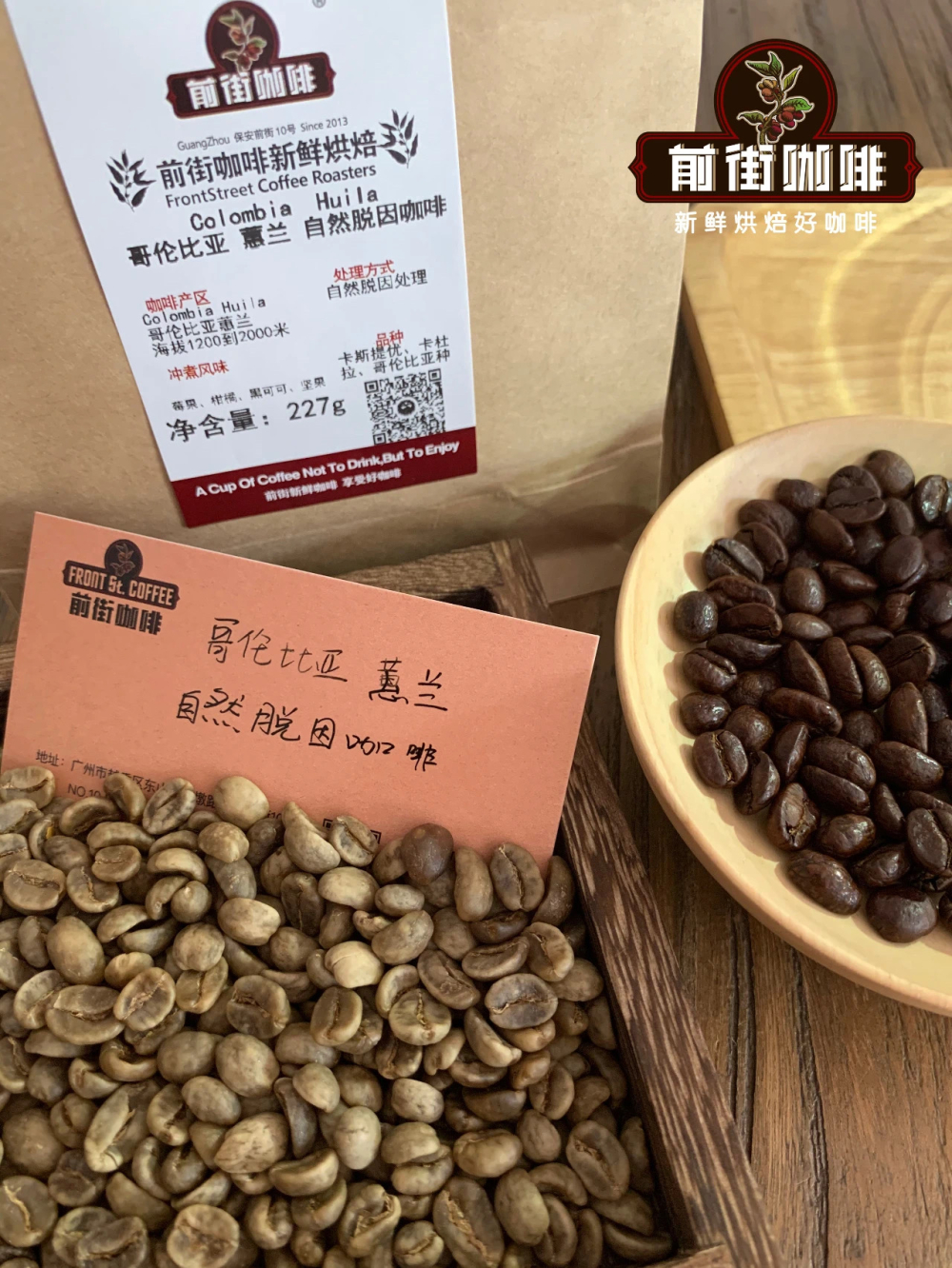
After the emergence of decaf coffee, many people questioneddecaf coffeewhether it affects health and so on. Front Street believes that questioning anything apart from the intake amount is nonsense. Whether it's caffeinated coffee or decaf coffee, if the daily intake exceeds what the human body can handle, even water will cause corresponding problems. So Front Street wants to remind all coffee-loving friends: coffee is delicious, but remember not to be greedy~. Alright, back to the topic—what is decaf coffee, and how is decaf coffee made? Front Street has acquired and listed a Colombian decaf coffee bean to explore this with everyone.
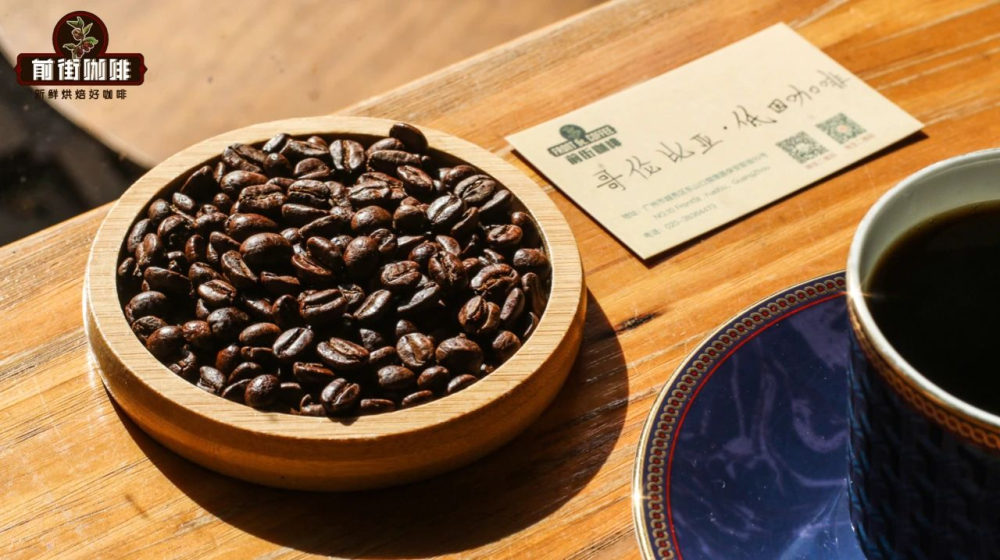
What is decaf coffee?Decaf coffeeIs it really zero caffeine?
Generally, the caffeine content of coffee beans is measured by weight ratio. Arabica coffee beans have a caffeine content of 0.9%-1.4% (average 1.2%), while Robusta has 1.8%-4% (average 2.2%). Decaf coffee is divided into naturally low-caffeine coffee and artificially processed decaffeinated (decaf) coffee. The most common naturally low-caffeine coffee is Coffea Laurina, whose caffeine is half that of regular Arabica (0.6%).
Unlike other artificially processed decaf coffees, Coffea Laurina has lower caffeine content compared to regular Arabica coffee trees due to genetic degradation, and it has better flavor. For artificially decaffeinated coffee, the EU standard for such decaf coffee is that the caffeine content after processing does not exceed 0.1% of green beans, while the US Food and Drug Administration FDA standard is to remove to below 3% of the original caffeine content.

Does decaf coffee mean completely no caffeine? Not exactly. Front Street Coffee (FrontStreet Coffee) believes that although decaf coffee extracts a large amount of caffeine, it still retains 2%~3% caffeine, meaning each cup of decaf espresso still contains about 0-7 milligrams of caffeine. Although caffeine is still present, compared to regular espresso, the caffeine in decaf coffee will not have any effect on the vast majority of people.
How is caffeine extracted from decaf coffee?
With the development of the coffee market, there are many methods for removing caffeine, which can be broadly categorized into direct/indirect solvent processing, supercritical carbon dioxide processing, Swiss Water Process, and mountain spring water processing.
Direct solvent processing (direct contact method)
The direct solvent processing method uses chemical solutions such as dichloromethane and ethyl acetate to dissolve out caffeine. First, steam is used to open the pores of green coffee beans, then the dichloromethane solvent is directly added to the coffee beans. After the solvent combines with caffeine, the caffeine-filled solvent is washed off, and the coffee beans are steamed again to remove all residual solvent. Since dichloromethane is suspected of increasing cancer risk with long-term exposure, there are concerns about using it as a solvent. But in fact, the FDA limits the dichloromethane content in decaffeinated coffee to 0.001%, and in reality it is even lower, with minimal side effects.
The process using ethyl acetate as a solvent is the same. Ethyl acetate is usually derived from sugarcane, so when used, the direct solvent method is sometimes called the sugarcane decaffeination method. Typically, Colombian decaffeination uses this method. However, ethyl acetate is a highly flammable substance, so it poses higher risks.
Swiss Water Process
This is the most traditional method of extracting caffeine, using this commercially developed high-efficiency processing method.
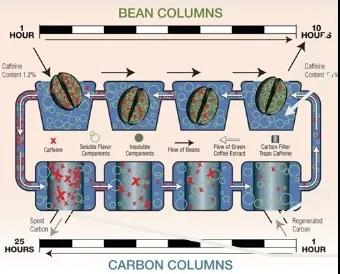
Steps of the Swiss Water Process: Soak green coffee beans in hot water. This hot water is called "Flavor-charged Water" in the Swiss Water Process. This water contains saturated flavor factors that all green coffee beans should have, except caffeine. This special water is the most important medium in the subsequent decaffeination process. After the flavor-charged water is formed, the coffee beans are filtered out. The flavor-charged water is filtered through an activated carbon filter to remove caffeine, leaving hot water full of pure flavor factors. Then the filtered coffee beans are re-soaked in the pure flavor factor hot water, allowing the coffee beans to reabsorb the coffee flavors.
Supercritical carbon dioxide processing
This processing method first allows the coffee beans to absorb water and swell, causing the caffeine molecules within the coffee beans to become loose. Liquefied carbon dioxide is added and the pressure in the water is raised above 100 atmospheres. Carbon dioxide is highly selective—while dissolving out caffeine, it does not "harm" the carbohydrates and proteins in the coffee beans, ensuring the coffee bean flavors are not destroyed. The liquid carbon dioxide that has carried away caffeine can also be recycled after removing the caffeine.
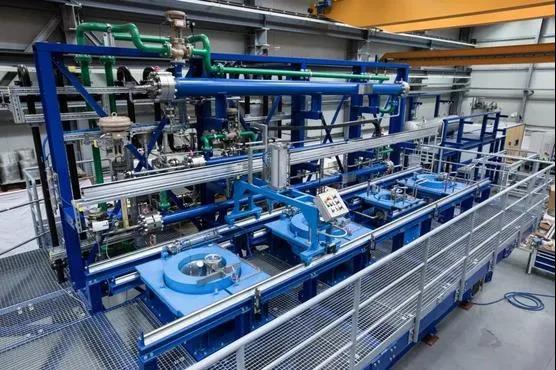
Coffee made using carbon dioxide decaffeination places less burden on the human body, and according to research, this method extracts more caffeine than the direct solvent method. At the same time, the cost of this method is much higher than the direct solvent method.
Mountain spring water processing
Similar to the Swiss Water Process, this uses another special type of water—water from glaciers—to extract caffeine. The company Descamex states that they use a special filtration device to remove caffeine. After processing, a caffeine-free water-based solution is obtained. This solution also dissolves the solid substances of coffee, which can be reused in the decaffeination process.
Does decaf coffee taste bad?
Based on the above decaf coffee processing methods, Front Street Coffee (FrontStreet Coffee) believes that decaf coffee tasting bad is not caused by the processing. Because most decaf coffee already selects cheap, commercial-grade coffee beans as raw materials. Modern decaffeination technology is quite complex. In most cases, companies producing decaf coffee naturally tend to choose coffee bean varieties with higher caffeine content (such as Robusta beans) when selecting raw materials. Before the decaf beans undergo decaffeination, the coffee beans were already not tasty to begin with. Like other coffee beans sold in coffee shops, if decaf coffee beans start with high-quality Arabica coffee beans from the green bean stage, then even after decaffeination, decaf coffee can still perform very well.
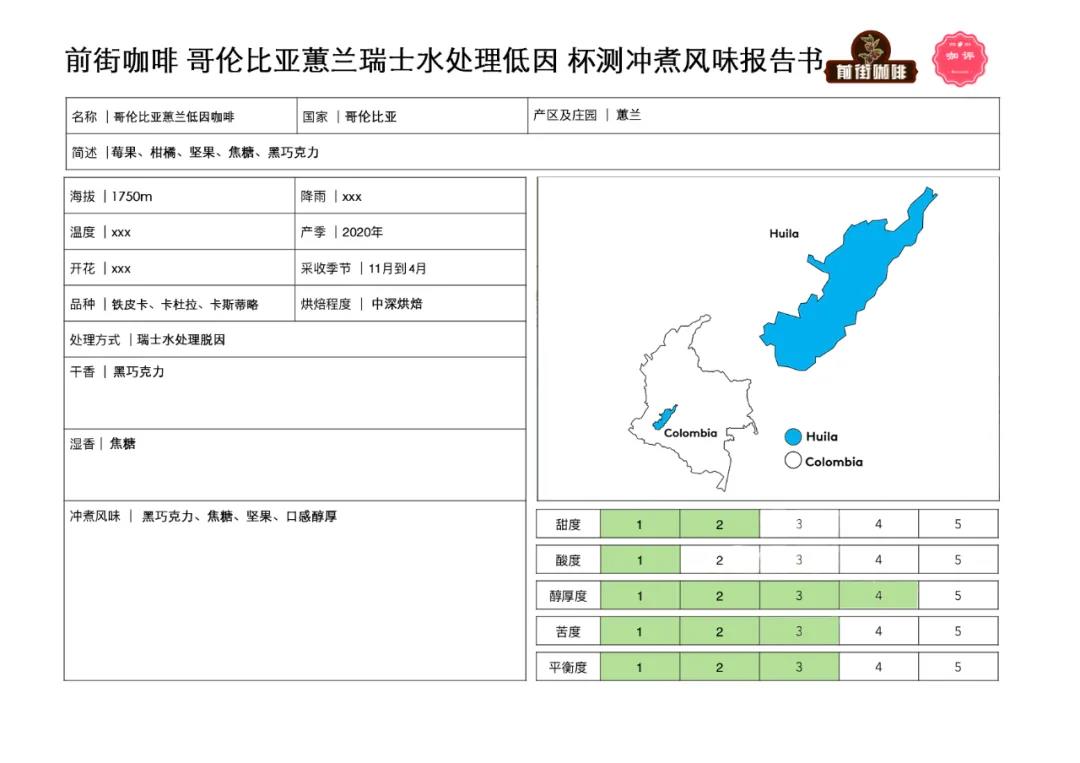
Front Street Coffee (FrontStreet Coffee) representative coffee bean——Colombia Huila Swiss Water Process Decaf Coffee

Country of origin: Colombia
Region: Huila
Altitude: 1750 meters
Variety: Typica, Caturra, Castillo
Processing method: Swiss Water Process
Grade: Supremo
Harvest season: 2020
Colombia Huila region
Colombian coffee beansare extremely well-known in the world, and the high-quality washed beans produced have always been representative of high-quality coffee. Coffee beans exported from Colombia undergo density inspection and manual removal of defective beans, and are bagged only after strict inspections at every level. ThereforeColombian coffeequality can be guaranteed.
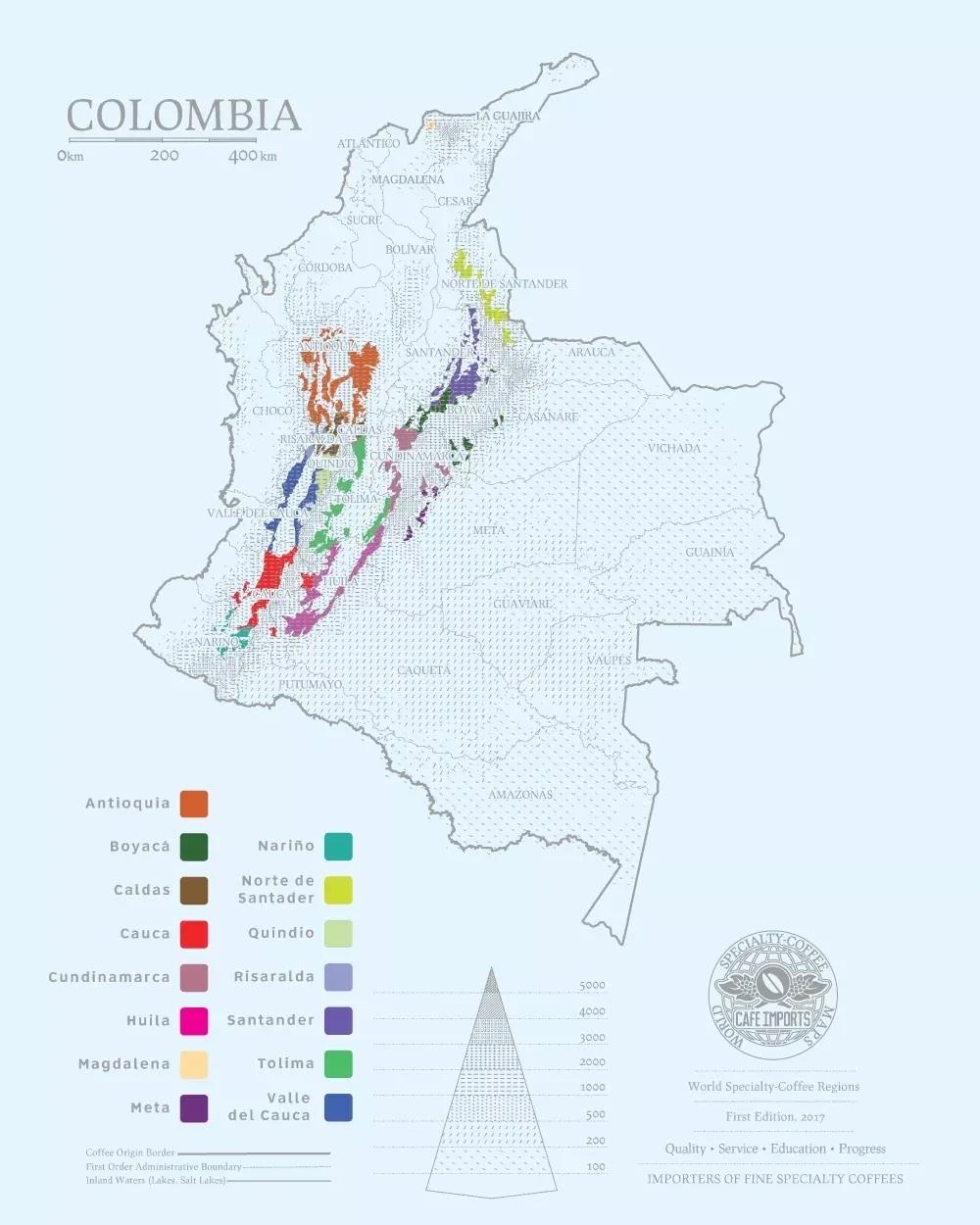
Colombia Huila belongs to the specially selected high-mountain coffee beans of the Colombian national company, known as Colombia's national treasure. With superior geographical and climatic conditions, Colombian coffee has always maintained high quality. Usually, Colombian coffee beans without special market trademark names come from the National Federation of Colombia Coffee Growers, which has always been known for its strict quality control and active promotion.
Colombian decaf coffeeBean varieties
This batch of decaf coffee includes three coffee varieties: Typica, Caturra, and Castillo. Typica, as one of the oldest Arabica varieties in the world, is loved for its delicious and sweet flavor. However, due to low yield per unit, it has been replaced by many high-yield coffee varieties in Colombia. Caturra is a natural mutation of Bourbon, with flavor comparable to or slightly inferior to Bourbon beans. More importantly, it has strong adaptability and does not need shade trees—it can thrive directly under the blazing sun, commonly known as Sun Coffee, and can adapt to high-density planting.
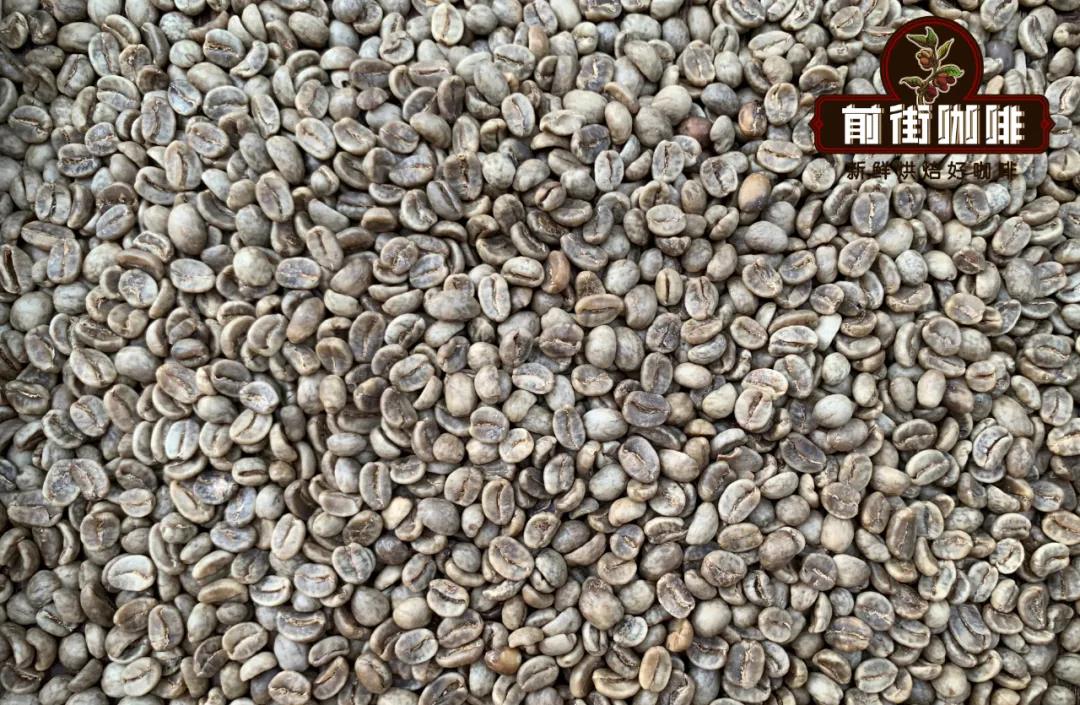
Castillo is based on the Colombia variety and hybridized with Caturra, only succeeding by the tenth generation. Although it was not favored by industry practitioners when it first appeared, in recent years there have been no shortage of batches with elegant and delicate flavors on the market.
Green bean grade
This batch of green coffee beans is graded Supremo. In the Colombian coffee bean system, Supremo is the highest grade, while Excelso is smaller in bean size and more ordinary. Colombian coffee beans have a balanced flavor profile, rich mouthfeel, unique flavor characteristics, and relatively full body. When medium roasted, the flavor carries a sweet note of vanilla and dark chocolate.

How Front Street roastsColombian decaf coffee beans
Front Street's roaster uses medium heat and then steadily increases, with the yellowing point at around 6 minutes 15 seconds, then lowers the heat and opens the air vent to enter the Maillard reaction. At first crack, opens the air vent wide, maintains heat, temperature approximately 183.2℃, and discharges from the roaster 2 minutes 30 seconds after first crack.
Preheat the roaster to 200 degrees and load the beans, set air vent to 3, turn on the heat after 30S, adjust heat to 130, turning point at 1'32'', maintain heat, yellowing at 6'15'', grass scent disappears, entering the dehydration stage, increase heat to 140, open air vent to 4, when reaching 151 degrees lower heat again to 110.
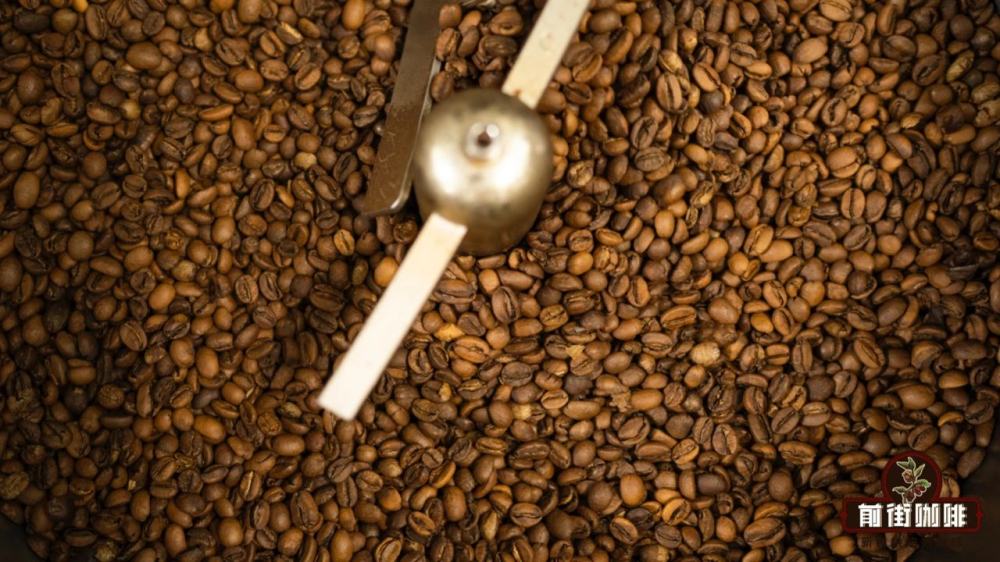
Dehydration completed at 8 minutes, wrinkles and dark spots appear on the bean surface, the toasted bread scent turns to coffee aroma, which is the prelude to first crack. At this time keep the heat unchanged, open air vent to 5, and listen carefully for the sound of first crack. At 9'57'' first crack begins, open air vent fully to 5. Post-first-crack development time 2 minutes 30 seconds, discharge from the roaster at 194.2℃.
Front Street cupping report
Front Street brewing recommendations
Dripper: Kono dripper
Water temperature: 90℃
Coffee dose: 15g
Coffee-to-water ratio: 1:15
Grind size: medium-coarse grind (70% passing rate on China standard No. 20 sieve)
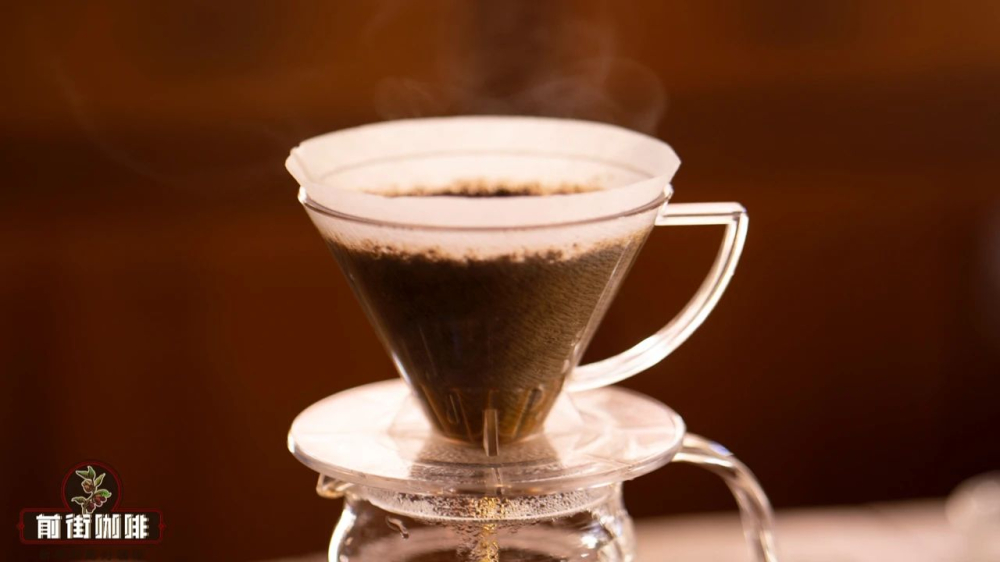
Brewing method: three-stage extraction. Use 30 grams of water for blooming for 30 seconds, then pour in a small stream in circles until 125 grams for the stage break, when the water level drops and is about to expose the coffee bed continue pouring until 225 grams and stop pouring. When the water level drops and is about to expose the coffee bed, remove the dripper. Brewing time is 3 minutes.
Brewing flavor: dark chocolate, caramel, nuts, rich mouthfeel.
The above content is compiled by CoffeeHunters, a coffee news website.

