







In most people's eyes, coffee is a beverage consumed for its stimulating effect, but its aroma also attracts a group of friends who pursue deliciousness, among whom are people who are intolerant to caffeine yet "greedy for taste," such as the customer mentioned at the beginning by Front Street Coffee.In this article, Front Street Coffee will discuss the caffeine content of various coffees, as well as people's misunderstandings about caffeine.
How much caffeine a coffee bean contains depends first on its variety and growing altitude. Taking the two most common coffee varieties as examples, Robusta's caffeine content accounts for about 2-4% of itself, while Arabica is about 0.9-1.4%, usually only half that of Robusta. Most conventional freshly ground coffee on the market uses Arabica varieties; only a few add a small proportion of Robusta to the blend in order to give espresso a richer crema.
The higher the growing altitude, the lower the caffeine content tends to be. High-altitude growing areas have lower temperatures and fewer pests and diseases, so coffee trees do not need to secrete much caffeine to resist pests. This also explains why Robusta grown at low altitudes contains so much caffeine, so this standard mainly applies to Arabica.
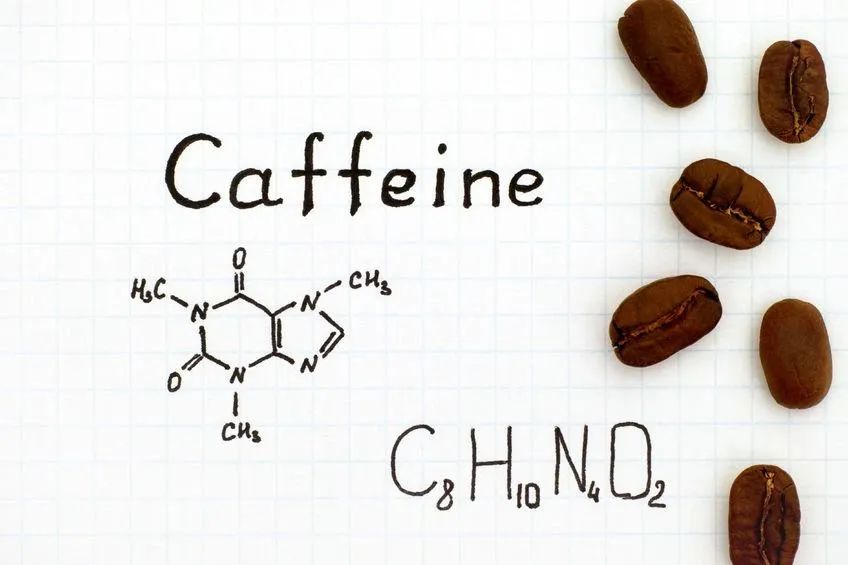
Front Street Coffee has previously explained that when brewing coffee, lighter flavor molecules are released first, while heavier large-molecule substances dissolve into the water later. Caffeine, with the chemical formula "C8H10N4O2," is a large-mass molecule, so like flavor substances, the amount of caffeine released is also related to extraction time. That is, the longer the brew, the higher the caffeine.
Therefore, the caffeine in espresso-based drinks is actually not the highest. Drip coffee, mainly pour-over, and immersion coffee, mainly French press, have slightly higher caffeine content. Although cold brew and ice drip coffee are extracted at low temperatures, the extremely long extraction time makes their caffeine content higher than the previous types.
The following is Front Street Coffee's reference for the approximate caffeine content of common coffee types based on daily production amounts:
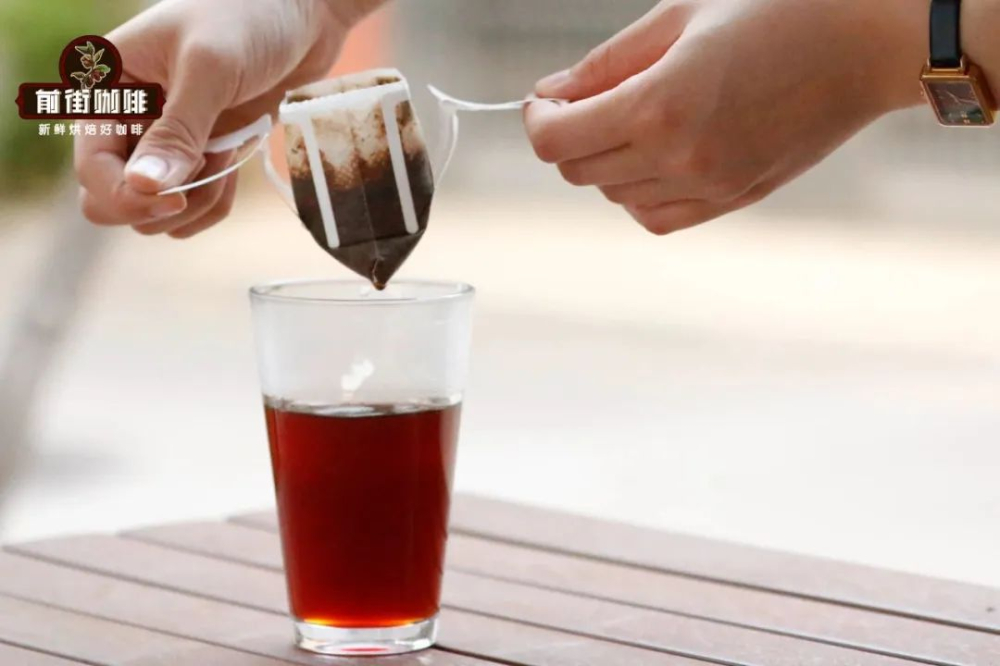
Front Street Coffee needs to emphasize one more point here: the above values are based on conventional extraction and are not absolute results. The actual caffeine content of a cup of coffee is also related to the extraction yield. For example, if two cups of Front Street Golden Mandheling coffee are brewed here, one with fine grinding and one with coarse grinding, with other parameters kept the same, then the fine grind will definitely release more flavor substances than the coarse grind, and the caffeine content will naturally be higher. In other words, if the coffee grounds are ground finer, the taste will be richer and it will also be more stimulating.

Online, popular science articles often tell us that an adult's daily caffeine intake should not exceed 400mg, otherwise it will affect health. Friends who are sensitive to caffeine will think about how to calculate the specific caffeine value from the drinks they consume, so as to avoid excessive intake. As a result, they ask questions like "How much caffeine is in a cup of ** coffee?"
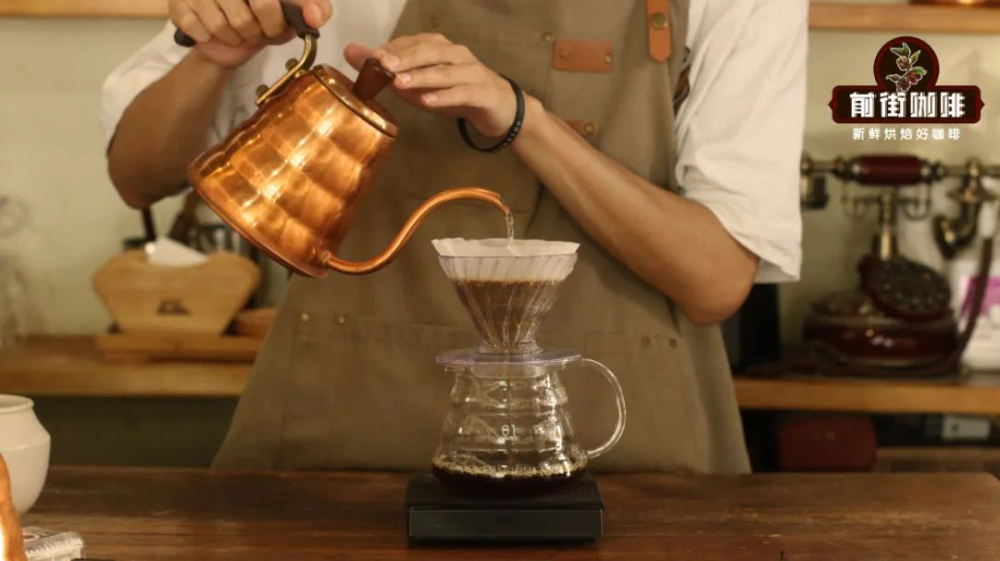
You should know that from a barista's perspective, in addition to coffee variety, growing altitude, and brewing time, multiple factors affecting the extraction of coffee substances also determine how much caffeine it contains. Taking pour-over as an example, differences in grind size, water temperature, pouring technique, and coffee-to-water ratio will directly change caffeine extraction, so it is difficult to measure with a specific value.
Front Street Coffee has noticed that some friends believe caffeine is related to the degree of roasting. They think that the darker the roast, the lighter the coffee beans become, so when weighing the same weight of beans for brewing, dark-roasted coffee requires more beans than light-roasted beans. In addition, the structure of dark-roasted beans is fluffier and more likely to extract flavor substances, so they think dark-roasted beans have more caffeine and a stronger stimulating effect.

However, many studies show that in fact the degree of roasting of coffee beans has little effect on caffeine. At this point, friends with personal experience may say: I really do feel more energized after drinking dark-roasted coffee! Then that can only mean that in your subconscious, compared with mild acidic coffee, only thick-bodied bitter coffee can make you feel refreshed and clear-headed. This is also why many people mistakenly believe that espresso has the highest caffeine content.
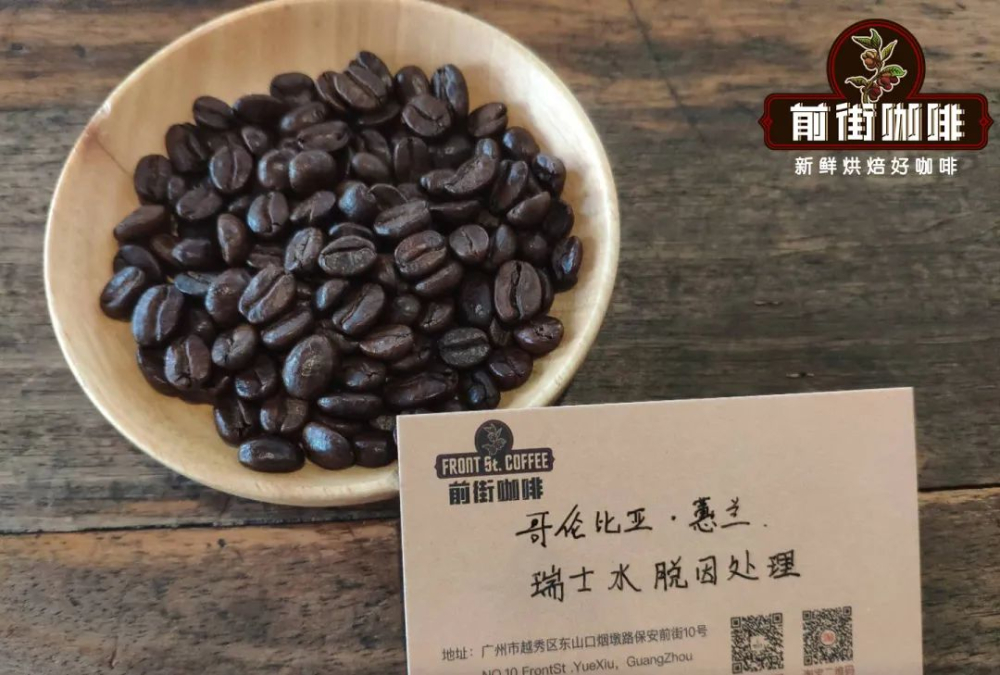
For some friends who are intolerant to caffeine, whether it is instant coffee, bottled coffee, freshly ground espresso, drip pour-over, or long-extracted ice drip and cold brew coffee, these drinks still have relatively high caffeine content, and drinking them makes it easy to stay awake. If friends really want to drink coffee but do not want to consume caffeine, they can choose artificially decaffeinated coffee; this type of coffee bean contains almost no caffeine.
Front Street Coffee (FrontStreet Coffee)
No. 10 Baoqian Street, Yandun Road, Dongshankou, Yuexiu District, Guangzhou, Guangdong Province
The above content is compiled by CoffeeHunters, a coffee news website.

