







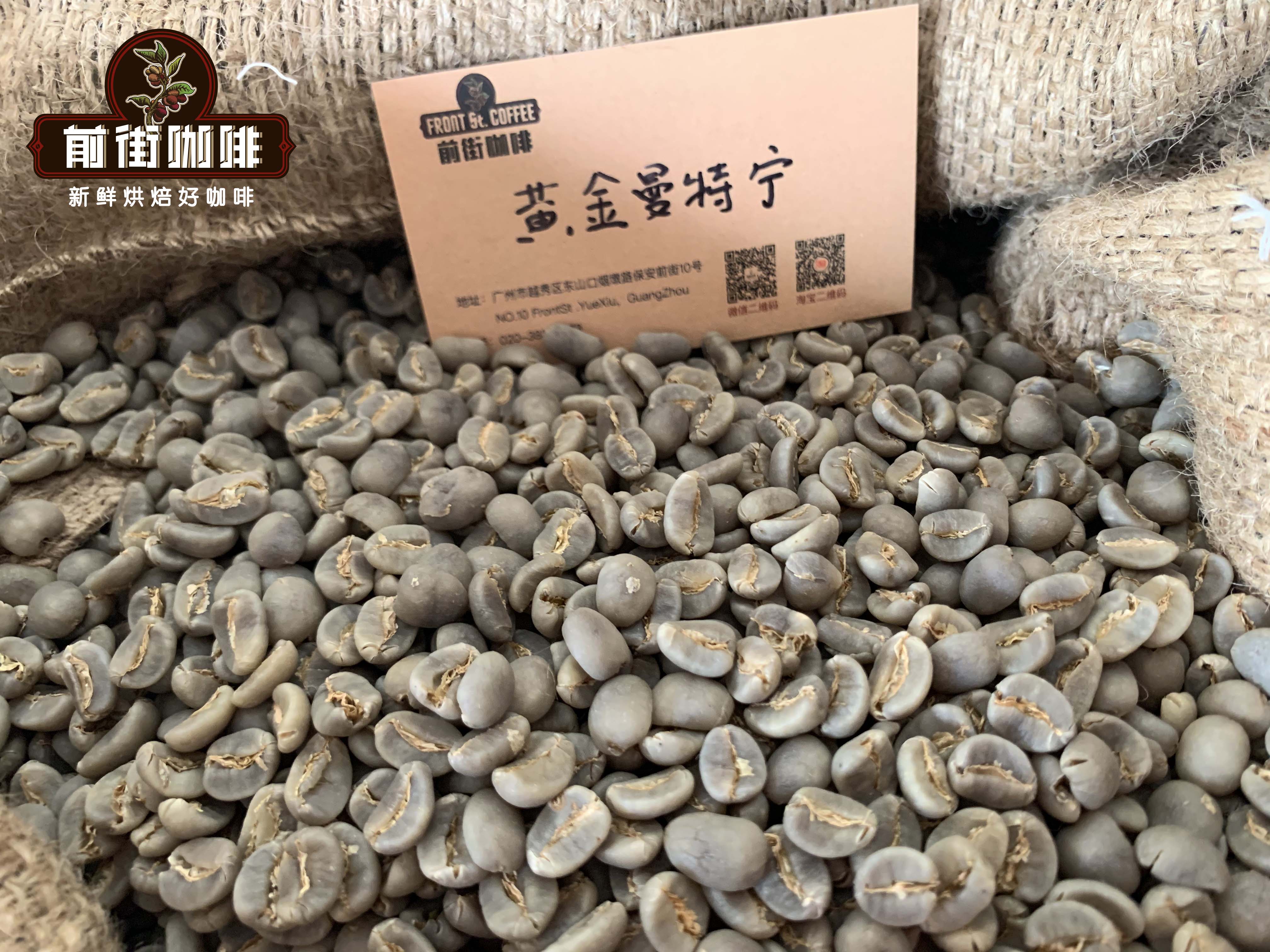
Sumatra Mandheling coffee beans from Indonesia have been renowned for over half a century since the 1960s. Front Street Mandheling coffee has always been characterized by its unique bitterness that highlights its most distinctive sweetness, much like the bittersweet experiences of life. Front Street has heard someone describe the experience of drinkingFront Street Mandhelingcoffee with the idiom: "after bitterness comes sweetness." Of course, appreciating this bitter-sweetness requires some training to truly enjoy it.
On the bean shelf at Front Street Coffee, you can find two types of Mandheling coffee beans: one is PWNFront Street Golden Mandheling, and the other is Front Street Lintong Mandheling from the everyday beans series. Together, they represent the old-school flavor and the new taste of Sumatra Mandheling coffee, respectively.

The traditional production area for Mandheling is the Lintong region south of Lake Toba in North Sumatra. Its highly distinctive wet-hulling process gives Front Street Mandheling coffee a heavy body, with herbal notes like camphor and pine, along with chocolate and caramel aromas, offering a rather complex layering.
Therefore, it can be brewed as a pour-over single origin, extracted with a moka pot or espresso machine for Mandheling SOE, or used as a blend to create a balanced espresso. To let more people taste the traditional Mandheling flavor, we combined Mandheling and Brazilian coffee into a Front Street Classic Espresso Blend, adding a small amount of Robusta beans. The medium-dark roast produces a very rich crema, making Americanos and lattes even more aromatic—a top choice for home coffee.

It was not until 1924 that the Aceh region of North Sumatra introduced Arabica coffee trees from North Sumatra Province. Subsequently, coffee production in the Aceh region surpassed the traditional Lintong region year by year. "It was not until 1924 that the Aceh region of North Sumatra introduced Arabica coffee trees from North Sumatra Province. Subsequently, coffee production in the Aceh region surpassed the traditional Lintong region year by year.
Mandheling almost always uses the wet-hulling method. Its biggest difference from traditional washing is that during the hulling process, there is significant friction between the green coffee beans and between the beans and the machine, generating excessive heat, which may cause the green beans to age rapidly, resulting in special aromas like wood and earth.

On this basis, PWN follows a strict set of standards in producing Golden Mandheling, selecting only the highest grade G1, with beans of 18 mesh or above and fewer than 3 defective beans (per 300g green bean sample). Then, three rounds of hand sorting are carried out to ensure defective beans are completely removed, making Front Street Golden Mandheling's coffee taste cleaner and sweeter.
Just from the word "Golden" in Golden Mandheling, you can sense that every bean is hard-earned, and its production is even scarcer. As a result, the price is higher than ordinary Mandheling coffee beans. Some merchants, noticing this gap, use Mandheling coffee beans of the same G1 grade, apply the same three rounds of hand sorting, and sell them under the name "Golden Mandheling."
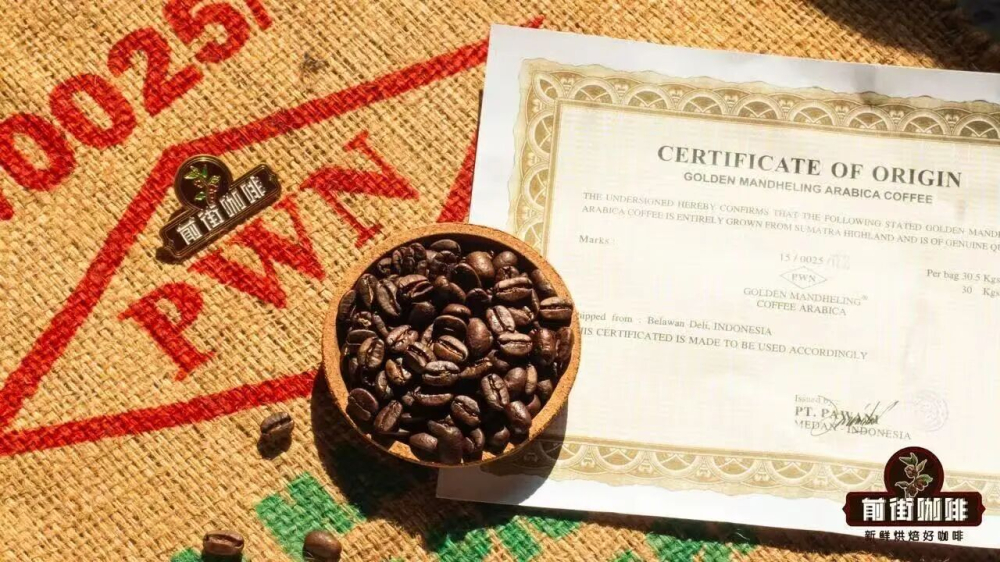
Golden Mandhelinghas a premium herbal note, a stronger caramel sweetness, and a calm, elegant fruity acidity. It offers a rich sweetness, a full-bodied, wild spice flavor, and when dropped before the second crack, it has excellent clarity and sweetness. It allows a wider range of roasting interpretations and highlights its roasted aroma, so it is a medium-dark roast.

After brewing, Front Street PWN Golden Mandheling has roasted nut notes. As the temperature drops slightly, aromas of cinnamon spice, herbs, and melon emerge, with a caramel-like sweetness and a clean, full body.
The above content is compiled by CoffeeHunters, a coffee news website.

