








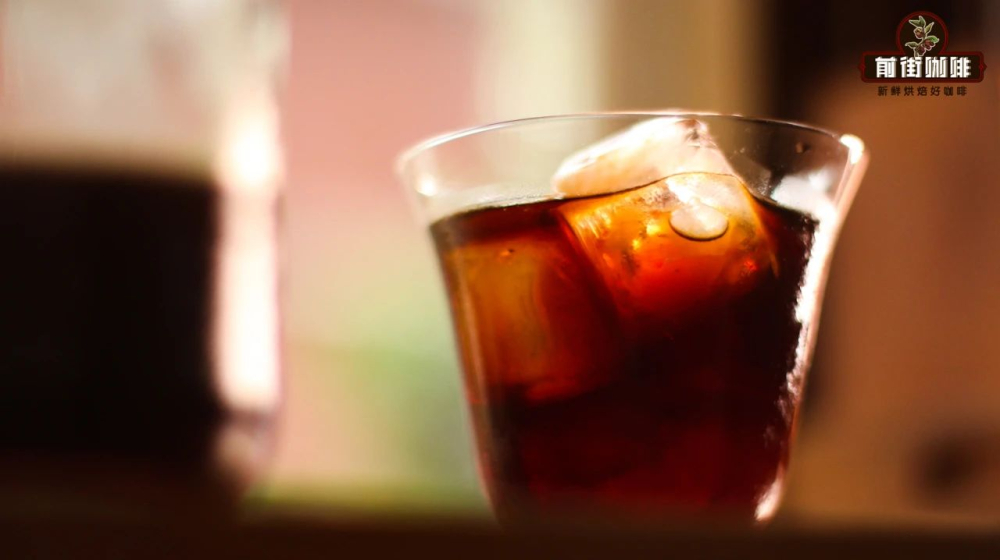
For friends who enjoy drinking black coffee, when traveling on business or for leisure, or at work, making a pour-over for themselves is quite inconvenient, so drip bag coffee is the obvious choice. Of course, as everyone's love for coffee has gone beyond simply tasting coffee in a café, more people are pursuing the process of brewing and enjoying it at home.
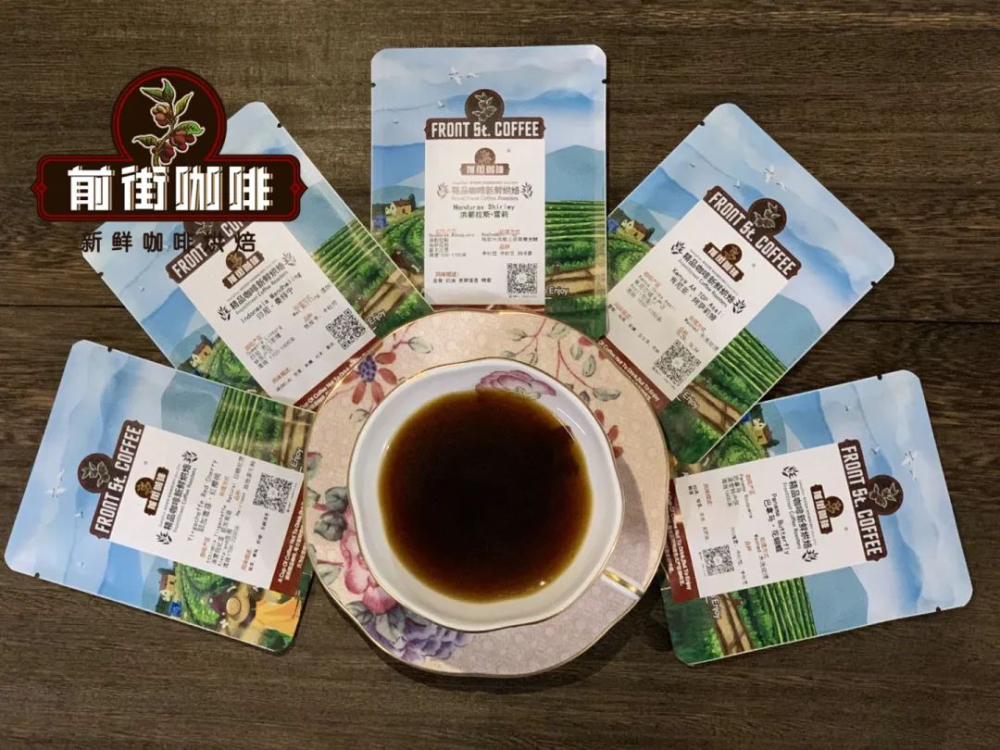
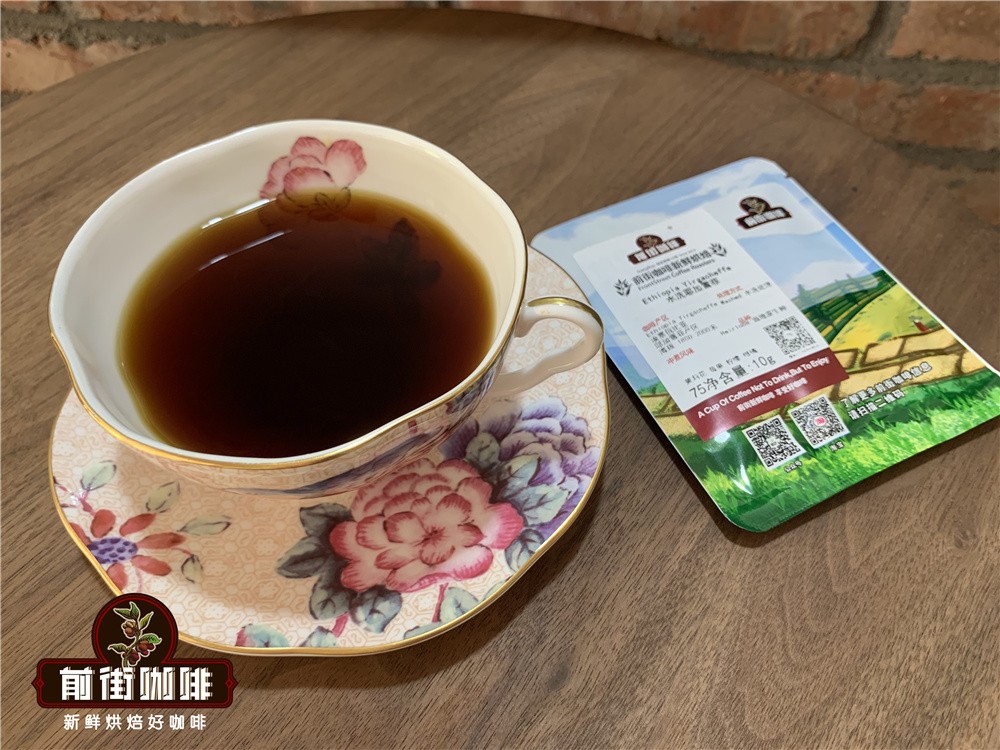
Drip bag coffee seems simple, but many friends still don't know the specific steps to brew it, treating the drip bag like a tea bag to soak in a cup — no wonder they say the taste is very weak. Front Street's drip bag coffee sells very well, especially the Front Street Ethiopia Yirgacheffe drip bag. It seems many friends enjoy coffee with floral and fruity notes!
Why is it called"drip bag"?
The earliest drip bag coffee was1990invented in 1990 by Yamanaka Sangyo Co., Ltd. of Japan. Its design concept came from the stringed tea bag. The inventor hoped to simulate pour-over drip coffee by pre-measuring coffee grounds into a non-woven filter bag, with paper tabs on both sides of the filter bag allowing the coffee packet to hang suspended in the center of the cup. Because it hooks onto both sides of the cup like little ears, everyone calls it "drip bag coffee."2002Starting in 1998, the Japanese registered the drip bag coffee packet as a patent and promoted it for sale on the market. This convenient and neat design quickly became mainstream in the market.
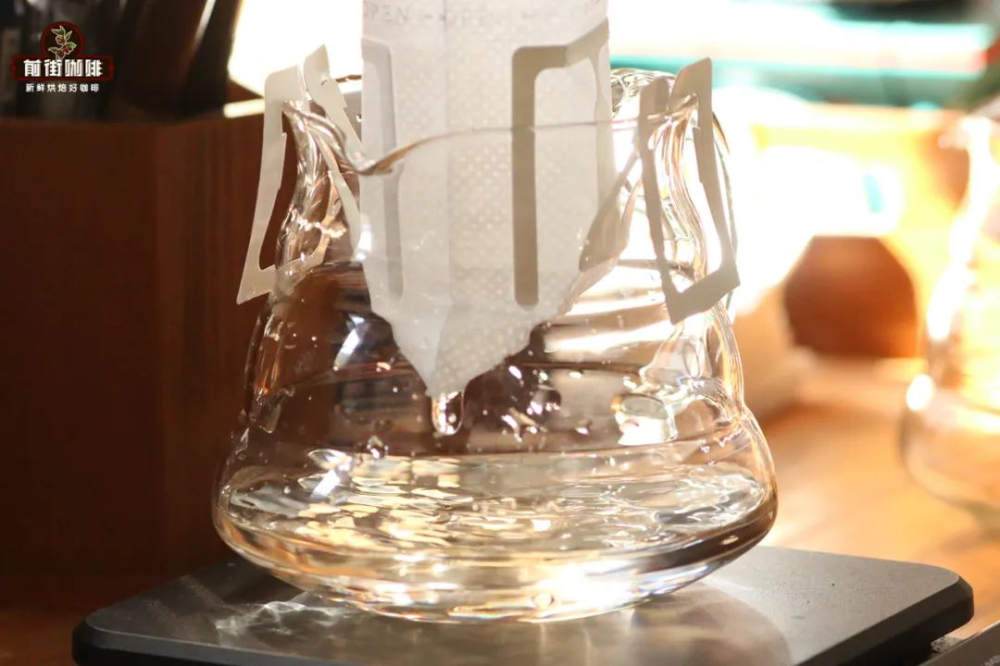
Drip bag coffee is a portable coffee made by grinding coffee beans, putting them into a filter bag, and sealing it. Front Street's drip bag coffees are all made with fresh coffee beans that are ground and packaged.
Drip bags, like pour-over, belong to filtered extraction, but compared to the operation of pour-over coffee, drip bags are much more convenient and quick. This is also why drip bag coffee is called coffee on the go.?Pour-over coffee requires at least the following equipment: a brewing kettle, a thermometer, a dripper and filter paper, a grinder, a timing scale, etc. Since drip bags are pre-ground, there is no need for grinding equipment. The filter bag usually uses biodegradable non-woven fabric. Water extracts the soluble substances from the coffee grounds and seeps out through the non-woven fabric, so there is no need to prepare filter paper and a dripper for brewing.
The pouring technique, timing, and ratio for drip bag coffee also don't need to be controlled as rigorously as with pour-over; you only need to ensure sufficiently hot water and an appropriate ratio. But also because ofthe "casual" operation, the flavor expression of the coffee is often not as rich and varied as pour-over coffee. In addition, since the drip bag is pre-ground and placed in the packaging bag, its aroma is not as full as freshly ground coffee. If stored too long, for more than a few months, it may develop some woody flavors. Therefore, Front Street recommends buying coffee beans and grinding them fresh right before brewing, so you can drink more delicious coffee.
Steps for brewing Front Street drip bag coffee:
Most drip bag coffees come in small packages. For example, Front Street's drip bags are10grams/per packet, using a1:15coffee-to-water ratio, so you need to pour150grams of hot water. Front Street believes that brewing drip bags is very casual. If you want a stronger black coffee, you can reduce the water used to brew the drip bag; if you want a lighter black coffee, just increase the water. As long as you like it, that's fine.
1First, we need to prepare a container for the coffee, either a sharing pot or a drinking cup will do, and a kettle for pouring water.
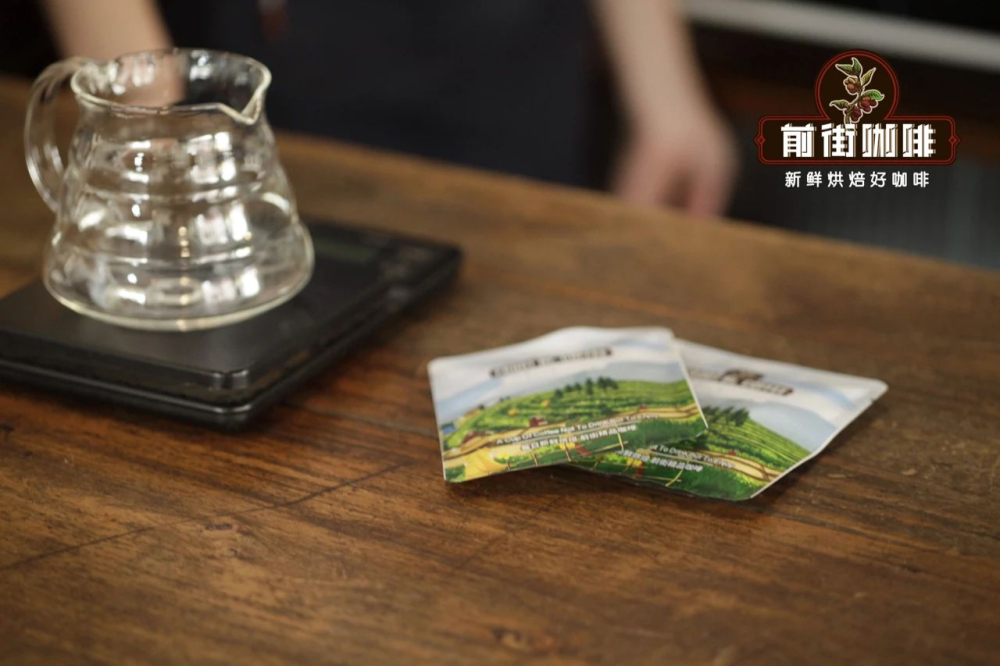
2First, tear open the sealed package, take out the coffee drip bag, and tear open the non-woven pouch along the dotted line on top.
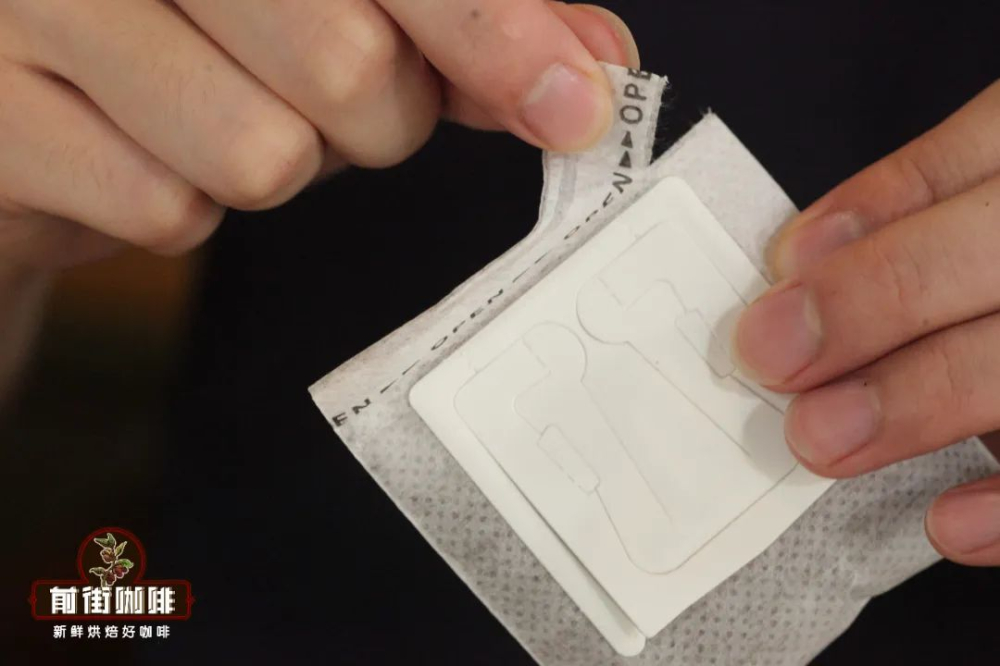
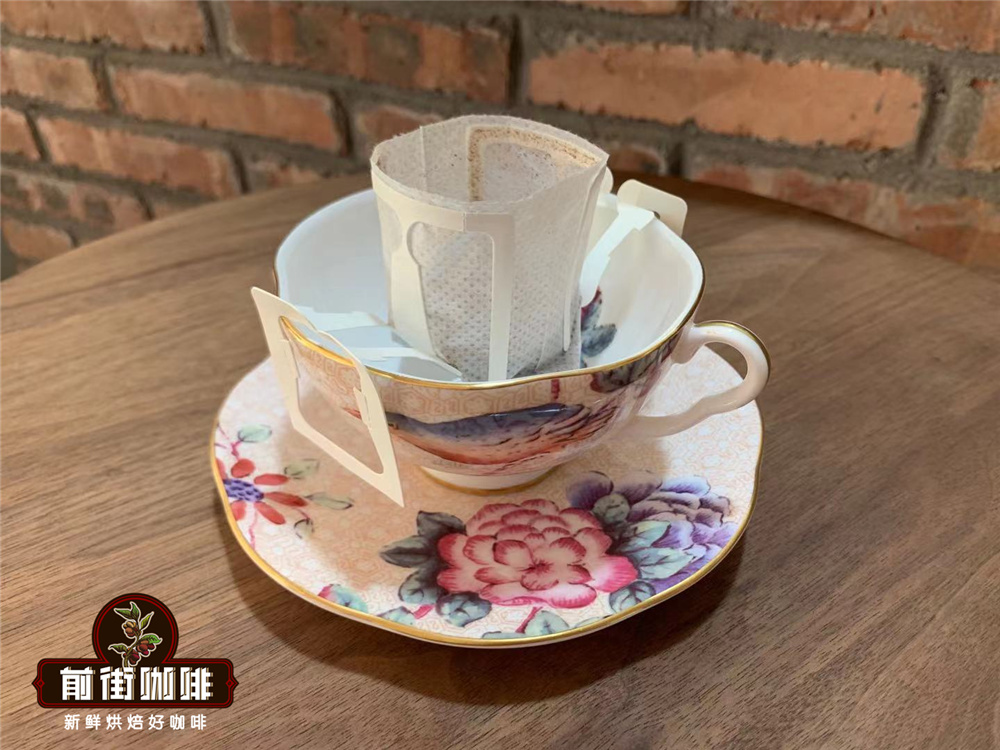
3Pull open the two ears, open up the entire drip bag, and then hang them on the edge of the cup or sharing pot.
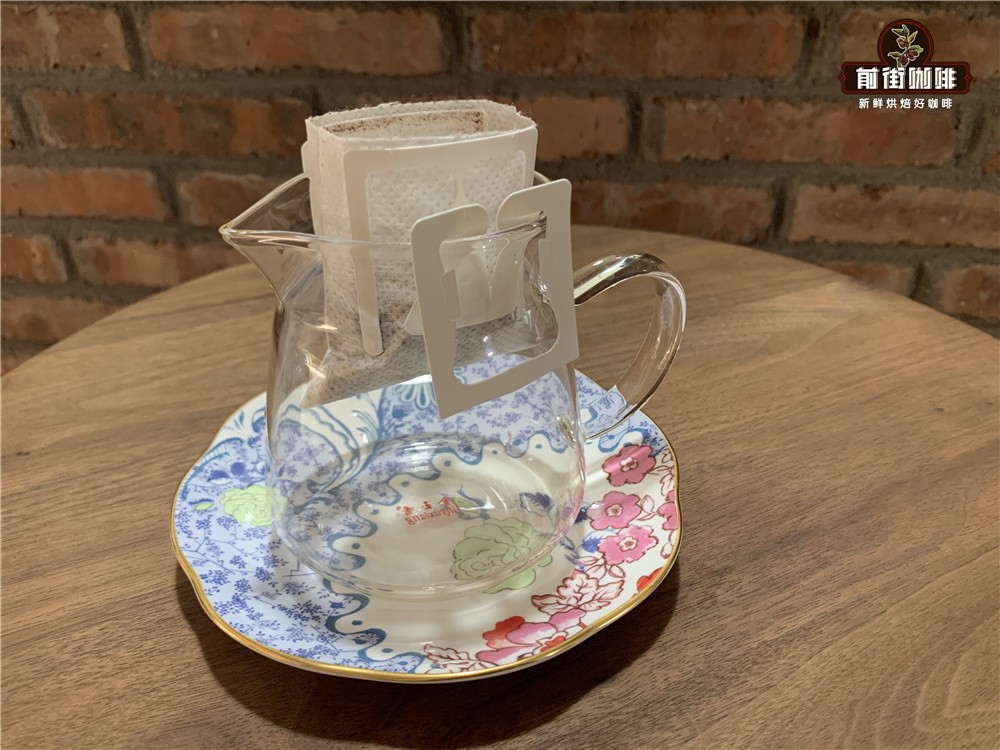
4First, in the first stage, wet all the coffee grounds and let them bloom for about10~20seconds. In the second stage, pour steadily in a small stream until the liquid level is nearly full, then wait for the coffee liquid to go down until it has completely flowed through.
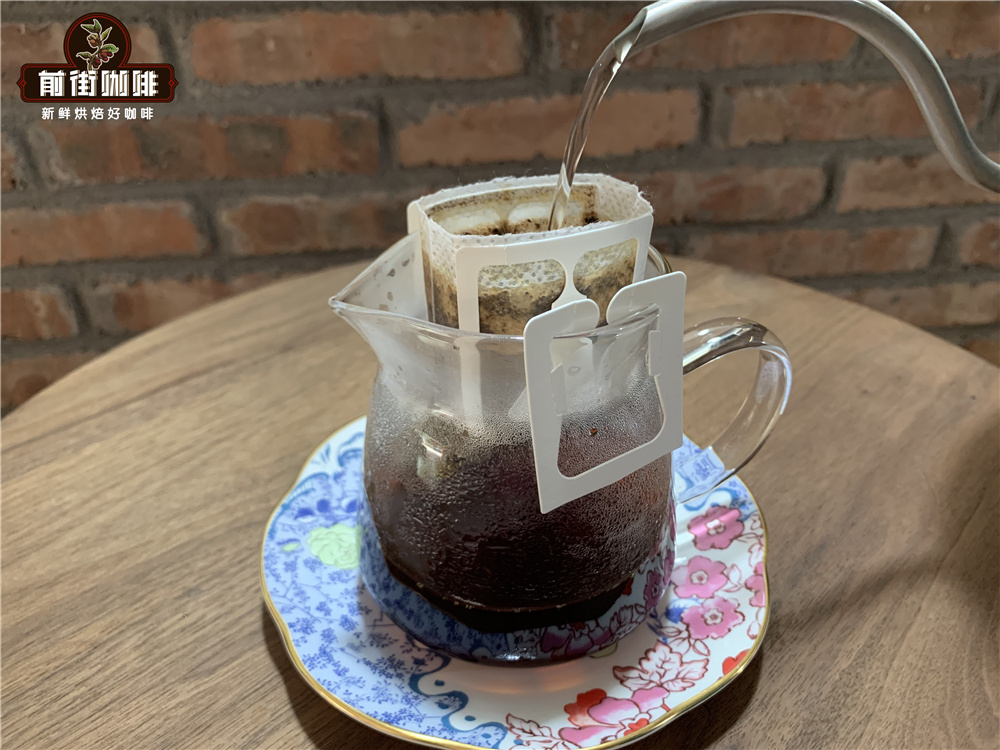
Pour in the final stage of water until full, wait for all the coffee liquid to finish dripping, remove the drip bag, gently shake to even out the coffee, and then you can enjoy it.
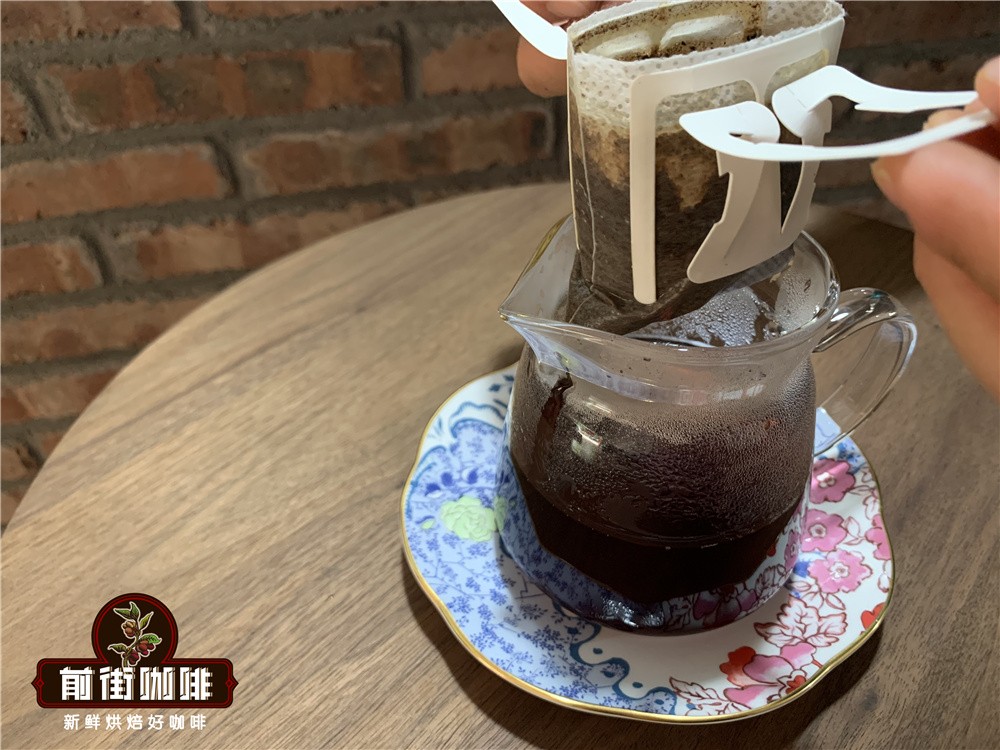
Although brewing drip bag coffee is very casual, there are still small details to pay attention to:
Drip bag coffee is also coffee, just pre-ground coffee powder, but this does not affect the characteristics of different coffee flavors from different coffee-producing regions; it's just that the aroma is not as rich and full. In terms of water temperature, be careful to control it at86~93degrees Celsius. If the water temperature is too low, the coffee extraction efficiency will be slow, and under-extraction is likely to occur. If you cannot raise the water temperature, then extend the contact time between the coffee grounds and hot water, that is, let it steep longer.
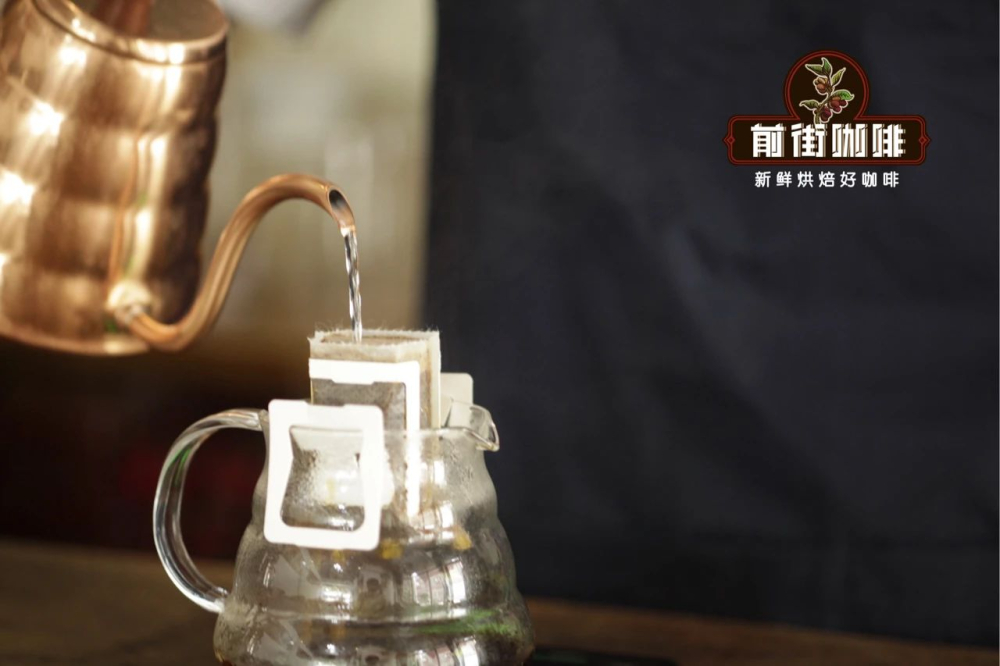
If the poured water stream is too fast, the extraction time of the coffee grounds is short, and the coffee taste tends to be weaker, so it is best to use a steady, small stream throughout to make the extraction of the coffee bed more even.
Front Street Drip Bag Coffee Recommendations
The Seasonal Random Drip Bag Pack is made by randomly selecting coffee beans from each of the eight major producing regions featured on Front Street and turning them into drip bag coffee packets. The eight major producing regions are: Front Street Ethiopia Yirgacheffe (citrus fruit notes), Front Street Indonesia Mandheling (herbal, rich, nutty), Front Street Brazil Cerrado (nuts and peanuts), Front Street Guatemala Huehuetenango (berry, citrus, nuts), Front Street Honduras Sherry (whiskey aroma and cream), Front Street Colombia Huila (dark chocolate, soft fruit acidity), Front Street Costa Rica Tarrazu5Mirasu/Mozart (sweet orange, toffee, raisin flavor), Front Street Yunnan Small Bean (brown sugar, tea-like, plum acidity)./
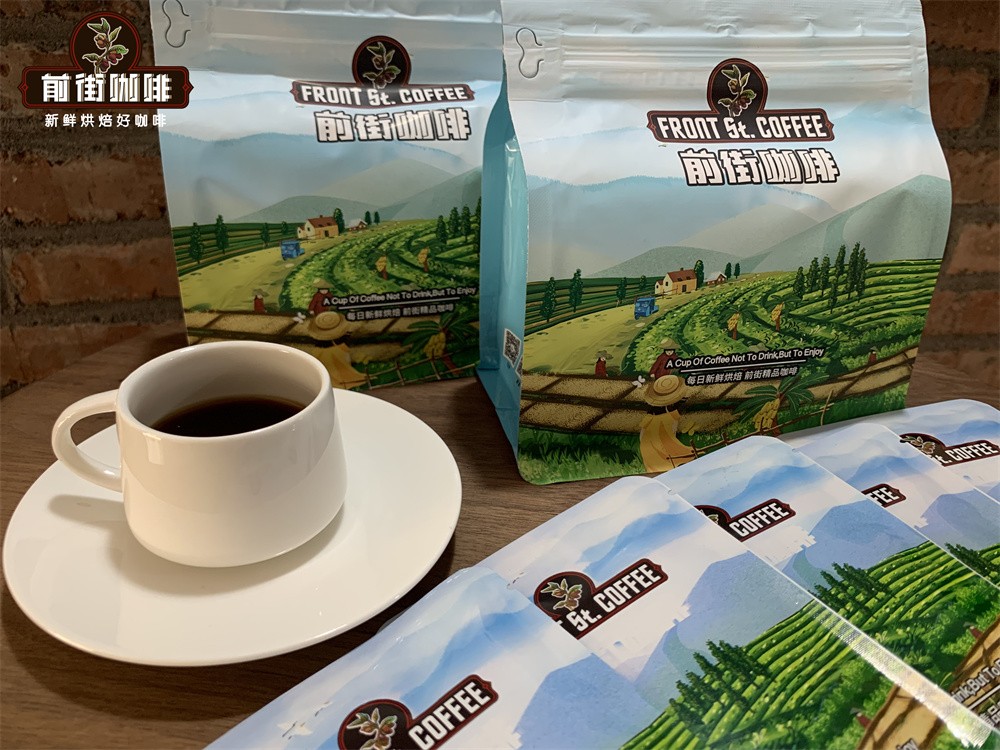
The classic drip bags are: Front Street Indonesia Mandheling (herbal, rich, nutty), Front Street Honduras Sherry (whiskey aroma), Front Street Panama Butterfly (citrus, hazelnut, honey), Front Street Ethiopia Yirgacheffe Red Cherry (citrus, fruity, wine aroma), Front Street Kenya Asalia (berry and cherry tomato notes).
There are five seasonal drip bags: Front Street Ethiopia Yirgacheffe (citrus fruit notes), Front Street Indonesia Mandheling (herbal, rich, nutty), Front Street Brazil Cerrado (nuts and peanuts), Front Street Panama Boquete Geisha drip bag (citrus and oolong tea notes), Front Street Ethiopia Geisha Chaka drip bag (floral and fruity acidity).
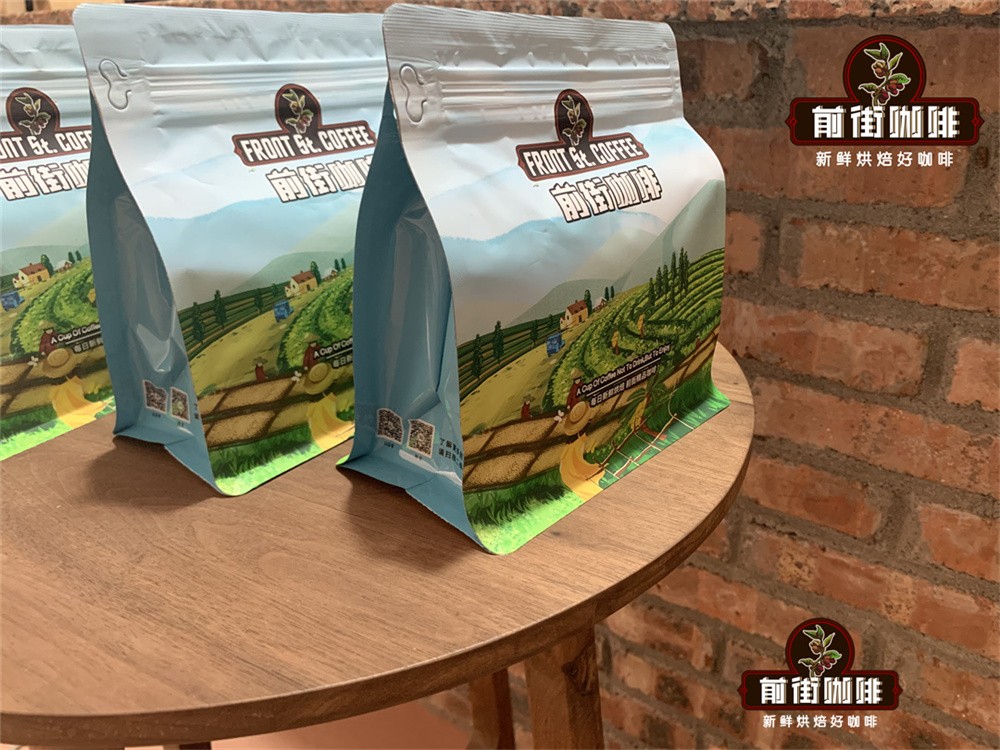
No matter which drip bag it is, Front Street's drip bags are all made by grinding and packaging fresh coffee beans. Since drip bag coffee is pre-ground, compared with pour-over coffee, it naturally is not as rich and full-bodied as pour-over coffee. However, drip bag coffee is the best and obvious choice for people on the go or office workers who drink black coffee.
Front Street Coffee (FrontStreet Coffee) Brewing Suggestions:
Whether coffee tastes good is directly related to the coffee variety, but you also need to pay attention to the freshness of the coffee beans. Front Street believes that the freshness of coffee beans is a very important part of brewing. Front Street Coffee (FrontStreet Coffee) ships coffee beans within5days of the roast date. Front Street's roasting philosophy is "freshly roasted good coffee," so every customer who places an order receives the freshest coffee. The resting period for coffee is about4-7days, so when customers receive it, it is exactly at its best flavor.
For friends who need their coffee ground, Front Street kindly reminds you: once coffee beans are ground in advance, there is no need to rest them further, because during transportation the pressure produced by carbon dioxide inside the packaging can also make the coffee flavor rounder, so once you receive the ground coffee, you can immediately brew a cup and drink it. However, ground coffee needs to be brewed promptly, because ground coffee oxidizes relatively quickly after contact with air, meaning the coffee's flavor will dissipate relatively quickly and the coffee will not taste as good. Therefore, Front Street recommends buying whole beans and grinding fresh right before brewing, so you can better taste the coffee's flavor.
For more specialty coffee knowledge, please follow: Front Street Coffee (Frontsteet Coffee)
The above content is compiled by CoffeeHunters, a coffee news website.

