







As coffee became more widely understood, in-store promotion of specialty coffee emerged in response, and we too began tracing things back to their roots—we came to treat coffee as a culture.
The rise of specialty pour-over coffee undoubtedly reflected market demand and the needs that cafés were discovering. Café counters also began to "lower their stature," no longer featuring the early design of a bar raised a foot high. Counter designs added seating, allowing customers to directly experience the fun of the brewing process. And baristas were lively and expressive, communicating with people warmly and openly. Come, smell the dry aroma—the prominent jasmine, rose, and lemon notes. Guide the guest to taste it: what do you sense when it first hits your lips, what's in this coffee? The guest will delightedly tell you what they tasted, what it reminded them of. Back and forth, it's all quite fun—your loyal fans won't just support you, they'll bring their friends along to learn too.
We often assume that tasting food relies on the perception of taste, but in fact some aromas reach the nose from the mouth after being placed in it, and some are mouthfeels perceived by touch. Research has also confirmed that every sense—including sight, hearing, touch, smell, and taste—influences the flavor we taste.
Memory is the persistence of the mind over time. In the process of tasting, whether it's perception, discrimination, appraisal, or comparison for judgment, none can be separated from memory.
Although we're not cuppers and don't need such professional training, try smelling the coffee with your nose before taking the first sip!
Because when tasting food, smell is just as important as taste—just as when you have a cold and your nose is stuffed, everything you eat tastes bland.
Odors are volatile substances, shadowless and formless, impossible to touch or see—you can only approach them and feel them. Remembering the smells of your surroundings is an exercise that must be accumulated in daily life. Ordinarily, we should consciously commit to memory the scents of the environments around us: asphalt roads, gardens, woods, the spice jars in the kitchen, the wet market, and so on. The purpose of this exercise is to roughly categorize various aromas—floral, fruity, nutty, balsamic, burnt, and so on—until finally you can understand the common characteristics of each aroma type.
The aroma given off by freshly brewed coffee is the first sensation you feel when tasting. Smelling the aroma through your nose allows you to sense coffee's ever-changing flavors. In a single cup of coffee you can often smell all kinds of aromas: floral, fruity acidity, earthy herbal, caramel, and more—this is what makes coffee so captivating.
The activation of smell draws out related tastes. For example, if you smell berries and caramel, then there must be flavor compounds in the cup—what flavor it is becomes clear. Why has the prominent cup-test flavor disappeared, why is the aroma so weak, why is the taste in the cup less than satisfying, why have the captivating floral and fruity notes ceased to exist? At this point you'll activate your memory bank—what should have been there at this moment, what kind of roast expression you want to achieve, all depends on your olfactory memory.
Everyone knows that during the Maillard reaction in roasting, coffee molecules begin to degrade, polymerize, and volatilize, and the resulting aromas contain many flavors. That's why we constantly take samples and rely on our senses—sight and smell—to adjust the roast.
Sometimes you notice a very familiar flavor compound but can't name it—has that ever frustrated you? If at that moment you open up your olfactory memory and combine the two, doesn't it become much easier?
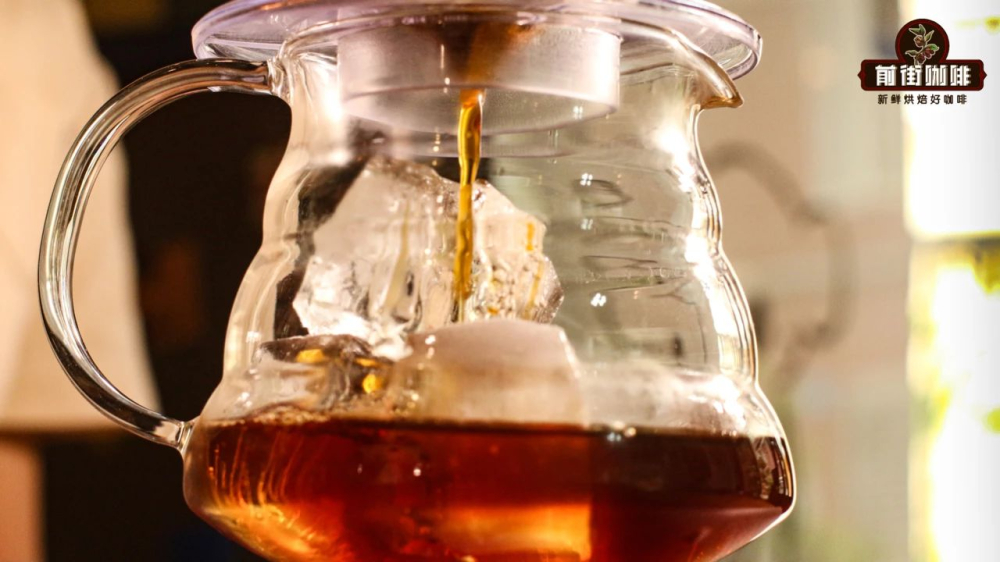
For example, when you smell durian, if you've eaten it before, your sense of taste will kick in. Because smell alone is enough to trigger taste memory! And taste can also be triggered by taste. It all depends on your memory and the messages expressed in the cup. Because smell and taste are interactive.
For taste training—or rather, taste memory—improve our ability to discriminate.
Keep drinking, and keep memorizing. This requires a process of accumulation. The so-called accumulation process is also a grueling training process—spending lots of money, using lots of time, with quantitative change bringing qualitative change.
Taste is one of our most important senses for tasting food. From the moment it enters the mouth to when it's pushed down the throat, this short journey of just 10 centimeters is nonetheless the crucial pathway that governs how we experience the flavor of food.
The perception of taste relies most on the tongue. The four basic tastes include bitter, salty, sour, and sweet. Different regions of the tongue have different sensitivities to taste, and through taste buds distributed across various parts of the tongue, each taste is perceived separately.
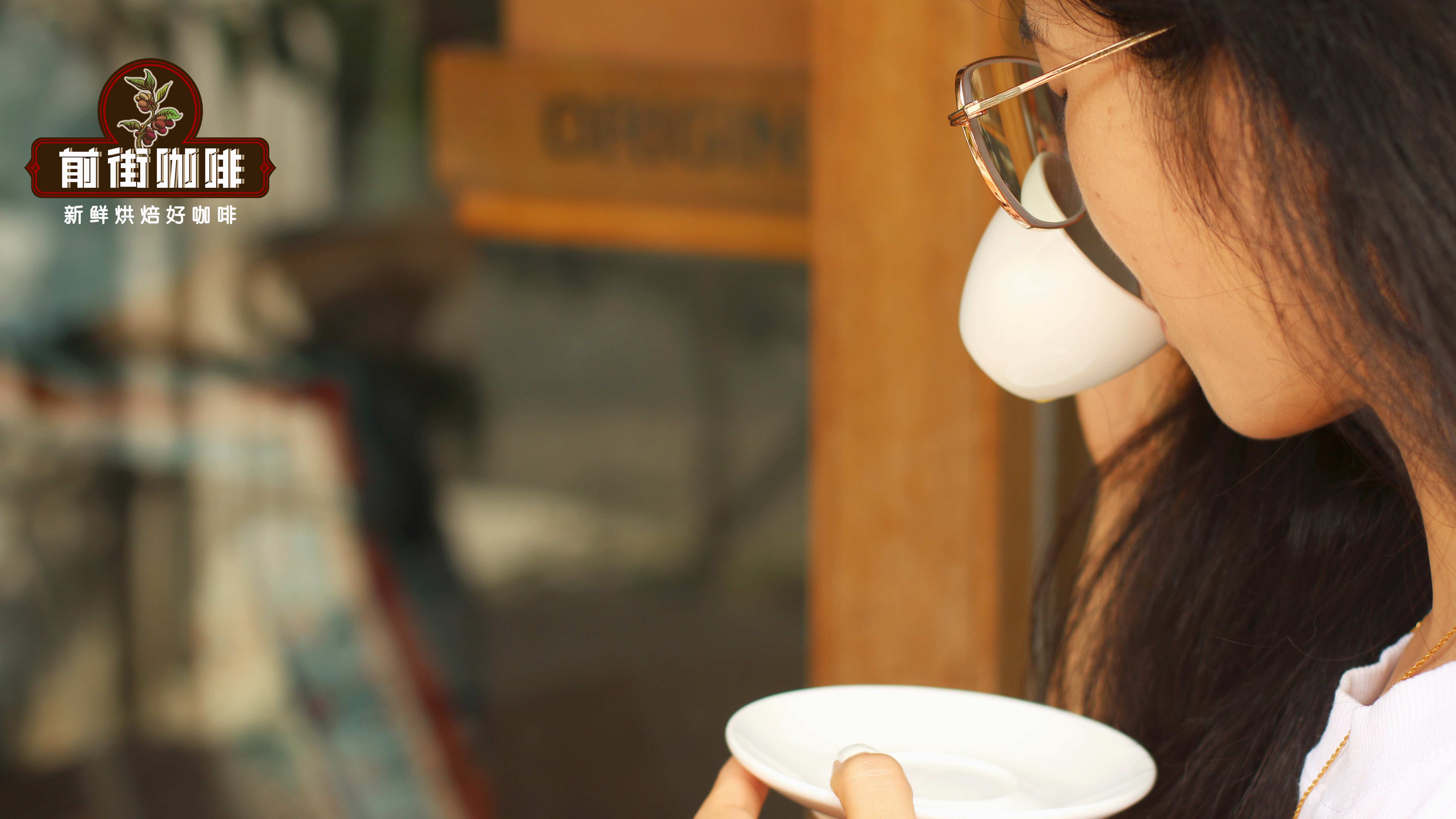
The taste buds on the tongue can quickly connect all passing food to the brain instantly, recording and saving all flavors—so much so that simply thinking of a certain food can bring its taste to mind, which is the reason behind "looking at plums to quench thirst."
So when drinking coffee, don't rush to swallow. First hold the coffee in the front of your mouth and let the detectors on your tongue analyze the different tastes: sour, sweet, bitter? What kind of sour? Sour first then sweet, or bitter first then sweet?
Then let the coffee's aroma diffuse and bloom between your mouth and nasal cavity. After swallowing, you can experience the afterglow released as the coffee liquid flows past your throat, as well as the aroma lingering in your mouth. As you swallow your saliva, you'll also feel the finish welling up from your throat.
We often use certain adjectives to describe food: crisp, tender, viscous, bouncy, silky. Beyond sour, sweet, bitter, and spicy, we also care about the sensations of our tongue, lips, and teeth—this is the mouthfeel of food. At the same time, our tongue also perceives the temperature of food. Both mouthfeel and temperature experiences come from touch, including the sensations of astringency, numbness, and spiciness—these too are a kind of touch!
When drinking coffee, we perceive the "body" after it enters the mouth, ranging from a thin, watery lightness to a thick, viscous mouthfeel. Some coffees feel more "substantial," while others feel as smooth as silk.
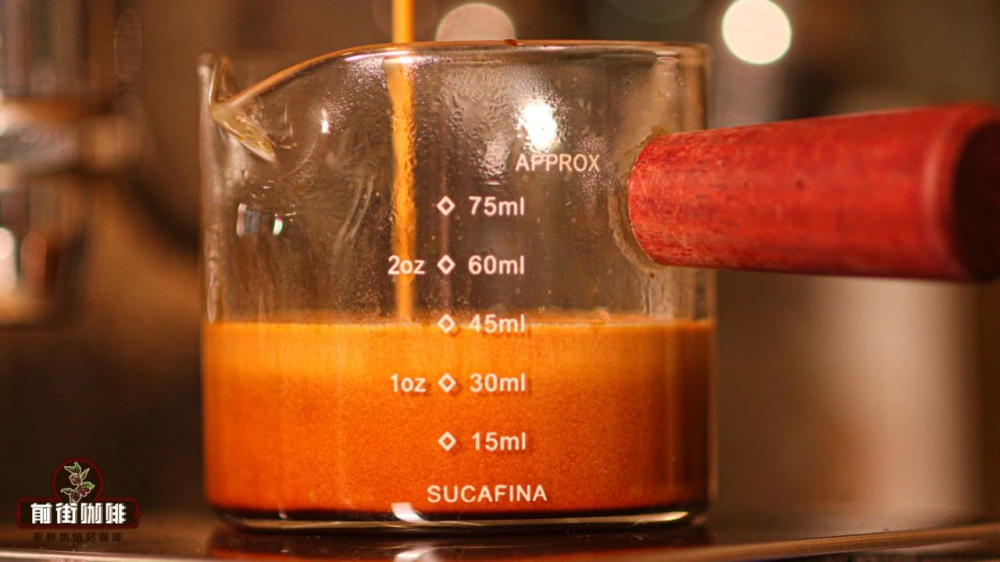
Different brewing methods also affect coffee's body. With pour-over coffee, for instance, the filter paper filters out the coffee's oils, making it taste lighter and thinner, while drinking espresso lets you experience a heavier, oilier body.
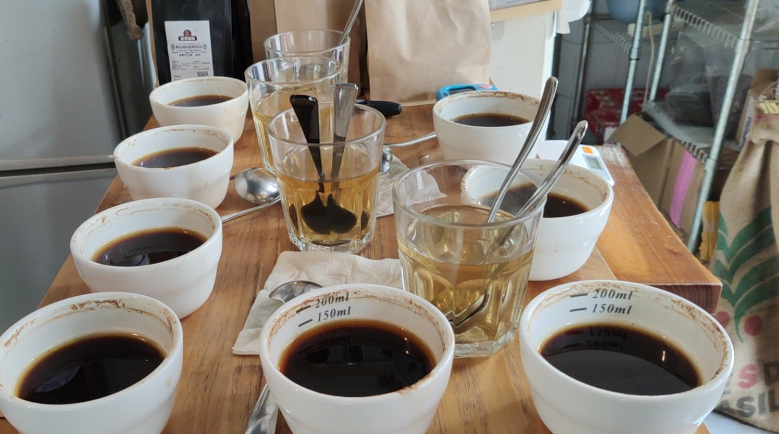
For daily taste and smell training, you can eat more fruit and smell fruit aromas. If you want deeper taste training, use aroma bottles and freshly ground coffee powder to compare dry aroma, wet aroma, and flavor. Smelling aroma bottles too much can also make you dizzy—you can smell the lid first, then the oil, swaying left and right to let your nasal cavity fully sense the odor, smelling in comparison, which will further deepen your discrimination ability. However, no matter which kind of aroma bottle, diligent practice will surely improve your olfactory discrimination.
Currently there are two major aroma bottle sets on the market: one is the 36-note Le Nez du Cafe (literally "The Nose of Coffee" in Chinese) made by the French company Edition Jean Lenoir, and the other is the 100-note Coffee Flavor Map produced this year by Korea's Scentone.
First, here is Le Nez du Cafe, the coffee nose.
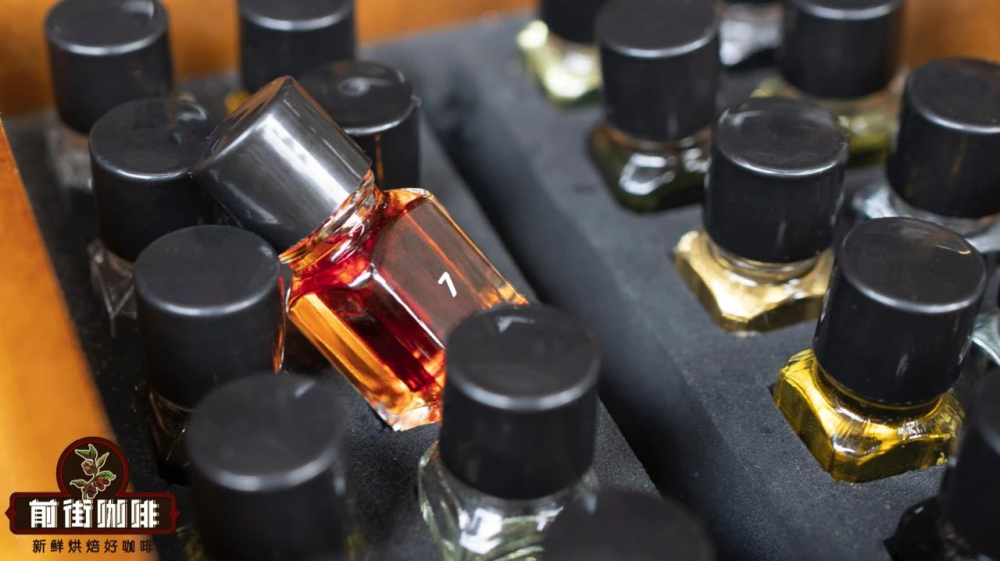
The 36-note coffee aroma bottle set:

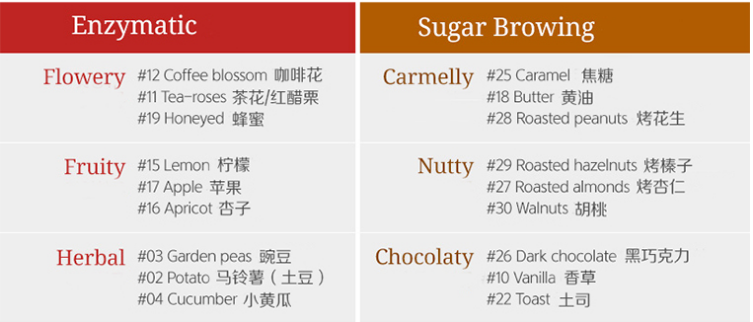
One,Enzymatic(Enzymatic Group)
(Fruits): Lemon, Apple, Apricot
(Vegetables): Potato, Cucumber, Garden Peas
(Flower Nectar): Coffee Blossom, Tea Rose, Honeyed
Two,Sugar Browning(Caramel Group)
(Four Nuts): Roasted Almonds, Roasted Peanuts, Roasted Hazelnuts, Walnuts
(Three Desserts): Caramel, Black Chocolate, Vanilla
(Two Meals): Toast, Fresh Butter
Three,Dry Distillation(Dry Distillation Group)
(Seasonings): Pepper, Coriander Seed, Clove-like
(Beverage Ingredients): Black Currant-like, Maple Syrup, Malt
(Herbal Processing): Roasted Coffee, Pipe Tobacco, Cedar
Four,Aromatic Taint(Defect Group)
(Wet and Fishy): Earthy, Straw, Medicinal
(Dry and Pungent): Rubber, Leather, Smoke
(Pleasant Aromas): Coffee Pulp, Basmati Rice, Cooked Beef
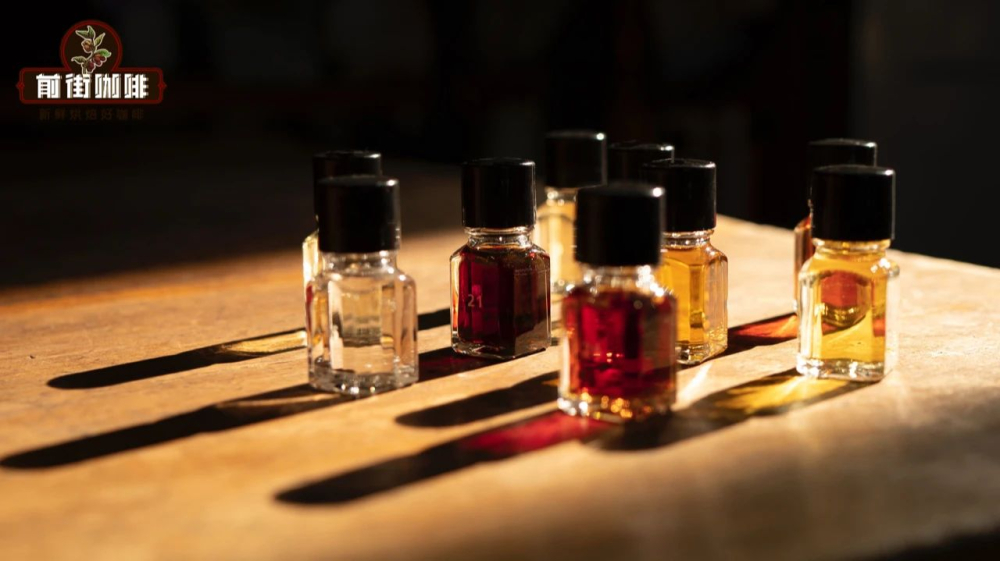
100-note Coffee Flavor Map
The Coffee Aroma Kit T100, also known as the Coffee Flavor Map, made its first public appearance at the 2016 SCAA exhibition.

1, Guava guava 2, Mangosteen mangosteen 3, Mango mango 4, Banana banana 5, Coconut coconut 6, Passion Fruit passionfruit 7, Watermelon watermelon 8, Papaya papaya 9, Tropical Fruit tropical fruit
10, Pineapple pineapple 11, Cantaloupe melon 12, Pomegranate pomegranate 13, Lychee lychee 14, Aloe aloe 15, Strawberry strawberry 16, Blueberry blueberry 17, Raspberry raspberry 18, Cranberry cranberry 19, Blackberry blackberry
20, Acerola Cherry acerola 21, Acai Berry acai berry 22, Black Currant blackcurrant 23, White Grapewhite grape 24, Muscat Grape muscat 25, Grape grape 26, Lemon lemon 27, Orange orange 28, Lime lime 29, Yuzu citron(yuja)
30, Grapefruit grapefruit 31, Pear cheinesepear 32, Apple apple 33, Quince(Quince) Chinese quince 34, Cherry cherry 35, Black Cherry dark cherry 36, Peach peach 37, Plum plum 38, Apricot apricot 39, Red Date jujube
40, Hazelnut hazelnut 41, Walnut walnut 42, Pine Nut pine nut 43, Almond almond 44, Peanut peanut 45, Pistachio pistachio nut 46, Sesame sesame 47, Red Bean red bean 48, Malt malt 49, Scorched Rice scorched rice
50, Roasted Coffee Beans roasted coffee bean 51, Caramel caramel 52, Brown Sugar brown sugar 53, Honey honey 54, Maple Syrup maple syrup 55, Cream Chocolate milk chocolate 56, Dark Chocolate dark chocolate 57, Mocha mocha 58, Cream cream 59, Butter butter 60, Yogurt yogurt
61, Cheddar Cheese cheddar cheese 62, Pine pine 63, Hawthorn crataegus 64, Basil basil 65, Thyme thyme 66, Earl Grey Tea carl grey 67, Rose rose 68, Jasmine jasmine 69, Sophora Flower acacia
70, Elderflower elderflower 71, Lavender lavender 72, Bergamot bergamor 73, Chrysanthemum chrysanthemum 74, Hibiscus hibiscus 75, Eucalyptus eucalyptus 76, Cinnamon cinnamon 77, Vanilla vanilla 78, Nutmeg nutmeg 79, Clove clove
80, Cardamom cardamom 81, Star Anise star anise 82, Cumin cumin 83, Black Pepper black pepper 84, Garlic garlic 85, Ginger ginger 86, Soy Sauce soy sauce 87, Wasabi mustard 88, Mayonnaise mayonnaise 89, Pumpkin pumpkin
90, Tomato tomato 91, Cucumber cucumber 92, Mushroom mushroom 93, Taro taro 94, Arrowroot kudzu 95, Ginseng ginseng 96, Bell Pepper paprika 97, Musk musk 98, Amber amber 99, Smoke smoke 100, Cooked Beef savory beef
The above content is compiled by CoffeeHunters, a coffee news website.


