








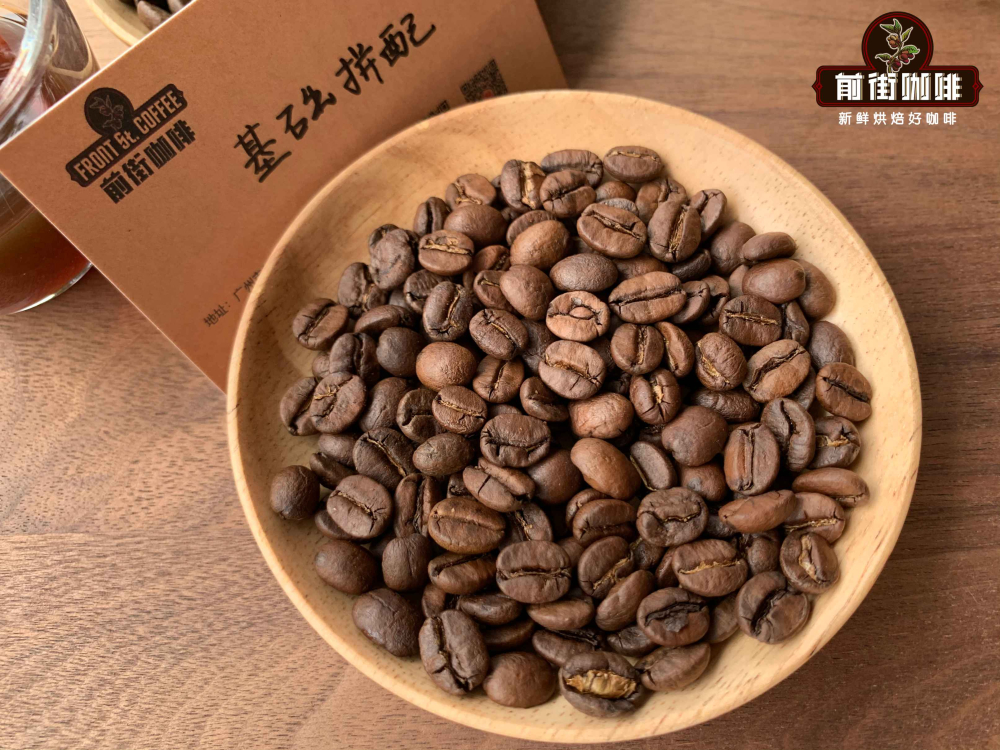
Blended coffee, also known as mixed coffee, is the practice of combining various single-origin coffee beans together, thereby fully bringing out the strengths of each single-origin bean. Blends are made from coffee beans of different origins combined together to create a more balanced taste. For example, if one coffee bean is smooth but lacks aroma, you can add another bean rich in aroma, allowing the advantages of individual beans to complement each other—whether in flavor complementing or enhancing one another—thereby creating a richer new taste. Sometimes the beans are blended first and then roasted; this is called raw blending. Sometimes the beans are roasted first and then blended; this is called roasted blending.
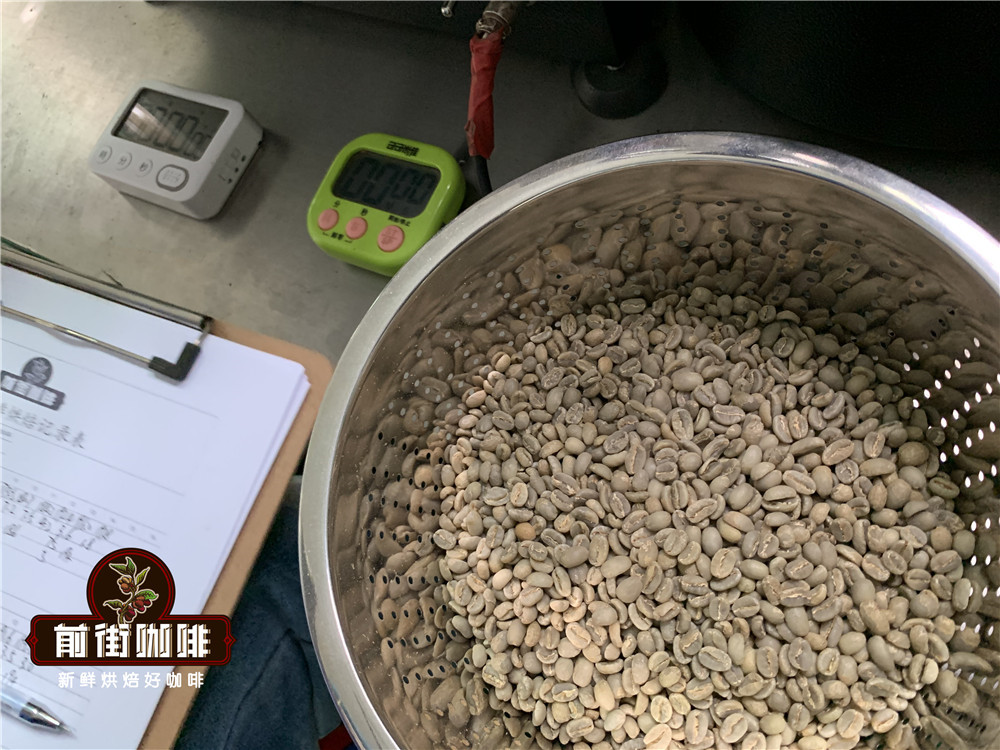
Whether pre-blending green beans or blending after individual roasting, it must depend on the characteristics of the coffees in the recipe. Both methods are acceptable. Post-roast blending provides different degrees of roast for each bean, so that each component can perform at its best.
Before blending beans, you must first know what flavors different coffee varieties from around the world have, and that beans from different origins each have different characteristics. Different coffee beans have different personalities due to different varieties and origins, with subtle differences in acidity, bitterness, sweetness, aroma, body, and other flavors. Single-origin coffee beans tend to emphasize the unique characteristics of a particular type of coffee. Blended beans are mostly used for espresso drinks such as Espresso, Americano, Latte, or Cappuccino. The coffee taste is more balanced, smoother, and more stable, which can be said to be more suited to mass taste.
Mixing different coffee beans is mainly done for the following purposes:
1. Stable flavor
Because coffee beans are an agricultural product, even the same kind of coffee bean will have a different flavor each year. So mixing several coffee beans together solves this problem well and can keep the taste basically consistent from year to year.
2. Balanced taste
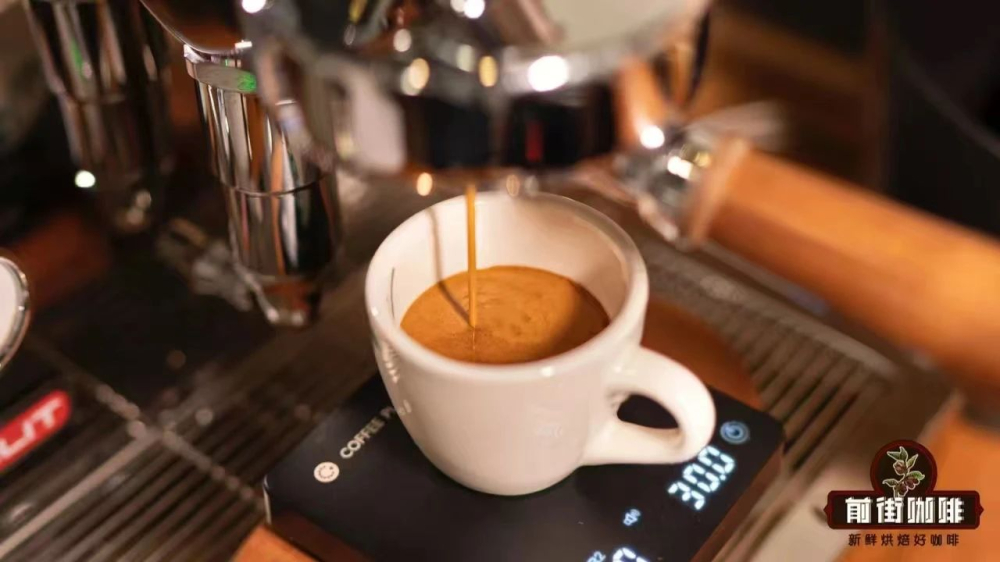
Because an espresso machine has the characteristic of amplifying the most prominent flavor of coffee beans, we almost never use a single-variety coffee to make Espresso. Otherwise, if that coffee bean is rather bitter, the Espresso made from it will be extremely bitter; if it is on the acidic side, it will be very sour. So we need blending to balance various tastes.
Blending coffee is by no means simple addition. Rather, it is hoped that through the blender's unique understanding of coffee flavors, different coffee beans can complement each other and be harmonized into blended coffee beans with excellent flavor.
3. Stable flavor:
Because coffee beans are an agricultural product, even coffee beans of the same type and from the same producing region will have a different flavor each year. So mixing several coffee beans together solves this problem well and can keep the flavor basically consistent from year to year.
Single originSOEHow the trend formed:
SOE has become popular recently. SOE stands for single origin espresso. Although it is not necessarily equivalent to specialty coffee, if you choose single-origin coffee beans whose flavors are easy to identify as SOE, you can create espresso with a unique and typical flavor. For example, the typical citrus flavor of Front Street Yirgacheffe, the fruity flavor of Front Street Kenya, and so on. In addition, because espresso amplifies the taste of coffee, specific flavors will be more prominent than in pour-over. However, although SOE performs prominently, because it comes from a single origin, its shortcomings are also relatively easy to amplify. Therefore, factors such as roasting and grind size will all affect the flavor, so it is not necessarily better to drink than blended coffee.
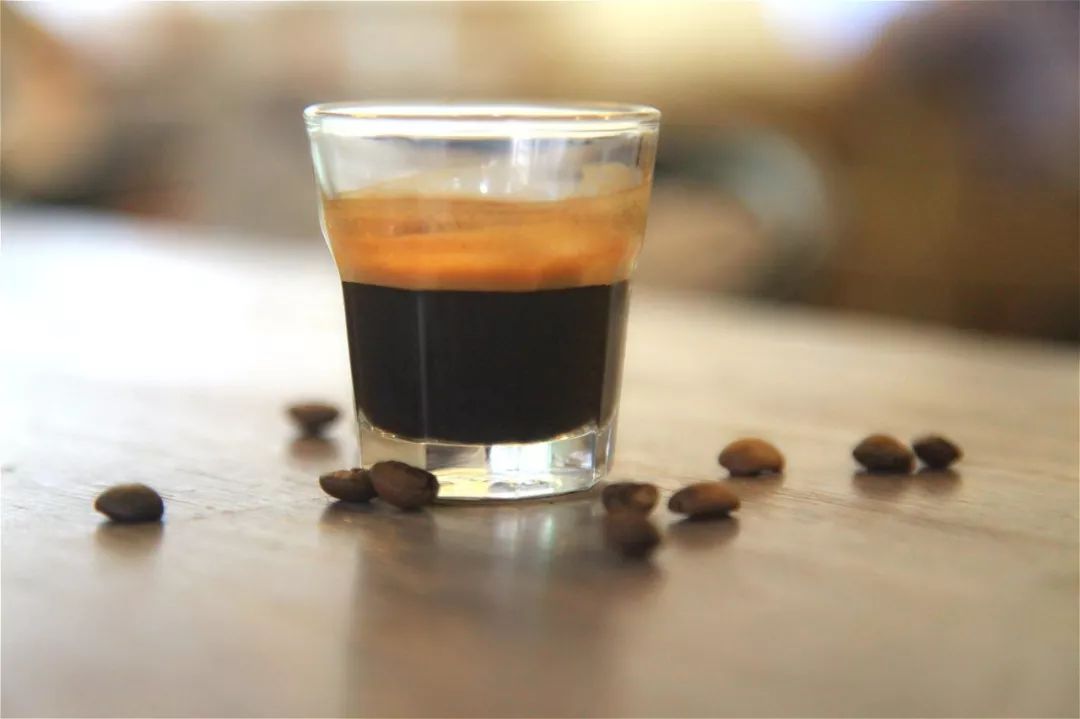
So, how do we blend?
(1) Front Street Specialty Espresso Blend: Colombia : Brazil
Front Street Colombia Huila Region Coffee Beans
Located in southwestern Colombia, it is one of the main coffee-growing areas. Colombia is generally at an altitude of 1,500–1,800 meters, mostly Bourbon and Caturra varieties, washed processing method, with relatively high density, uniform screen size, and plump bean shape (thicker from the center to the surface). Because the Huila region is filled with famous coffee-growing areas, the names of various small areas have become brand names and circulate as such. Although the cultivation conditions in this region are also very good, the cultivation infrastructure of coffee farms and surrounding conditions is still not very developed. The green bean drying equipment or washed-processing facilities are still not complete, which is a very regrettable point. Coffee from the Huila region has a strong mouthfeel and a heavier body.
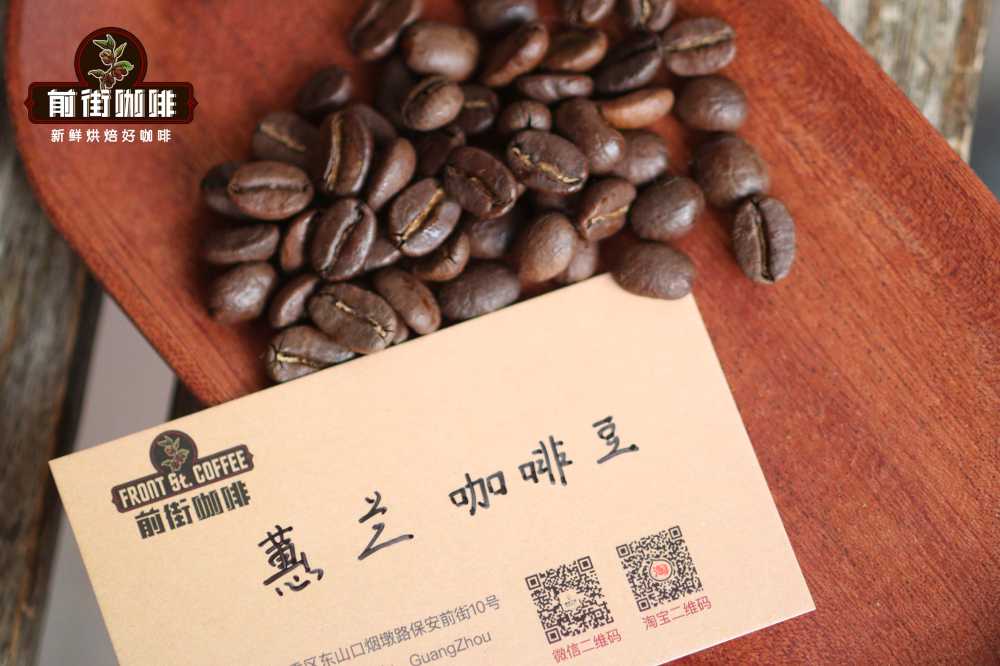
In particular, the nutty, chocolate, and caramel aromas and suitable acidity of coffee from the Huila region can be called high-grade specialty coffee. And aromas such as caramel and suitable acidity can be called high-grade specialty coffee.
Flavor characteristics: rich and solid mouthfeel, with a pleasant acidity, mellow aroma, moderate acidity, and rich sweetness that is very thought-provoking. Because it is cheap and the beans are small, it is suitable for blending. The coffee has a strong mouthfeel and a heavier body. Its nutty, chocolate, and caramel aromas and suitable acidity can be called high-grade specialty coffee, suitable for single origin or as an espresso blend base.
Front Street Brazil Cerrado Region Coffee Beans
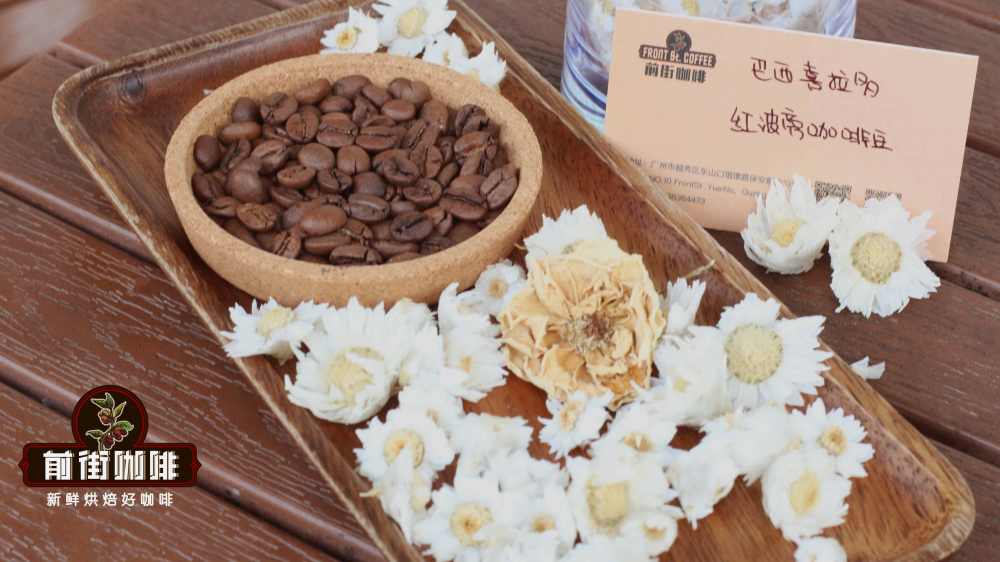
Brazilian coffee generally grows at an altitude of 1,000–1,300 meters, so its density is relatively low. Mostly Bourbon variety, using semi-washed processing. With moderate moisture content, the bean texture is rather soft, and the thickness from the bean surface to the center is relatively thin, so it is not suitable for roasting at too high a temperature. The temperature of the roaster's inner wall will scorch the bean surface, producing a burnt bitter taste;
At the same time, if you want to express the characteristics of nuts, milk chocolate, and better body, and use it as a blend base, we adopt the method of dropping the beans at medium heat, maintaining the heat until the dehydration stage, and making slight adjustments as the temperature rises after first crack begins, promoting a more complete caramelization reaction. When the temperature rises to near second crack, the beans can be discharged.
Flavor characteristics: comfortable sweet-bitterness, extremely smooth on entry; with a faint grassy aroma, lightly fragrant with a slight bitterness; sweet and smooth, with a finish that makes one feel pleasant.

Flavor after blending: a sweet and fragrant taste. Using a medium-dark roast, when making espresso, the mouthfeel will have a soft slight acidity, clear sweetness, and a nutty sweet aftertaste. The overall impression is not too stimulating, mild, and the crema is medium. This FrontStreet Coffee espresso blend is suitable for daily output in coffee shops.
(2) Front Street Commercial Espresso Blend: Colombia : Brazil : Robusta
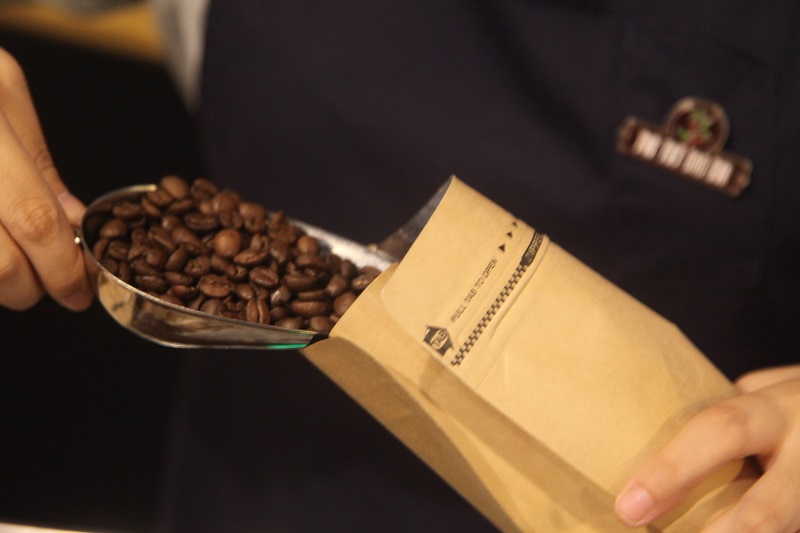
【Robusta】beans have strong resistance to pests and diseases and high yield. They are usually not as acidic as Arabica beans, often with a slight woody aroma. The caffeine content is 2.2%, higher than Arabica's 1.2%, and the chlorogenic acid content is also higher. They are also quite bitter and are usually used as commercial beans, costing less than Arabica beans.
In terms of the flavor of a single bean, the coffee taste obtained from commercial beans is much inferior to that of specialty coffee beans. Generally, commercial beans are chosen for blending. Through blending, coffee with a very good taste can also be produced, and it can be used to make latte, cappuccino, and other espresso drinks. Our Front Street commercial blend, when made into Espresso, because it contains Robusta beans, will have a richer crema, a classic taste, caramel sweetness, nutty and cocoa-like, dark chocolate flavors, balanced acidity and sweetness, a slight sweet-bitterness, and a lasting finish. This Front Street commercial espresso blend meets the daily needs of opening a shop.
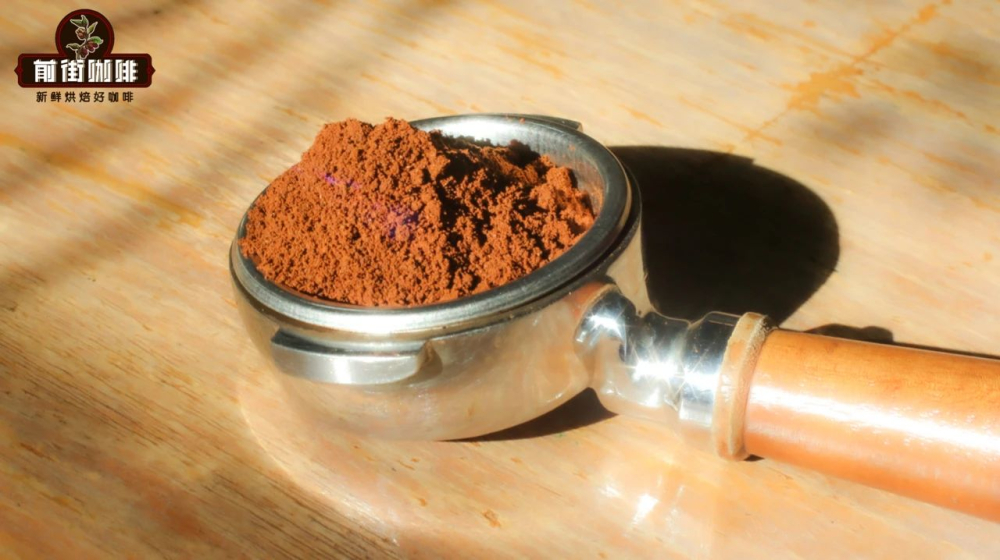
(3) Front Street Basic Espresso Blend: Yunnan AA : Brazil
Our Yunnan AA is 【Typica】, the oldest native variety from Ethiopia, produced in Ethiopia and southeastern Sudan. All Arabica varieties are derived from Typica. The top leaves are copper-red, so it is called red-top coffee. The flavor is elegant, but the plant is relatively weak, has poor disease resistance, is prone to leaf rust, and has low fruit yield. Typica has four slender leaves arranged in an open posture, with an inclination angle of 50–70 degrees. The opposite leaves are oblong, with smooth surfaces. The branches at the ends are very long and have few lateral branches, while the flowers are white and bloom at the base where the petiole joins the branch. Ripe coffee cherries resemble cherries in appearance and are bright red.
When planting, it needs more shade, and it can usually only be harvested once about every two years. Yunnan's high-quality geographical and climatic conditions provide good conditions for coffee growth. The planting areas include Lincang, Baoshan, Simao, Xishuangbanna, Dehong, and other prefectures. Yunnan's natural conditions are very similar to Colombia's: high altitude, large temperature difference between day and night. Its flavor is of the mellow-aroma type, with moderate acidity, a rich and mellow taste, uniform beans, high oil content, and fruity aroma. Its quality and mouthfeel are similar to Colombian coffee.
Blend flavor: with soft fruity acidity, caramel sweetness, nutty and dark chocolate flavors, smooth and viscous, but the taste is on the lighter side. This relatively cost-effective Front Street basic espresso blend is suitable for shops and home users who prioritize cost and have ordinary requirements for flavor.
When blending, there must be a distinction between primary and secondary components in order to blend a taste more wonderful than single-origin coffee. Before formulating a blending plan, first envision a more suitable combination method, then blend through appropriate roasting, and determine the best plan through cupping and later adjustments. I hope this helps everyone~
Finally, understand in one minute the differences between Espresso, Macchiato, Latte, Cappuccino, and Flat White
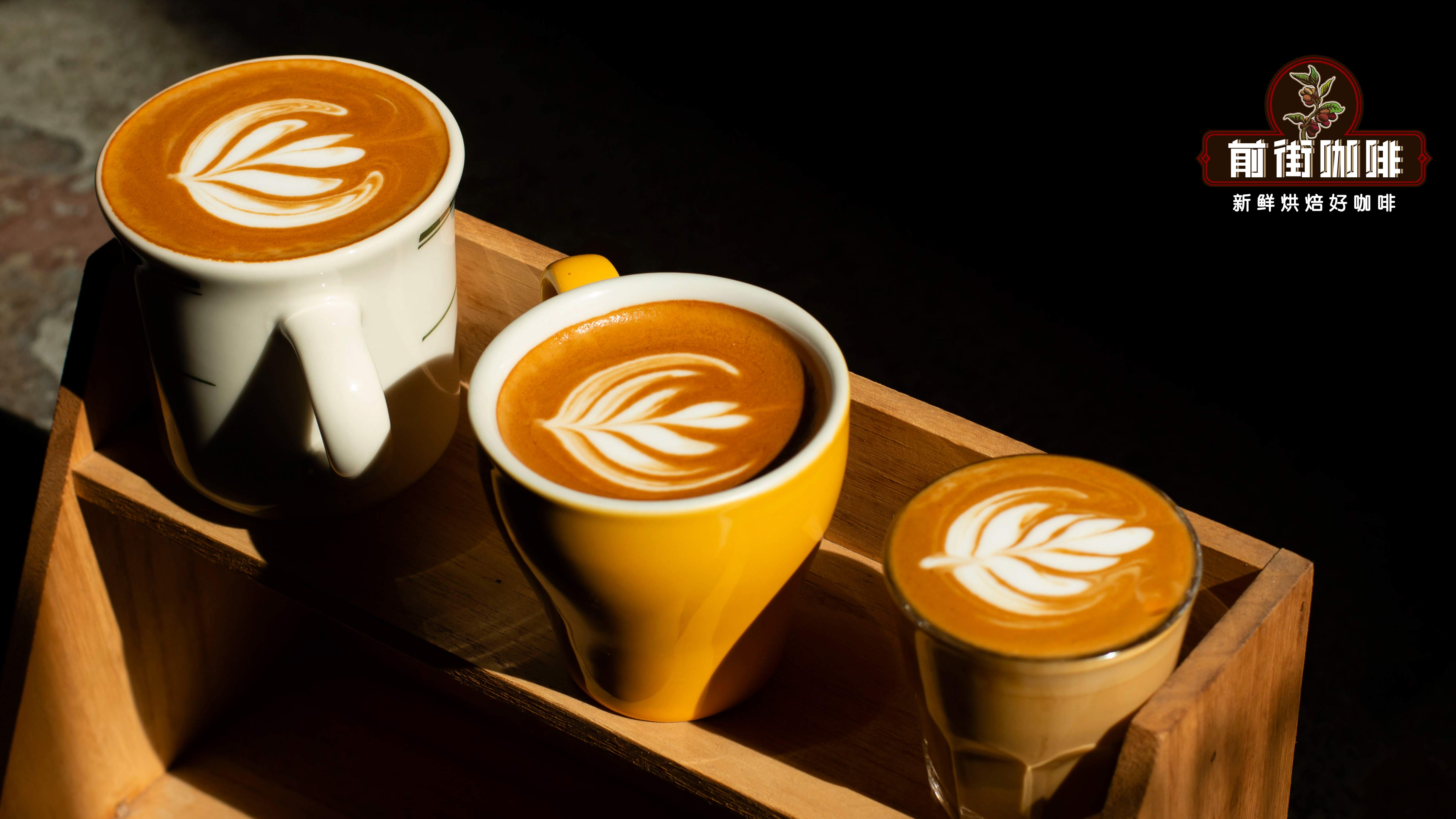
Fancy coffee Latte
In Italian, it means "milk," so if you order a latte in Italy, you will only be served a cup of milk, not coffee; in some domestic cafes there are also flavored lattes, such as matcha latte and purple sweet potato latte. Remember, they do not contain coffee.
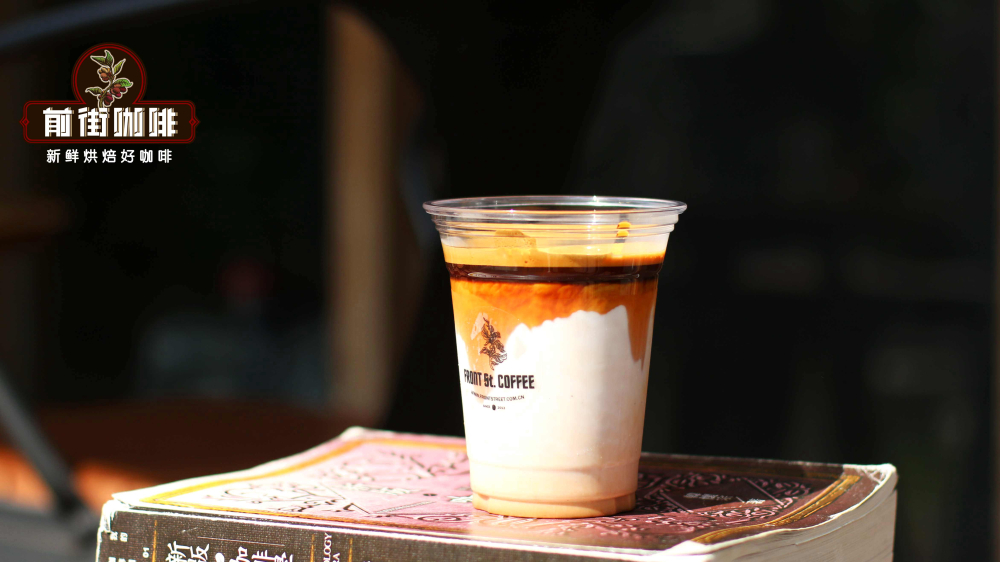
Latte (one cup 300ml): single espresso 1 shot 30 ml + milk
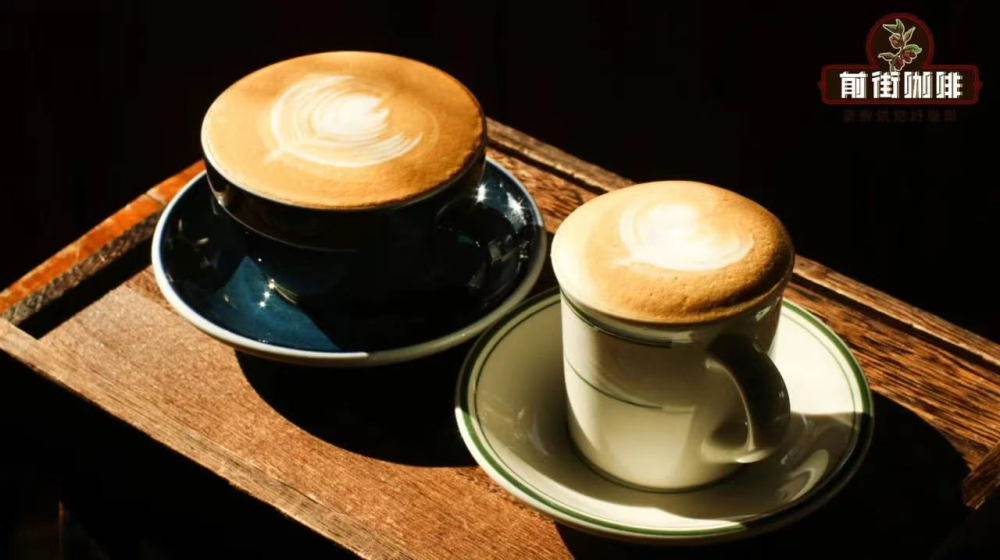
Cappuccino (one cup 200ml): single espresso 1 shot 30ml + thicker milk foam
Fancy coffee Affogato (Affogato)
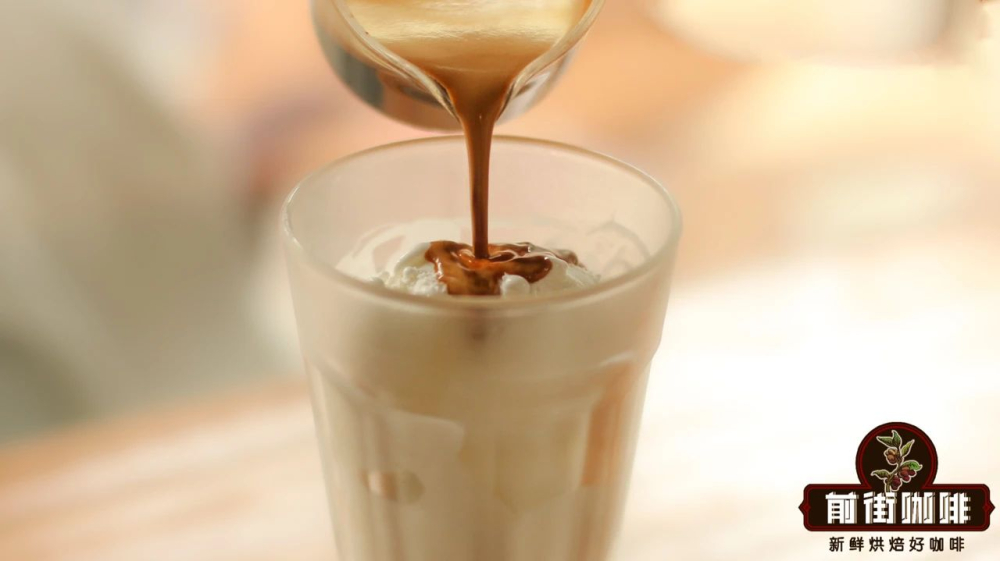
In Italian, it means "drowned." Pour espresso over a scoop of ice cream to drown it. It is not only visually appealing, but also a very delicious coffee, deeply loved by women in summer.
Fancy coffeeFlat White Flat White
Whether it was invented in Australia or New Zealand is still undecided. At first, it was translated in China as "xiaobai," "pingbai," and "aobai." After being introduced into China by Starbucks, it was translated as "furuibai." Compared with an ordinary latte, its milk foam is thinner, the milk foam is finer and smoother, and the coffee taste is stronger.

When cappuccino enters the mouth, you will feel a layer of1cmthe above thick milk foam, and the mouthfeel is relatively soft. WhileFlat Whitealthough it also has some foam, it is relatively fine, and the foam body is5mmbelow, the milk and espresso are highly integrated, and the mouthfeel is relatively silky.Flat white(one cup200ml): the base is two shots of espresso60grams, and in some places, on this basis, theespis extracted for a longer time, two shots ofRistretto(Ristretto:1:1ofEspresso)
The above content is compiled by CoffeeHunters, a coffee news website.

