







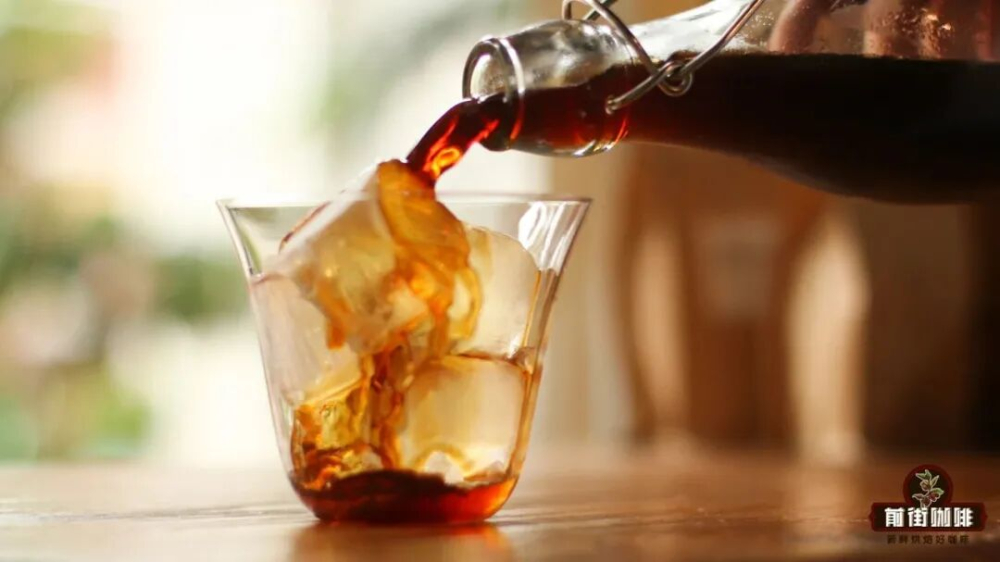
I believe many friends know that although iced drip coffee, iced Americano, iced latte, and iced pour-over all belong to the category of iced coffee, the price of iced drip is always considerably higher than other iced coffees, and sometimes the portion is even smaller. For example, a cup of Americano at Front Street Coffee costs 23 yuan, while a cup of iced drip coffee costs 40 yuan—more than ten yuan more expensive. Why is that?
Regarding iced drip coffee, aside from the "higher price" that often sparks various comparisons, its long production time also adds a lot of mystery to this coffee.
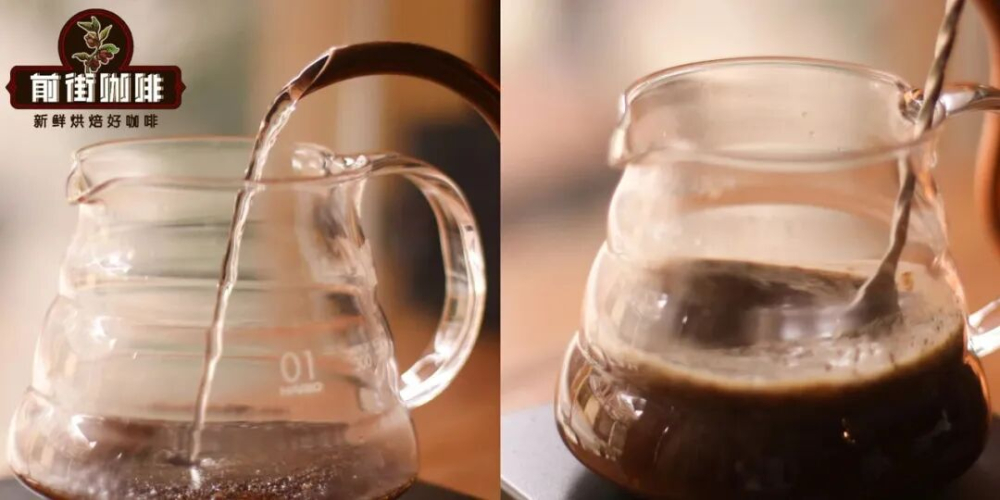
Although both are coffees extracted under low-temperature water, the production steps and principles of iced drip and cold brew are completely different. Cold brew is simply cold immersion—the method is straightforward: just mix coffee grounds with water, refrigerate for several hours, then filter out the grounds, and it's all done. So as long as you have coffee beans (or grounds), anyone can make cold brew at home.
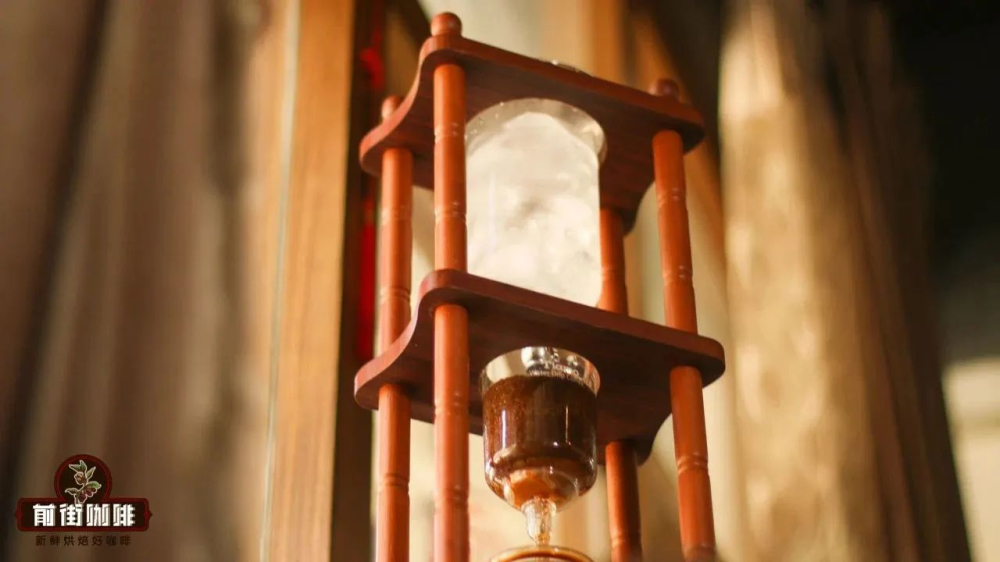
Iced drip is the exact opposite. A standard serving of iced drip coffee first requires a specific device—an iced drip tower, with three layers from top to bottom containing ice water, coffee grounds, and the dripped coffee liquid, making it a continuous multi-extraction method.
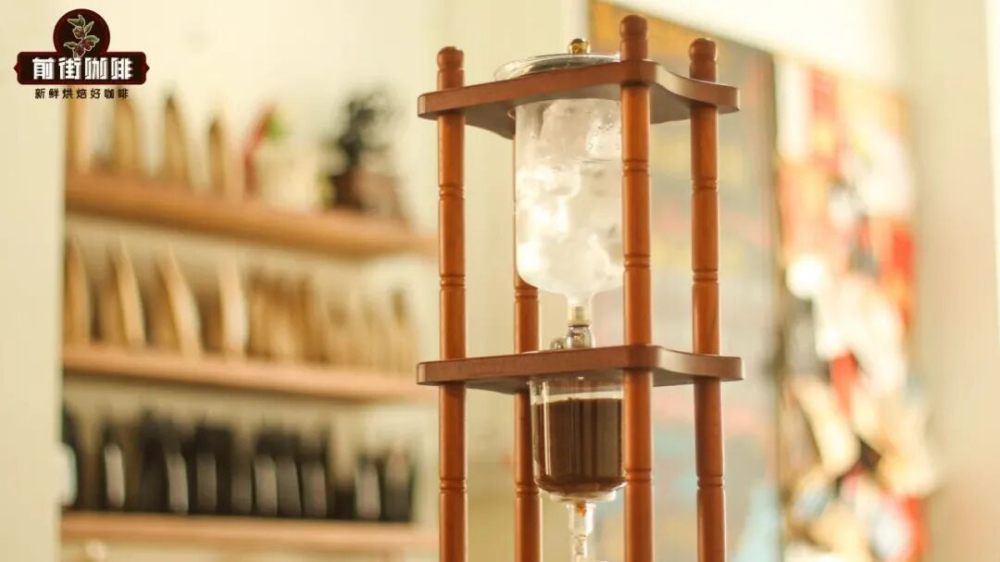
Furthermore, from the name we can easily see that iced drip coffee not only emphasizes "ice" but also requires "dripping" for extraction. Therefore, the upper chamber holding the ice water must be equipped with a valve that controls the water flow to ensure the coffee is constantly in a state of extraction. Finally, until the coffee liquid reaches the target extraction amount, or the ice water has all dripped into the coffee grounds, the extraction is complete. However, at this point, the coffee liquid is not yet ready to drink—it needs further refrigeration for a period to ferment and mature, so that the taste becomes rich, smooth, and full of layers.
In summary, to make a standard iced drip coffee, we not only need specialized equipment, but also need to constantly monitor the water droplets to maintain stable extraction, grasp various parameters and details, and wait through a long fermentation process. Obviously, compared to cold brew, which is "so easy anyone can do it," the production elements of iced drip coffee are much more complicated, which is the main reason why few people choose to make iced drip at home.
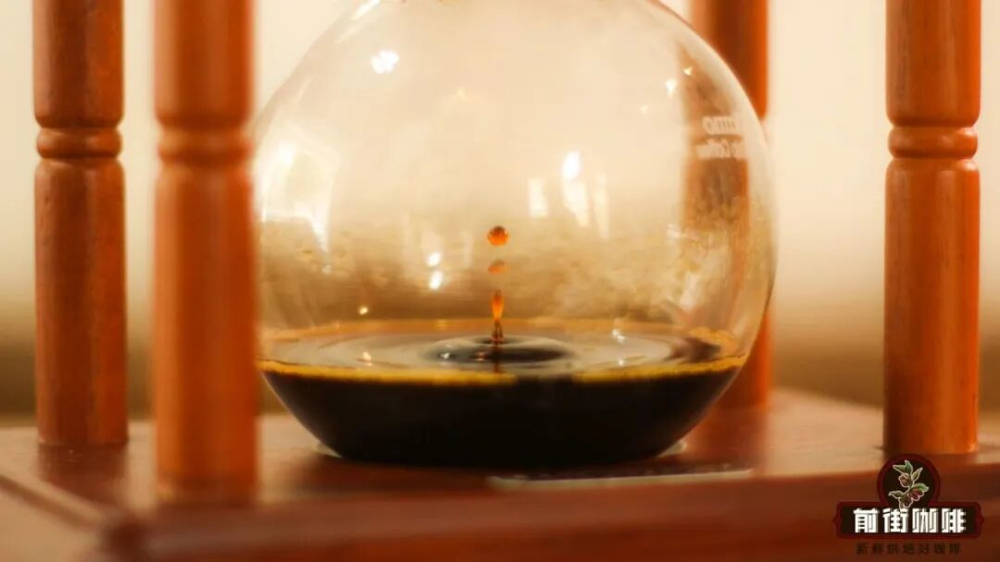
Front Street Coffee often mentions in articles that different water temperatures can brew coffees with different flavors, and at low temperatures, the astringent substances in coffee are not easily released. Like pour-over, iced drip is also a drip-filter coffee, except it uses ice water below 5°C as the solvent, which can be understood as low-temperature drip-filter coffee.
Based on Front Street Coffee's experience, the production time of iced drip is mainly affected by the following four factors: dripping speed, coffee grounds grind size, extraction ratio, and maturation time.
11. Grind size of coffee grounds
There are two points to note about the coarseness of coffee grounds. If too coarse, the resistance formed by the powder layer is small, water passes through more easily into the lower chamber, and with cold water's low extraction efficiency, the coffee will be weak and lacking in flavor. Too fine is also not good—greater resistance easily causes clogging and water accumulation, and steeping too long will bring out bitter and astringent flavors.

For controlling the grind size of iced drip, Front Street Coffee uses a No. 20 (0.85mm) standard sieve for calibration. The grind sizes of various common extraction methods from fine to coarse are as follows: iced drip (cold brew) > pour-over (siphon) 80% > American drip 75-80% > cupping 70-75% > French press 65-70%. Therefore, the grind size of iced drip coffee should be finer than pour-over coffee, at about 83-85% pass rate.
22. Dripping speed of water
Throughout the drip process, new cold water continuously passes through the coffee bed and filters to form new coffee liquid. Compared to static cold brew, iced drip is a dynamic brewing method that extracts and filters simultaneously. So to prevent extraction from being interrupted, we must ensure water droplets contact the coffee bed at a steady rate, so as to obtain a cup of iced drip coffee with both concentration and mouthfeel.
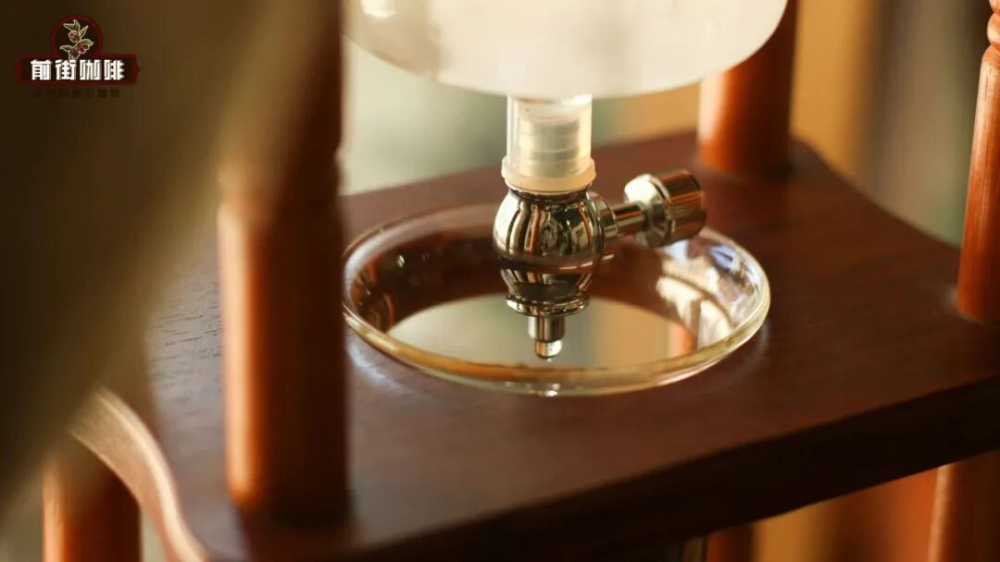
It can be seen that controlling the dripping speed is a crucial part of making iced drip coffee. If the water drips too fast, extraction is likely insufficient, and the coffee will be very weak with no aroma; on the contrary, if too slow, the coffee will ferment, producing unpleasant sourness or off-flavors.
According to Front Street Coffee's experimental results, when using light-roast coffee beans, the valve can be adjusted to a faster state of 7 drops per 10 seconds to highlight the light floral and fruity notes, such as Front Street Coffee Red Cherry and Front Street Coffee Little Tomato; when making iced drip with medium-roast coffee beans, such as Front Street Coffee Sidra and Front Street Coffee Strawberry Candy, Front Street Coffee recommends controlling the flow rate to a slower state of 5 drops per 10 seconds, which will give the final coffee a rounder body and more fermented feel.

33. Extraction ratio
The ratio of iced drip not only affects production time but, more importantly, determines the coffee's concentration and extraction rate. Considering that the coffee will ultimately be served with ice to maintain a low temperature, Front Street Coffee habitually uses 1:10 for iced drip. For those who prefer a lighter taste, Front Street Coffee recommends 1:12 to 1:14, which makes iced coffee more suitable for drinking straight.
44. Maturation time
I believe many people know that even iced drip extracted under the same conditions will taste very different depending on the number of storage days.
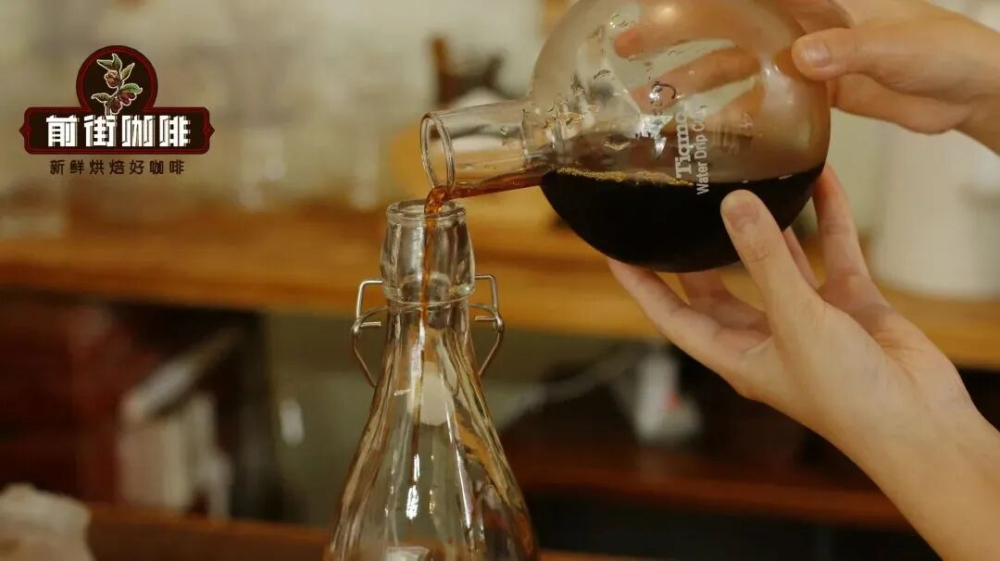
A freshly made pot of iced drip placed in the refrigerator allows the substances in the coffee to undergo a slow, controllable fermentation process. After several hours of settling, the coffee's mouthfeel becomes transparent and mellow; on days 3 to 5, the fermented flavor of iced drip is most prominent; starting from day 6, the flavor substances dissolved in the water continue to change, some aromas have dissipated, and the acidity is no longer bright. Therefore, considering both flavor experience and health safety, Front Street Coffee recommends drinking the finished iced drip coffee within 5 days (counting from the production date) for the best experience.
How long does it take to make a cup of iced drip coffee?
Following Front Street Coffee's specification of about 200ml per cup of Red Cherry iced drip coffee, when using a 1:10 coffee-to-water ratio, 20g of coffee grounds are needed, with 240g of ice water added (the coffee grounds will absorb twice their own weight in water). At a valve flow rate of 7 drops per 10 seconds, it takes about 2.5 hours to finish dripping.
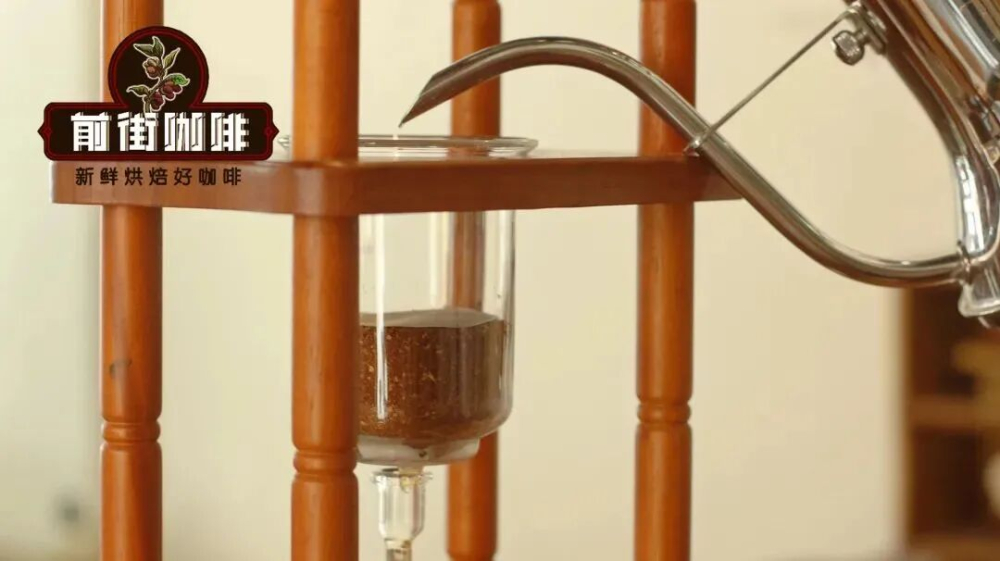
But since we know iced drip is inefficient to make, most of the time we won't make just one cup—we'll "fill as much as it can hold." For the device used at Front Street Coffee's shop, the lower chamber can hold up to about 650ml of coffee liquid, so three cups' worth is made each time: 60g of grounds dripping 600g of coffee liquid, at 7 drops per 10 seconds, taking about 7 hours to drip. Finally, the coffee liquid is refrigerated overnight and ready to sell the next day.
So when asked how long it takes to make a cup of iced drip coffee, saying "a day and a night" doesn't seem wrong at all.
The above content is compiled by CoffeeHunters, a coffee news website.


