







What Does Yunnan Coffee Taste Like in the Cup?
Catimor is a laboratory-bred variety widely planted across Asia because it tolerates cold, resists disease, and yields heavily. Its trade-offs are a shorter plant lifespan, less layered flavor, and a less delicate mouthfeel, which is why opinions in specialty circles stay divided. Better cultivation and post-processing have lifted its cleanliness enough that the market image has recovered in recent years.
The variety carries Robusta genes through one parent, Hibrido de Timor, while the other parent is Caturra, a natural Bourbon mutation. In Yunnan coffee, growers now work with both Catimor and Typica, and the differences show up in the cup. A V60 three-stage pour brings out the sweet-and-sour notes and tea-like sensation these lots are valued for.
Catimor, a coffee variety widely cultivated in Asian production regions, is favored for its disease resistance and high yield, yet it sparks controversy due to its less delicate flavor. This article will comprehensively analyze Catimor coffee's flavor characteristics and origin background from perspectives such as variety origin, Yunnan cultivation history, and post-processing method evolution, and introduce Front Street Coffee's practices in variety improvement, including the differences between Yunnan Typica and Baoshan Catimor products. It also provides Front Street's recommended V60 three-stage brewing parameters to help enthusiasts better present Yunnan coffee's sweet-and-sour notes and tea-like sensation.
Front Street Catimor Coffee Bean Flavor Characteristics, Grind Size, and Production Region Variety Detailed Explanation
Today, as Arabica varieties become increasingly diverse, Catimor is still widely cultivated by coffee farmers in many Asian countries. Its popularity is mainly due to advantages such as cold tolerance, disease resistance, and high yield, but its shortcomings are also obvious: a relatively short plant lifespan, insufficiently rich flavor layers, and not delicate enough mouthfeel.
Because of this, opinions on Catimor in the specialty coffee circles have always been divided. However, with advances in cultivation techniques and post-processing methods, the cleanliness of Catimor coffee has improved significantly, and its market image has also gradually recovered in recent years.
What is Catimor coffee?
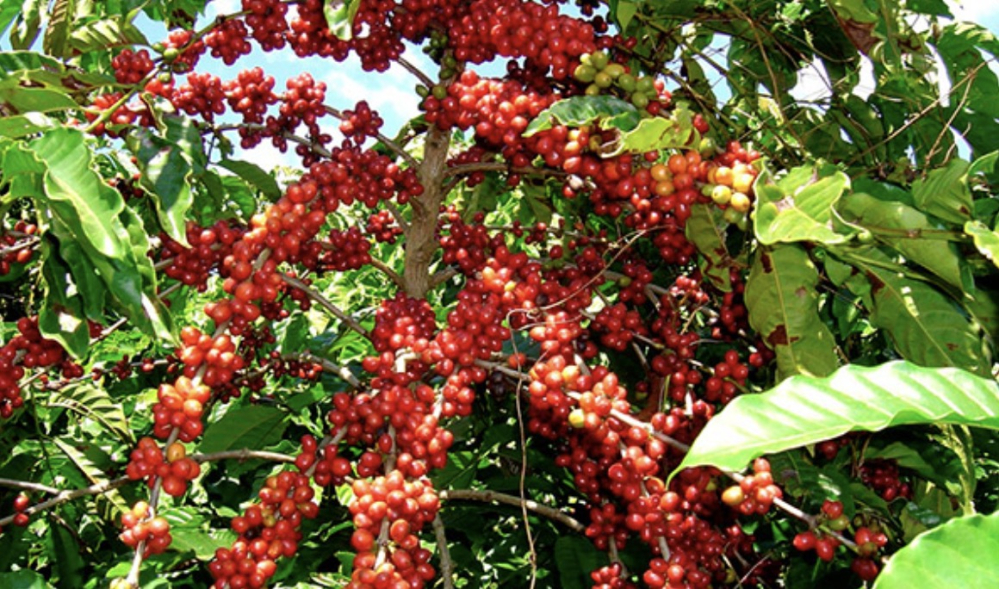
According to Front Street, like many varieties highly praised in the specialty coffee world (such as Pacamara and SL28), Catimor was also bred in a laboratory, and its lineage is not "romantic." One parent is Caturra—a natural mutation originating from Bourbon in Brazil; the other parent is Hibrido de Timor (also known as "Timor Hybrid" or "Tim Tim"), which is the only known natural hybrid of Canephora (a type of Robusta) and Arabica in Southeast Asia on Timor Island in the early 20th century.
Because it carries Robusta genes, some enthusiasts believe Catimor should not be counted as Arabica. But from the grower's perspective, what cash crops pursue is low input and high output. As consumers' demands for flavor increase, Catimor cultivation and the coffee bean extraction process have also gradually received more attention.
Some coffee researchers have pointed out that if Catimor is planted in high-altitude areas with a mild climate and abundant rainfall, and the environment is kept clean during processing, the variety's own astringency and unpleasant flavors can be effectively reduced.
Is Yunnan Catimor Arabica coffee good?
Many people first hear about Yunnan coffee through the Catimor variety. Although Yunnan has a century-long coffee cultivation history, what was first planted there was not Catimor. In 1904, a French missionary brought the first coffee tree to Yunnan. Later, genetic testing confirmed it was the Typica variety, but at the time it was not recorded as "Typica"; instead, it was recorded as "Arabica coffee" based on the fruit morphology of Arabica.
After that, for a period, in order to repay loans to the Soviet Union, Yunnan coffee farmers once planted Typica on a large scale. But after the loan repayment ended, domestic coffee demand was sluggish, and many farmers cut down coffee trees and switched to other cash crops. It was not until the 1990s, when Nestlé took a fancy to Yunnan as this treasure land and distributed the Catimor variety, which was more resistant to leaf rust, that people began planting coffee again and supplied it to Nestlé for a long time.
During the period when they mainly supplied Nestlé, coffee farmers did not cultivate carefully, and the coffee bean extraction and drying process was also relatively rough, resulting in Yunnan coffee's flavor being unsatisfactory for the first 20 years. It was not good to drink directly, so its reputation was poor.
However, as demand for coffee consumption grew, Yunnan producers and sellers realized that scientific cultivation was necessary, and extraction and drying also needed to be more refined in order to make the flavor cleaner. At the same time, in recent years, special processing techniques have matured, and people began applying them to Yunnan Catimor. Through external intervention to improve undesirable flavors, consumers gradually accepted Yunnan coffee.
Although scientific cultivation and post-processing methods have made Yunnan coffee much better tasting, FrontStreet Coffee believes that Catimor's inherently unpleasant flavors still exist, only masked by more scientific cultivation and post-processing. The meaning of specialty coffee lies in improving quality. If the variety and altitude are not changed and quality improvement is claimed solely through post-processing, that is somewhat far-fetched and does not conform to the original intent of specialty coffee.
Therefore, FrontStreet Coffee has established its own estate since 2013 and began planting Typica. Typica was chosen first because it is one of the oldest coffee varieties and has pure Arabica genes; second, because its flavor is elegant and clean, and it has always been recognized as a specialty coffee variety.
Although by 2022, Front Street Yunnan Typica coffee bean production was not large, only more than 600 kilograms, enough for FrontStreet Coffee's Taobao store sales and physical store offerings, only by personally experiencing the entire process can shortcomings be discovered and continuous improvement be made. Also, precisely because of the change in variety, "Front Street 2013 Yunnan Typica Coffee Beans," although using traditional sun-dried processing, have a full and alluring flavor, with notes of plum, berries, brown sugar, black tea, and nuts.
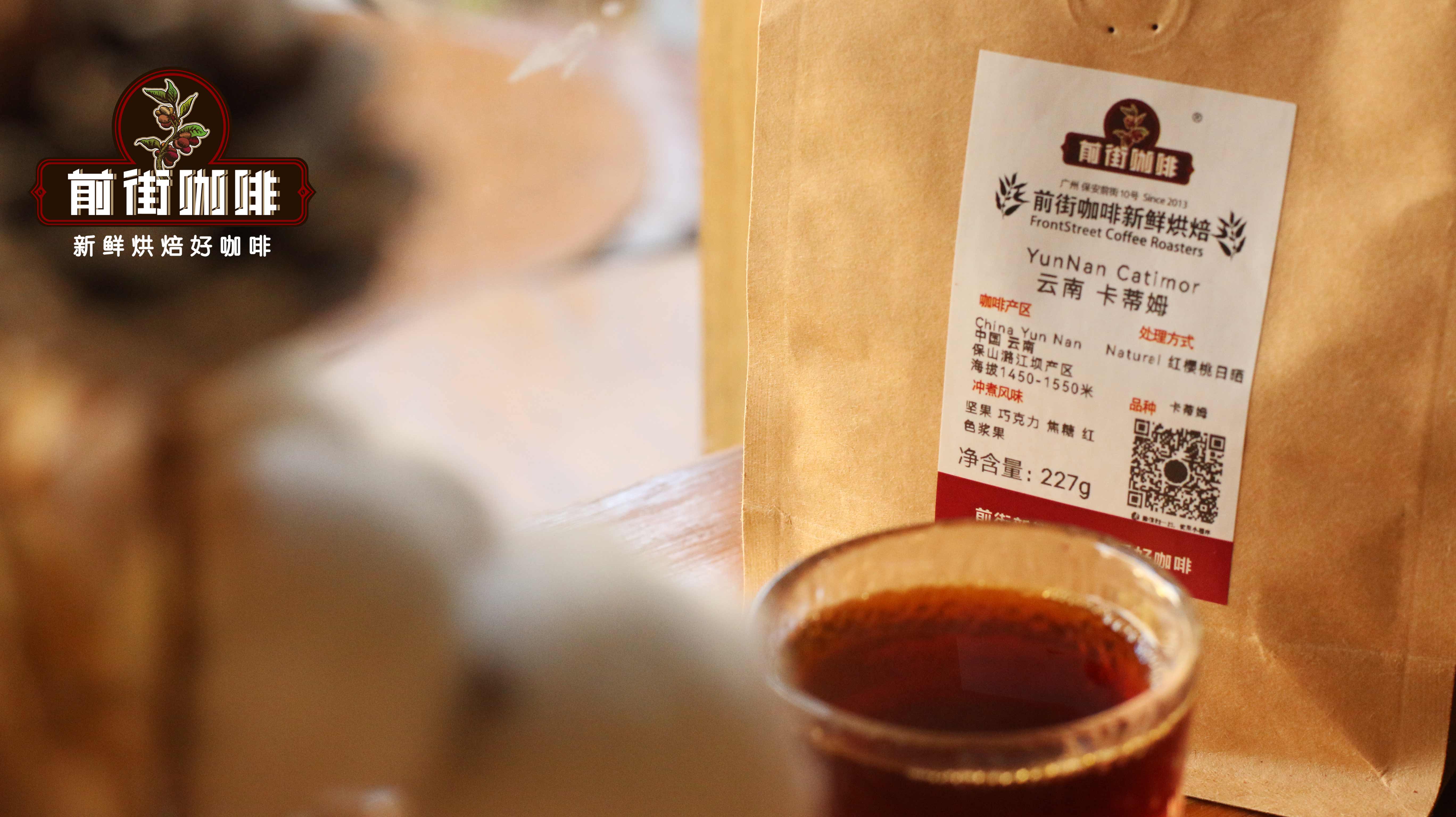
In addition to growing Yunnan Typica itself, FrontStreet Coffee also sells a Catimor coffee bean from the Baoshan production region in Yunnan. As a member of Front Street's signature daily coffee series, this Yunnan Arabica coffee bean allows everyone to taste the flavor of the Yunnan production region at the highest cost-effectiveness, expressed as Yunnan's distinctive plum acidity, brown sugar caramel sweetness, and melon-fruit aroma.
How should Yunnan coffee beans be brewed to taste good?
All coffee beans sold by FrontStreet Coffee are shipped within five days of the roast date. Only freshly roasted coffee can express coffee's most beautiful flavor. To preserve Yunnan coffee's sweet-and-sour notes and tea-like sensation, FrontStreet Coffee uses a medium roast for it.
Front Street recommends using a V60 dripper, with a coffee-to-water ratio of 1:15, medium grind (about the size of coarse granulated sugar / 75% passing rate through the China No. 20 standard sieve), water temperature of 88-89 degrees, combined with three-stage pouring brewing.
For the first pour, use 30g of water and bloom for 30 seconds; for the second stage, pour in a small stream in circles until 125g, wait until the water level in the coffee bed drops by half before pouring again, continue pouring in a small stream in circles until 225g, and wait until all dripping is complete. The total extraction time is about 2 minutes and 10 seconds.
The above content is compiled by CoffeeHunters, a coffee news website.


