







What Gives Golden Mandheling Coffee Its Herbal, Full-Bodied Character?
Golden Mandheling is a Sumatran coffee, and its herbal, spicy, full-bodied profile comes from the wet-hulling method locals developed for a hot, humid climate with limited fresh water. Sumatra's top lots grow in the north, around Lake Tawar in Aceh and Lake Toba in Lintong, where volcanic ash soil and a long rainy season feed the beans. PWN Golden Mandheling is a well-known grade of this origin.
After depulping, wet-hulled coffee is briefly fermented and then dried with moisture still high, which shapes the dense body and earthy, cedar-like notes typical of indonesian coffee tasting notes. Because it is usually roasted dark, pour-over works well with slightly cooler water and a steady, gentle pour to keep caramel sweetness and body in balance. Enjoying it as a pour-over with a little attention is among the everyday ways to enjoy mandheling.
Mandheling coffee is one of the most iconic single-origin coffees from the Indonesian island of Sumatra. Behind its unique herbal, spicy, and full-bodied flavor lies the wet-hulling method that locals developed to suit their environment. This article will guide you through the terroir of Sumatra's coffee-growing regions, the reasons behind the creation of wet-hulling and its steps, and what makes PWN Golden Mandheling so special. At the same time, Front Street Coffee will share pour-over brewing ideas, parameter suggestions, and flavor performance for this dark-roasted bean, helping you better bring out Golden Mandheling's caramel sweetness and solid body. If you're curious about Mandheling's "taste of place," this article will give you a complete answer.
To learn more about specialty coffee, follow our WeChat public account: Front Street Coffee (FrontStreet Coffee).
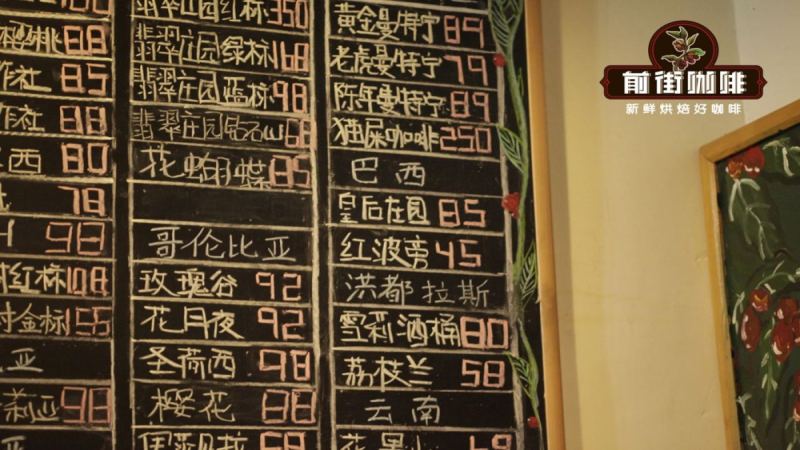
Front Street's daily bean list always carries dozens of coffee beans. With just a little attention, you'll notice that different producing regions have their own flavor tendencies, and even the same bean can display unique aromas depending on processing method and production stage. Take the PWN Golden Mandheling on Front Street's bean list as an example—it carries Mandheling's signature herbal, full-bodied character while also offering clean, clear flavors and mouthfeel.
Characteristics of Mandheling Coffee Beans
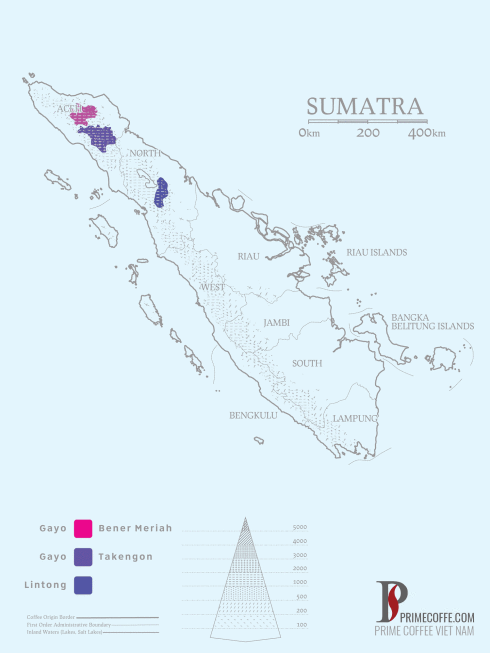
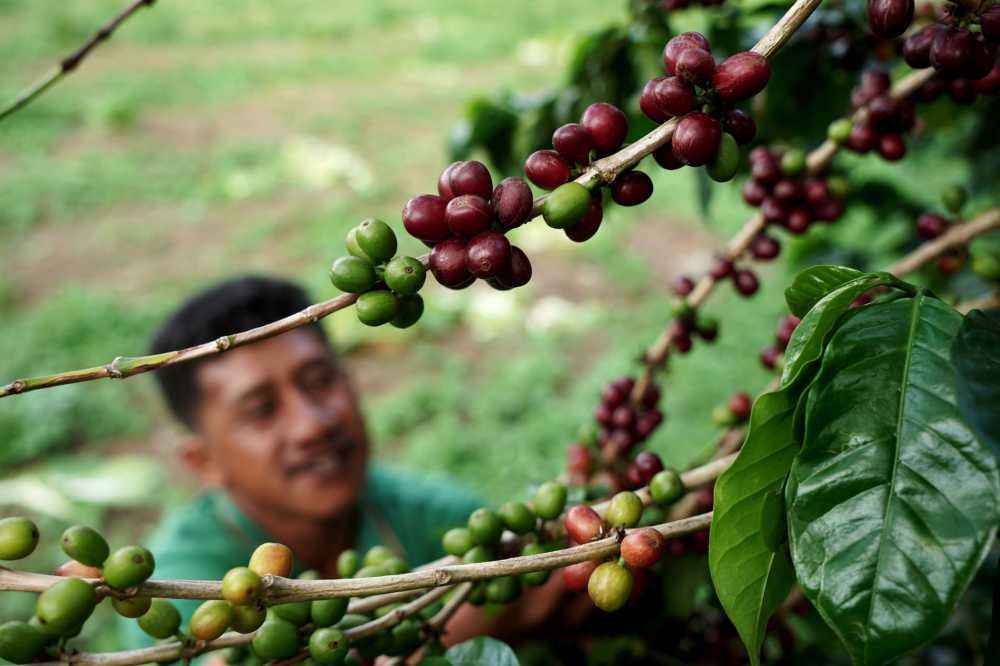
Mandheling coffee comes from Indonesia's most famous producing region—Sumatra—so it is also often called "Sumatra coffee." High-quality coffee is mainly concentrated in the north of the island, around two volcanic lakes: Lake Tawar in the Aceh region and Lake Toba in the Lintong region. The areas around these two lakes have fertile volcanic ash soil, and combined with the long rainy season typical of the local tropical rainforest climate, the coffee beans produced here carry a rich herbal aroma.
Because of the year-round high temperature and high humidity, and the very limited freshwater resources locally, residents find it difficult to adopt washed processing on the scale seen in Central and South America; meanwhile, the African-style 20-day sun-drying is even harder to achieve in a tropical rainforest climate. So locals combined practical conditions and developed a unique "semi-washed" method—wet-hulling.
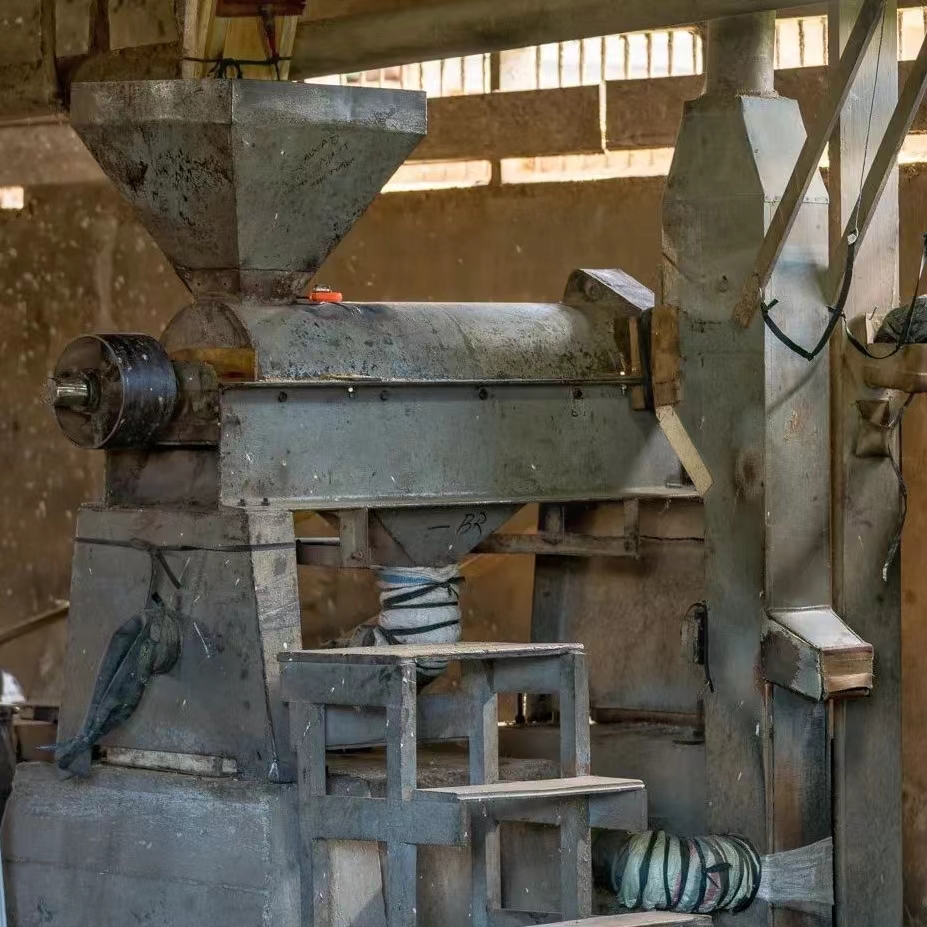
After the coffee fruit is depulped, it is poured directly into a tank for a short fermentation, usually only a few hours. At this point, a small amount of mucilage still remains on the surface of the parchment. The mucilage is then removed by scrubbing. After that, the parchment beans enter the drying stage. The first drying only requires the moisture content to drop to 30–40%, lasting about 2–3 days, after which the coffee farmers sell the green beans to collectors. Once the collectors receive these semi-dry parchment beans, they directly hull them by machine to extract the innermost green beans.
The huller generates considerable friction during operation, crushing open the parchment layer clinging tightly to the green beans. During this process, white or green viscous liquid often flows out. Because the green beans have been soaked in mucilage for a long time and are in a humid environment, they ultimately become softer, pale and swollen, and take on a grayish-green color. Under friction and agitation, the green beans are also more likely to be crushed or bruised, especially at both ends, where small notches easily form—the so-called "goat hoof" beans.
After the parchment layer is removed, the "naked beans" dry very quickly, but at the same time they are directly exposed to humid air, making them prone to various microbial growth. It is precisely this series of factors that gives Indonesian coffee its unique woody, spicy, and herbal notes—what we often call the "taste of place." Compared with traditional washed processing, wet-hulling is shorter in both fermentation and drying, thus saving a great deal of labor.
What Is Golden Mandheling Coffee?
To further improve the quality of Mandheling coffee, the Indonesian company PWN hand-sorts the Mandheling green beans it purchases four times, ensuring each green bean is intact, uniform, and plump, and meets a screen size of 18 or above—that is, Indonesia's local G1 grade. After comparative cupping, Front Street found that the strictly selected Golden Mandheling eliminates the earthy and woody notes commonly found in ordinary Mandheling, making the overall flavor cleaner and more transparent.
It is worth noting that although there are many coffees on the market under the name Golden Mandheling, PWN has long registered the Golden Mandheling trademark. This means that only Front Street PWN Golden Mandheling is truly Golden Mandheling coffee. If you want to appreciate the charm of Mandheling's flavor, Front Street believes Front Street PWN Golden Mandheling coffee is well worth trying.
Golden Mandheling's most representative characteristics lie in its spice, herbal notes, and body. To fully present this profile, Front Street's roaster uses a dark roast for this coffee bean.
The Pour-Over Flavor of Front Street PWN Golden Mandheling Coffee
Golden Mandheling's aroma is complex and layered. To taste the ideal flavor and mouthfeel, Front Street recommends brewing with freshly roasted coffee beans. Coffee beans enter their peak flavor period 4–7 days after roasting. Once this period is exceeded (about a month and a half), the aroma gradually weakens and woody defect flavors appear. Front Street has always believed that the freshness of coffee beans is especially critical, so all shipped coffee beans are freshly roasted within 5 days. Including logistics transit time, you can start tasting them as soon as you receive them.
The brewing approach Front Street develops for each coffee bean is based on the characteristics shown during cupping. For beans like Golden Mandheling with notes of herbs, dark chocolate, caramel, nuts, and pine, Front Street Coffee's baristas choose the Kono dripper. Kono's ribs extend less than half the height of the dripper. This design allows the filter paper to cling closely to the dripper wall after wetting, thereby restricting airflow, extending the water absorption time of the coffee grounds, making the extracted coffee more uniform overall, and enhancing body. In addition, the groove structure at the bottom of the Kono dripper is also a key design that enables a siphon effect during brewing.
Dark-roasted coffee beans have a looser structure and strong water absorption. If you're not careful, excessive absorption can lead to over-extraction, making the brewed Mandheling bitter and astringent. Therefore, Front Street grinds coarser and brews with lower-temperature water.
Suggested brewing parameters: Water temperature: 87–88°C; Coffee dose: 15 g; Coffee-to-water ratio: 1:15; Grind size: medium grind (70% passing a Chinese standard No. 20 sieve).
Use a three-pour method when brewing. Pouring in three stages better showcases Golden Mandheling's full body and caramel sweetness. For the first stage, pour 30 ml for blooming to wet all the coffee grounds and allow degassing, laying a foundation for subsequent flavor extraction; for the second stage, pour 100 ml, mainly to bring out Mandheling's golden foam while raising the coffee bed; for the final stage, pour 95 ml gently in the center. After all the coffee liquid has drained, remove the dripper and gently swirl the carafe to mix the coffee.
The pour-over Front Street PWN Golden Mandheling coffee tastes very rich, giving off aromas of spices and herbs, with a solid full body overall, along with caramel sweetness and flavors of chocolate and nuts.
To learn more about specialty coffee, follow our WeChat public account: Front Street Coffee (FrontStreet Coffee).
The above content is compiled by CoffeeHunters, a coffee news website.


