







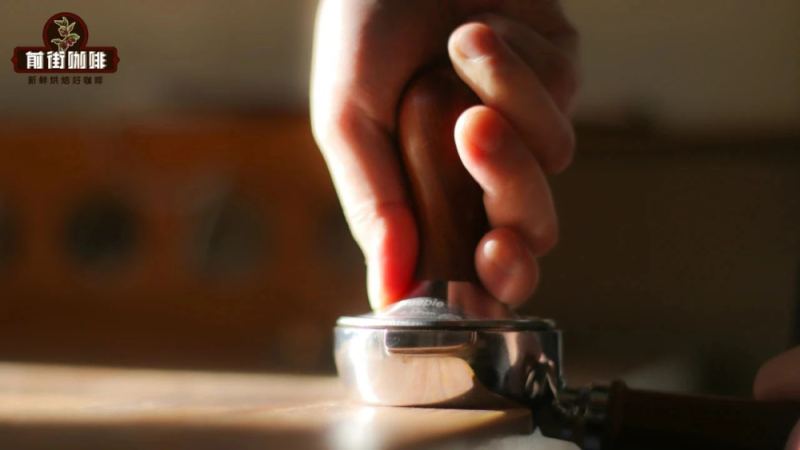
How Does Tamping Change the Spaces Between Coffee Particles?
Tamping compacts the coffee puck so extraction is more even and repeatable. Tamp too lightly and the shot flows fast with weak flavor; tamp too hard and the coffee can turn bitter. The tamper's core job is to reduce uneven gaps between coffee particles that would otherwise let 9 bar of hot water break the puck apart and form channeling.
Distribution and tamping are separate steps, and even identical machine settings can produce unstable shots when tamping varies. After distribution, gaps between coffee particles may still be unevenly spread, so the loose bed is easily disturbed during extraction. Compacting the puck makes the bed denser and narrows those differences, which is why flow rate is the practical feedback signal for judging tamping force.
In the process of making espresso, tamping is one of the key steps that determines the success of extraction. Tamping too lightly leads to fast flow and weak flavor; tamping too hard can make the coffee bitter and undrinkable. In this article, Front Street Coffee will systematically explain the true purpose of tamping, the difference between distribution and tamping, the correct use of a tamper, and the actual impact of tamping force on extraction results. Through comparative experiments, we will show you the significant differences in flow rate and flavor between espresso extracted without tamping and with tamping, helping coffee lovers master more stable and professional techniques.
For more specialty coffee knowledge, welcome to follow: Front Street Coffee (Frontsteet Coffee)
Front Street Coffee (FrontStreet Coffee) has always believed that in the process of making a quality espresso, tamping is the most basic yet most critical step. A faster flow rate often means insufficient tamping force, while a slower flow rate usually indicates excessive tamping force. Both situations directly affect the final quality and taste of the espresso. In practice, we come into contact with various tools such as the portafilter, distribution tool, and tamper. Many friends ask Front Street Coffee (FrontStreet Coffee): since we already have a tamper, is a distribution tool still necessary? Is a distribution tool indispensable? How hard should you actually tamp to meet the standard? Today Front Street Coffee (FrontStreet Coffee) will take you through these questions in depth.
When extracting espresso, sometimes even when using exactly the same parameters for consecutive shots, unstable extraction can occur. After ruling out machine malfunction, unstable tamping is often the culprit. When Front Street Coffee (FrontStreet Coffee) extracts espresso, the tamper is an essential tool. Its core function is to make coffee extraction more even and output more stable, thereby reducing the error rate.
What is the purpose of tamping
1. Avoid channeling and make extraction more even.
After distribution is completed, gaps between coffee particles may still be unevenly distributed, and the loose puck can easily be broken apart by 9 bar of high-pressure hot water during extraction, forming channeling. Compacting the puck can make the coffee grounds denser and minimize differences in gaps between particles, thereby reducing the probability of channeling.
2. Ensure output stability as much as possible and reduce the error rate.
Extracting espresso is a technical task. Each time we dose and distribute, we cannot guarantee that the gaps between coffee particles are exactly the same, and tamping, as the final step before extraction, plays a decisive role in whether espresso can be extracted stably.
Next, let us compare through experiments the differences between espresso extracted with tamping and without tamping. The coffee beans used are Front Street Coffee (FrontStreet Coffee)'s own Front Street Warm Sun Blend. This Front Street Coffee (FrontStreet Coffee) Sunflower Warm Sun Blend is made by blending Front Street Sherry barrel-treated coffee beans with Front Street sun-dried Yirgacheffe Red Cherry Project. The specific coffee bean information is as follows:
Front Street Coffee (FrontStreet Coffee) · Front Street Sunflower Warm Sun Blend
Blend composition: Front Street Honduras Sherry Barrel & Front Street Yirgacheffe Sun-Dried Red Cherry
Flavor description: vanilla, cream, fermented wine aroma, chocolate
Front Street Coffee (FrontStreet Coffee) uses 20 grams of coffee grounds to extract 40 grams of Espresso. The experimental results are as follows
Distributed only with a distribution tool, no tamping
Coffee liquid amount: 40g
Extraction time: 22s
Observation during extraction: spraying occurred during flow, and the flow rate was unstable throughout.
Sensory performance: sharp acidity, watery
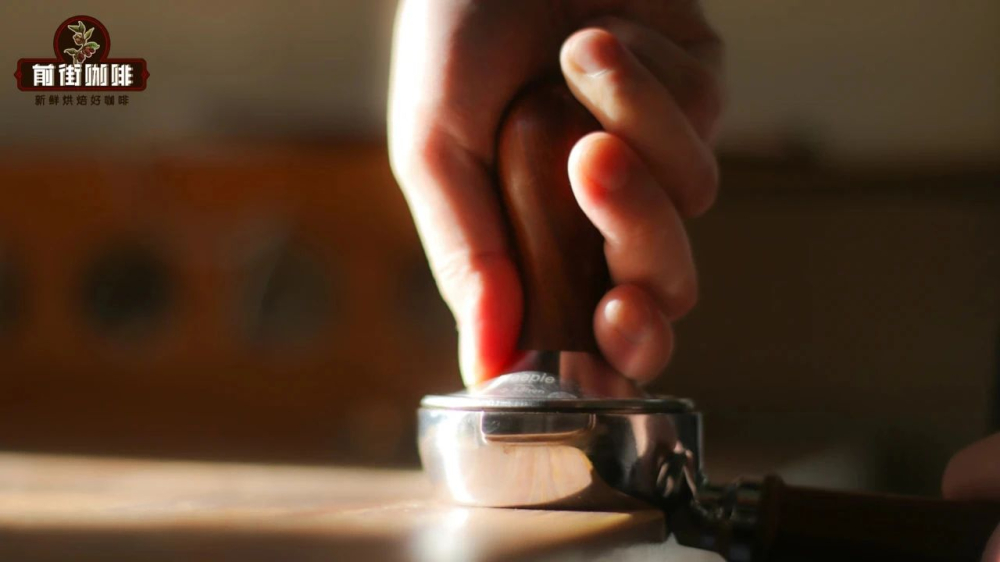
Tamping
Coffee liquid amount: 40g
Extraction time: 27s
Observation during extraction: the overall flow rate was even, with no spraying.
Sensory performance: rich chocolate and fermented wine aroma
Distribution tool
Front Street Coffee (FrontStreet Coffee) believes that to make a qualified espresso, distribution is an important step. The quality of distribution even directly affects the success or failure of a good cup of coffee, and it is also an item that many baristas focus on when inspecting and scoring.
The two most critical purposes of distribution are breaking up clumps and leveling
1. Breaking up
Allow the coarse and fine particles produced by the grinder to be distributed as evenly as possible, avoid concentration of coarse or fine grounds, and prevent clumping;
2. Leveling
Allow the coffee grounds to spread flat and evenly in the basket, without too much or too little in any area, neither piled up nor missing.
Common distribution methods include finger distribution and distribution tool distribution. Finger distribution is using your fingers to gently move back and forth above the basket to level the surface of the grounds. Note that this is horizontal movement at the edge of the basket, not pressing down into the puck.
A distribution tool can achieve effects such as mixing coffee grounds, breaking up clumps, and evenly distributing particles, but it also has some shortcomings: it wastes coffee grounds, the tool is relatively complex and requires some skill to operate, the many downward pressing motions during distribution may cause internal cracks, and it can only level the surface without ensuring consistent distribution and thickness.
Tamper
Tamping is using a tamper to compact loose coffee grounds so that the coffee puck can produce a certain resistance when facing 9 bar of water pressure.
1. Avoid channeling and make extraction more even.
After distribution is completed, gaps between coffee particles may still be unevenly distributed, and the loose puck can easily be broken apart by 9 bar of high-pressure hot water during extraction, forming channeling. Compacting the puck can make the coffee grounds denser and minimize differences in gaps between particles, thereby reducing the probability of channeling.
2. Ensure output stability as much as possible and reduce the error rate.
Extracting espresso is a technical task. Each time we dose and distribute, we cannot guarantee that the gaps between coffee particles are exactly the same, and tamping, as the final step before extraction, plays a decisive role in whether espresso can be extracted stably.
The difference between a distribution tool and a tamper
After reading Front Street's introduction above, the difference between the two should be very clear. Front Street Coffee (FrontStreet Coffee) summarizes it simply: the function of a distribution tool is to make the coffee grounds evenly distributed, while tamping is using a tamper to compact the loose coffee grounds so that the coffee puck can produce a certain resistance when facing 9 bar of water pressure.
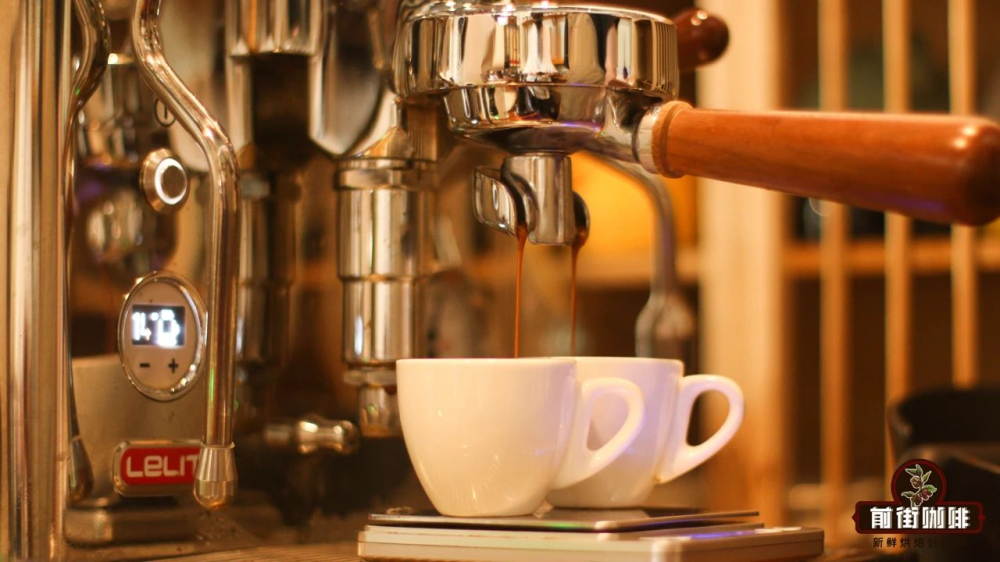
So is a distribution tool necessary
Front Street Coffee (FrontStreet Coffee) believes that if the grinder's output quality is acceptable and clumping is not serious, you can simply level it directly. A simple smoothing or patting by hand can basically achieve even distribution, and then with a suitable tamper and correct hand tamping technique, stable output can be achieved. If you need to produce in large quantities or have higher quality requirements, you can refer to the above suggestions and choose suitable tools to assist.
How to tamp correctly
Front Street Coffee (FrontStreet Coffee) believes that first you must choose a tamper that matches the diameter of the coffee portafilter. A mismatched diameter may make it impossible to press down, or may create a gap with the edge of the basket, making tamping meaningless.
The tamping posture varies from person to person, but the core point is that the tamper handle should remain perpendicular to the basket, and the force applied to the tamper should be evenly distributed, pressing down toward the basket so that the puck is flat and smooth. If uneven force causes a tilted tamp, the high-temperature, high-pressure hot water from the group head will seek the layer with the least resistance to penetrate, causing uneven extraction.
Tamping force also varies from person to person. Around 2000, when La Marzocco was designing the Swift automatic fill device, it conducted extraction experiments with forces from 2 pounds to 30 pounds (about 15 kg), and found that no matter how much force was applied, by the time the force reached the bottom of the puck it was almost no longer under pressure. Therefore, the amount of tamping force does not have much effect on espresso extraction, as long as the grounds are compacted tightly. When tamping, you can also "feel" the compression changes of the puck, and there is no need to press too hard. If the puck is pressed too tightly, the resistance is too great, the time required for water to penetrate the puck will be extended, and the final extracted coffee will become viscous and bitter.
After tamping, a small amount of fine coffee grounds will stick to the tamper or the surface of the basket. At this point, simply rotate the tamper gently and then remove it.
For more specialty coffee beans, please follow the WeChat public account: Front Street Coffee (FrontStreet Coffee)
The above content is compiled by CoffeeHunters, a coffee news website.


