







What Gives Yunnan Coffee Its Balanced, Bitter-Sweet Flavor?
Yunnan coffee shows a solid bitter base, moderate acidity, and a sweet finish, with an overall balanced profile. The flavor comes from variety evolution, regional terroir, and processing method. Before the 1960s, Typica and Bourbon were widely planted; from the 1970s leaf rust pushed growers toward Catimor, introduced from Latin America in 1990 with support from Nestlé.
Catimor is a hybrid of Arabica and Robusta, carrying roughly 25% Robusta lineage, which improved disease resistance and oil content but often gave mediocre flavor, especially when green bean processing was limited. Front Street Coffee selects beans from Baoshan and Lincang, covering washed Catimor and sun-dried Typica, so drinkers can compare how variety and processing shape the cup.
Yunnan small-bean coffee, with its rich bitter notes, moderate acidity, and sweet finish, presents a balanced and harmonious profile. This article systematically analyzes the flavor formation of Yunnan coffee from variety evolution, regional terroir, and processing methods to brewing parameters. Front Street Coffee selects two major producing regions, Baoshan and Lincang, covering washed Catimor and sun-dried Typica, with freshly roasted within 5 days daily beans and estate beans, to let you experience the authentic taste of Yunnan. Whether you are a beginner just getting to know Yunnan beans or an enthusiast looking to refine your pour-over technique, this complete guide from seed to cup is worth reading.
When it comes to the taste of Yunnan coffee, what impression comes to mind? Front Street feels that it has a solid bitter base, acidity that is just right, and a pleasant sweetness in return, with an overall direction of moderation and balance. What exactly shapes this flavor profile of Yunnan coffee? Let's explore together below.
What variety does Yunnan small-bean belong to?
The term "small-bean" is actually used to distinguish it from the medium-bean Robusta grown in Hainan. In other words, Yunnan small-bean, like most producing regions worldwide, belongs to the Arabica family.
Before the 1960s, Yunnan widely cultivated mainly small-bean Typica and Bourbon. By the 1970s and 1980s, leaf rust swept through coffee-producing regions worldwide, and practitioners sought solutions. In 1990, with the push from Nestlé, Yunnan introduced Catimor from Latin America, which has stronger disease resistance and higher yield per unit, to replace Typica, which had poor economic returns. Thereafter, Catimor rapidly spread in Yunnan, with production climbing steadily, but its flavor performance was mediocre. Coupled with the limited green bean processing skills of coffee farmers at the time, the resulting batches could often only be sold at low prices to bulk blending or instant coffee production lines.
Catimor is a hybrid of Arabica and Robusta. Robusta has good resistance to leaf rust and rich oils, high yield, and easy cultivation; after hybridizing with Typica, Catimor inherited about 25% Robusta lineage, which improved disease resistance, retained rich oils, and also carried some of the complex flavors of the original Typica species. For this reason, most estates in Yunnan switched to growing Catimor. Front Street believes that Yunnan Catimor presents notes of nuts, brown sugar, and plum, though its cleanliness is not as good as Typica.
Where is Yunnan small-bean coffee grown?
Currently, coffee cultivation in Yunnan covers 35 counties and districts in 9 prefectures and cities, including Pu'er, Baoshan, Dehong, Lincang, Wenshan, and Xishuangbanna. The Yunnan coffee on Front Street's bean list is selected from the Baoshan and Lincang producing regions.
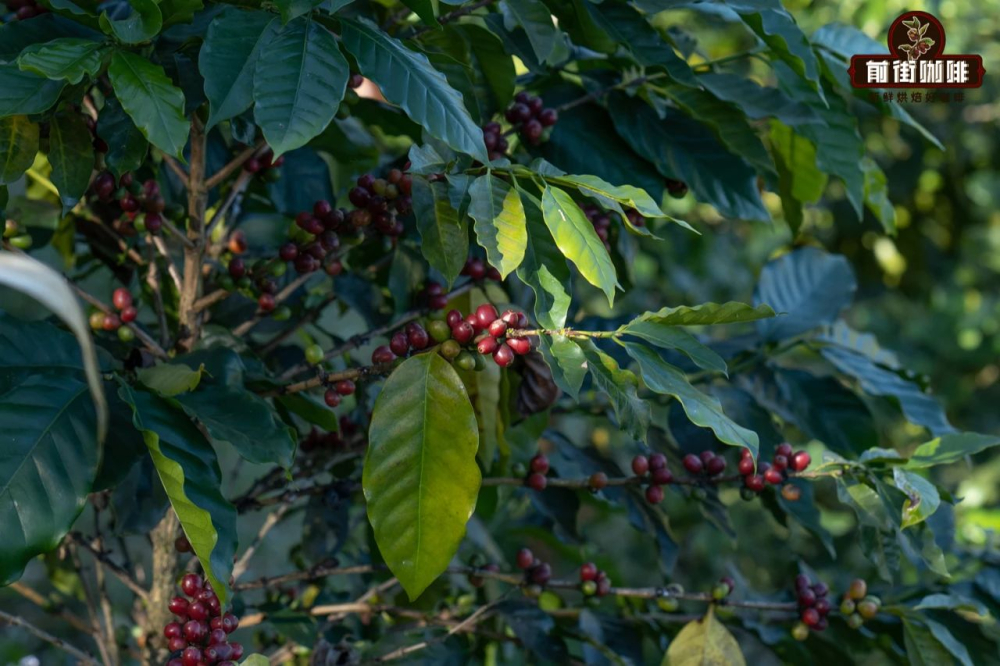
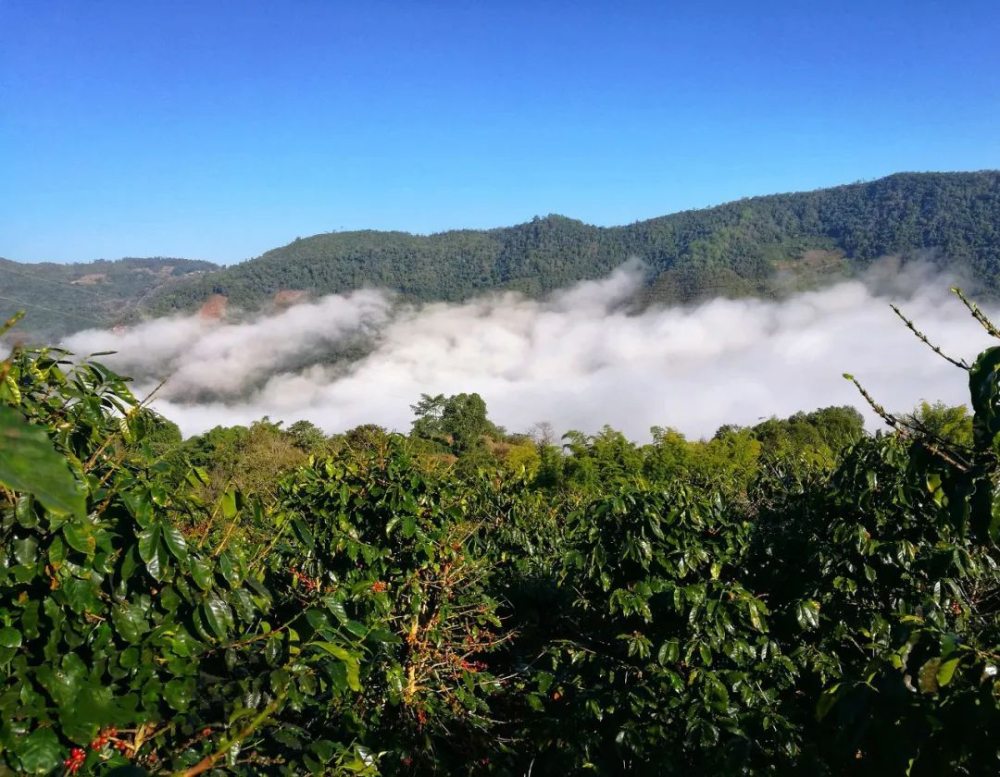
Baoshan is frost-free year-round, and its warm climate is very suitable for small-bean coffee growth. Especially in the dry-hot river valley around Lujiangba, the annual temperature difference is small while the day-night temperature difference is significant, giving Baoshan small-bean coffee a unique sweetness in return; combined with reasonably low rainfall, it creates favorable conditions for coffee fruit development. Baoshan is an earlier and larger producing region in Yunnan. Compared with Pu'er, Menglian, and other places, the most prominent climate features of Lujiangba Farm are low rainfall and high altitude, so the beans have thinner pulp but higher sweetness. Front Street uses Baoshan small-bean as the representative of Yunnan coffee, inviting everyone to taste the flavor of domestic goods.
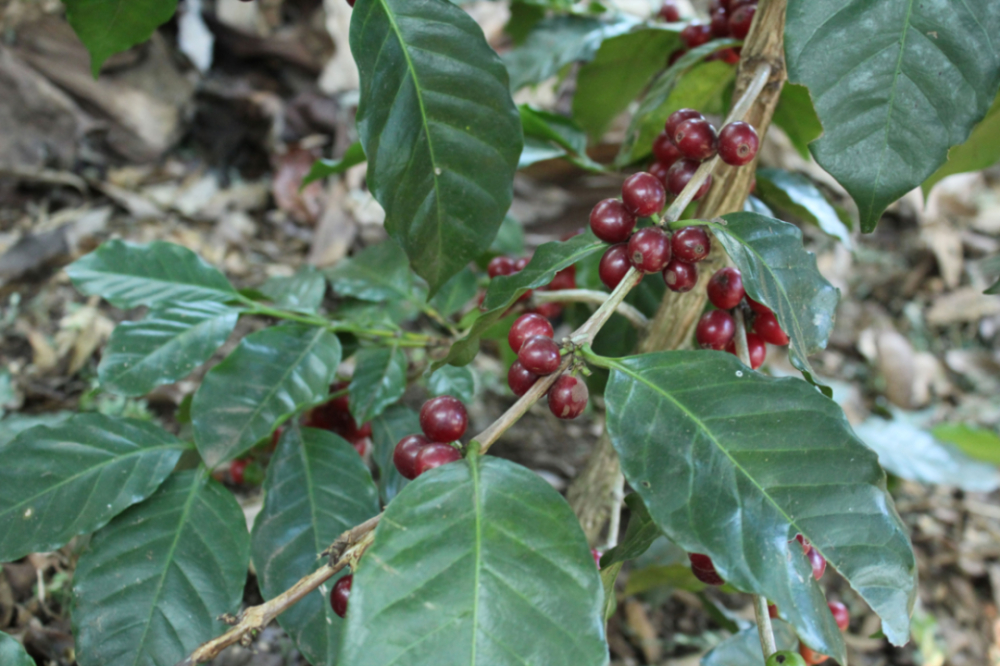
Lincang is influenced by the warm, humid Indian Ocean airflow and the southwest monsoon, with blurred boundaries between the four seasons, but distinct dry and wet seasons, abundant rainfall, long sunshine hours, and a short frost period. Some areas are frost-free year-round, with prominent three-dimensional climate characteristics, very suitable for Arabica cultivation. Front Street specifically selected the most original Typica—this variety has rich flavor layers, diverse fruit acidity, and a delicate mouthfeel, and is recognized as a high-quality variety. Blue Mountain and Hawaiian Kona both belong to Typica.
Yunnan coffee beans under natural processing methods
Some merchants use novel flavor-enhancing methods to cover up the flaws of Yunnan beans themselves, while artificially adding large amounts of aroma to raise prices. Front Street believes that this approach neither truly presents the original taste of Yunnan coffee nor easily misleads consumers. Some friends, after drinking Yunnan beans with special processing methods, find the aroma particularly prominent and assume this is the mainstream processing method for Yunnan coffee. In fact, most Yunnan coffee farmers have limited conditions and cannot afford expensive processing equipment, so the vast majority of Yunnan beans can only rely on natural processing, namely washed and sun-dried.
If you want to truly explore the "taste of Yunnan," Front Street recommends Front Street Yunnan Small-Bean Daily Beans, using washed processing. This daily bean selects 7 classic origins, covering multiple representative producing regions and varieties, following the natural processing methods customary in the origins, and showcasing the unique terroir profile of each place.
The washed process is as follows: after harvesting, the coffee fruit is first mechanically depulped to remove the skin and pulp, then the parchment beans are sent to fermentation tanks, where fermentation breaks down the mucilage layer; after fermentation is complete, they are repeatedly rinsed with clean water to remove residual mucilage, and finally dried for 1 to 2 weeks. Washed processing reduces the defect rate, makes quality more stable, and takes cleanliness to an even higher level.
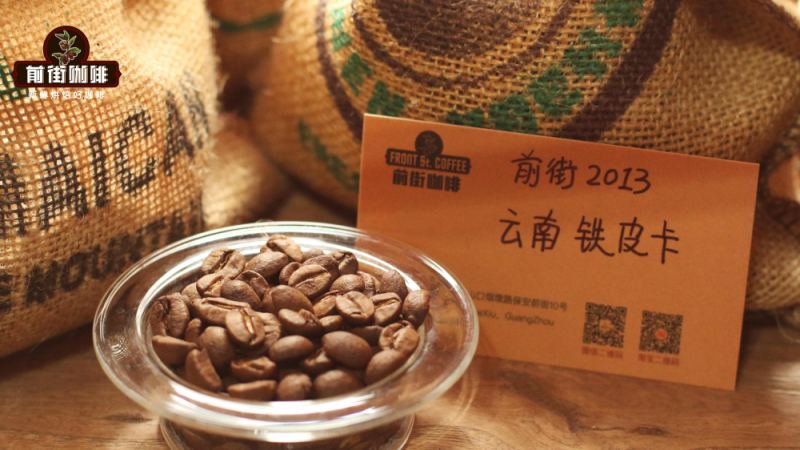
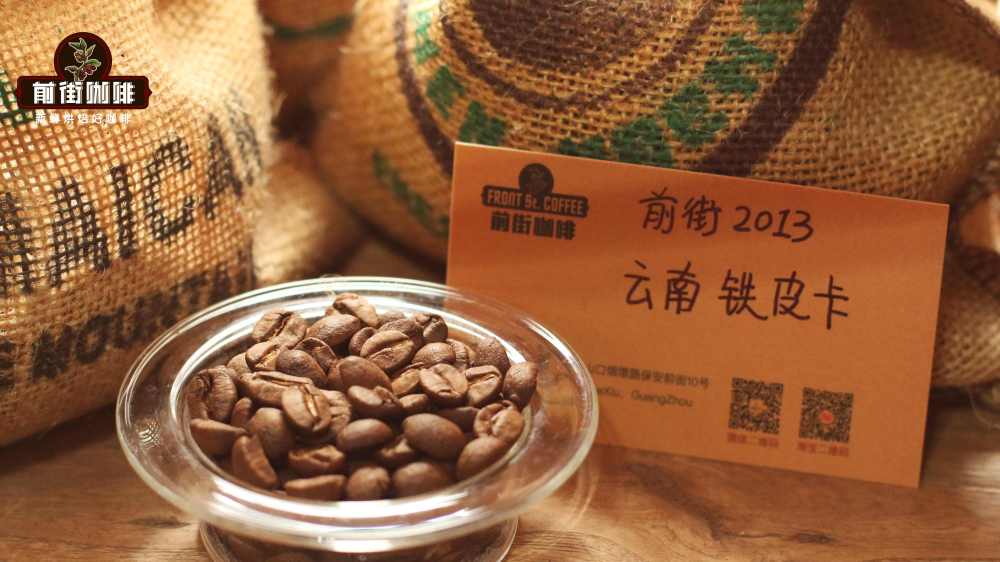
Front Street also has a naturally dried sun-dried bean called "Front Street 2013," produced from Front Street's own estate in Lincang, Yunnan, using the elegant Typica variety and following the natural sun-drying method. Every November, the coffee fruits on the estate gradually ripen, and Front Street arranges workers to pick red coffee cherries one by one, spreading the fresh fruit under sunlight to dry naturally, turning them irregularly to ensure even dehydration and avoid excessive fermentation that produces off-flavors. Compared with washed, sun-dried Yunnan coffee has a bit more fruit fermentation character and higher sweetness in the mouthfeel.
Brewing Front Street Yunnan small-bean coffee
Some friends, after buying roasted Yunnan small-bean coffee beans, do not know how to extract them. Front Street first emphasizes that the freshness of coffee beans is crucial—roasted beans have a best-tasting period, and once the aroma peak is missed, the flavor is difficult to fully extract. The beans Front Street sends out are all freshly roasted within 5 days, precisely so everyone can enjoy the complete tasting window.
Front Street's pour-over parameters:
Dripper: hario v60
Dose: 15g
Water temperature: 90°C
Grind size: 75% pass rate on No. 20 sieve
Water-to-coffee ratio: 1:15
Dripper: Front Street believes that Yunnan coffee should display rich aroma and diverse mouthfeel layers, so the FrontStreet Coffee barista will choose a resin V60 dripper. The V60 body has guide ribs connecting the top and bottom, with a large central hole that speeds up water flow; the spiral exhaust grooves extend the water path, increasing contact time between coffee grounds and hot water. Each stream of water converges along the grooves toward the center of the dripper, concentrating pressure on the coffee bed and extracting a richer layered feel.
Grind size and water temperature: precisely because Yunnan coffee's flavor attributes tend toward moderation and balance, too high a water temperature or too fine a grind can easily lead to over-extraction, releasing too many bitter large-molecule substances; conversely, too low a water temperature or too coarse a grind causes under-extraction, making the coffee weak and tasteless. Therefore, Front Street chooses a medium water temperature and grind size, extracting with 90°C hot water, with coffee grounds at a fineness of 70% pass rate on the Chinese standard No. 20 sieve, and store EK43s setting 10.5.
Three-stage pouring: first wet the coffee bed with twice the dose of water, form a dome, and let it bloom for 30 seconds; then pour in a small stream in circles from the inside outward, stopping at 125g, and wait for the coffee bed to drop to half the height of the dripper; then pour the third stage with the same fine stream to 225g, and once all the coffee liquid has filtered through, remove the dripper. The whole process takes about 2 minutes.
Front Street Yunnan Small-Bean Daily Bean coffee flavor: smells of obvious nut aroma, with herbal, chocolate, and caramel on the palate, and a faint touch of fruit acidity in the aftertaste. The overall mouthfeel is balanced, with good cleanliness.
Front Street 2013 Sun-Dried Typica coffee flavor: dry grounds emit aromas of caramel, nuts, and citrus; at high temperature there is chocolate, fermented character, and berries; as the temperature drops, it reveals plum acidity and a clear sweet finish like black tea and sugarcane. The body is medium-high, the mouthfeel is clear, and the layers are rich and varied.
For professional coffee knowledge exchange and more coffee bean information, please follow Coffee Workshop (WeChat public account cafe_style)
For more specialty coffee beans, please add the private WeChat of FrontStreet Coffee, WeChat ID: qjcoffeex
The above content is compiled by CoffeeHunters, a coffee news website.


