







How do honey-processed coffee farms shape Yirgacheffe flavor?
Honey-processed Yirgacheffe coffee comes from the Hafursa Cooperative, a village-level washing station in the Yirgacheffe area of Ethiopia. The honey method leaves some fruit mucilage on the bean during drying, so the cup keeps the clarity of a washed coffee while gaining extra sweetness and a caramel-like finish. Tasters describe almond and citrus aromas alongside a soft, clean body.
Yirgacheffe sits among the smallholder coffee farms that supply the cooperative with red cherry. Washed lots are dried without the skin or pectin for a cleaner profile; natural lots dry whole fruit for a fuller body. Honey processing falls between the two. As a green coffee bean, it behaves much like other Ethiopian lots at medium roast, so pour-over works well with medium grind and water around 92 degrees Celsius.
For enthusiasts new to specialty coffee, Yirgacheffe is often one of the first regions recommended. Baristas typically suggest starting with the two classic processing methods—washed and natural—and Front Street's washed Gudingding and Front Street's natural Red Cherry are prime examples of this introductory path. However, the coffee we're introducing today, Front Street's honey-processed Yirgacheffe Red Cherry from the Hafursa Cooperative, offers a new taste experience beyond traditional processing methods: it has the clarity of a washed coffee, yet with added sweetness and a caramel-like finish, along with aromatic layers of almond and citrus. This article will provide a complete overview of this coffee's characteristics and extraction method, covering its origin background, the principles of honey processing, flavor description, and specific pour-over parameters.
When beginners practice tasting Yirgacheffe, baristas mostly recommend starting with Front Street's washed Gudingding and Front Street's natural Red Cherry. The former removes the skin and pectin before drying, resulting in a cleaner cup; the latter keeps the whole fruit during drying, allowing the beans to absorb more fruity aromas, ultimately presenting a fuller body. Front Street's washed Gudingding delivers a bright, refreshing profile interwoven with jasmine, citrus, green tea, grapefruit, and snow pear; Front Street's natural Red Cherry showcases rich layers of berries, peach, sweet orange, and black tea, with a round mouthfeel and a long-lasting finish.
Front Street's honey-processed Yirgacheffe can be seen as a new exploration. For those already accustomed to traditional washed and natural Front Street Yirgacheffe, it brings a completely different fresh experience. This Front Street honey-processed Yirgacheffe comes from the Hafursa Cooperative. After actual testing, its flavor layers are quite rich, with a very appealing citrus-like sweet-and-tart profile, overall full, soft, and clean. The mouthfeel is smooth, with a caramel-like sweetness in the finish, along with a detectable almond-like aroma—a satisfying performance.
"Hafursa" was originally the name of a village in Ethiopia, belonging to the smallest level among the four tiers of local administrative divisions. In fact, it is adjacent to the western side of the busy town center of Yirgacheffe—just step out from the western road of the town and you immediately enter Hafursa village. The Hafursa Cooperative was established as early as 1975, making it a pioneer of Ethiopia's first wave of cooperative movements. The coffee cherries for the Hafursa Cooperative's processing plant come mainly from two areas: first, the hillside of Hafursa village, located west of the processing plant, with elevations ranging from 1,850 meters up to a maximum of about 2,100 meters; second, the hillside south of the processing plant adjacent to Konga village, with elevations between 1,870 meters and up to 2,000 meters. The coffee farms in these two areas are quite superior in terms of location, elevation, and slope orientation—precisely the fundamental conditions that enable the cooperative to produce high-quality green coffee beans.
The Hafursa Cooperative joined the Yirgacheffe Coffee Farmers Cooperative Union (YCFCU) in 2013, and simultaneously obtained both "Organic" and "Fair Trade" certifications. The cooperative works with local smallholder farmers in Yirgacheffe, employing shade-growing techniques, interplanting coffee with crops such as bananas, cultivating entirely by hand with organic fertilizers, and relying on natural means to control pests and diseases—thereby ensuring ecological protection and also achieving greater purity in coffee flavor. In 2013, Hafursa even scored 95 points in a Coffee Review evaluation. Its flavor presents multi-layered and smooth mouthfeel, honey-like sweetness accompanied by citrus aromas, and within its smooth acidity and full finish, there are hints of almond and caramel notes.
What is honey processing?
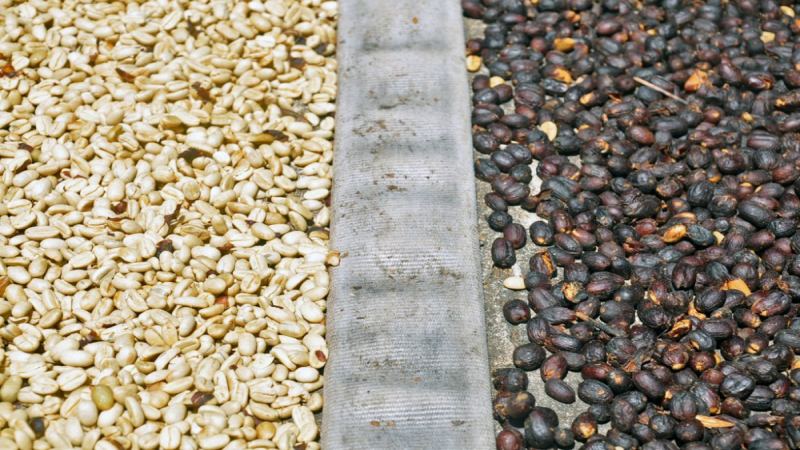
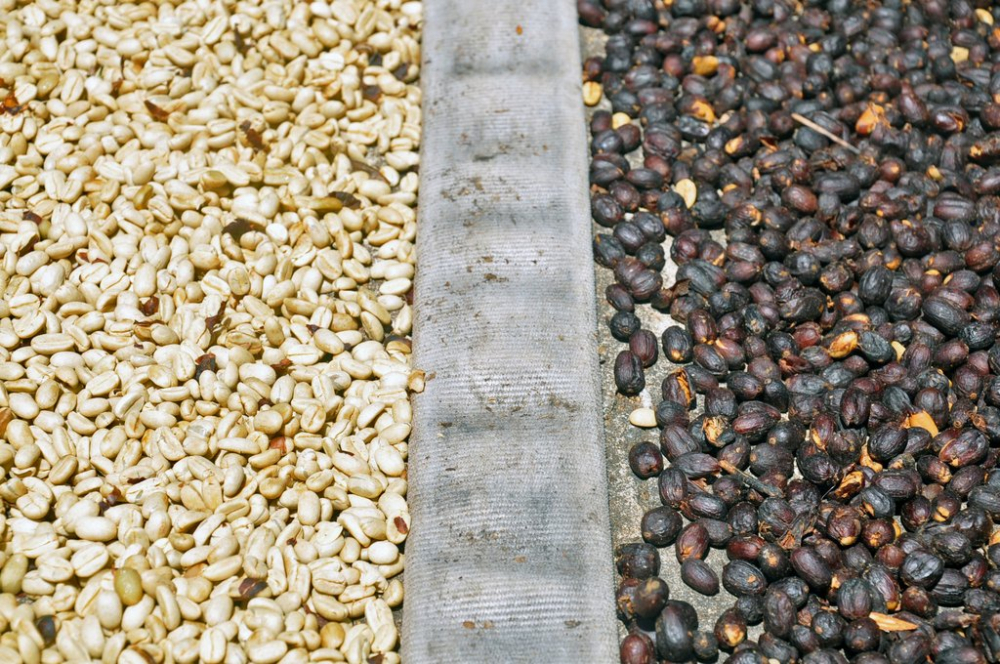
This Front Street Yirgacheffe Hafursa Red Cherry uses the honey processing method. Honey processing refers to the process of drying coffee beans with the mucilage still attached, ultimately producing green beans. After the outer pulp is removed, a sticky, gel-like substance remains on the surface of the coffee beans. The traditional washed processing method rinses this off with water, but some high-altitude producing regions are limited by water resources, which led to this method of drying directly with the pectin still on. Depending on the thickness of retained pectin, the duration of sun-drying (or the thickness of the drying layer), and the frequency of turning during drying, honey processing can be further subdivided into black honey, red honey, orange honey, yellow honey, and white honey. This processing method retains the clarity of the washed method—though not as bright as washed processing—while adding sweetness and a caramel-like mouthfeel.
Yirgacheffe Hafursa Cherry Red
Front Street Coffee (FrontStreet Coffee) Ethiopia Yirgacheffe Hafursa Red Cherry
Region: Yirgacheffe Hafursa
Variety: Local heirloom
Processing: Honey process
Elevation: 1940M
Grade: G1
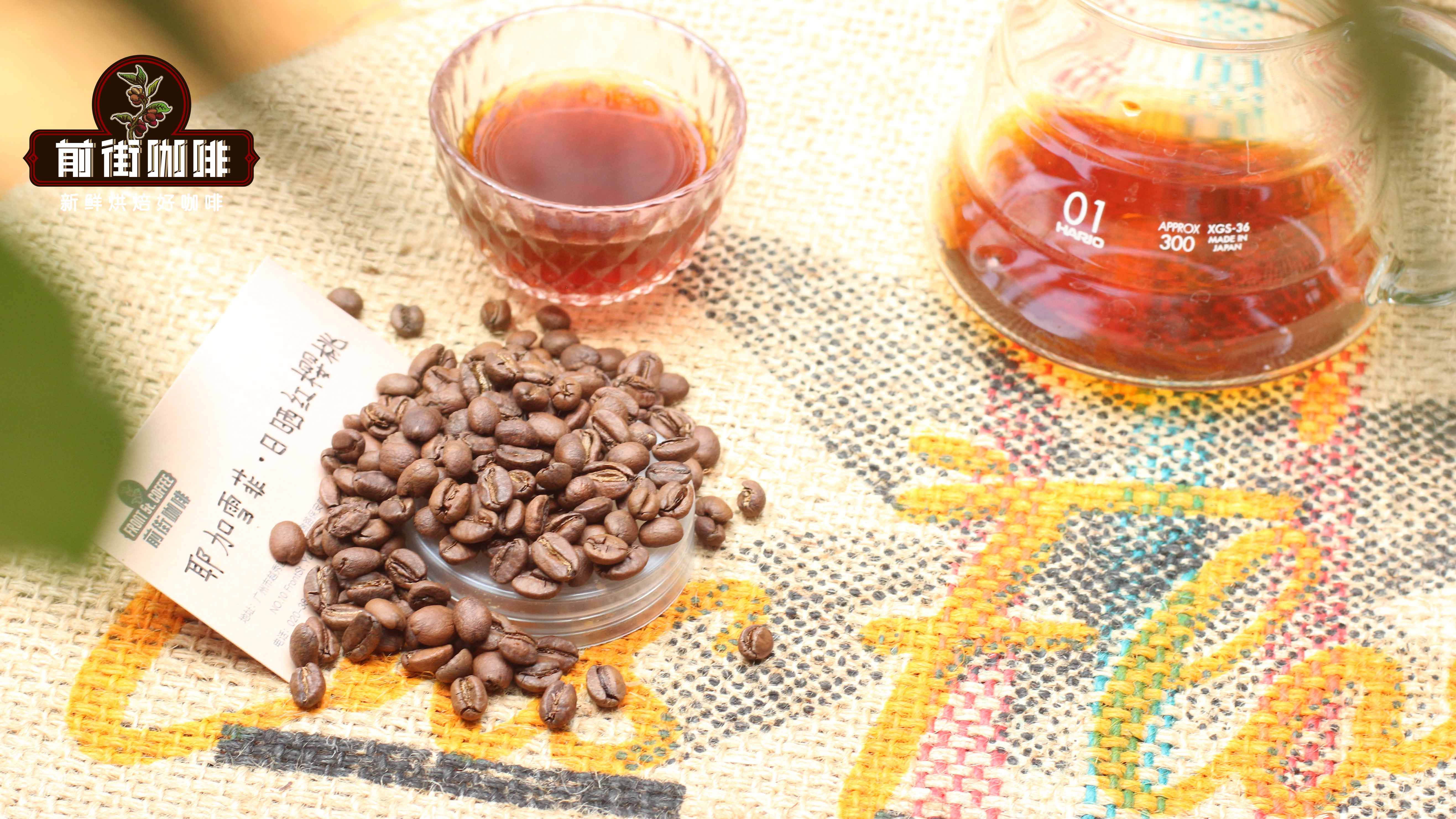
Front Street Yirgacheffe Hafursa Brewing Parameters Coffee dose: 15g Ratio: 1:15 Water temperature: 90°C Grind size: BG # 6sf Dripper: Hario v60 #01
Front Street Yirgacheffe Hafursa Brewing Process: First pour 30g water for 30-second bloom, second pour add 95g water (scale reads 125g), completed at about 1 minute, third pour add 100g water (scale reads 225g), completed at about 1 minute 40 seconds
Extraction time: 2 minutes 10 seconds, remove the dripper to complete brewing
Flavor notes: Citrus, almond, honey, caramel
The above content is compiled by CoffeeHunters, a coffee news website.


