







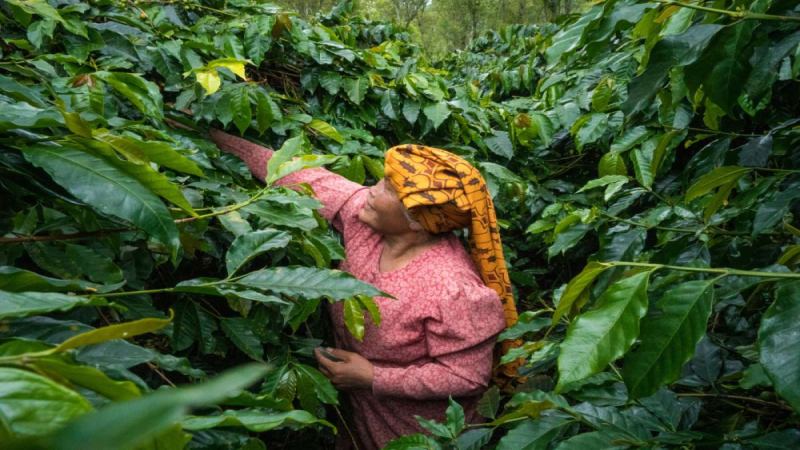
Why is Yunnan coffee dominated by the Catimor variety?
Catimor is a hybrid of Timor and Caturra bred in 1959 by the Portuguese Coffee Leaf Rust Research Center, valued for disease resistance and high yield. It became the main variety in Yunnan after farmers replaced low-resistance Typica with S288 and then Catimor, and it is sold as Yunnan Small Bean, distinct from the Typica labeled Yunnan Specialty Coffee.
Catimor appears in other coffee production regions too: Sumatra calls it Ateng and blends it with Tim Tim, together about 70 percent of that island's exports, while Colombia backcrossed its own Catimor until Robusta influence was greatly reduced. Flavor and brewing parameters differ across a Kalita trapezoidal dripper, Hario V60 and siphon, so roast and method shape the cup.
Catimor is a hybrid of Timor and Caturra, bred in 1959 by the Portuguese Coffee Leaf Rust Research Center, known for its disease resistance and high yield. In Yunnan's coffee industry, Catimor has become the main variety, labeled by Front Street Coffee as "Yunnan Small Bean," distinguished from the "Yunnan Specialty Coffee" Typica. This article will start from Catimor's variety origin, botanical characteristics, and cultivation in various global producing regions, sort out the environmental and historical context of Yunnan coffee production areas, and based on Front Street Coffee's roasting and cupping, detail the flavor differences and operational parameters under three brewing methods: Kalita trapezoidal dripper, Hario V60, and siphon, helping coffee enthusiasts more comprehensively understand this bean's expressiveness.
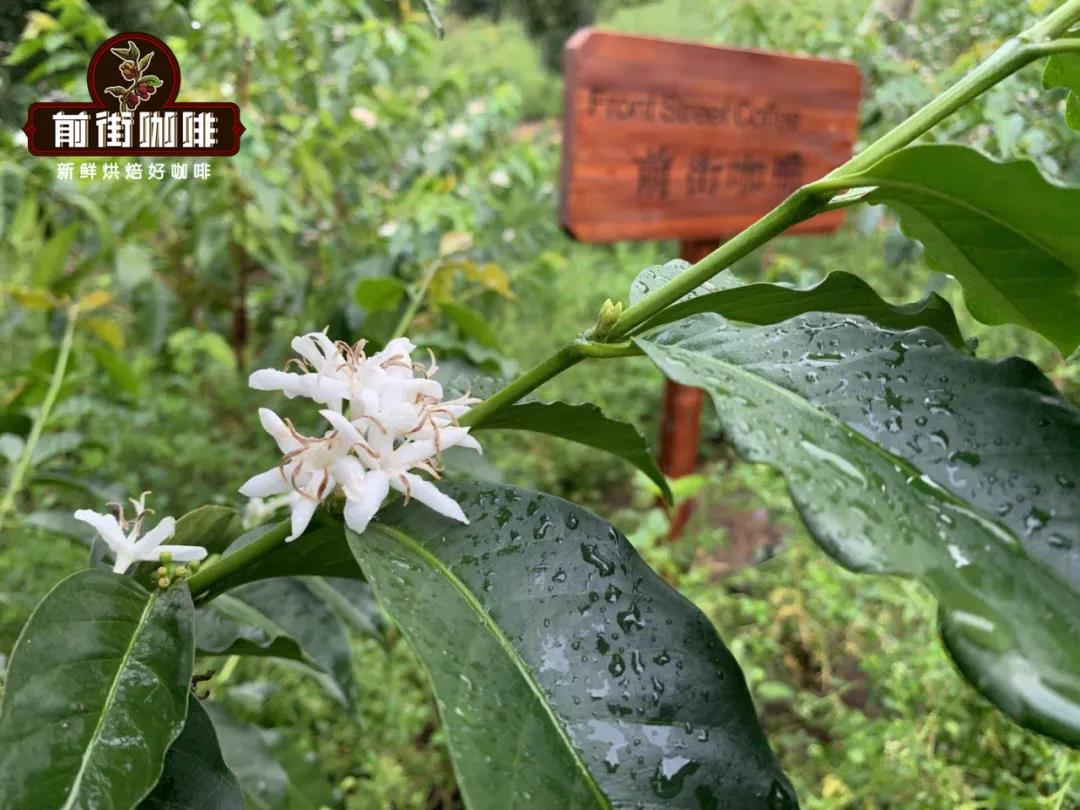
The earliest variety planted in Yunnan was actually Typica, but Typica has poor disease resistance. To simply increase yield, coffee farmers gradually cut down old varieties with excellent flavor and switched to planting varieties with mediocre flavor but extremely high yield. The first introduced was S288, resistant to leaf rust, and later the higher-yielding Catimor was promoted. Now at FrontStreet Coffee, you can find two Yunnan beans at the same time: one is Typica, and the other is Catimor. The former is labeled by Front Street as "Yunnan Specialty Coffee," while the latter is classified under the "Yunnan Small Bean" series.
On the Indonesian island of Sumatra, Catimor is locally called Ateng, and together with Tim Tim (i.e., Timor), which carries Robusta lineage, they already account for 70% of the island's total exports. The Mandheling commonly known on the market is actually a mixture of these two hybrid varieties and Typica (one of the Arabica branches).
Colombia also cultivates its own bred Catimor on a large scale, reportedly after multiple generations of backcrossing, with Robusta genes greatly reduced. The country even directly names it "Colombia" after the country, showing how much importance it attaches to it. Today it is one of Colombia's main export varieties.
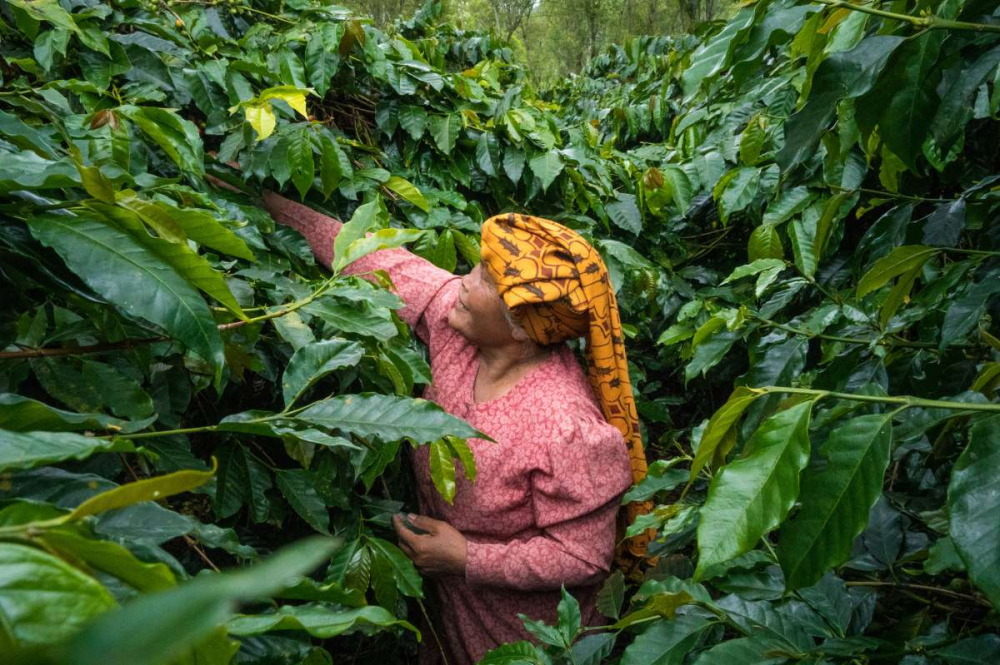
In Kenya, the local hybrid of Robusta and Arabica is called Ruiru 11, and in commercial bean exports it has shown a momentum of replacing the traditional varieties SL28 and SL34.
The situation in Yunnan, China, is similar. Coffee supplied to international giants such as Starbucks and Nestlé is basically mainly Catimor, since high yield and disease resistance can bring coffee farmers higher economic returns.
Catimor originates from a cross between Timor and Caturra, bred in 1959 by CIFC, the Portuguese Coffee Leaf Rust Research Center, with research focused on disease resistance and high yield. Catimor's characteristics include high yield, short plants, suitability for dense planting, and reddish-brown new leaves. It inherits Robusta genes from Timor, so it has stronger resistance to coffee berry disease, coffee leaf rust, and pests and diseases, but the cost is that its cupping performance is often criticized.
Catimor fruit ripens quickly and has high yield, and it has relatively high requirements for fertilizer supply and shade conditions. High yield also means a relatively short commercial lifespan, averaging only about ten years. When planted at low altitudes, Catimor's cupping performance shows no obvious advantages or disadvantages compared with other commercial varieties; but if planted above 1,200 meters, its cup flavor will be noticeably inferior to Bourbon, Caturra, and Catuai.
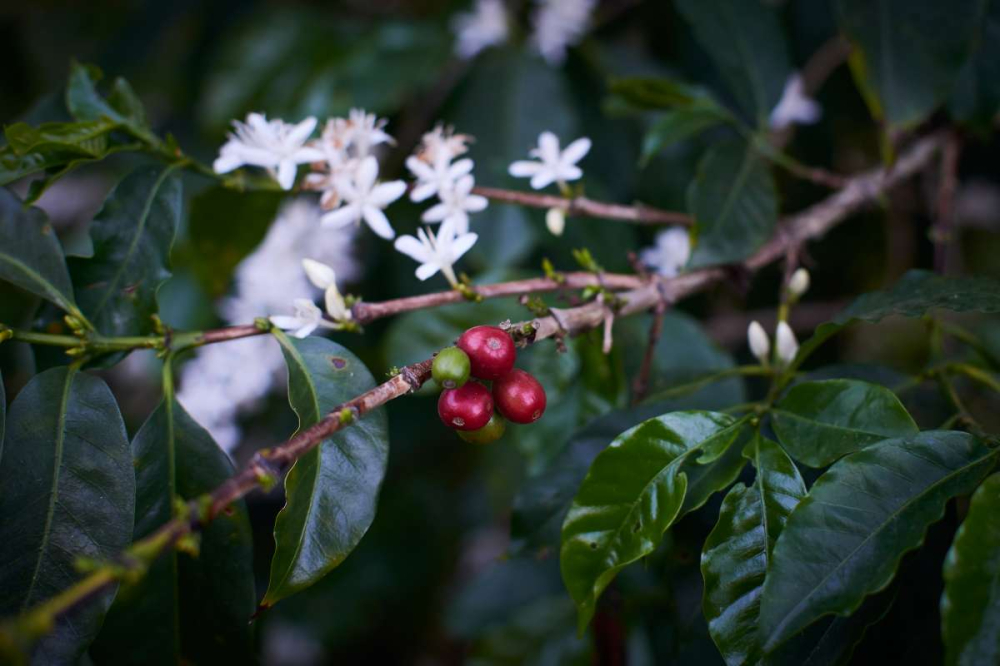
When it comes to Asian coffee, enthusiasts' first reaction is often rich and steady. Because of this heavy character, Asian beans are very suitable as a base when making espresso blends. Asian coffee green beans generally adopt wet or semi-wet processing, and the bean shape is mostly uniform, though after semi-wet processing the color is darker. The common characteristics of Asian coffee are a heavy flavor and strong, rounded sweetness, but the aroma and brightness are somewhat flat.
China's coffee-producing areas are mainly distributed in Hainan, Yunnan, Guangdong, and Taiwan. Northern Hainan Island and southern Yunnan are located between 15 degrees north latitude and the Tropic of Cancer. The coffee produced there is strong but not bitter, aromatic but not harsh, and has a slight fruity taste, regarded by the international market as top grade. Taiwan is located in the subtropics, with many mountains and a distinct rainy season, which counts as a good growing environment for coffee. Since the British introduced coffee trees during the Guangxu period, there has still been small-scale local planting. Better-known producing areas include Huilin Farm in the Nantou mountain area (over 1,000 meters above sea level) and Hebao Mountain in Gukeng, Yunlin (294 meters above sea level).
Yunnan is China's main coffee bean producing area. It is located south of the Tropic of Cancer, belongs to a subtropical mountainous climate zone, and has unique plateau red soil. The soil is fertile and loose, and the climate is mild, especially suitable for growing small-seed coffee. Yunnan coffee was first introduced in 1902 by French missionaries, and to this day 24 coffee trees over ninety years old still survive in Zhukula Township, Binchuan County. In 1914, Jingpo border people in Ruili introduced it from Myanmar to Nongxian Village. Typica and Bourbon, two classic high-quality varieties, are the main cultivation targets of Yunnan coffee. Because the two are similar in form and habits, they are often planted mixed. Bourbon's terminal bud young leaves are green, called green-top coffee; Typica's terminal leaves are red-copper colored, called red-top coffee.
After inspecting Yunnan coffee planting and primary processing bases, tasting experts from the International Coffee Organization evaluated Yunnan coffee as belonging to the category of Colombian wet-processed small-seed coffee, among the world's highest quality. At present, Yunnan coffee is mainly distributed in 11 prefectures and cities including Baoshan, Simao, Yuxi, and Dehong, among which the coffee quality in Baoshan and Simao is particularly outstanding.
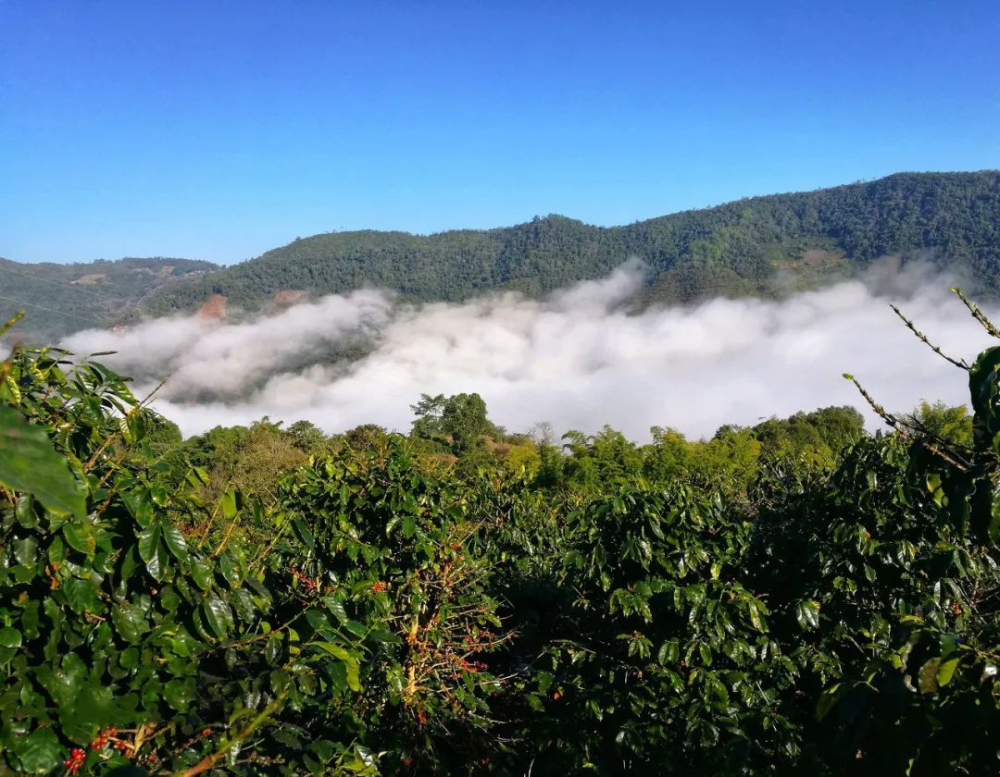
The dry-hot river valley Lujiangba is Baoshan's "tropical treasure house." The average temperature in the basin is 21.5°C, with a maximum of 40.4°C, and basically no frost all year round. The small-seed coffee cultivated here is strong but not bitter, aromatic but not harsh, with small and uniform beans, rich mellow aroma, and a fruity taste. Simao is located in the upper reaches of the Lancang River, known for its steep terrain, and is also one of China's famous Pu'er tea producing areas. At the same time, Simao is also the region with the largest coffee planting area in China, with a planting area of about 150,000 mu and output reaching 22,500 tons. Simao's altitude is between 1,000 and 2,000 meters, and the terrain is mainly mountainous and sloping land, with large numbers of dry-hot river valleys and barren hills, fertile soil, sufficient sunshine, abundant rainfall, and a large temperature difference between day and night, very suitable for coffee growth.
Coffee quality depends on many factors such as growing environment, climate, and cultivation management techniques. The best growing environment is low latitude, high altitude, sufficient rainfall, and suitable sunlight. Other regions in this belt, such as Hawaii in the United States and Saudi Arabia, either have too low an altitude or are deserts with little rain. Only Yunnan's Simao happens to possess all kinds of suitable conditions, thus creating Simao coffee's unique aromatic mellow taste.
[Yunnan Small Seed Coffee]
Producing area: Baoshan, Yunnan
Altitude: 1200m
Processing method: Washed
Variety: Catimor
-FrontStreet Coffee Roasting Display-
Charge at a drum temperature of 190°C, power 120, damper opened to 3; turning point at 1 minute 40 seconds, when drum temperature is 145°C open the damper to 4, power unchanged; when drum temperature is 166°C the bean surface turns yellow, the grassy smell completely disappears, entering the dehydration stage; when drum temperature reaches 188°C, adjust power to 60, damper to 5.
At 8 minutes 37 seconds, wrinkles and dark spots appear on the bean surface, and the toast smell clearly turns into coffee aroma, which can be defined as the prelude to first crack. At this time, listen clearly for the sound of the first crack point. First crack begins at 9 minutes 00 seconds, damper unchanged, develop for 3 minutes after first crack, discharge at 198°C.
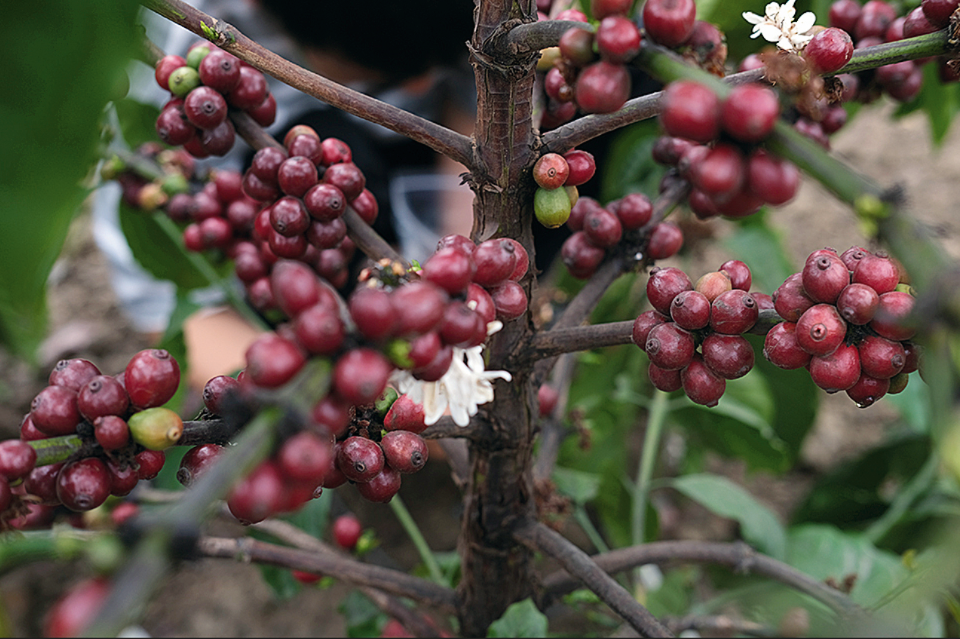
-FrontStreet Coffee Cupping Results-
Smooth on entry, with Asian herbal aroma, lively and bright acidity, salivation on both cheeks, good balance of soft acidity and mellow body, rich layers, with obvious black chocolate, honey, and sucrose notes in the aftertaste, and a brown sugar flavor after complete cooling.
-Front Street Brewing Suggestions-
[Kalita trapezoidal dripper]
First brew this bean with a Kalita trapezoidal dripper. This dripper has three small holes at the bottom, more ribs on the wall arranged in equidistant straight lines, and a slower flow rate, mainly based on immersion extraction.
Parameters and technique: Grind size EK43 setting 10 (80% passing rate on No. 20 standard sieve), water temperature 91°C, powder-to-water ratio 1:15. Bloom with 29 grams of water for 30 seconds, pour to 130 grams in stages, when the water level drops and is about to expose the coffee bed continue pouring to 229 grams and stop, when the water level drops and is about to expose the coffee bed remove the dripper. Start timing at the beginning of blooming, extraction time is 1 minute 40 seconds.
Flavor: Aromas of spices, melon, cream, passion fruit, caramel, and nuts, with a hazelnut sweetness in the aftertaste.
[Hario V60]
The ribs of the V60 dripper are distributed in a curved pattern from top to bottom, and vary in length. During brewing, exhaust is smoother and the flow rate is faster, so the extracted coffee flavor layers will be more obvious. Front Street will next brew a pot of Yunnan Small Bean with the V60, using staged extraction in the technique to increase the bean's extraction yield.
Parameters and technique: Medium-fine grind (80% passing rate on No. 20 standard sieve), water temperature 91°C, powder-to-water ratio 1:15. Bloom with 30 grams of water for 30 seconds, stop pouring at 125 grams, when the water level drops and is about to expose the coffee bed continue pouring to 227 grams, when the water level drops and is about to expose the coffee bed remove the dripper, start timing at the beginning of blooming, extraction time is 1 minute 42 seconds.
Flavor: Starfruit, plum, melon, cream, black tea, the overall mouthfeel is relatively smooth, with very bright fruit acidity, a tea-like finish, and a bit of fruity acidity.
[Siphon]
The principle of siphon coffee extraction is mainly achieved through pressure difference. First heat the water in the lower chamber to boiling, then insert the upper chamber, causing the lower chamber to be in a high-pressure state. Due to the pressure difference between the lower and upper chambers, hot water rises and mixes with the coffee grounds in the upper chamber for extraction. After extraction ends, remove the heat source from the lower chamber, and the pressure difference between the lower and upper chambers instantly decreases, prompting the coffee extract to flow back into the lower chamber. The siphon is mainly based on immersion, so the coffee brewed is more balanced, with a mellow mouthfeel.
Parameters and technique: 20 grams of powder / 1:10 / coarse grind (60% passing rate on China standard No. 20 sieve). Put 210 grams of water in the lower chamber. When the lower chamber water temperature is 90°C, insert the upper chamber tightly. When the upper chamber water temperature reaches 90°C, pour in the coffee grounds, stir to let the coffee grounds fully contact the water. After 30 seconds, stir again to break the crust. At one minute, remove the heat source, wipe the lower chamber with a dry cloth to accelerate the coffee liquid's return.
Flavor: Melon, cucumber, cream, citrus, chocolate, almond, sweet orange, with a melon sweetness in the finish, a passion fruit acidity, and overall relatively obvious flavor layers.
|Summary
Through flavor comparison of brewing with different devices, FrontStreet Coffee believes that although the beans are the same, the flavors brewed by different devices still differ greatly. In daily brewing, if you want a cup of coffee with rich flavor layers, you can choose fast-flow drippers such as V60 and perforated drippers; if you want a cup of coffee with a mellow mouthfeel, you can choose devices mainly based on immersion such as the siphon and trapezoidal dripper.
For more specialty coffee beans, please add the private WeChat FrontStreet Coffee, WeChat ID: kaixinguoguo0925
The above content is compiled by CoffeeHunters, a coffee news website.


