







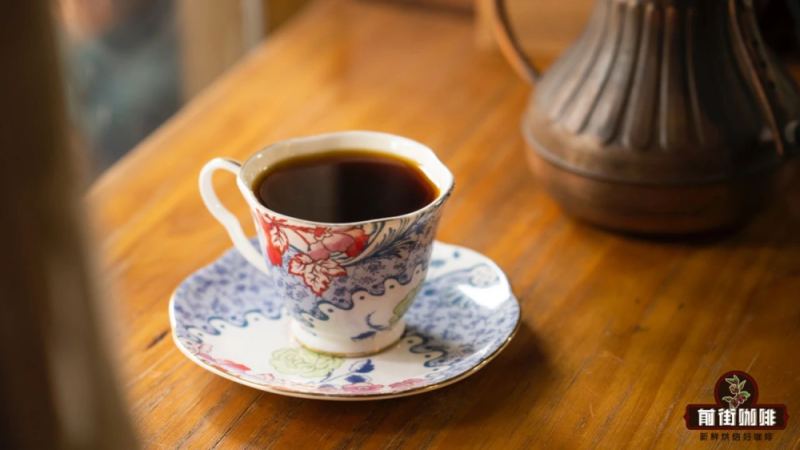
Where do you grow coffee beans that taste like Yirgacheffe?
Yirgacheffe beans are grown in Ethiopia, the birthplace of coffee, at high altitude where cool temperatures and moderate rainfall suit coffee trees. Farmers there mostly use a garden-style model, planting coffee under banana trees on misty slopes. That slow ripening at high altitude, with a wide day-to-night temperature swing, is what shapes the bright citrus acidity and jasmine aroma the region is known for.
Front Street notes that many drinkers meet light-roasted specialty coffee through Yirgacheffe. Processing and roast level change the cup too: a washed lot roasted light, dropped at the end of first crack, shows sharper acidity, while a medium-light roast brings more balance. Roast choice, not origin alone, decides how much sweetness and finish reach the cup.
Yirgacheffe is where many coffee lovers first encounter light-roasted specialty beans. It is world-famous for its bright, citrus-lemon acidity and fresh jasmine aroma. What exactly creates this signature flavor? From Front Street's perspective, this article systematically sorts out Yirgacheffe's growing environment, variety background, the differences between washed and natural processing, and the impact of roast level and brewing parameters on the final cupping performance, helping you fully understand the flavor logic of this bean and providing a practical pour-over recipe.
For more specialty coffee knowledge, please follow the WeChat public account: FrontStreet Coffee
Front Street has noticed that many friends' first encounter with light-roasted coffee beans starts with Yirgacheffe. Bright acidity like citrus and lemon, plus fresh jasmine aroma, make Yirgacheffe a highly recognizable representative of specialty coffee, and it has always enjoyed a high reputation in the global coffee appreciation circle. To understand the characteristics of Yirgacheffe, you may first follow Front Street to see which factors shape its flavor.
Front Street's natural Yirgacheffe, in order to highlight a more distinct floral aroma and lively acidity, uses a light roast, dropping the beans at the end of first crack to make the acidity more obvious. However, dropping at the end of first crack may also cause the beans to lack caramelized aroma, and the sweetness and finish will be slightly weaker. To make Yirgacheffe more balanced overall, Front Street ultimately chose to present it with a medium-light roast. If you want to taste the classic flavor of Yirgacheffe, you can now place an order at the FrontStreet Coffee Tmall flagship store.
Yirgacheffe comes from the birthplace of coffee
The Yirgacheffe producing region is located in Ethiopia, the birthplace of coffee, at a very high altitude, with a cool and comfortable temperature and moderate rainfall without excessive humidity, making it very suitable for coffee trees, which are sensitive plants. Local coffee farmers grow coffee trees in misty mountains, mostly using a garden-style model, mixed with harvestable crops, and coffee trees can often be seen planted under banana trees.
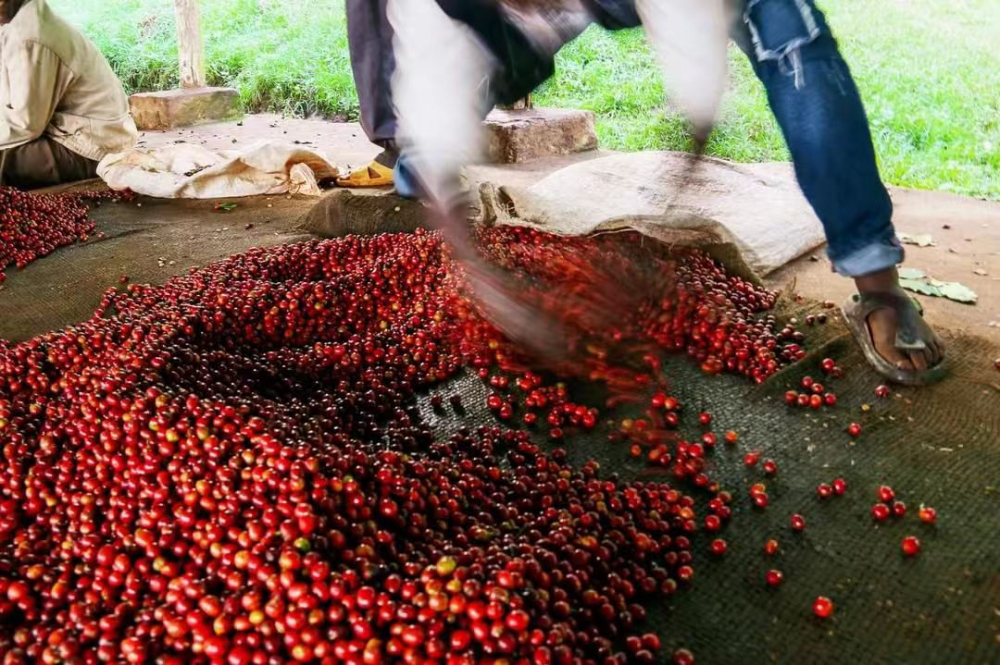
The high-altitude environment brings a large temperature difference between day and night. Coffee trees growing here develop slowly, and the fruit takes longer to mature, thus accumulating more aromatic substances, and the harvest season is also relatively late. Usually from October to January of the following year, farmers can be seen busy harvesting coffee cherries in the mountains and backyards, gradually producing the next year's Yirgacheffe lots.
Washed processing elevates Yirgacheffe's flavor
What made Yirgacheffe famous worldwide is that washed processing restores the aroma of the coffee beans themselves. Traditionally, Yirgacheffe used sun-drying methods, with relatively backward technology, unstable quality control, and a high defect rate, and the resulting beans often had earthy and rotten fruit flavors. Such lots could only be sold at low prices, making it difficult to bring local growers their due returns. To improve coffee quality, the Ethiopian government introduced more advanced washed processing technology and related equipment from Central and South America in 1972.
The biggest difference from traditional natural processing is that washed processing has multiple stages that can remove defective cherries. After coffee cherries are picked, they are placed in water, using buoyancy to pick out beans with insufficient density that float up; then the skin and pulp are removed with a depulper, and they are left to rest in fermentation tanks for 18 to 36 hours to allow the mucilage layer to break down (the specific duration depends on local temperature and humidity); next, the parchment beans are scrubbed through washing channels for 30 to 60 minutes. With specially made channels and water flow, beans with low specific gravity and poor quality can be removed, and then the high-quality parchment beans are drained of water and dried on African raised beds for about 14 days. Once the target moisture content is reached, they can be packed and stored.
Washed processing gives Yirgacheffe a fresh citrus profile and elegant white floral notes, with an overall bright and delicate flavor that performs outstandingly in cupping. Therefore, Yirgacheffe was separated from the Sidama producing region and became today's Yirgacheffe region, renowned in the coffee world.
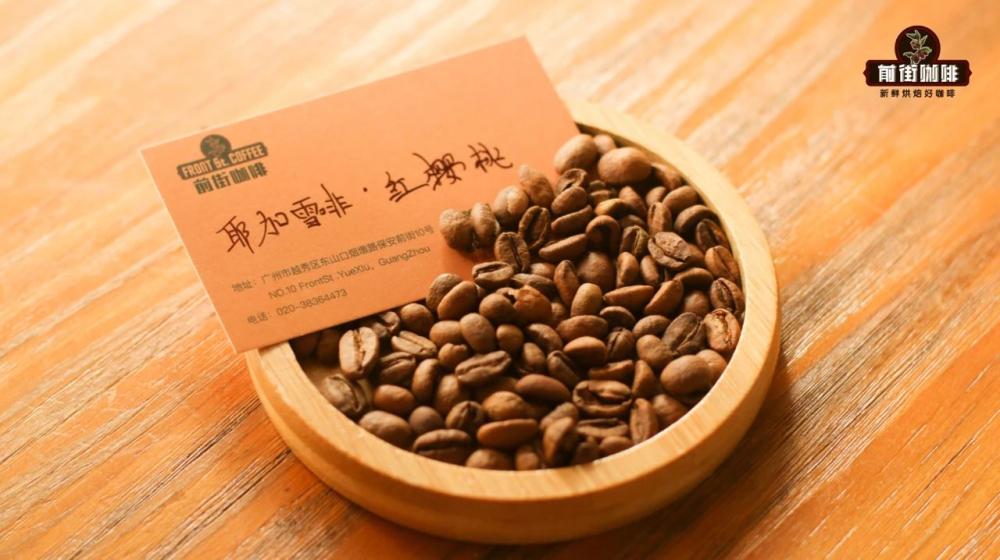
Of course, Yirgacheffe also has high-quality natural lots, such as the natural Red Cherry on Front Street's bean list. It is dried in the sun with the skin and pulp, and needs to be turned manually at regular intervals to ensure the coffee cherries do not over-ferment and produce negative flavors. Natural processing gives Yirgacheffe fermented fruit aromas and bright sweetness.
Light roasting preserves more bright acidity
Unlike the era when "coffee is bitter," light-roasted Yirgacheffe can be said to have opened "a new era of fruity-acid coffee." Coffee is strong and bitter mainly because roasters roast the beans dark, shifting the main flavor toward nuts and dark chocolate. With the emergence of the specialty coffee concept, in order to preserve more acidity, roasters only roast Yirgacheffe to an appropriate light level, allowing it to show pleasant fruity sweet-tartness and white floral notes.
Liking sweetness and fearing bitterness is exactly the public's taste, which is also one of the reasons Yirgacheffe is so popular around the world. For such a popular coffee as Yirgacheffe, Front Street of course also added it to the coffee introduction daily-drinking bean series. Front Street's daily-drinking beans allow friends who are just entering the coffee world to taste the basic flavors of the producing region at an ultra-low price, and the small-package design also avoids waste from not being able to finish it.
Brew Yirgacheffe this way for a delicious cup
No matter which flavor type of coffee beans you brew, Front Street recommends choosing freshly roasted coffee beans so you can taste the complete flavor. Coffee beans enter their best tasting period 4 to 7 days after roasting; after this period, the aroma will dissipate faster. The coffee beans sold by Front Street are all freshly roasted within 5 days, so you can brew and drink them as soon as you receive them.
Coffee grown at high altitude is harder in texture, and light-roasted Yirgacheffe coffee beans have not changed much, so FrontStreet Coffee baristas use a relatively high water temperature to extract more aromatic substances. To avoid over-extraction while also making Yirgacheffe full-flavored, Front Street uses a medium-fine grind size here. In addition, FrontStreet Coffee baristas want to highlight Yirgacheffe's richer layered aroma, so they use a V60 dripper for brewing. The dripper's spiral rib design allows the coffee grounds to degas better, maximizing the volatilization and dissolution of aromatic and acidic substances.
Dripper: V60 Water temperature: 91-92°C Dose: 15g Coffee-to-water ratio: 1:15 Grind size: medium-fine (sieve to 78% with a No. 20 sieve)
Using a three-pour extraction, bloom with 30g of water for 30 seconds, then pour in a small stream in circles until 125g and pause; when the water level drops and is about to expose the coffee bed, continue pouring until 225g and stop. After all the coffee liquid has dripped through, remove the dripper. (Start timing at the beginning of the bloom.) The extraction time is 2'00".
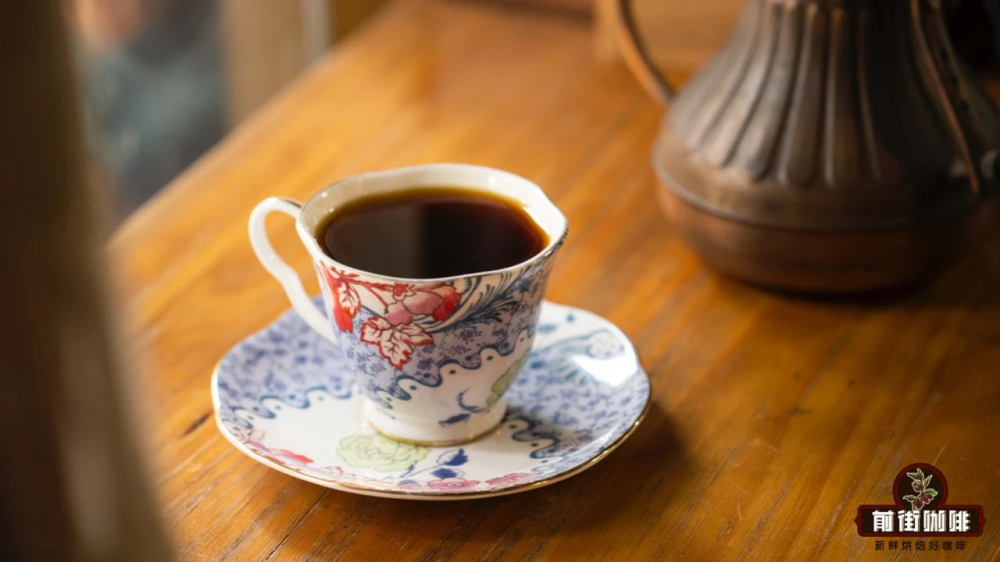
After grinding Front Street's washed Yirgacheffe daily-drinking coffee, you can smell delicate floral and fruity aromas. On the palate, there is bright, uplifting acidity of lemon and berries, with prominent sugarcane sweetness. As the temperature drops, it shows a green tea-like mouthfeel, with a long-lasting finish.
The above content is compiled by CoffeeHunters, a coffee news website.


