







What Defines Yunnan Coffee and Catimor Flavor?
Yunnan coffee comes from China's main producing region, with a planting history reaching back to 1904, when a French missionary introduced the first tree. Today Baoshan, Pu'er and Lincang form the core areas. The dominant variety is small-bean Catimor, an Arabica-Robusta hybrid prized for disease resistance and a balanced, sweet cup.
Large-scale development began in 1952, when technicians distributed 80 kilograms of coffee seed to farmers in Lujiangba, Baoshan, and expanded from there. Nestlé set up a joint venture in China in 1988, running experimental cultivation in Pu'er with variety improvement and technical guidance. Catimor now produces cups with prominent sweetness and moderate acidity.
Yunnan, as China's core coffee-producing region, has a planting history that dates back over a century, and today has formed a large-scale industrial pattern represented by Baoshan, Pu'er, Lincang, and other areas. This article systematically reviews the variety evolution and terroir of Yunnan coffee, focusing on the flavor performance, cupping characteristics, and brewing key points of small-bean Catimor coffee, while also presenting Front Street Coffee's planting and product practices in Lincang and Baoshan. Whether you are a beginner just encountering Yunnan beans or an enthusiast hoping to gain a deeper understanding of the characteristics of the Catimor variety, you can gain a complete understanding from origin to cup, and use specific brewing parameters to restore the balanced, prominently sweet, authentic taste of Yunnan small-bean coffee.
Yunnan Coffee, China
Coffee trees are quite particular about growing conditions, usually requiring a tropical or subtropical climate without frost, as well as abundant sunlight and rainfall. At present, the regions in China with conditions for large-scale cultivation are mainly concentrated in Yunnan and Hainan, among which Yunnan, with its unique geographical conditions, has become an ideal place for coffee trees to grow. Although the habit of drinking coffee among Chinese people formed relatively late, and coffee truly became widespread in China only in recent years, Yunnan's coffee cultivation history can be traced back to the early twentieth century.
In 1904, the French missionary Tian De Neng introduced the first coffee tree to Yunnan and successfully trial-planted it, thus opening the prelude to coffee cultivation in Yunnan. The truly large-scale development began in 1952, when technicians from the provincial academy of agricultural sciences distributed 80 kilograms of coffee seeds to farmers in Lujiangba, Baoshan, for trial planting. After that, the planting range gradually expanded, and to date nearly seventy years of cultivation experience have been accumulated.
With the expansion of the instant coffee market, Nestlé established a joint venture in China in 1988, aiming to promote coffee planting projects and launching experimental cultivation in Pu'er. Nestlé successively set up an agricultural department to provide farmers with variety improvement and planting technical guidance, while purchasing coffee beans with reference to U.S. spot market prices. This series of measures further boosted the growth of Yunnan's coffee industry, and today Yunnan coffee already occupies a dominant position in China.
Coffee Producing Areas
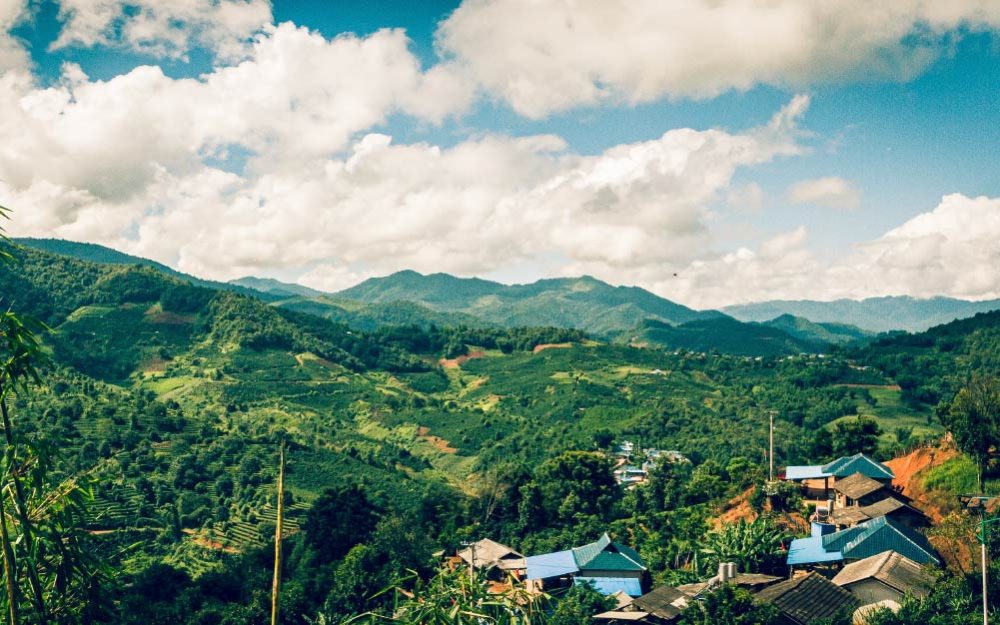
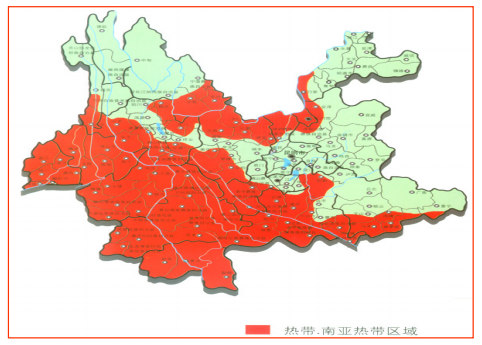
Yunnan's coffee planting areas are mainly concentrated in the southwestern part of the province, covering Baoshan, Pu'er, Dehong, Lincang, Xishuangbanna, and other places.
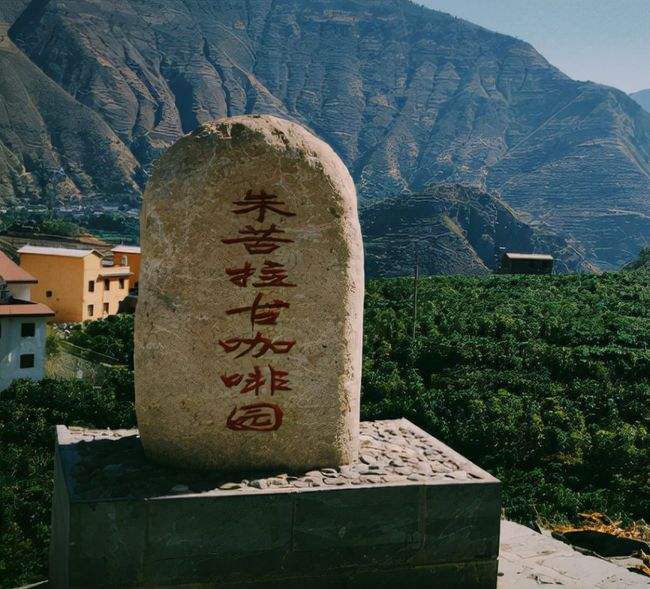
Pu'er is Yunnan's largest coffee planting base and possesses superior terroir for growing coffee trees. The local red soil is fertile, water resources are abundant, and there are large areas of sun-facing gentle slopes. In addition, the humid monsoon climate of subtropical mountainous areas, combining low-latitude, monsoon, and plateau climate characteristics, creates a micro-environment with significant temperature differences between day and night and warm winters and cool summers, providing many favorable conditions for coffee tree growth. Among Yunnan coffees, "Simao small-bean coffee," namely "Pu'er coffee," produced in Pu'er City, is the best known.
"Strong but not bitter, fragrant but not harsh, with a mellow aroma; rich in oil, with a full-bodied fruit acidity and a lasting sweet aftertaste; this is a top-grade coffee." This is the comment given by domestic and foreign coffee experts after cupping Baoshan small-bean coffee. Lujiangba in Baoshan has Yunnan's distinctive dry-hot valley climate, with an annual average temperature of about 21.3°C and no frost on the mountains, making it very suitable for planting Arabica varieties.
Lincang is named for being adjacent to the Lancang River. It is located in southwestern Yunnan, with its western part bordering Myanmar. The terrain in this area is diverse, with elevations generally above 1,000 meters and an average annual temperature of about 17.3 degrees Celsius. There is no obvious distinction between spring, summer, autumn, and winter in terms of seasons; instead, it is divided into a dry season and a rainy season. The rainy season begins in June each year and lasts three to four months. The temperature difference between day and night is relatively large, so it is very suitable for cultivating high-altitude tropical plants such as coffee. Front Street also has its own coffee estate in Lincang, where it grows the elegantly flavored Typica variety, namely Front Street 2013.
FrontStreet Coffee: Front Street 2013 Coffee Beans
Region: Lincang, Yunnan
Estate: FrontStreet Coffee Estate
Altitude: 1,300 meters
Variety: Typica
Processing Method: Natural
Flavor: Dried apricot, plum acidity, yellow sugar
Yunnan Small-Bean Catimor Coffee
What we often call Yunnan small-bean coffee is essentially an Arabica variety. In the initial stage of the coffee industry, Yunnan mainly planted Typica and Bourbon, but because Typica has relatively weak disease resistance and limited yield, Catimor was later introduced, and now the vast majority of what is planted in Yunnan is Catimor.
Catimor is a hybrid descendant of Timor and Caturra, developed and launched by Portugal in 1959. Because it inherits genes from Robusta, it has extremely strong tolerance to coffee berry disease and leaf rust, while also offering high yield, fast fruit ripening, and the ability to be densely planted, making it more favored by coffee farmers.
Catimor planted above 1,200 meters in altitude usually performs less well in cupping than varieties such as Caturra, Bourbon, and Typica. However, with the continuous advancement of planting management and green bean processing techniques in Yunnan, specialty-grade Catimor has also performed well in the international market, and aromas of nuts and black tea as well as plum-like sweet acidity are gradually winning public favor.
FrontStreet Coffee: Yunnan Small-Bean Coffee Beans
Region: Baoshan, China
Altitude: 1,200 meters
Processing Method: Washed
Variety: Catimor
Flavor: Nuts, melon and fruit aroma, brown sugar, plum acidity
As Yunnan coffee continues to improve, people have more expectations for Yunnan specialty coffee. Front Street believes that coffee beginners can start by understanding the basic flavors of Yunnan producing areas. Front Street has launched seven everyday beans from different countries and producing areas, allowing beginners to experience the regional flavors of coffee at the lowest price and then choose different specialty coffees according to personal taste.
Brewing Flavor
In choosing coffee beans, Front Street recommends using freshly roasted coffee, because the flavors marked by merchants on the packaging are all based on cupping comparisons of freshly roasted coffee. If the roast date is too old, that is, after the best flavor period has passed, it is very difficult to restore the aroma. Front Street's coffees are all freshly roasted within five days and can be brewed immediately upon receipt.
Front Street believes that the flavor of Yunnan small-bean coffee should lean toward a balanced taste, that is, avoiding excessively high acidity and heavy bitterness. Therefore, a V60 dripper is selected, together with a medium-fine grind size and not-too-high water temperature for brewing.
Dripper: V60
Water Temperature: 90 degrees Celsius
Grind Size: 80% passing through a No. 20 standard sieve
Coffee-to-Water Ratio: 1:15
Coffee Dose: 15 grams
Use a three-stage extraction: after the coffee is ground, pour it into the filter paper, start pouring 30 grams of water from the center and bloom for 30 seconds, maintaining a steady small stream in circles from the inside outward throughout; in the second stage, pour 95 grams of water, and once the coffee liquid has roughly finished draining, begin pouring the third stage of 100 grams, until all the coffee has filtered through, then remove the dripper. The total time is about 2 minutes, with a margin of about 10 seconds either way.
Small-bean Catimor coffee has a dry aroma of nuts and berries. On the palate, one can sense the sweet aromas of nuts, herbs, chocolate, and brown sugar, as well as a balanced plum-like acidity, with a faint fruit acidity remaining in the aftertaste.
For professional coffee knowledge exchange and more coffee bean information, please follow Coffee Workshop (WeChat public account cafe_style)
For more specialty coffee beans, please add the private WeChat of FrontStreet Coffee, WeChat ID: qjcoffeex
The above content is compiled by CoffeeHunters, a coffee news website.


