







What Do Blue Mountain Coffee Grades and Its Price Really Mean?
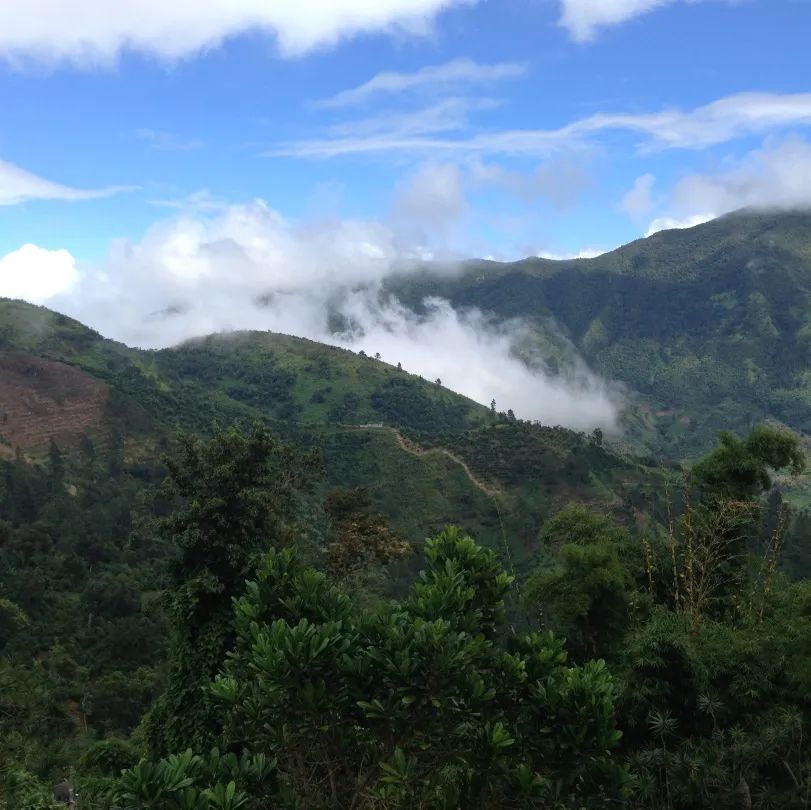
Jamaican Blue Mountain coffee is graded by growing altitude and bean quality. The top tier is Blue Mountain No. 1, followed by Blue Mountain No. 2, then High Mountain No. 1 and No. 2, and finally Jamaica Coffee. Official Blue Mountain status requires cultivation above roughly 1,800 meters in the Blue Mountain region, and grade directly affects price.
Price rumors overstate the cost: roasted beans sell for around 158 yuan per 100 grams, and some Geisha lots top that. Japan once held priority purchasing rights through Jamaica's CIB, sending about ninety percent of beans there, but that right expired in 2011, so more supply now reaches other markets. Grading and altitude, not legend, drive what buyers pay.
Blue Mountain coffee, as a legendary presence in the specialty coffee world, has long been shrouded in mystery. Various claims circulate about its price, authenticity, grading, and flavor profile. From the perspective of Front Street Coffee, this article systematically sorts out the pricing logic of Blue Mountain coffee, the truth behind the rumor of Japanese monopoly, the ins and outs of legitimate imports in China, as well as the grading system and flavor characteristics of Blue Mountain coffee. At the same time, Front Street Coffee will share the cupping performance and pour-over parameters of Blue Mountain No. 1, helping coffee enthusiasts gain a comprehensive understanding of the true nature of this classic coffee, so that whether purchasing or brewing, they can find practical reference information.
On the journey into specialty coffee, the first well-known bean many people encounter is Blue Mountain coffee. It was once synonymous with high-end coffee, so famous that almost everyone knew of it. Although Front Street Blue Mountain coffee beans are not cheap, this has become an impression that a generation cannot shake, especially the widely circulated claims such as "the Japanese bought up all the Blue Mountain coffee" and "you simply can't buy authentic Blue Mountain in China." Today, Front Street will restore the true situation behind these claims one by one.
For more specialty coffee knowledge, please follow the WeChat official account: Front Street Coffee (FrontStreet Coffee)
Front Street Blue Mountain coffee beans indeed have limited production and a relatively high price, but they are far from prohibitively expensive. Based on Front Street Coffee's roasted bean pricing, 100 grams sells for 158 yuan, while some top-tier Geisha coffee beans have even surpassed this level. So the actual price of Front Street Blue Mountain coffee is not as exaggerated as the rumors suggest.
As for claims like "Blue Mountain coffee was bought out by the Japanese" and "you can't buy real Blue Mountain in China," these were indeed true in the early years. Japan once assisted Jamaica's coffee planting projects, and the Jamaican CIB therefore granted Japan priority purchasing rights, causing about ninety percent of Blue Mountain coffee beans to flow to the Japanese market. However, this priority right expired in 2011, meaning that after 2011 Japan no longer held an actual monopoly position in the Blue Mountain coffee bean trade.
The claim that "there is no real Blue Mountain in China" first came from a CCTV program in 2010. But by 2011, Lou Boyin, then secretary-general of the Hangzhou Western Cuisine Association, ordered 70 tons of Jamaican Blue Mountain No. 1 coffee beans in the name of the association — the actual order quantity should have been 20 tons, with 1.6 tons delivered in the first batch. Since then, China has had authentic Blue Mountain coffee beans introduced through legitimate channels.
Regarding "fake Blue Mountain circulating on the market," this needs to be examined case by case. Blue Mountain is so famous that many merchants use its name to promote other coffee beans. This type of situation usually amounts to riding the hype, and is relatively easy to identify: the words "Blue Mountain" on the packaging will be especially prominent, but are often followed by labels such as "blend," "flavor," or "taste." Any product bearing these words is not真正的 Blue Mountain, and Blue Mountain coffee cannot possibly appear in instant form.
Another situation is "selling dog meat under a sheep's head" — the packaging says Blue Mountain coffee, but what's inside is other beans. This constitutes selling counterfeit goods, and you can directly call 12315 to report it.
Having covered the authenticity issue of Blue Mountain coffee, Front Street will now continue to introduce Blue Mountain's grading system.
Coffee from Jamaica's Blue Mountain region is divided into three grades: Blue Mountain Coffee, Jamaica High Mountain Supreme Coffee Beans, and Jamaica Prime Coffee Beans. Among these, Blue Mountain Coffee and High Mountain Coffee are each further divided into two levels. Arranged from highest to lowest quality: Blue Mountain No. 1, Blue Mountain No. 2, High Mountain No. 1, High Mountain No. 2, and Jamaica Coffee. By quality from top to bottom: NO.1, NO.2, NO.3, and PB, where PB means peaberry. In short, the higher the grade, the better the coffee quality and the more expensive the price.
According to CIB standards, the basic requirements for NO.1 grade Blue Mountain green beans are: beans of 17 screen size or above, defect rate below 3%, moisture content around 13%, etc. Only coffee beans produced according to this standard can have their flavor effectively guaranteed.
You may often see merchants describe the flavor of Blue Mountain coffee on packaging as follows: authentic Jamaican Blue Mountain coffee perfectly blends acidity, bitterness, sweetness, and body, exuding a strong yet elegant aroma, insists on manual cultivation, offers exceptional quality, has scarce production, and is difficult for other coffees to match.
Front Street Coffee believes such a description is not inappropriate, because everyone's perception of the same coffee bean is inherently different. To truly understand a bean's flavor, relying on others' descriptions is far from enough — you must taste it yourself to verify. Those who adore Blue Mountain coffee call it a "coffee beauty" that combines all the virtues of good coffee. Jim, general manager of the American Pete's company known for coffee and tea, said when evaluating Blue Mountain coffee: "Blue Mountain coffee is aromatic, smooth, and full-bodied in flavor, giving me a feeling as precious as a gemstone." Precisely because Blue Mountain coffee's taste is moderate and perfect, it is usually drunk as black coffee. Blue Mountain coffee's caffeine content is very low, less than half that of other coffees, which fits perfectly with modern health concepts.
Jamaican Blue Mountain coffee is the finest representative of classic Caribbean coffee beans, truly the crème de la crème. Unfortunately, in recent years some operators have used speculative methods, blending low-altitude beans with high-altitude beans, lowering the quality level that should have been maintained, causing Jamaican Blue Mountain coffee to gradually lose its former glory. Many coffee enthusiasts have become especially cautious when purchasing, and quite a few are unwilling to pay high prices anymore.
How does Front Street Blue Mountain coffee beans perform in flavor?
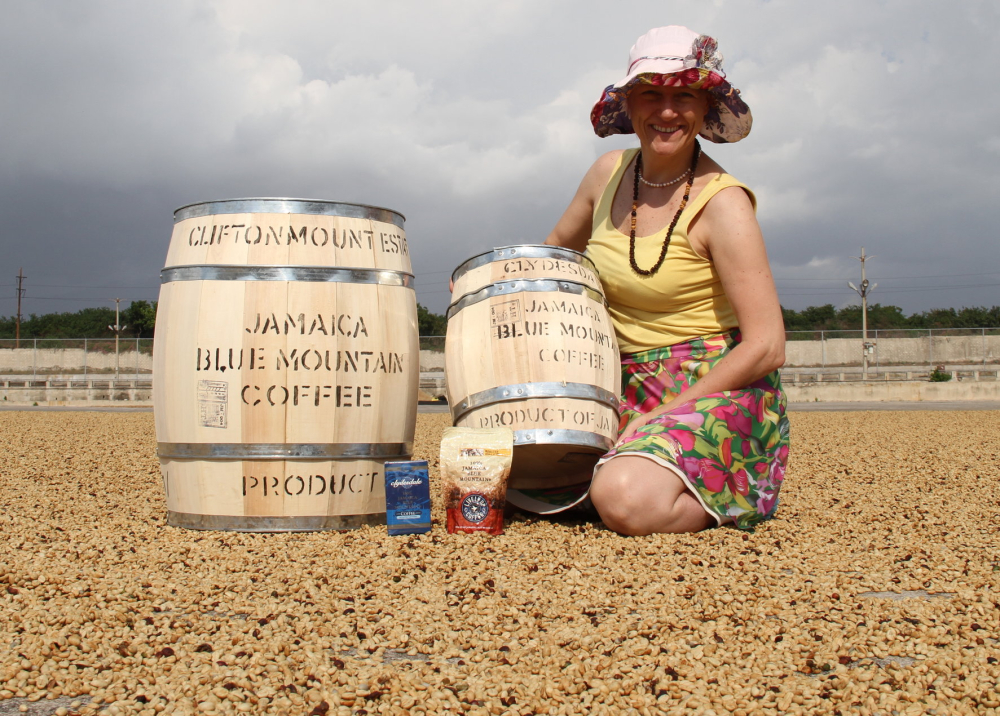
It is no exaggeration to say that Front Street Blue Mountain coffee presents the most balanced coffee flavor in the world, a standard cup of black coffee. If you want to know what classic black coffee really tastes like, Front Street recommends you must try authentic Front Street Blue Mountain coffee at least once. Front Street Blue Mountain coffee comes from Jamaica's Clifton Farm, the earliest area in the Blue Mountain region to plant and produce Blue Mountain coffee, and one of the origins of the first Blue Mountain coffee introduced to China. Its green bean quality is very high, with uniform, plump beans. Front Street selects the highest grade, Front Street Blue Mountain No. 1, processed by the traditional washed method.
Front Street Jamaican Blue Mountain No. 1 Coffee Beans
Region: Jamaica Blue Mountain
Altitude: 1310m
Processing method: Washed
Variety: Typica
Flavor: Chocolate, Nuts, Cream, Cocoa
Front Street uses the cupping format, with all roasts at medium-dark level, and all cupped simultaneously 8 hours after roasting. On the palate, black chocolate and nut flavors appear, with high cleanliness, very bright, good body, and a balance of acidity, sweetness, and bitterness.
How should Front Street Blue Mountain coffee be brewed to taste good?
Front Street recommends the pour-over method, which better showcases Front Street Blue Mountain coffee's clean and balanced flavor.
Front Street recommends using freshly roasted coffee beans for brewing, so you can experience the coffee's rich flavors to the fullest. Front Street Coffee ships coffee beans within 5 days of the roast date, because Front Street knows well that freshness greatly affects flavor. Front Street's roasting philosophy is "freshly roasted good coffee," so every customer who places an order receives coffee in its freshest state. Coffee's resting period is about 4 to 7 days, so when customers receive it, it is at its optimal flavor and ready to brew directly.
Parameters: 15 grams of coffee powder
Powder-to-water ratio: 1:15
Water temperature: 88℃
Grind size: 70% passing rate on a No. 20 standard sieve.
Filter: KONO dripper
The brewing method uses three-stage pouring. Dividing into three pours better presents Front Street Golden Mandheling coffee's full body and caramel sweetness. The first stage is a 30ml bloom pour, which completely wets the coffee grounds for degassing and prepares for better extraction of flavor compounds later; the second stage pours 100ml, mainly to flush out Mandheling's golden foam and raise the coffee bed. The final stage is a gentle center pour of 95ml. Once all the coffee liquid has filtered through, remove the dripper and gently swirl the coffee in the server.
The above content is compiled by CoffeeHunters, a coffee news website.


