








How Did Yunnan Coffee Cultivation Begin and Evolve?
Yunnan coffee began in 1892, when a French missionary planted the first coffee tree at Zhukula to supply his own daily drinking needs. That tree was a small-bean Arabica, later identified as Typica, the oldest variety in the Arabica family. From that single planting, coffee grew into a highland specialty crop whose flavor leans herbal and fresh rather than fruit-forward.
Yunnan sits inside the coffee belt, the band spanning Africa, Asia and the Americas where coffee cultivation is viable. African origins tend toward floral and fruity notes, American origins toward balance and chocolate, while Asian origins like Yunnan show fresh herbal aromas. Typica and Catimor dominate local plantings, with high-altitude Typica now explored in Lincang for its clean, balanced cup and sweet finish.
In the global coffee landscape, Asian origins stand out with their herbal, fresh character, and Yunnan, China is a key representative of this style. From the first coffee tree planted by a French missionary in Zhukula in 1892, to the succession of Typica and Catimor varieties, and now to the specialty exploration of high-altitude Typica in Lincang, Yunnan coffee has traveled a winding yet remarkable path of evolution. In this article, Front Street Coffee will guide you through the history of coffee cultivation in Yunnan, its main varieties, terroir conditions, and flavor expression, and share Front Street's 2013 Yunnan Typica brewing parameters and tasting notes, so you can experience the unique coffee charm nurtured by this land.
From a global geographical perspective, the coffee belt spans three continents—Africa, Asia, and the Americas—and each origin's coffee style is distinct. African coffees are known for their vivid floral and fruity notes, unforgettable at first sip; American coffees pursue balanced flavors, with nuts, chocolate, and soft fruit acidity weaving a long finish; Asian coffees often carry a fresh herbal aroma, conveying a sense of natural authenticity. Next, Front Street will focus on our local origin—Yunnan.
Yunnan
After reviewing relevant historical records, Front Street learned that in 1892, a French missionary successfully planted the first coffee tree in a place called Zhukula to meet his own drinking needs. At the time, he probably never imagined that a century later, coffee would become a calling card of Yunnan's highland specialty agriculture. According to records from that time, this tree belonged to the small-bean species, and the coffee beans it produced were extremely small, so people in China called it "small-grain coffee."
Later scholarly research confirmed that the earliest coffee variety planted in Yunnan was Typica, one of the oldest varieties in the Arabica family. Most other varieties that emerged afterward came from natural mutations or hybridization of Typica. The most prominent flavor advantage of this variety lies in its clean and balanced character, along with a captivating sweet aftertaste.
From the late 1950s to the early 1960s, as economic exchanges with the Soviet Union and Eastern European countries gradually were interrupted, coffee exports were hindered. In addition, at that time domestic coffee consumption was regarded as a capitalist lifestyle, coffee lacked a market foundation, and the cost of planting and maintaining Typica was relatively high, so farmers cut down coffee trees and switched to other cash crops. As a result, Yunnan small-grain coffee production nearly came to a halt. It was not until the early 1980s, when Nestlé took an interest in Yunnan as a suitable place and distributed the easier-to-cultivate Catimor variety, that Yunnan coffee production recovered and ushered in new development.
Yunnan initially used Typica as its main planted variety, but because of its low yield and weak disease resistance, it did not gain widespread acceptance among local coffee farmers. By contrast, Catimor won the favor of many farmers with its excellent overall performance and gradually grew into Yunnan's dominant coffee variety. Therefore, when drinking coffee in Yunnan today, what you taste in most cases is Catimor.
Catimor is mainly promoted and planted on a large scale in Dehong, Baoshan, Pu'er, and other parts of Yunnan Province, while Panzhihua in Sichuan and Myanmar are also actively expanding cultivation. Areas of Yunnan above 800 meters elevation have abundant rainfall and fertile, loose soil. The Baoshan area in particular has a dry-hot valley climate that is very suitable for coffee cultivation.
Main coffee varieties grown in Yunnan
Typica and Bourbon are the two major cultivated varieties of Yunnan coffee, and both are known for clean, balanced, and refined flavors. In 1991, Yunnan introduced Catimor from Kenya. This variety has stronger virus resistance and higher yield, but its flavor is slightly inferior to Typica and Bourbon. Because Typica and Bourbon are quite similar in morphology and habits, they are often planted together in production.
In recent years, coffee cultivation in Yunnan has become increasingly scientific, and green bean processing has become more refined, resulting in a noticeable improvement in coffee flavor. Even Catimor processed by traditional washed or natural methods can present a relatively clean flavor profile.
But Front Street Coffee believes that if Yunnan coffee is to truly join the ranks of specialty coffee, variety selection is key. So in 2013, Front Street planted the Typica variety on a mountain at 1,300 meters elevation in Lincang, Yunnan. Compared with Catimor, Yunnan Typica can show a more pronounced sweetness and an intoxicating black tea-like aftertaste, with acidity, sweetness, and bitterness in balance—a very charming flavor.
Yunnan coffee growing environment
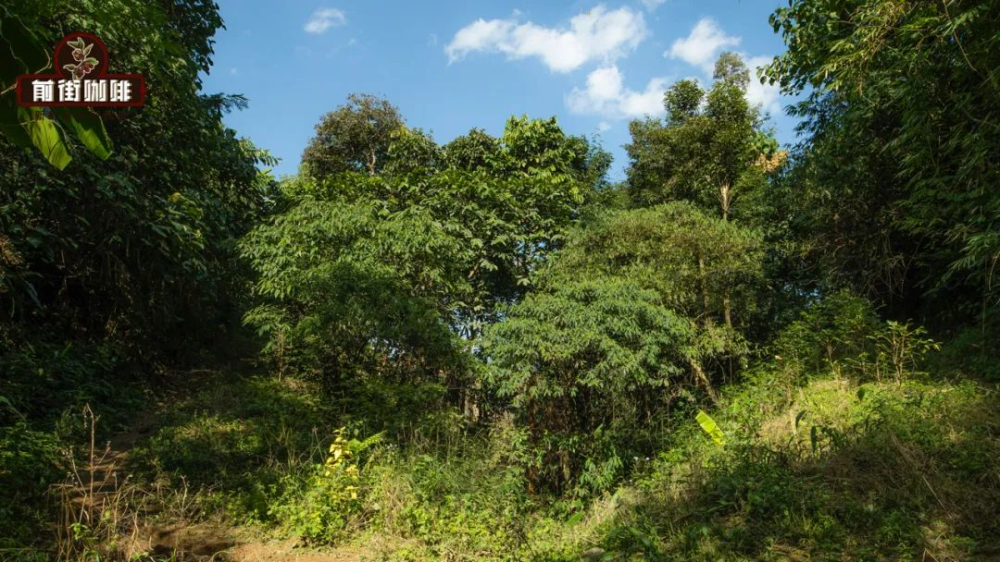
Yunnan's coffee-growing areas are mainly distributed in Lincang, Baoshan, Simao, Xishuangbanna, and Dehong. Among them, Baoshan, with an average annual temperature of 21.5°C, a maximum temperature of 40.4°C, and basically frost-free conditions year-round, is praised as the most ideal small-grain coffee producing area.
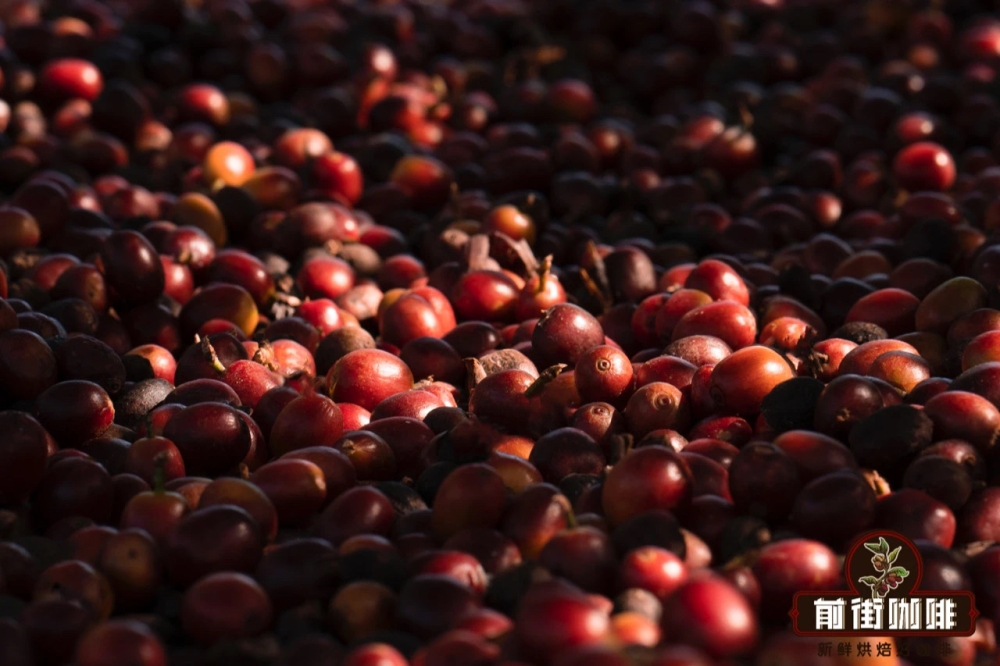
The small-grain coffee produced locally is renowned at home and abroad for being rich but not bitter, aromatic but not harsh, with small and uniform beans, a mellow mouthfeel, and fruity notes. Experts have even compared it to Colombia's wet-processed small-grain coffee, evaluating it as coffee of excellent quality in the world. Baoshan small-grain coffee has a long history of cultivation and is now a national geographical indication product, highlighting the unique charm of Yunnan coffee.
Front Street Coffee: Front Street 2013 Yunnan Typica
Origin: Lincang, Yunnan
Altitude: 1,300 meters
Variety: Typica
Processing method: Natural process
Brewing flavor: Dried apricot, plum, yellow sugar, chocolate, black tea note
Front Street coffee brewing suggestions
In the field of pour-over coffee, Front Street has always regarded the freshness of coffee beans as a key factor; the fresher they are, the more fully they can release rich flavors. The coffee beans shipped by Front Street Coffee are all freshly roasted within 5 days, because freshness has a huge impact on flavor.
Front Street's roasting philosophy is "freshly roasted good coffee," ensuring that every customer who places an order receives the freshest beans. The coffee resting period is usually 4 to 7 days, so when it arrives it is at its peak flavor expression. However, from the perspective of understanding coffee, you can try brewing even if the resting period is not yet complete, so you can appreciate the aroma changes the beans present at different stages.
Front Street brewing: Parameters for Front Street 2013 Yunnan Typica coffee
Dripper: KONO
Water temperature: 88-90°C
Coffee-to-water ratio: 1:15
Grind size: Medium-fine grind (80% passing through China standard No. 20 sieve)
The brewing uses a three-stage extraction: first, bloom with twice the amount of water as the coffee grounds, that is, 30 grams of water for a 30-second bloom; then pour in a slow circular stream, pausing the staged pour at 125 grams; when the water level drops and is about to expose the coffee bed, continue pouring until 225 grams and stop (timing starts at the beginning of the bloom), with a total extraction time of about 2 minutes. Try to keep the brewing technique as consistent as possible for both beans.
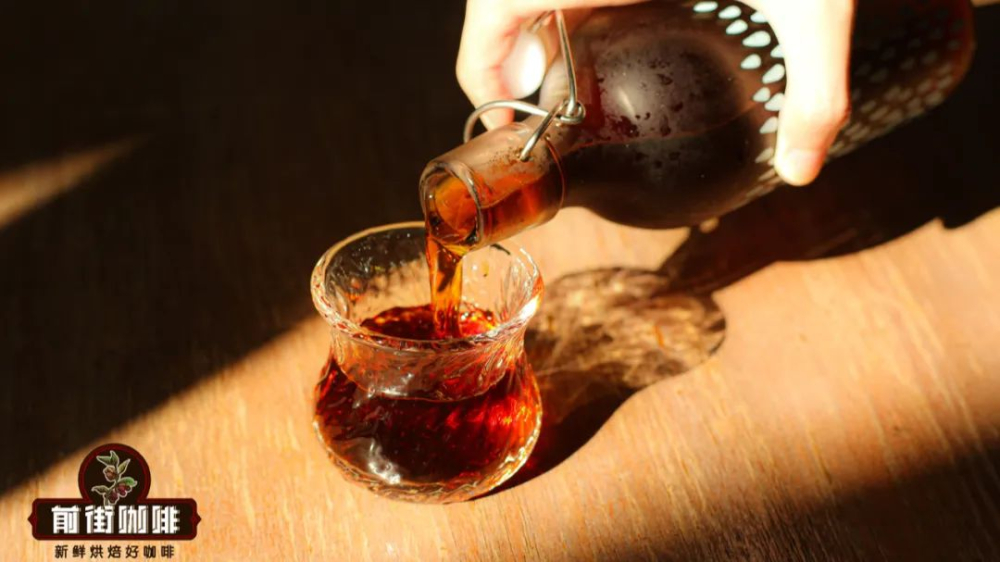
Front Street sensed that this coffee bean has a relatively complex flavor profile, with sweet aromas of chocolate, nuts, roasted sweet potato, and toffee, mixed with a little dark berry acidity and a good body.
For professional coffee knowledge exchange and more coffee bean information, please follow Coffee Workshop (WeChat public account: cafe_style)
For more specialty coffee beans, please add the private WeChat of Front Street Coffee; WeChat ID: qjcoffeex
The above content is compiled by CoffeeHunters, a coffee news website.


