







Jamaican Blue Mountain Coffee: Region, Grades, and Flavor
Jamaican Blue Mountain coffee grows in the cool, misty hills of the island's eastern parishes, where elevations above three thousand feet slow cherry development. The Blue Mountain range itself, along with the nearby High Mountain and Jamaica Prime zones, holds official growing boundaries. Clifton Estate sits within that historic region, and its lots follow the same careful picking and pulping practices used across the island.
The grading system separates No. 1, No. 2, No. 3, and peaberry based on screen size and defects. Blue Mountain No. 1, the most familiar grade, screens at seventeen or eighteen, while peaberry, a single round bean from each cherry, offers a denser roast profile. In the cup, the coffee shows mild acidity, low bitterness, and notes of cocoa and warm spice.
Why has Blue Mountain Coffee become a classic among classics? This article takes you into Jamaica's Blue Mountains to learn about its origin environment, growing conditions, grade classifications, and how to identify the authentic product. Front Street Coffee selects Clifton Estate Blue Mountain No. 1, using a medium-dark roast to present a balanced flavor of dark chocolate, roasted nuts, and subtle fruit acidity. From altitude restrictions to wooden barrel export certificates, understand the full picture of Blue Mountain Coffee in one article.
Blue Mountain Coffee
For decades, Blue Mountain Coffee has deeply won the favor of countless seasoned coffee enthusiasts with its balanced, full, and solid flavor expression, making it one of the most representative classic coffees, and one especially worth savoring. If you want to experience this classic style, Front Street Blue Mountain No. 1 coffee beans are a choice worth prioritizing—classic in positioning, pure in flavor, and outstanding in quality, fully deserving of the title "Emperor of Coffee."
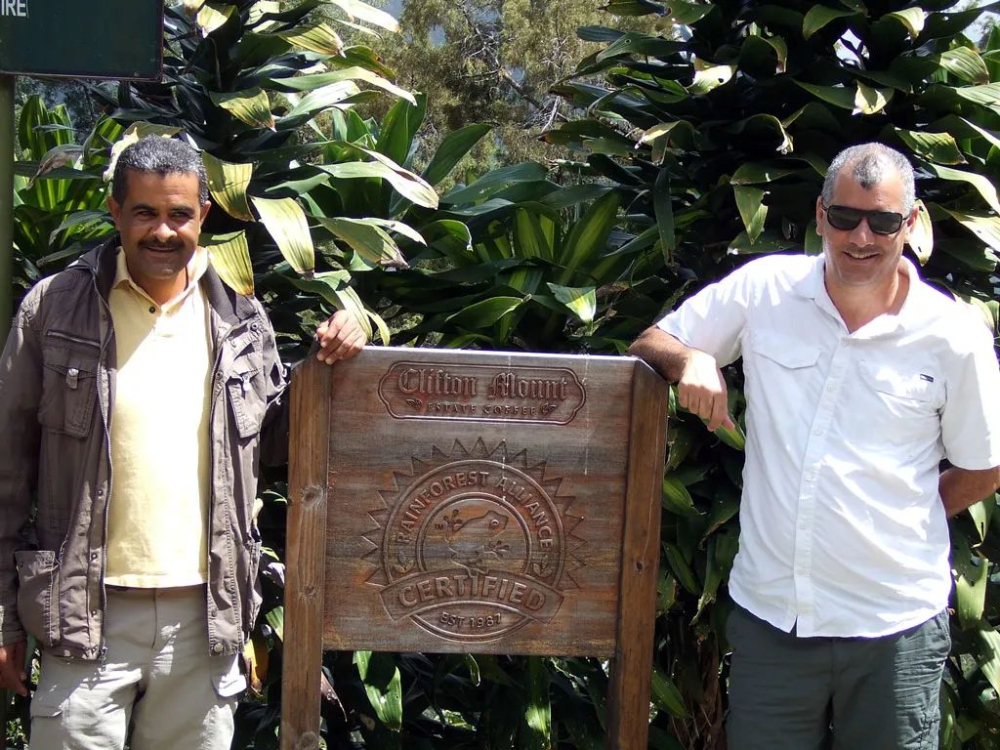
Front Street Coffee has always held great passion for Blue Mountain Coffee. In order to let more people taste authentic Blue Mountain No. 1 at a reasonable price, Front Street specifically chose Clifton Estate, located in Jamaica's Blue Mountains with a long history of coffee cultivation. This estate began coffee cultivation and production around 1750, and is also the only coffee estate in the Blue Mountains to obtain Rainforest Alliance certification (this certification is granted only to regions that meet sustainable agriculture system standards).
What exactly is Blue Mountain Coffee?
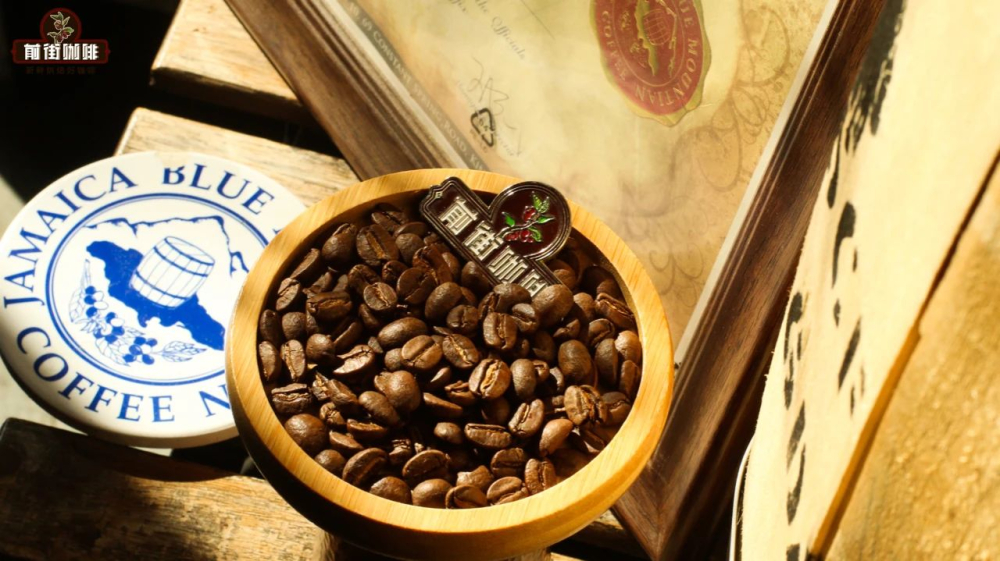
Blue Mountain Coffee is widely recognized as one of the finest coffees in the world. The Blue Mountains are located in eastern Jamaica. When the weather is clear, sunlight shines directly onto the Caribbean Sea, and the peaks reflect the brilliant blue glow of the seawater, which is how the Blue Mountains got their name. The main peak of the Blue Mountains is 2,256 meters above sea level, the highest peak in the Caribbean region, and also a famous tourist destination.
However, not the entire mountain range is suitable for growing commercial crops. The Jamaican government stipulates that areas above 1,700 meters above sea level belong to a natural ecological protection zone, where coffee and other commercial crops are prohibited from being planted. Therefore, the Blue Mountain Coffee growing belt is concentrated between 910 and 1,700 meters above sea level.
This area lies within the coffee belt, with fertile volcanic soil, fresh and pollution-free air, a humid climate, and fog and rain throughout the year. The average annual rainfall is about 1,980 millimeters, and the temperature remains around 27 degrees Celsius—it is precisely these natural conditions that have nurtured the world-renowned Jamaican Blue Mountain Coffee.
Blue Mountain Coffee possesses all the characteristics of high-quality coffee: rich and aromatic in taste, with sweetness, acidity, and bitterness perfectly balanced, with almost no perceptible bitterness, leaving only a moderate and elegant acidity. Through cupping, Front Street Coffee found that medium-dark roasted Blue Mountain Coffee shows an extremely balanced and mellow flavor, in which dark chocolate, roasted nuts, and faint fruit acidity complement one another, blending together without competing.
Can all coffee produced in the Blue Mountains be called Blue Mountain Coffee?
According to the classification of the Jamaica Coffee Industry Board (CIB), only coffee grown between 910 and 1,700 meters above sea level can be called "Jamaica Blue Mountain Coffee." Coffee grown between 460 and 910 meters above sea level can only be called "Jamaica High Mountain Coffee," while coffee below 460 meters is called "Jamaica Prime Coffee."
For Jamaican Blue Mountain Coffee, the CIB also classifies grades according to bean size and defect rate after processing, including Blue Mountain No. 1, Blue Mountain No. 2, Blue Mountain No. 3, and Blue Mountain Peaberry. At present, the Blue Mountain Coffee imported into China is mainly Blue Mountain No. 1 grade.
Blue Mountain No. 1 coffee beans: 96% of the coffee cherries must reach a screen size of 17 or above, and the defect rate after processing must not exceed 2%;
Blue Mountain No. 2 coffee beans: 96% of the coffee cherries must reach a screen size of 16 or above, and the defect rate after processing must not exceed 2%;
Blue Mountain No. 3 coffee beans: 96% of the coffee cherries must reach a screen size of 15 or above, and the defect rate after processing must not exceed 2%;
Blue Mountain Peaberry: 96% of the coffee cherries must reach a screen size of 10 or above, and the defect rate after processing must not exceed 2%.
How do you identify authentic Blue Mountain Coffee?
In supermarkets or convenience stores, we often see coffee products labeled "Blue Mountain flavor," and many coffee shops also use Blue Mountain flavor blend beans to make coffee, but none of these are authentic Blue Mountain Coffee, and they may even have no connection to Blue Mountain at all.
The large number of Blue Mountain flavor coffees on the market is partly because Blue Mountain Coffee is extremely well known in China, and many people regard it as synonymous with good coffee; on the other hand, early Blue Mountain Coffee was scarce and expensive, so operators used mixed beans plus dark roasting to create a blend with a taste close to Blue Mountain.
Authentic Blue Mountain Coffee, however, is not a blend, but a single-variety coffee bean, using one of the oldest varieties in the Arabica lineage—Typica—and the variety itself has a very clean and serene flavor.
In terms of export, the Jamaican government stipulates that Blue Mountain Coffee beans must be packed in wooden barrels, with strict requirements and designated export standards, and certificates are issued as proof. In Front Street Coffee's physical stores, the relevant wooden barrels and certificates can be seen.
There are three types of certificates in total:
(1) A quality certificate issued by the Jamaica Coffee Industry Board;
(2) An authorized sales certificate issued by the Blue Mountain Coffee producer (Blue Mountain Coffee is distributed by 4 processing producers licensed by the Jamaican government and exported by 16 licensed exporters);
(3) Certificate of origin for Jamaican Blue Mountain Coffee.
The above content is compiled by CoffeeHunters, a coffee news website.


