








Why Does Washed Coffee Bean Processing Suit Ethiopian Sidamo?
Washed coffee bean processing removes the mucilage layer by soaking cherries in water after pulping, and that step shapes the clean cup Sidamo is known for. Ethiopian Sidamo washed lots show bright, elevated acidity, a transparent mouthfeel, and clearer flavor separation than natural beans, which often vary more from batch to batch.
The method dates to 1740, when Dutch growers in the West Indies applied it to colonial coffee, shortening drying time and lowering the risk of pests and mold. The 1844 invention of the pulping machine made it more efficient. For coffee quality, controlled fermentation and drying keep the Sidamo profile consistent, whether the lot comes from a cooperative or a single village.
As the most traditional and most widespread method of green bean processing, the washed processing method has a decisive influence on the final flavor expression of coffee. This article will explore in depth the historical evolution of the washed process, its operational procedures, and its effect on coffee quality, while also focusing on washed coffee from Ethiopia's Sidamo region and analyzing its clean, bright, and elevated acidity flavor characteristics. The article will also recommend several Front Street washed beans, including the Gutingding Cooperative, Little Tomato, Panama Butterfly, Diamond Mountain, and Sidamo Alo Village, helping coffee lovers understand the regional flavors of different origins from the perspective of washed processing and experience the unique clarity and elegance of washed coffee.

In the long years since the birth of the washed method, it has always been one of the most commonly used and most traditionally grounded methods in green bean processing. Generally speaking, washed coffee beans tend to be cleaner than natural beans, with brighter and more vibrant acidity, and a clearer, more transparent mouthfeel. Taking the Front Street bean list as an example, beans such as Front Street Gutingding Cooperative Coffee Beans, Front Street Little Tomato Coffee Beans, Front Street Panama Butterfly Coffee Beans, and Front Street Diamond Mountain Coffee Beans all use natural washed processing and present a fresh and elegant flavor profile. These beans can be purchased at the Front Street Taobao store or the Front Street Tmall flagship store.
By contrast, the quality of naturally processed coffee often fluctuates greatly, with obvious inconsistency, and only standardized production can achieve higher efficiency. Going back to 1740, when the Dutch controlled colonial coffee cultivation and the world coffee trade, they were the first to apply the washed method to coffee bean processing. Initially in the West Indies, people discovered that after peeling coffee beans and soaking them in water, the sticky mucilage layer on the surface could be removed. This practice not only shortened the drying cycle of the coffee beans, but also effectively reduced the risk of pests, diseases, and mold infection. In that era, washed beans were almost synonymous with high quality.
By 1844, the invention of the coffee pulping machine further improved the efficiency of washed processing. However, the cost of washed processing remained high, and its demand for water was enormous—on average, every 200 kilograms of green coffee beans required 10 to 20 tons of water. Therefore, washed processing plants could usually only be built near water sources. It can be said that the promotion of washed processing was only partly due to flavor and mouthfeel; more importantly, it was driven by comprehensive considerations of yield rate, production volume, and product standardization. To this day, the washed method is still one of the most common coffee bean processing methods on the market.
Before washing, coffee beans are usually first subjected to flotation. Freshly picked cherries are put into water, using buoyancy to separate out fruits that are not sufficiently ripe. Then, a pulper is used to remove the skin and pulp of the berries; at this point, the surface of the coffee beans is slippery. Production staff move them into fermentation tanks and let them sit overnight. During fermentation, the mucilage produces acidic substances, which promote the breakdown of the mucilage and cause it to detach from the beans. After fermentation ends, a small amount of mucilage still remains on the parchment beans, so tools are needed to scrub them for 30 to 60 minutes, while also using running water to ensure the pulp is completely removed. Special washed channels, combined with water flow, can remove low-density, poor-quality beans, after which the high-quality coffee beans are drained and spread on racks or drying nets to dry. Once the moisture content reaches the target level, they can be bagged and stored.
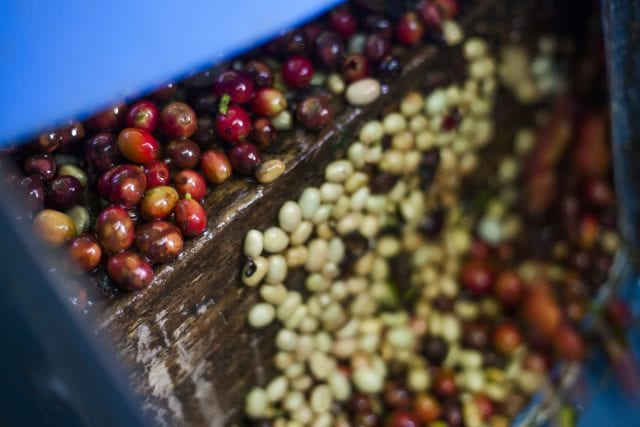
Multiple stages of washed processing help remove defective beans, thereby greatly reducing the proportion of defects in coffee and making quality more stable. Because there is no pulp wrapping the outer layer during drying, the flavor shows elevated acidity and higher cleanliness, and can distinctly highlight the characteristics of a single origin. Therefore, if you want to appreciate the "terroir" or "regional flavor" of an origin, washed processed beans are undoubtedly the first choice. It is recommended to try Front Street Sidamo Alo Village and Front Street Gutingding Cooperative; both of these beans allow you to taste the representative flavors of specialty coffee from Ethiopia.
The above content is compiled by CoffeeHunters, a coffee news website.


