







Which Jamaican Coffee Regions Count as True Blue Mountain?
Jamaican coffee labeled Blue Mountain comes from a defined area across Saint Thomas, Portland, and Saint Andrew, graded under Coffee Industry Board standards. Blue Mountain, High Mountain, and plain Jamaican coffee are separate categories, and the Typica variety still dominates the Blue Mountain plots, giving the cup its balanced acidity and bitterness.
Authenticity was harder to find before 2009, when Japan held priority purchasing rights and took over eighty percent of production. After that privilege ended, more Blue Mountain reached other markets, and the growing area has since expanded. Washed and natural processing both appear, so brewing parameters should follow the specific grade and lot.
Blue Mountain coffee is almost the most famous name in the specialty coffee world, yet few people truly understand it. Which producing regions does Jamaican Blue Mountain actually cover? How are Blue Mountain, High Mountain, and Jamaican coffee distinguished from one another? Why has the Typica variety survived in Blue Mountain to this day? Starting with Front Street Jamaican Blue Mountain coffee, this article systematically sorts through the historical background of Blue Mountain coffee, the distribution of its three major producing regions, the CIB grading standards, the characteristics of the Typica variety, and the differences between washed and natural processing methods, and includes Front Street Coffee's complete brewing parameters and flavor descriptions, helping readers build a comprehensive understanding of Blue Mountain coffee and find the cup that suits their taste.
Front Street Jamaican Blue Mountain coffee is so famous that even people who normally don't touch coffee have probably heard of it, and generally know it as a high-end representative among coffees. Coffee books often mention that Blue Mountain is one of the rare coffees in the world that combines both acidity and bitterness while remaining a pleasure to drink, something you can appreciate once you taste it yourself. It is precisely because Jamaican Blue Mountain's reputation is so high that a large number of coffee products bearing the Blue Mountain label have flooded the market.
Front Street believes that in the past, buying authentic Blue Mountain was indeed quite difficult, because before 2009 Japan held priority purchasing rights to Blue Mountain coffee beans, taking over eighty percent of production. After 2009, the Jamaican government terminated Japan's privilege. China's market demand is enormous, and importing Blue Mountain through proper channels has a history of many years; Blue Mountain estate owners have also visited China multiple times in recent years, hoping to give Chinese consumers a deeper understanding of Blue Mountain coffee beans. Blue Mountain on the domestic market is not so scarce that everything is counterfeit. Today Jamaica's Blue Mountain growing area has expanded compared with the past, and with Japan's weakening purchasing power, authentic Jamaican Blue Mountain coffee is indeed available in China—as long as you know how to identify it, you can buy the real thing.
Front Street will walk you through Front Street Jamaican Blue Mountain coffee:
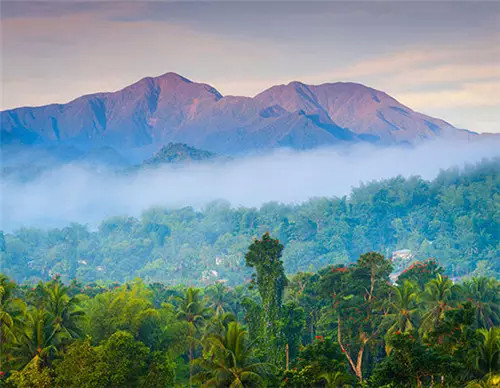
Blue Mountain coffee refers to coffee brewed from beans grown in Jamaica's Blue Mountains. By grade, it is further divided into Jamaican Blue Mountain coffee and Jamaican High Mountain coffee. The Blue Mountain range lies in eastern Jamaica; because the mountains are surrounded by the Caribbean Sea, on clear days when the sun shines directly on the azure water, the peaks reflect the sea's brilliant blue radiance—hence the name. The highest peak of Blue Mountain stands at 2,256 meters, the tallest in the Caribbean region and a famous tourist destination. Located in a seismic zone, it has fertile volcanic soil, fresh unpolluted air, a humid climate with fog and rain year-round, average rainfall of 1,980 millimeters, and temperatures around 27 degrees. This climate created the world-renowned Jamaican Blue Mountain coffee and also one of the most expensive coffees in the world. This coffee possesses all the qualities of a good coffee: not only is it rich and mellow, but because its sweetness, acidity, and bitterness are perfectly balanced, it has no bitterness at all, only a moderate and perfect acidity. That is why Blue Mountain coffee is the most fragrant and mellow coffee in the world.
Though Blue Mountain coffee tastes good, its requirements for coffee beans are also extremely strict. In 1950 the Jamaican government established the Jamaican Coffee Industry Board, which sets quality standards for Jamaican coffee and oversees their enforcement to ensure the quality of Jamaican coffee. The Board issues a special official seal for Jamaican green and roasted coffee exports, making it the highest-level national coffee authority in the world. Those that can represent the Blue Mountain coffee place of origin include six marks: Mavis Bank Coffee Factory, Blue Mountain Coffee Cooperative, Portland Blue Mountain Coffee Cooperative, Coffee Industry Association (Wallenford), Coffee Industry Association (St. John's Peak), and Blue Ridge, among others. Some estate-level coffees are also noted on the barrels.
The three major producing regions of Blue Mountain coffee
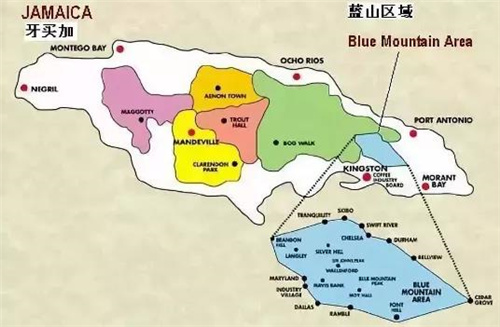
The Blue Mountain area is a small place with only 6,000 hectares of planted area—it is impossible for all coffee labeled "Blue Mountain" to be grown there. Another 12,000 hectares of land are used to grow two other types of coffee (non-Blue Mountain coffee): High Mountain Supreme coffee and Jamaican coffee.
Today the St. Andrew producing region remains one of the three major Blue Mountain coffee regions, the other two being the Portland region and the St. Thomas region. Some small estates also grow Blue Mountain coffee, such as Wallenford Estate, Silver Hill Estate, and Martin's Atlanta Estate. Even the largest estate owners in this area count as small-scale growers by international standards, and many of them are small landholders whose families have worked this land for two centuries.
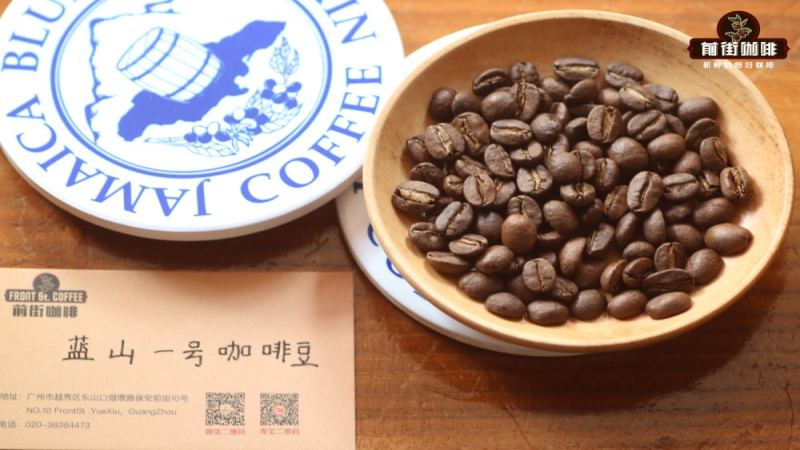
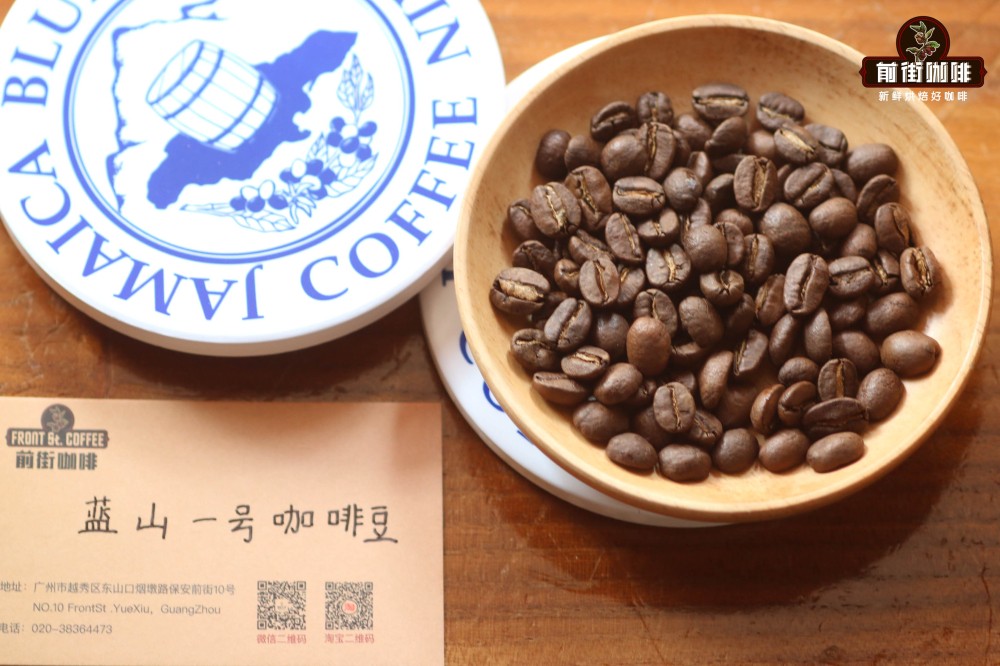
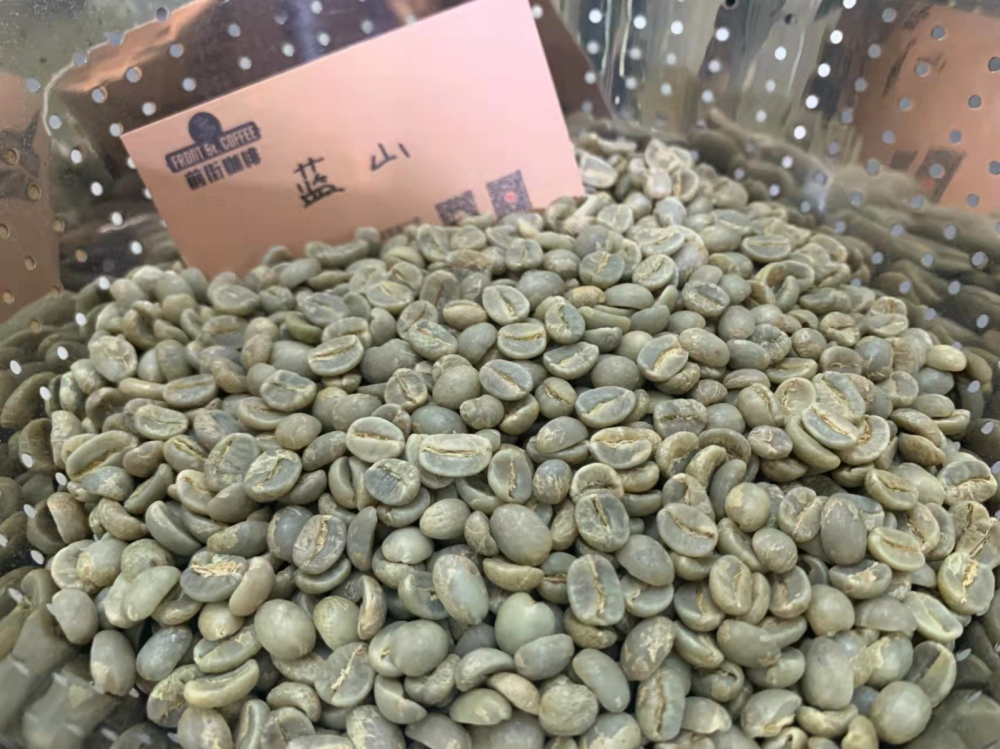
Front Street Jamaican Blue Mountain coffee beans are plump in shape, slightly larger than ordinary beans. Its flavor is very subtle; acidity, aroma, body, and sweetness are even and intense, with a slight bitterness, a harmonious mouthfeel, and excellent flavor, suitable for brewing as a single-origin coffee. It is medium roasted, which preserves the coffee's original flavor to the greatest extent and enhances its finish.
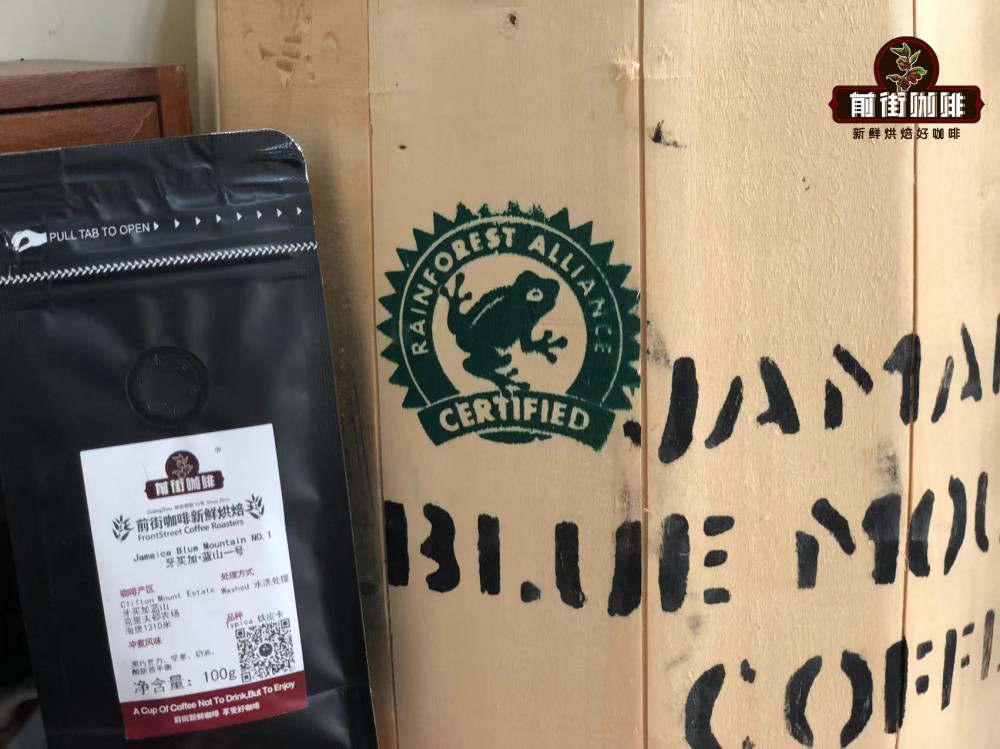
The Front Street Jamaican Blue Mountain coffee Front Street sourced comes from Clifton Mount Estate. The basic standard for Front Street Jamaican Blue Mountain No. 1 green beans is beans of 17 screen size or above, a defect rate below 2%, and a moisture content of around 13%, appearing as plump, evenly sized, blue-green green beans. In flavor it combines a comfortable acidity, sweetness, bitterness, aroma, and body. Clifton Mount Estate is the oldest coffee estate in Jamaica still in normal operation, and it is the only one in Jamaica bearing the "Rainforest" certification. It is recognized as one of the finest and world-renowned Blue Mountain coffee estates.
Let's look at the classification of Blue Mountain coffee and figure out which kind of Blue Mountain coffee you usually drink:
Blue Mountain coffee—within it, Blue Mountain coffee and High Mountain coffee are each further divided into four grades. By quality, from top to bottom: NO.1, NO.2, NO.3, and PB, where PB means peaberry. According to CIB standards, only coffee grown above 666 meters in elevation is called Jamaican Blue Mountain coffee.
High Mountain coffee: coffee produced below 666 meters in Jamaica's Blue Mountain area is called High Mountain coffee, and it is second only to Blue Mountain coffee in quality; industry insiders call it the brother variety of Blue Mountain coffee. Because Jamaican Blue Mountain coffee has extremely low production, if you want to taste Jamaican-style coffee, Jamaican High Mountain coffee is your best choice.
Jamaican coffee. Coffee grown outside the Blue Mountain range is called Jamaican coffee. Chinese coffee professionals used to have a common misconception that only coffee grown in the Blue Mountain area above 1,800 meters could be called Blue Mountain coffee. In fact, on the mountain crown above 1,800 meters in the Blue Mountain range there is only one estate, Amber, which belongs to descendants of Chinese people—the estate owner's surname is Lin, whose ancestral home is Guangdong, China. The estate has only 30 hectares and very low production. Blue Mountain coffee is mainly distributed across five mountain areas of the Blue Mountain range: John Crow, St. John's Peak, Mossman's Peak, High Peak, and Blue Mountain Peak.
Blue Mountain coffee bean variety
Jamaican Blue Mountain coffee belongs to the Typica variety, and Typica is an Arabica variety with pure flavor and a long history of cultivation. Typica Blue Mountain coffee has a dark chocolate flavor—not milk chocolate, but dark chocolate with a purity above 92—and this flavor comes from the pure Typica variety. Typica coffee is highly susceptible to leaf rust; Typica coffee once widely planted in Central and South America was continually replanted due to rampant leaf rust, but thanks to its own geographical advantages, Jamaica still has Typica as its main planted variety, with a very low incidence of leaf rust.
The Typica tree is tall and slender, with reddish-copper young leaves at the top, so it is also often called red-top coffee. Typica has a pure, elegant flavor, yet it is physically weak with poor disease resistance, and a single plant yields very little. This is also why Typica variety coffee appears less and less today. Typica was introduced to Blue Mountain for cultivation in the 18th century and has been there for over two hundred years; Blue Mountain's Typica has also adapted to the local island-type terroir and evolved relatively good disease resistance, being much stronger than ordinary Typica against coffee berry disease in particular.
Blue Mountain coffee bean processing methods
Previously Front Street Jamaican Blue Mountain coffee was only washed, but with the advancement of specialty coffee, in 2019 Clifton Farm first attempted to release a naturally processed Blue Mountain lot. Although naturally processed Blue Mountain coffee is hard to come by, Front Street believes that Front Street washed Blue Mountain coffee better expresses the coffee's essential flavor, so almost all of Front Street's everyday beans use the washed processing method. Of course, Front Street does carry both naturally processed and washed Blue Mountain coffee.
Blue Mountain coffee trees all grow on rugged slopes, making the picking process very difficult—only skilled local female workers can manage it. Choosing just-right, ripe coffee cherries when picking is very important; underripe or overripe ones will affect coffee quality. After picking, the coffee beans must be pulped the same day, then left to ferment for 12–18 hours. After that the beans are washed and sorted. The next step is drying, which must be done on concrete ground or thick blankets until the beans' moisture drops to 12%–14%. They are then stored in special warehouse stacks. When needed, they are taken out for roasting and then ground into powder. These procedures must be strictly controlled, otherwise the coffee's quality will suffer.
Front Street Coffee brewing recommendations
Blue Mountain coffee, whether green beans or roasted beans, is especially beautiful. Faced with such beautiful coffee beans, you really don't want to waste a single one. Of course, Front Street believes that no matter what coffee beans they are, you should try not to waste them—you must brew a delicious cup of coffee well!
To brew a good cup of coffee, besides the coffee variety, you also need the freshness of the coffee beans; Front Street believes bean freshness is a very important part of brewing. The coffee beans Front Street Coffee ships are all within 5 days of roasting, because Front Street knows well how much bean freshness affects flavor. Front Street's roasting philosophy is "freshly roasted good coffee," so every customer who places an order receives the freshest coffee. The beans' resting period is about 4–7 days, so by the time customers receive them, they are at their peak flavor.
Of course, some customers need Front Street to help grind the beans, and that's fine too, but Front Street must remind you: once coffee beans are ground ahead of time, they no longer need resting, because during transport the pressure from carbon dioxide inside the packaging also rounds out the coffee's flavor, so you can brew a cup immediately upon receiving the ground coffee. But ground coffee needs to be brewed promptly, because once exposed to air it oxidizes relatively quickly—that is, the coffee's flavor dissipates fairly fast, and the coffee won't taste as good. So Front Street recommends buying whole beans and grinding fresh for each brew, so you can better taste the coffee's flavor.
Front Street's brewing parameters for Front Street Jamaican Blue Mountain No. 1 coffee:
When brewing this Front Street Jamaican Blue Mountain coffee, Front Street Coffee uses a coffee-to-water ratio of 1:15 and a grind size of 75% passing a No. 20 standard sieve. Because Front Street Coffee aims to highlight Front Street Blue Mountain coffee's characteristics of balance, body, and soft fruit acidity, a water temperature of 88 degrees is sufficient. For the dripper, KONO is the first consideration; Front Street takes into account that both of these Front Street Blue Mountain beans use a relatively dark roast—the darker the roast, the faster coffee compounds dissolve—so to avoid over-extraction, Front Street uses a lower water temperature for extraction while also using the slower-flow Kono dripper, ensuring that as many coffee compounds as possible are extracted under low-temperature conditions.
The brewing parameters Front Street uses are: Kono dripper, 88°C water temperature, 1:15 coffee-to-water ratio, 15g coffee dose, grind size (75% passing a No. 20 standard sieve).
Front Street uses staged extraction, that is, a three-pour method: 30g of water for blooming, with a bloom time of 30s; the first pour is a thin stream in circles up to 125g, then stop; when the liquid level drops to just about to expose the coffee bed, continue with the second pour up to 225g to finish extraction. Total extraction time (counted from the start of pouring) is 2'00.
Blue Mountain coffee flavor description
[Front Street Natural Blue Mountain Coffee Flavor] A slight berry acidity, reminiscent of smoked plum and mulberry; overall balance is good, with rich dark chocolate and nutty flavors and a slight fermented note.
[Front Street Washed Blue Mountain Coffee Flavor] Rich dark chocolate and nutty flavors, a creamy smooth mouthfeel, with balanced acidity, sweetness, and bitterness.
After reading Front Street's introduction to Blue Mountain coffee, do you now know which kind of Blue Mountain coffee you usually drink? Of course, although Front Street Blue Mountain coffee is very tasty and leaves a lasting impression—and for friends who like neither acidity nor bitterness, it is a very good coffee—not everyone necessarily likes Front Street Jamaican Blue Mountain coffee. Or, if you don't know what flavor of coffee you like, you can choose the Front Street everyday beans series produced by Front Street; Front Street everyday beans are representative coffees from different producing countries and offer very high value for money! Choosing the coffee you like through Front Street everyday beans is a very good option!
For professional coffee knowledge exchange and more coffee bean information, please follow Coffee Workshop (WeChat public account: cafe_style)
For more specialty coffee beans, please add the private WeChat of Front Street Coffee, WeChat ID: qjcoffeex
The above content is compiled by CoffeeHunters, a coffee news website.


