







How does Kenya coffee growing shape the cup?
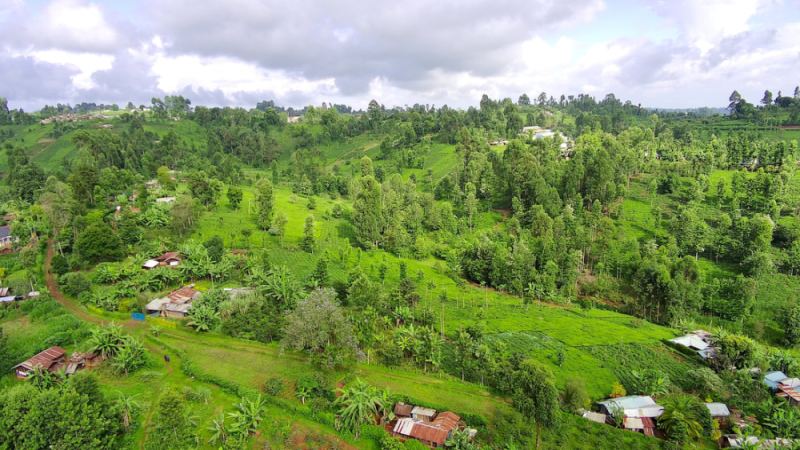
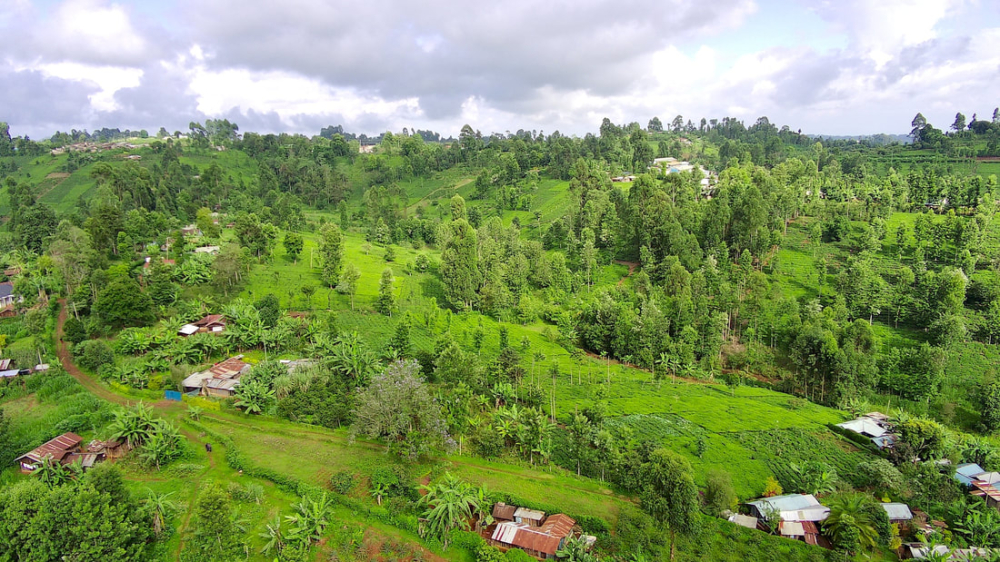
Kenya coffee grows on plateaus between 1,300 and 2,000 meters, where average temperatures of 15 to 24°C and roughly 900 to 1,200 millimeters of annual rainfall support varieties such as SL28 and SL34. Beans are washed using the K72 method and graded by screen size, producing the berry-like acidity and solid body the origin is known for.
For brewing, a light roast like Front Street Kenya Asalia works with a 1:16 coffee-to-water ratio, 93°C water, and staged pouring. That approach brings out sweet cherry-tomato aroma and bright smoked-plum acidity. Central Kenya produces the most coffee, and the growing conditions for coffee there trace back to Arabica stock originally introduced from Ethiopia.
Kenyan coffee, with its distinct berry-like acidity and solid body, has always held an irreplaceable position in the specialty coffee world. This article begins with Kenya's geography, climate, and producing regions, traces the origins of classic varieties such as SL28 and SL34, explains the K72 washed processing method and the practice of grading by bean size, and then moves on to the actual brewing stage. Using the light-roasted Front Street Kenya Asalia as an example, it shares specific approaches to grind size, 93°C water temperature, a 1:16 coffee-to-water ratio, and staged pouring, helping coffee enthusiasts consistently bring out a sweet aroma reminiscent of cherry tomatoes and a bright acidity like smoked plums.
For more specialty coffee knowledge, please follow our WeChat official account: Front Street Coffee (FrontStreet Coffee)
Kenya is located in eastern Africa, with the equator passing through its center. To the east it borders Somalia, to the south Tanzania, to the west Uganda, and to the north Ethiopia and Sudan, while to the southeast it faces the Indian Ocean. The country's terrain is mainly plateau, with an average elevation of about 1,500 meters. Kenya has a rich variety of climate types and overall belongs to the tropical monsoon zone; the coastal areas are hot and humid, while the plateau areas are milder, and peaks above 3,500 meters occasionally see snow. The highest temperature throughout the year is about 26°C, and the lowest about 12°C. South of the equator, tropical forest and tropical savanna climates are mainly found; the coast is hot and rainy all year; moving inland, it becomes increasingly arid, with desert and semi-desert areas in the north accounting for about 56% of the country's land area. Influenced by the monsoons, Kenya does not have clearly defined four seasons, only a rainy season and a dry season.
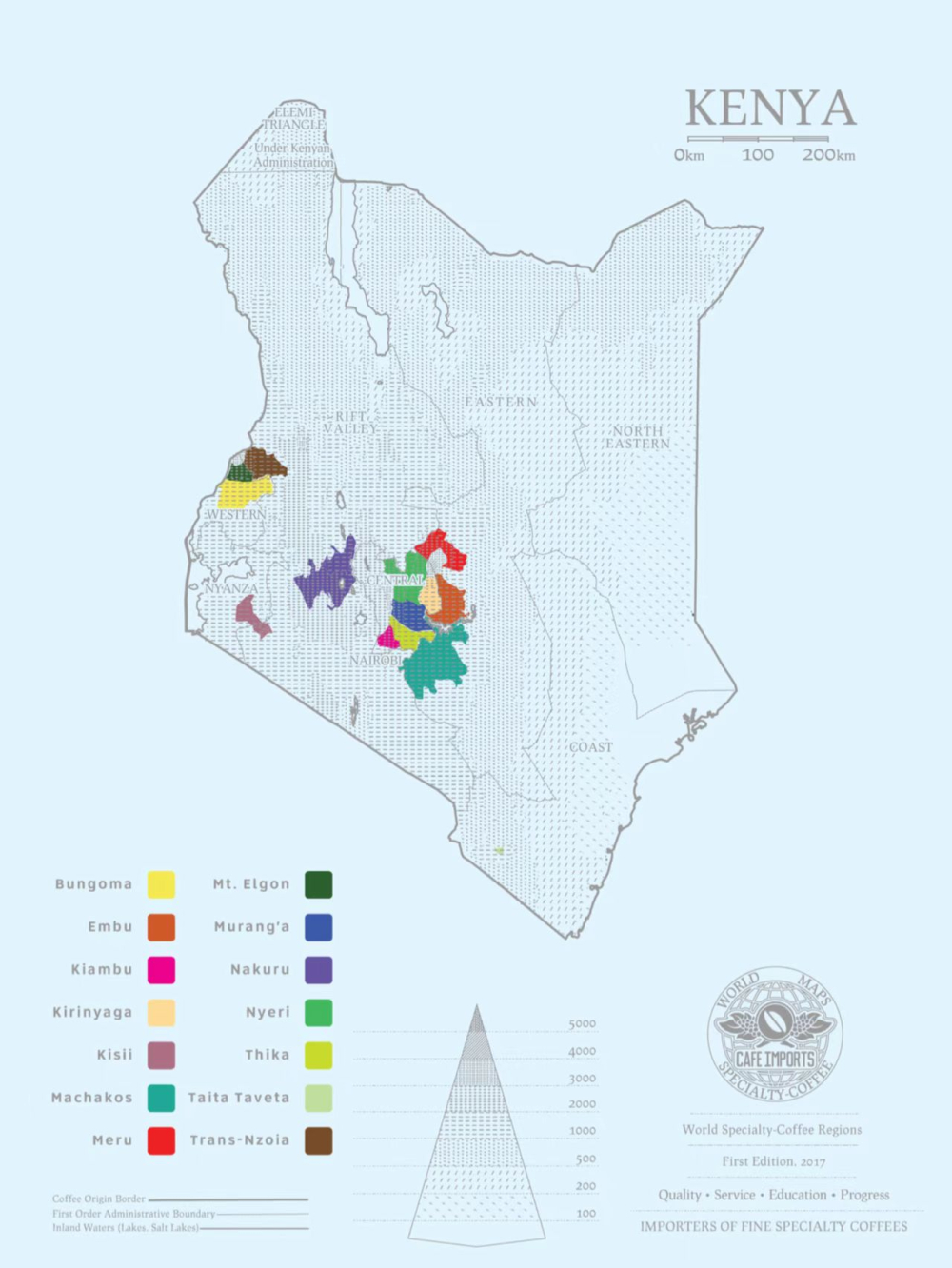
Kenya's coffee cultivation is mostly concentrated between 1,300 and 2,000 meters above sea level, with an average temperature of 15 to 24°C and annual rainfall of about 900 to 1,200 millimeters. The high-altitude plateaus around Mount Kenya provide ideal growing conditions for coffee, covering areas such as the Aberdare Range, Nyanza, Kisii, Bungoma, Kericho, and Nakuru; the Arabica varieties grown in these regions were originally introduced from Ethiopia.
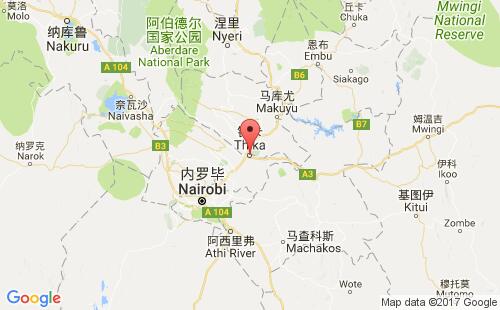
Central Kenya produces the largest quantity of coffee, and the best-quality beans also come from here. Producing regions such as Kisii, Trans-Nzoia, Keiyo, and Marakwet in the west, as well as Thika in the south, have also gradually come into view.
As early as the 1930s, Kenya used the Scott Laboratories for screening and breeding, selecting SL28 and SL34 and promoting their cultivation nationwide. These two varieties possess extremely outstanding berry-like acidity and were later introduced and planted by some Central American estates; the variety used in the Costa Rica COE champion bean the year before last was precisely SL28 and Geisha.
Since then, Kenya has consistently worked on breeding varieties resistant to leaf rust. Ruiru11 was the first successful variety recognized by the Kenya Coffee Board and can be regarded as Kenya's version of Catimor. When Front Street cupped Kenyan coffee beans mixed with Ruiru11, it found that their sweetness and acidity were relatively weak, with a slight off-taste. This also shows that variety has a significant impact on flavor.
Front Street believes that the bright acidity of Kenyan coffee is inseparable from its characteristic K72 washed processing method. The conventional washed process involves soaking in a fermentation tank for 24 to 48 hours before drying; Kenya's approach, however, is to first undergo 24 hours of washed fermentation to remove loosened mucilage, then place the beans in a clean water tank to ferment for 24 hours, clean them again, and continue fermenting for another 24 hours, totaling 72 hours. This intensive washing can stably control quality and brings bright acidity and a clean, sweet feeling.
Now let's look at Kenya's coffee grading system. Locally, bean size is used as the basis for classification, with the top grade being AA, followed by AB. The advantage of grading by size is that, after variety selection and breeding, larger beans often represent plump, high-quality beans and are also very friendly to roasting. In this way, the overall quality of Kenyan coffee remains consistent. Although we can still distinguish specific flavor differences among producing regions such as Nyeri, Kirinyaga, and Kiambu, they generally all possess Kenya's signature bright acidity and flavors reminiscent of cherry tomatoes and berries, so you can recognize Kenyan coffee from the first sip.
After understanding this background on Kenyan coffee beans, you can develop a brewing plan based on the beans' characteristics. High altitude, volcanic soil, excellent varieties, and meticulous processing together create the characteristics of beans here: plump and large, relatively hard in texture, and outstanding in appearance.
[Roasting Recommendation] These Front Street Kenya Asalia beans are plump and round. In order to fully express their bright, mellow acidity, Front Street uses a light roast level.
To avoid clogging during brewing, Front Street does not recommend producing too many fines during grinding. You can use a higher-quality grinder, or use a sieve to remove the fines; the target coarseness is a 75% passing rate on a No. 20 standard sieve.
Regarding water temperature, this Kenyan coffee is suitable for brewing at a higher temperature, which can fully bring out its fruity sweetness (cherry tomato). Front Street recommends using a water temperature of 93°C.
For the coffee-to-water ratio, Front Street recommends 1:16. Kenyan coffee itself has a solid body, and even when brewed at a 16x coffee-to-water ratio it does not weaken; at 1:16, the brewed concentration is very gentle, with bright smoked plum acidity paired with the sweet-and-sour aroma of cherry tomatoes, very pleasant.
As for the coffee dose, if using a small V60 dripper, Front Street recommends using at least 15 grams of coffee grounds; if using a large V60 dripper, it is recommended to use at least 25 grams of coffee grounds.
When pouring, you can raise the coffee bed and avoid making large circles, which can thin the thickness of the coffee bed and fully extract, avoiding channeling (at the edges) and clogging (at the bottom).
First pour 30 ml of water and bloom for 30 seconds. In the second stage, pour 120 ml of water, pouring in circles from the center outward until the surface is entirely golden foam, then shrink the circling back to the center point, with the coffee bed height reaching 1/2 of the short rib.
In the third stage, pour 90 ml of water, pouring in circles about the size of a coin. After the coffee liquid has fully dripped into the server, end the extraction; the time is 2 minutes (with a 10-second margin).
This brewing method can highlight the cherry tomato aroma and sweetness of Kenyan coffee, while also ensuring a solid yet translucent smoked plum acidity.
The above content is compiled by CoffeeHunters, a coffee news website.


