







How does Kilimanjaro coffee differ from Kenya coffee?
Kilimanjaro coffee comes from Tanzania's northern highlands around Mount Kilimanjaro, where washed Bourbon is grown at 1,300 to 2,000 meters and graded AA. The cup has a full body, mild acidity, and a lasting aroma, with citrus and berry notes, honey sweetness, and a faint tea-like finish that earned it the nickname Coffee Gentleman.
Compared with high-quality Kenya coffee, Tanzanian acidity is less bright and sharp, and the overall profile is softer and gentler with more prominent sweet aroma. A red-wine-like character also appears, though it overlaps with other origins. Tanzania's southern and Kilimanjaro regions differ in altitude, varieties, and harvest periods, and a V60 works well for the washed Bourbon.
Tanzania's Kilimanjaro coffee has long been praised for its full body, mild acidity, and rich aroma, earning it the name "Coffee Gentleman." This article provides a comprehensive overview of this washed Bourbon bean's growing region background, variety characteristics, and flavor performance, and compares it with neighboring Kenya coffee. It also details the altitude, varieties, and harvest periods of Tanzania's two major growing regions—southern Tanzania and Kilimanjaro—and includes Front Street Coffee's roasting curve and V60 brewing parameters, offering coffee enthusiasts a complete reference from green bean to cup.
For more specialty coffee information, welcome to follow: Front Street Coffee (Frontsteet Coffee)
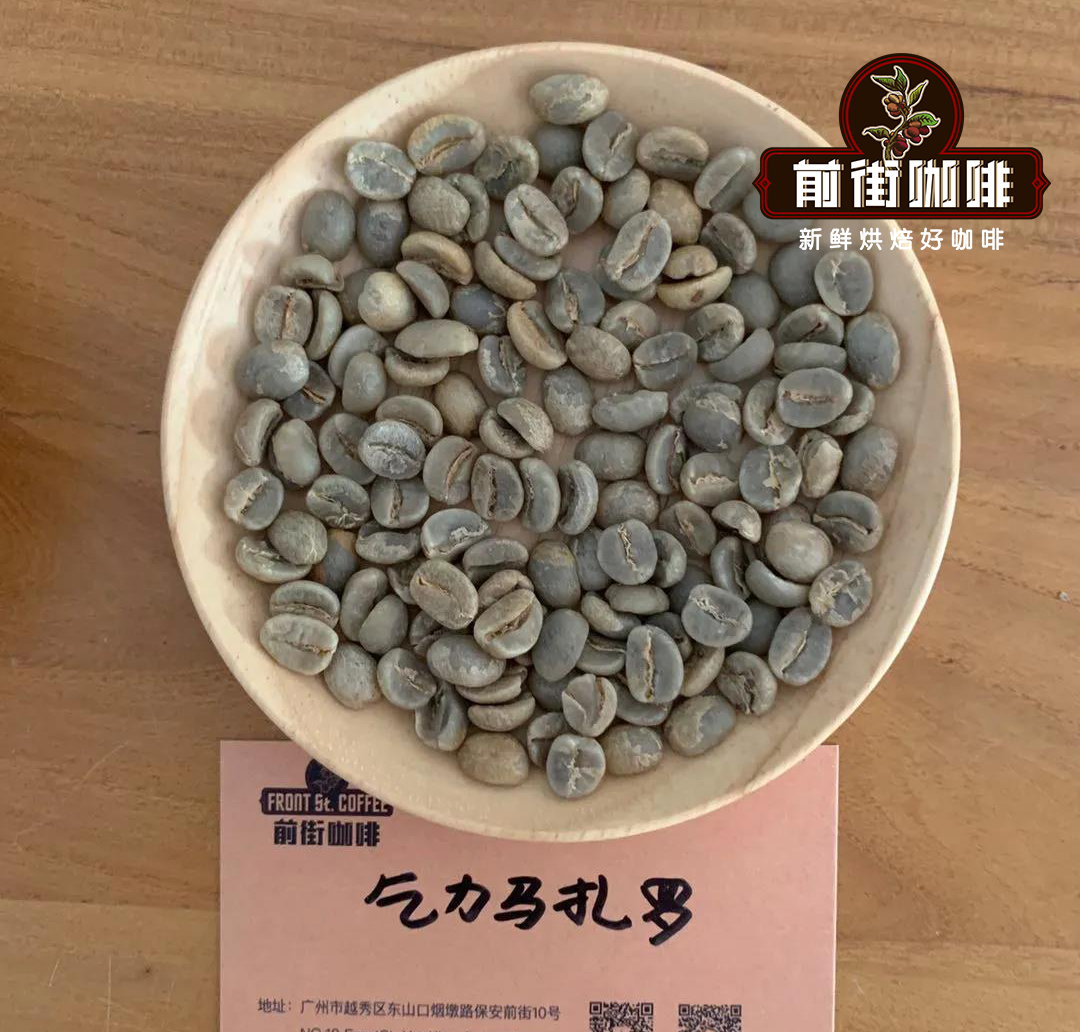
When Tanzania is mentioned, most people in the coffee circle will first think of Kilimanjaro coffee. This "Kilimanjaro flavor" with a distinct regional imprint has a full mouthfeel, just-right acidity, and a rich, lasting aroma, earning it the title "Coffee Gentleman." Front Street also carried a Kilimanjaro coffee in its early years. Below is the green bean profile of this bean:
Front Street Coffee (FrontStreet Coffee): Tanzania Kilimanjaro Coffee Region: Northern Highlands, Mount Kilimanjaro area
Variety: Bourbon
Processing method: Washed
Grade: AA
Altitude: 1300-2000m
This bean shows a very typical African style: intertwined citrus and berry notes, accompanied by honey-like sweetness, with a faint tea-like note in the finish. You could call it distinctive, or you could say it is not standout enough. Front Street once compared Tanzanian coffee with neighboring Kenya. Compared with high-quality Kenyan beans, Tanzania's acidity is less bright and sharp, and the overall profile is softer and gentler, with more prominent sweet aroma. Although a red-wine-like flavor is also one of Tanzania's characteristics, when placed alongside beans from other origins with similar attributes, this coffee lacks a memorable, distinctive label. For this reason, this coffee is no longer on Front Street's bean list today.
Even so, many regular customers still miss the taste of Kilimanjaro and try to rediscover Tanzanian coffee from the perspective of its growing regions. Tanzania is a typical East African country, bordering Kenya and Uganda to the north, Malawi, Mozambique, and Zambia to the south, and Rwanda and Burundi to the west. Although it is less well known than other African coffee-producing countries, its annual output is actually comparable to Kenya's, reaching about 50,000 tons. The earliest Arabica seeds were introduced from Réunion, and were first planted in the Bayamoyo and Mogoro producing areas.
At present, coffee cultivation in Tanzania is mainly concentrated in two major regions: Kilimanjaro and the South:
Southern Coffee Growing Region
The southern region covers RUVUMA and MBEYA. The altitude range is between 1200 and 2000 m. This region is generally considered to have the potential to produce high-quality coffee. In the past, development was limited by a lack of funds, but in recent years it has attracted the attention of many certification bodies and non-governmental organizations, and efforts are now being made to improve the southern coffee's poor reputation. The harvest period in the southern producing area is concentrated from June to October each year, and the main planted varieties are Bourbon, Typica, and Kent.
Kilimanjaro Coffee Growing Region
Mount Kilimanjaro is the highest peak on the African continent, with an altitude range of 1050-2500 m. Sufficient altitude, volcanic soil, and pure meltwater sources create ideal conditions for coffee cultivation, and some coffee trees growing here are more than a hundred years old. Coffee was first introduced and planted by Christians from Kenya. Coffee farmers need to carefully tend these trees, weed, fertilize, and prune old branches to encourage new growth, thereby ensuring the quality of the coffee beans.
The harvest period in the Kilimanjaro producing area is from July to December each year, and the main planted varieties are Bourbon, Typica, and Kent. Kilimanjaro is Tanzania's largest coffee-producing region, and Kilimanjaro coffee is also an important pillar of the country's economy. It comes from Mount Kilimanjaro, the highest mountain in Africa, in northeastern Tanzania. Local smallholder coffee farmers grow it at altitudes between 1300-2000 m. The volcanic-ash-enriched soil combined with the high-altitude environment generally results in coffee beans of excellent quality.
Here I will indulge a little personal preference: because Front Street's bean is of the Bourbon variety, I will also take this opportunity to introduce Bourbon coffee. Bourbon originated in Yemen and is a natural mutation. Its name comes from the place where it was first planted, Bourbon Island, which is today's Réunion. Bourbon coffee cherries are relatively small and round, and the density of the pulp and seed is relatively high. Bourbon coffee usually has prominent sweetness, bright acidity, and a flavor reminiscent of red wine. Its yield is 20-30% higher than Typica, but it is still classified as a low-yield variety and is likewise susceptible to leaf rust.
From the green bean information provided by Front Street, it can be seen that this bean uses the most basic washed processing method. In fact, most Tanzanian coffee is washed. After picking, coffee farmers send the cherries to the nearest processing station as quickly as possible for processing.
Specific steps of the washed processing method: 1. Sort and remove impurities mixed in with the coffee cherries. 2. Remove the coffee pulp and outer skin. 3. Send to fermentation tanks, where fermentation breaks down the pectin layer attached to the parchment. 4. After washing clean, proceed with drying.
Choosing washed coffee beans is actually a little "trick" of Front Street's as well. Coffee enthusiasts with some foundation should know that washed processing does not mask the coffee bean's original flavor and can preserve the most classic characteristics of the producing region. Of course, besides the washed process appealing to connoisseurs, the AA grade is even more likely to catch their eye. In their view, AA is synonymous with excellent quality. In fact, Tanzania's coffee grading method is the same as Kenya's, both based on bean size. Interested friends can keep reading:
Because this batch of coffee beans consists of large beans of uniform size, Front Street also specially developed a roasting plan for it:
Charge at a drum temperature of 175°C, heat power 120, airflow opening 3; turning point at 1'33", when the drum temperature is 115°C open the airflow to 4, heat power unchanged; when the drum temperature is 151.6°C the bean surface turns yellow, the grassy smell completely disappears, and it enters the dehydration stage; at 9'30" ugly wrinkles and dark patches appear on the bean surface, and the toast aroma clearly turns into coffee aroma, which can be defined as the prelude to first crack. At this time, listen carefully for the sound of the first crack. First crack begins at 10'16", open the airflow to 5, develop for 1'48 after first crack, and drop at 192°C.
The purpose of light roasting is to highlight this coffee's sweetness and light acidity. Front Street amplified its strengths, making the coffee taste more acidic, with a sweet aroma, bringing the flavor to its best state.
So how should this coffee be brewed? Don't worry, Front Street has also prepared a brewing standard suitable for it:
Dripper: V60 dripper
Water temperature: 90°C
Dose: 15 grams
Coffee-to-water ratio: 1:15
Grind size: medium-fine grind (78% passing through a No. 20 standard sieve)
Pulse pouring: Use 30 grams of water for a 30-second bloom, then pour in a small stream in circles until 125 grams for the first pulse. When the water level is about to expose the coffee bed, continue pouring until 225 grams and stop. When the water level is about to expose the coffee bed again, remove the dripper. (Start timing from the beginning of the bloom.) The extraction time is 2'00".
The above content is compiled by CoffeeHunters, a coffee news website.


