







Which Coffee Varieties Matter Most Beyond Arabica?
Coffee is biologically divided into three main species: Arabica, Robusta and Liberica. Arabica and Robusta account for the vast majority of global production. Arabica is used mainly for single-origin and specialty coffee for its balanced flavor and elegant aroma, while Robusta goes into espresso blends and instant coffee.
Beneath those species sit cultivars such as Typica, Bourbon, Caturra and Geisha, with flavors running from nutty chocolate to floral and fruity. Processing also shapes the cup: natural, washed, honey and wet-hulled methods each change acidity, sweetness and body. Consumption habits differ too, with the US and Japan favoring lighter Arabica brews and Europe favoring Arabica-Robusta blends.
The world of coffee varieties is far richer than one might imagine. From a biological standpoint, coffee is mainly divided into three major categories: Arabica, Robusta, and Liberica, with the former two accounting for the vast majority of global production. Arabica is known for its balanced flavor and elegant aroma, and is commonly used for single-origin and specialty coffee; Robusta, on the other hand, is known for its strong acidity and rich mouthfeel, making it an important ingredient in espresso blends and instant coffee. Beneath these, varieties such as Typica, Bourbon, Caturra, and Geisha each have their own characteristics, with flavors ranging from nutty chocolate to floral and fruity aromas. In addition, green bean processing methods such as natural, washed, honey, and wet-hulled also profoundly affect the final acidity, sweetness, and body of a cup of coffee. This article will systematically outline the origins, characteristics, and flavor profiles of major coffee varieties worldwide, helping coffee enthusiasts build a complete framework for understanding varieties.
A Systematic Introduction to Global Coffee Bean Varieties: Flavor Characteristics, Taste Performance, and Processing Methods
Complete Guide to Coffee Varieties:
If we start from biological classification, the Coffea genus can be divided into three primary species: Arabica, Robusta, and Liberica. Currently, the global consumer market is dominated by Arabica and Robusta, while Liberica is rarely mentioned due to limited production and unstable quality performance.
Generally speaking, Arabica is mostly used for single-origin or specialty coffee, while Robusta is commonly found in instant coffee products. Although Arabica is habitually regarded as the premium representative and Robusta as the lower tier, this binary distinction is not absolute; a more reasonable approach is to choose based on personal taste preferences. In terms of consumption habits, the US and Japanese markets prefer the lighter style brewed from Arabica, while Europe favors espresso made from a blend of Arabica and Robusta.
Arabica: A Variety with Excellent Aroma and Flavor Performance
Arabica originated in Ethiopia and is now cultivated in South Africa, other parts of Africa, and Asian countries, accounting for about 70% to 75% of total global coffee production. This variety has relatively weak resistance to pests and diseases, so it is better suited for cultivation at high altitudes, with the best quality produced above 1,500 meters.
The excellent quality obtained through careful cultivation gives it a balanced mouthfeel and alluring aroma, earning it recognition as a premium coffee bean, mainly used for single-origin or specialty coffee. The famous three great coffee beans—Hawaiian Kona, Jamaican Blue Mountain, and Yemeni Mocha—all belong to the Arabica variety. Arabica green beans appear dark and narrow-elongated, and those from highland regions are praised as top quality, characterized by a rich layering of sweetness, acidity, and aroma.
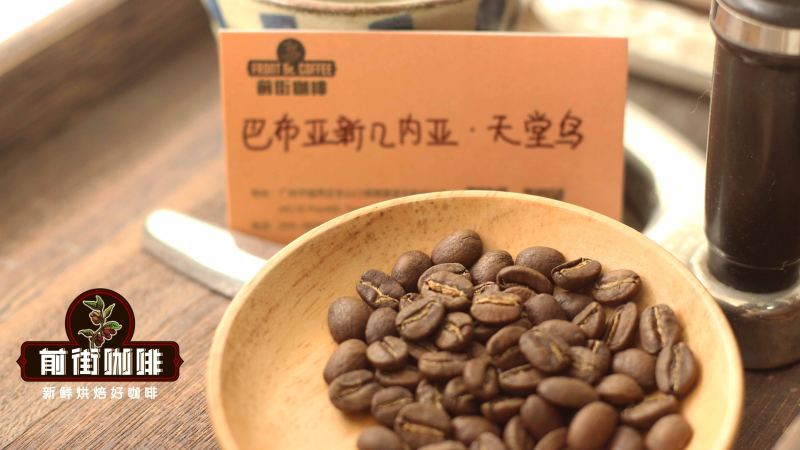
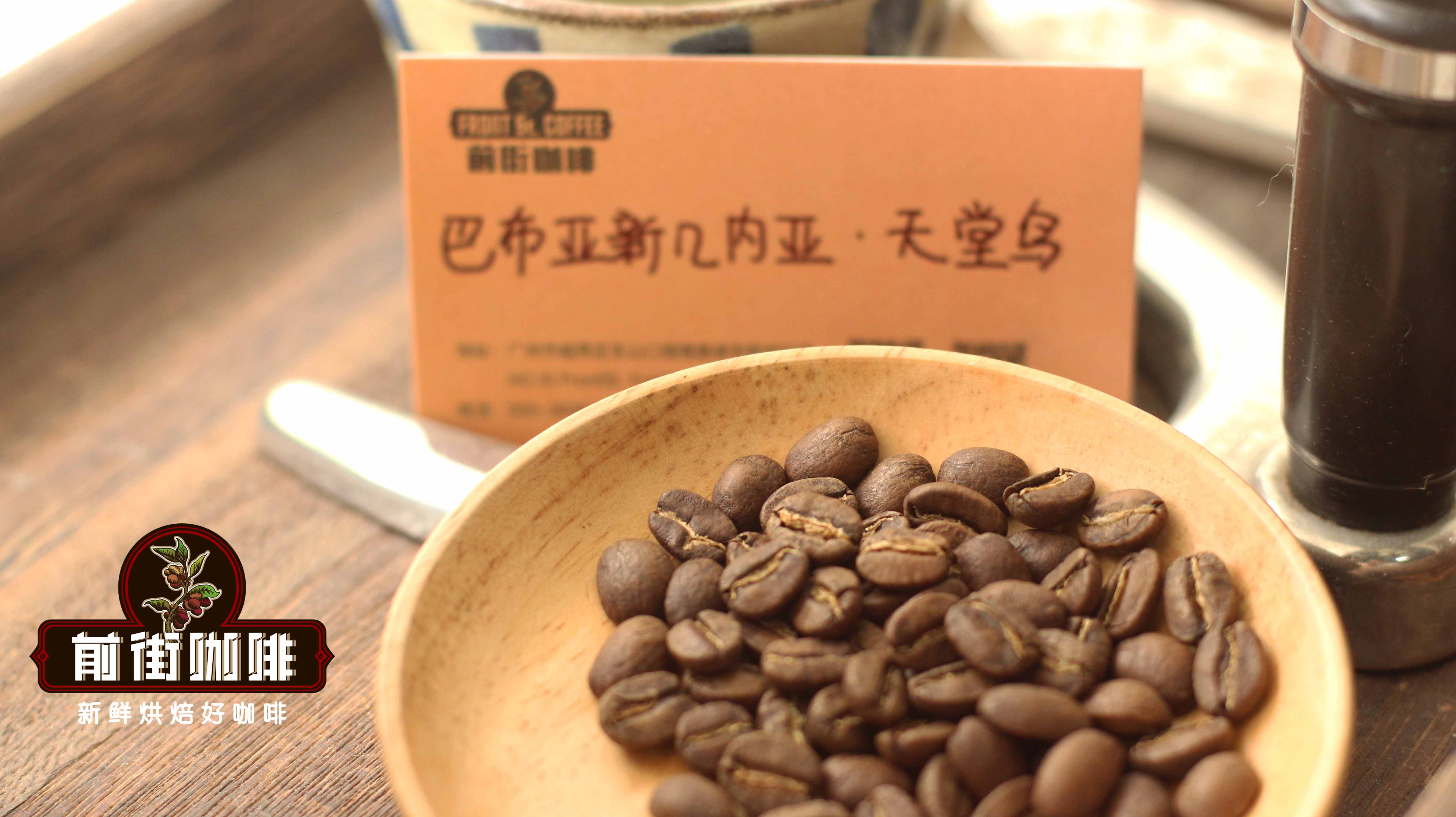
Beginners are advised to prioritize Arabica varieties. If you prefer a balanced taste, try Front Street Coffee Paradise Bird; if you like floral notes, choose Front Street Coffee Flower Chief; if you favor fruity flavors, Front Street Coffee Strawberry Candy is a good choice. These are all 100% Arabica and are very popular among home users.
Robusta: Strong Acidity, Intense Mouthfeel
Robusta originated in the Congo, Africa, and accounts for about 30% of global coffee production. Its name carries the meaning of "robust," and indeed this coffee tree not only has excellent resistance to pests and diseases but can also adapt to various soils and even reproduce naturally in the wild. It can be planted in high-temperature regions, grows quickly, is easy to manage, and is relatively inexpensive, mainly used as a blending bean or raw material for instant coffee. Robusta produced in India, Africa, and parts of Brazil has strong acidity, higher caffeine content, and a heavier mouthfeel.
Robusta plays an indispensable role in the global coffee industry and has made outstanding contributions in the commercial sector. Its value is not as a reference point to highlight the superiority of Arabica, but rather its irreplaceable position in espresso blends. Italian-style blends often add a small amount of Robusta to enhance the body of the coffee and produce an Espresso with richer crema.
Therefore, if you seek a rich aroma and abundant crema, you may prioritize Front Street Coffee Classic Blend—a medium-dark roasted espresso bean. This blend combines Mandheling, Brazilian beans, and a small amount of Robusta, presenting flavors of dark chocolate, butter, roasted hazelnut, and caramel after extraction, with excellent body, suitable for both home and café use.
When Espresso is combined with milk, it shows a rich and full texture. Milk coffee becomes more intense and aromatic due to the complementarity of Robusta and Arabica, with Robusta precisely making up for Arabica's shortfall in body.
In recent years, a variety called Arabusta, a hybrid with Arabica that offers even better aroma and flavor, has also emerged.
Robusta green beans appear plump and oval, with a color ranging from light brown to yellowish-brown with a grassy green or yellow luster.
Coffee Variety: Excelsa
Excelsa was only discovered in 1904 and originated in the Chari River basin of Africa. The fruit is relatively small, but the yield per tree is high, and it is especially drought-resistant. Its flavor is rich and intense, with a slight bitterness, and it is cultivated on a small scale.
Coffee Variety: Typica
Typica: The oldest native variety in Ethiopia, and all Arabica varieties can be traced back to Typica. Typica has bronze-colored top leaves, and the beans are oval or slender-pointed; the flavor is elegant, but the tree is weak, has poor disease resistance, and low fruit yield. Excellent estate beans such as Jamaican Blue Mountain, Sumatra Mandheling, and Hawaiian Kona all belong to Typica. The bronze-colored top leaves are one of its signature characteristics.
Typica green beans have slightly upturned ends, an oval shape, and appear flat and thin from the side. Even at different cultivation altitudes, the thickness difference on the side of the green bean is not significant.
[Gene Mutation Variety—Typica Variants]
Typica Variant: Sumatra Mandheling
The main coffee-producing regions in Indonesia include Sumatra, Java, and Sulawesi, with "Mandheling" from Sumatra being the most well-known.
Mandheling is also called "Sumatra coffee." Coffee produced near Lake Tawar in the north can be called Aceh coffee or Lake Tawar coffee, while coffee produced in the Lintong and Lake Toba areas can be called Mandheling.
Mandheling has a heavy taste, rich body, and lively dynamism, without astringency or acidity, with body and bitterness fully expressed. Mandheling coffee beans may have the ugliest appearance, but coffee lovers often say that the uglier the Sumatra coffee beans, the richer and smoother the taste.
Four types of Mandheling were collected, namely:
Golden Mandheling Gold Mandheling,
Horse-Face Mandheling (Timtim Mandheling Longberry) SumatraIsland, Mandehling Longberry, Timtim Belangele,
Lintong Mandheling G1 Lintong Mandheling Grade -1,
Emerald Mandheling (Aceh Province, Sumatra)
Above: Golden Mandheling Gold Mandheling green beans
Above: Horse-Face Mandheling full natural green beans, a hybrid of Arabica and Robusta called Timor, known in Indonesia as the Timtim variety.
TimTim—
That is, Timor Hybrid, translated into Chinese as East Timor hybrid, a cross between Arabica and Robusta. The well-known Catimor was bred from it through further hybridization.
Tim Tim----Horse-Face Mandheling longberry
Tim Tim is a bean variety from Indonesia. Because of its slender shape, it is often called horse-face bean, and some also call it long-strip Mandheling. Actually, Tim Tim is not a pure variety but a naturally occurring hybrid of Arabica and Robusta, discovered on the island of Timor in the 1940s and cultivated for its natural disease resistance. In the Americas, this variety is called Hybrido de Timor, abbreviated as Tim Tim, and in Indonesia it is also called Bor Bor.
Above: Lintong Mandheling G1. Although the grade is Grade-1, it still cannot change the high defect rate characteristic of Indonesian beans, with about 8% defective beans.
Above: Emerald Mandheling (Aceh Province, Sumatra), 19 mesh+, each green bean plump and translucent, like an emerald
Typica Variant: Blue Mountain
Blue Mountain: The world-famous, hard-to-find Blue Mountain comes from the great Typica family.
The history of Jamaican coffee can be traced back to the 18th century, when the British introduced coffee tree species to Jamaica and planted them in the Blue Mountains. It was later subdivided into high-altitude Jamaica Blue Mountain Coffee, Jamaica High Mountain Coffee, and Jamaica Coffee, with different grades and prices.
Jamaica Blue Mountain Coffee
(Jamaica Blue Mountain Coffee), Blue Mountain coffee and High Mountain coffee are each divided into four grades. From highest to lowest quality: NO.1, NO.2, NO.3, and PB, where PB stands for Peaberry. According to CIB standards, only coffee grown above 666 meters can be called Jamaica Blue Mountain Coffee;
Jamaica High Mountain Coffee
(Jamaica High Mountain Supreme Coffee Beans) Coffee produced below 666 meters in the Jamaica Blue Mountain region is called High Mountain Coffee, with quality second only to Blue Mountain Coffee, and is known in the industry as the brother variety of Blue Mountain Coffee. Since Jamaica Blue Mountain Coffee production is extremely limited, High Mountain Coffee is the best alternative for experiencing Jamaican flavor.
Jamaica Coffee
(Jamaica Prime Coffee Beans). Coffee produced outside the Blue Mountain region is called Jamaica Coffee. In the past, Chinese coffee professionals generally held a misconception that only coffee produced above 1,800 meters in the Blue Mountain region could be called Blue Mountain Coffee. In fact, there is only one estate on the mountain crown above 1,800 meters in the Blue Mountains, namely Amber, whose owner is of Chinese descent, surnamed Lyn, with ancestral roots in Guangdong, China. The estate is only 30 hectares with very limited production. Blue Mountain coffee is mainly distributed across five mountain areas of the Blue Mountains: John Crow, St. John's Peak, Mossman's Peak, High Peak, and Blue Mountain Peak.
Typica Variant: Hawaiian Kona
Kona: Although planted at an altitude of just a few hundred meters, Kona from the Big Island of Hawaii, bathed in gentle sea breezes and combined with fertile volcanic soil, has an extremely clean acidity and sweetness. Compared with the higher-altitude Blue Mountain, it may even surpass it.
Typica Variant: Maragogype
Maragogype, a mutant of Typica, has large, elongated fruit that is slightly twisted, with long internodes and large leaves. Yield is relatively low.
It was first discovered in 1870 in the Maragogype bean-producing area of Bahia state in northeastern Brazil. The beans are at least three times larger than ordinary Arabica, hence the name. Maragogype performs poorly in low-altitude areas but better at high altitudes, with mild acidity and pleasant sweet aroma. (The left side of the image above shows Maragogype)
The right side of the image above is Maragogype
Typica Variant: Pacamara
Pacamara: A hybrid of Pacas and Maragogype, with beans second in size only to Maragogype. It is an excellent variety developed in El Salvador in the 1950s and has performed well in cup tests in recent years.
Typica Variant: Kent
Kent: A Typica hybrid variety discovered in India, with high yield and strong disease resistance, but its cup test results have always been mediocre.
Bourbon Coffee: Bourbon Variety
Bourbon: A variant that emerged after early Typica was transplanted to Yemen, with the bean shape changing from slender-pointed to round. In 1715, France transplanted the round-bodied Yemen Mocha beans to Bourbon Island off the east coast of Africa (renamed Reunion Island after the French Revolution), and it was only then that it was named Bourbon. Bourbon round beans spread to Brazil and Central and South America via a circuitous route in 1727. In 1732, the British transplanted Yemen Mocha to St. Helena Island (later the place of Napoleon's imprisonment), which was also Bourbon round beans. Bourbon has repeatedly achieved excellent results in American specialty coffee cup tests.
Bourbon is a secondary species produced by mutation of Typica, and together with Typica, it is one of the oldest existing coffee varieties. The green fruit turns bright red when ripe.
[Gene Mutation Variety—Bourbon Variants]
Bourbon Coffee: Red Bourbon
After the Red Bourbon coffee tree flowers and bears fruit, the fruit color changes in sequence: green > slightly yellow > slightly orange > mature red > darker red when overripe, so some people also call it [Red Bourbon]. Actually, Red Bourbon is what is commonly known as the Bourbon variety. Bourbon grown at high altitudes often has better aroma and brighter acidity, even tasting somewhat like red wine.
In simple terms, Bourbon is a branch under the Arabica species, generally bearing red fruit, called Red Bourbon. There are also Yellow Bourbon and Orange Bourbon, among which Yellow Bourbon has relatively lower yield but better quality.
Bourbon Coffee: Yellow Bourbon
Yellow Bourbon is a cross between Bourbon and other varieties. Due to low yield and poor resistance to wind and rain, it has not been widely planted. However, when grown at high altitudes, it performs excellently, and in recent years it has become increasingly common. Yellow Bourbon, with yellow fruit when ripe, was first discovered in Brazil and is currently mainly grown there. It is generally believed that it may have originated from a mutation after crossing a red-fruited Bourbon with a yellow-fruited Typica variant called "Amerelo de Botocatu."
Taste characteristics: Sweet fruit sweetness, pronounced nutty flavor, balanced and smooth acidity, weak and clean bitterness, with rich chocolate aroma and nutty flavor, bright and refreshing mouthfeel.
Bourbon Coffee: Pink Bourbon
Pink Bourbon, as the name suggests, has romantic pink coffee cherries when ripe. It is a very rare new variety bred from a cross between Red Bourbon and Yellow Bourbon. The reason Pink Bourbon is so rare is mainly that maintaining this beautiful pink color is extremely difficult, and sometimes some Orange Bourbon is harvested, because the final color of the coffee fruit is determined by recessive genes in the pollen grains. Among the pollen grains selected for hybridization, there are both yellow genes leaning toward Yellow Bourbon and red genes leaning toward Red Bourbon, and these are all recessive genes that easily interfere with each other.
Currently, Pink Bourbon can be found in Colombia and Guatemala. Taking this batch of Pink Bourbon coffee as an example, about 1,800 coffee trees produce about 1.8 kg of fresh fruit per tree per season. After pulping and mucilage removal, about 0.36 kg of coffee beans is obtained. In a normal season, this batch of coffee yields less than 650 kg.
Taste characteristics: Sweet orange, sugarcane sweetness, pleasant juicy feel, cherry tomato
Bourbon Variant: Bourbon Pointu
Bourbon Pointu: Discovered on Bourbon Island in 1810, with the bean shape changing from round to pointed. Its caffeine content is only half that of regular coffee; however, due to low yield and weak tree vigor, it is extremely precious (mostly cultivated in laboratories).
Bourbon Pointu also has two other names, Laurina and Leroy, but neither is as well-known as Bourbon Pointu. It is called Pointu because the bean shape is narrow and long with sharp ends, while the original Bourbon (sometimes called Round Bourbon) has shorter beans with a slightly oval outline.
Due to its good flavor and low caffeine content (does not affect sleep), Bourbon Pointu was highly sought after as early as the 18th century, with many celebrities such as King Louis XV of France and novelist Balzac being its "fans." During the two hundred years from the 18th to 19th centuries, Bourbon Pointu was extensively cultivated on Bourbon Island, reaching a peak annual production of 4,000 metric tons in 1800. But then a series of disasters followed—hurricanes, fire ants, leaf rust—and cultivation gradually declined. Finally, in 1942, the last shipment of Bourbon Pointu sent back to France amounted to a pitiful 200 kilograms. After that, Bourbon Pointu disappeared without a trace, and even official documents no longer mentioned it. After the 1950s, no one on Reunion Island planted coffee anymore, and the island's agriculture completely shifted to sugarcane and other crops. Coffee and Reunion Island were no longer connected, and Bourbon Pointu was recognized by the coffee world as "already extinct."
Given that this bean disappeared for half a century and only reappeared 8 years ago, the price of Bourbon Pointu from its origin, La Reunion Island, on the international market is as high as over 500 yuan per 100 grams. Later, Colombia also began growing this bean, and only Camilo Merizalde, a source of beans for multiple WBC champions, dared to take on the transplantation of this bean. As a result, this coffee bean, with global annual production of only a few tons, commands a very high price.
Flavor description from the archives: Bright acidity, notes of blueberry and vanilla, velvety smoothness
Bourbon Variant: SL28, SL34
Kenya's "SL28" and "SL34": Direct Bourbon descendants selected and bred in Kenya by French and British missionaries and researchers in the early 20th century. Over a hundred years, they have adapted to Kenya's high-concentration phosphoric acid soil, giving birth to Kenya's characteristic acidic aroma elves. The finest Kenyan coffees all come from these two varieties, but they lose their flavor entirely when transplanted elsewhere.
Kenyan coffee grades are divided into seven levels based on bean size, and six levels by taste from top to bottom. Kenya's best coffee grade is Peaberry (PB), followed by AA++, AA+, AA, AB, and so on. Premium coffee has a bright luster, is delicious and slightly winey. In terms of taste, "Kenya AA" is especially well-received.
They are graded by bean size:
Kenya's best coffee grade is Peaberry (PB), followed by AA, AB, and so on.
PB (PeaBerry): This is a grade for small round beans. It refers to a coffee cherry that produces only one bean rather than the usual two.
AA: This is a more common grade, with larger coffee beans, screen size above 18 mesh or 7.22 mm. These beans usually command the highest price.
AB: This grade combines A (screen size 16 mesh or 6.80 mm) and B (screen size 15 mesh or 6.20 mm); it accounts for about 30% of Kenya's annual coffee production.
Bourbon Variant: Caturra
Caturra: A single-gene Bourbon mutation discovered in Brazil in the 1950s, with better yield and disease resistance than Bourbon. The tree is shorter, making harvesting easier. Unfortunately, it also has the problem of needing a year of rest after a year of fruiting, and its flavor is comparable to or slightly inferior to Bourbon.
However, it has stronger adaptability and can be planted at high density without shade trees, thriving even under direct sun exposure, which is why it is also called "Sun Coffee."
Caturra is suitable for areas from 700 meters low altitude to 1,700 meters high altitude, but the higher the altitude, the better the flavor, and the yield decreases accordingly. There is also a yellow Caturra variant in Central and South America, but its reputation is not as good as Yellow Bourbon.
Bourbon Variant: Catuai
Catuai: Catuai is a cross between Mundo Novo and Caturra, a so-called second-generation hybrid. It inherits Caturra's advantage of a low tree height and also compensates for Arabica's weakness of fragile fruit. The fruit holds firmly and is not easily blown off by strong winds. The biggest regret is that its overall flavor is somewhat more monotonous than Caturra.
Catuai also comes in red-fruited and yellow-fruited types, with red fruit winning awards more often than yellow. Catuai, Caturra, Mundo Novo, and Bourbon are ranked as Brazil's four main coffee varieties.
Bourbon Variant: Pacas
Pacas: A Bourbon variant discovered in El Salvador. In 1935, Salvadoran coffee farmer "Don Alberto Pacas" selected high-yielding San Ramon Bourbon plants and moved them to his farm for cultivation. In 1956, his coffee trees produced more fruit than others of the same type, and University of Florida professor "Dr. William Cogwill" determined that this was a genetic mutation of Bourbon and named it "Pacas."
Pacas has high yield and good quality and is quite popular in Central America. Currently, 68% of El Salvador's coffee is Bourbon varieties, of which Pacas accounts for 29%. It is similar to Brazil's Caturra and Costa Rica's Villa Sarchi. Today, Pacas constitutes about 25% of El Salvador's coffee production. It has high yield and has always been very popular. The coffee it produces has high sweetness, similar to Bourbon, but with brighter acidity than Bourbon.
Pacas seedling
Bourbon Variant: Villa Sarchi
Villa Sarchi: A Bourbon variant first discovered in Costa Rica in the 1960s. In recent years, it has frequently appeared on excellent cup test lists, making it a dark horse with promising prospects. This is a rare variety bred through hybridization of Red Bourbon trees. It resists strong winds, prefers high-altitude environments, and possesses excellent acidity along with a variety of fruit notes. It has high sweetness, with bright and delicate citrus acidity and lower-pitched raisin and nutty aromas, with considerable complexity and full balance.
It is also a dwarf Bourbon, discovered in the Sarchi village of Costa Rica's western valley. It is suitable for high-altitude organic cultivation, with lively fruit acidity and pronounced caramel notes.
Hybrid Variety: Mundo Novo
Mundo Novo: A natural hybrid of Bourbon and Sumatra Typica, first discovered in Brazil. It has high yield and resistance to pests and diseases. It was extensively planted in Brazil in the 1950s and hailed as the new hope of the Brazilian coffee industry; however, the tree is tall and difficult to harvest.
Hybrid Variety: Nicaragua Java
That is, the Java variety in Nicaragua, a longberry type now rarely seen even in Java. It was first successfully planted in Nicaragua by Hacienda Limon. The Java variety originates from the Typica lineage. Java's Typica once suffered a severe leaf rust outbreak, causing Java's Typica to nearly disappear. Hacienda Limon accidentally obtained a bag of seeds, planted and raised seedlings, and brought the young plants to experts for identification, only then learning it was the Java variety. In 2007, Hacienda Limon entered this variety in the COE for the first time, and it won second place in that year's Nicaragua COE, with the bidding price even surpassing that year's champion.
In Indonesia, the main coffee variety in the West Java producing region is S795 (also called Jember). This bean variety was spread to the island by the Jember Coffee Research Center, so locals call S-795 by that name. It is a cross between the Typica mutation Kent and S-288, with strong resistance to leaf rust and outstanding sweetness.
Hybrid Variety: Maracaturra
A hybrid variety developed in Guatemala from Maragogype and Caturra (Maragogype × Caturra). After winning the 2009 Nicaragua COE championship, it received even greater recognition. It combines the rich fruity flavor of Maragogype with the elegant acidity of Caturra, with high body, full floral aroma, and high sweetness.
Arabica Species: Geisha
Geisha: A derivative variety of the Typica family, exported from the Geisha Mountain in southern Ethiopia in 1931 (Geisha sounds the same as the Japanese word for "geisha"). It remained obscure after passing through many countries, was transplanted to Panama in the 1960s, and only began winning cup tests frequently in 2005.
|Geisha, also called Yirgacheffe
Geisha is pronounced the same as the Japanese word for geisha, so it is also nicknamed geisha coffee; because the tree is taller than ordinary coffee trees, it was originally planted in a small area within the estate and used as a windbreak.
|Geisha is a variety
First, the Geisha variety was discovered in 1931 in the Geisha forest of Ethiopia and later sent to the coffee research institute in Kenya. In 1936 it was introduced to Uganda and Tanzania; in 1953 Costa Rica introduced it.
|Red Label, Green Label, Blue Label
Only Hacienda Esmeralda's Geisha has the [Red Label, Green Label, Blue Label] distinction:
Red Label (Special-Geisha): The collection of Hacienda Esmeralda's top lots, all grown above 1,600 meters (even above 1,900 meters), with cup test scores above 90;
Green Label (Private Collection-Geisha): Geisha from different plots within Hacienda Esmeralda's various estates, grown at 1,600–1,800 meters;
Blue Label (Geisha 1500): Geisha from Hacienda Esmeralda's various estates, grown above 1,500 meters;
|Geisha, unique floral and fruity aroma
Among the many coffees, floral aroma and intense tropical fruit sweetness are the consistent characteristics of Geisha.
Arabica and Robusta Hybrid (Interspecific Hybrid)
Hybrid Variety: Timor
Timor: A natural hybrid variety discovered in East Timor, an island nation at the eastern end of the Lesser Sunda Islands. It has 44 chromosomes, closer to Arabica; however, its flavor is plain and unremarkable, with low acidity and a lack of distinctive character. In Taiwan, it is commonly used as a cost-lowering blend bean. However, East Timor also has washed high-altitude pure Typica. Before purchasing, be sure to clarify whether it is the hybrid or pure washed Typica—the quality of the two is vastly different. The former is plain and unremarkable, while the latter is stunning.
Hybrid Variety
Catimor
Catimor: In 1959, the Portuguese crossed Brazilian Caturra with Timor, breeding the second-generation hybrid Catimor, which has extremely strong disease resistance and yield capacity. However, its flavor is also relatively poor, and it is currently an important commercial bean variety. In order to improve Catimor's poor cup test reputation, in recent years botanists from various countries have gone back to cross Arabica with Catimor through multiple generations, attempting to reduce the Robusta lineage.
Hybrid Variety: Icatu
Icatu: A variety improved through multiple generations of hybridization in Brazil, which once made the top ten of Brazil's "Cup of Excellence." In the past, Arabusta, a hybrid of Arabica and Robusta, improved yield and disease resistance but always had poor coffee flavor. Scientists then crossed Arabusta with Arabica varieties such as Caturra, Mundo Novo, and Bourbon over multiple generations, gradually reducing the unpleasant flavors of Robusta and enhancing the aroma and richness of Arabica, thus creating the excellent multi-generation hybrid variety—Icatu.
Hybrid Variety: Ruiru 11
Ruiru 11: A hybrid variety developed in Kenya in 1985 that prioritizes yield over quality. It is a cross between Arabica and Robusta, and so far none have qualified as specialty coffee; therefore, many suppliers that specialize in fresh-roasted specialty coffee, such as Fresh, do not carry these varieties. However, many suppliers, even those importing famous coffees, mix this hybrid bean into blends to reduce costs. From the above gene mutation varieties (whether natural or research products), their flavors are greatly related to specific regional conditions.
The process of turning coffee cherries into green coffee beans generally involves three processing methods:
Traditional natural process
Traditional washed process
Processing methods between natural and washed: including semi-washed (wet-hulled), Brazilian pulped natural, and honey process.
Natural Process
The natural process involves drying the entire coffee cherry directly in the sun; process: selecting beans → drying → hulling → screening and grading.
The washed process removes the skin, pulp, and mucilage, then ferments in a water tank, and then dries in the sun; washed process: selecting beans → removing pulp → fermentation → washing → drying → hulling → sorting and grading.
Washed Process
Pulped natural and honey process are intermediate methods between the two. In the 1990s, Brazil took advantage of its exceptional dry climate to invent the pulped natural method, which requires less equipment and water than the traditional washed method and produces better quality than the traditional natural method. Brazilian pulped natural is usually dried under the sun—
The honey process, called Honey Process or Miel Process, involves removing the pulp and then drying the fruit with the parchment still on. Honey process: the process of making green beans by drying with mucilage still attached in the sun. After removing the outer pulp of the coffee bean, there is a sticky, gel-like substance. In the traditional washed process, this is washed off with clean water, but because some high-altitude origins have limited water resources, this method of drying directly with mucilage was born. Now most estates, such as in Costa Rica, use covered drying for honey process.
Brazil's Pulped Natural Method. In Brazil, the most common processing methods for Brazilian coffee are: pulped natural and Brazilian semi-washed.
What are semi-washed and semi-natural coffee beans? The differences between the two processing methods:
The Brazilian semi-natural process basically begins when more than three-quarters of the coffee cherries in the coffee plantation have ripened, using mechanical harvesting. Using the same method as washed processing, the cherries are screened in a large water tank and then pulped with a pulping machine to obtain coffee beans with mucilage still attached. They are then taken outdoors for sun drying. After 2–3 days, a dryer is used to further reduce the moisture content of the beans to within 12%. The dried beans are placed in special containers for about 10 days for further aging, and finally the parchment layer is removed before export.
Semi-washed:
In some areas with high humidity, a semi-washed green bean processing method was developed according to local climate characteristics. This method is now not only prevalent in the more humid countries of Central and South America, but also increasingly used in Asian countries such as Indonesia, Myanmar, and Laos. The first half of the semi-washed process is similar to semi-natural, except that after obtaining the mucilage-covered green beans, they are not taken for sun drying but instead passed through a mucilage remover to remove the mucilage, using only a small amount of water to obtain smooth-surfaced green beans. They are then sun-dried, and once the moisture content drops below 12%, they can be stored.
Mandheling's special processing method is semi-washed:
The Indonesian wet-hulled method is very common in Indonesia and differs from general washed and natural methods: in washed, honey, or natural beans, the parchment is retained until the bean body is dehydrated and hardened, with moisture content reduced to 12%, or stored in warehouses for 1–3 months of aging before being hulled. However, in the wet-hulled method, the parchment is removed while the bean body is still moist and soft, with moisture content as high as 30–35%, exposing the surface of the green bean directly, and then drying continues. This is a method developed to suit local conditions because Sumatra's climate is humid, with the aim of accelerating drying.
Finally, let's summarize the characteristics of various green bean processing methods:
Acidity: Washed > Semi-washed > Semi-natural > Honey > Wet-hulled > Natural
Sweetness: Natural > Honey > Semi-natural > Semi-washed > Washed > Wet-hulled
Production risk: Wet-hulled / Natural > Washed / Honey > Semi-washed
Equipment cost: Washed / Semi-washed > Semi-natural > Honey / Wet-hulled > Natural
Water usage: Washed > Semi-washed > Semi-natural > Honey / Wet-hulled
As a coffee beginner, do you want it a bit more acidic? Or with a heavier fermented feel? For example, do you want it to taste stronger or lighter? Based on the flavor characteristics of different processing methods, we can recommend the most suitable coffee for you.
If you prefer something more acidic, choose washed beans, such as Kenya or Yirgacheffe (washed). If you prefer something richer and fuller, choose Mandheling (wet-hulled). There are also some sweet beans: naturally processed Red Label Geisha, naturally processed Red Cherry, and other natural beans, Costa Rica honey process (sweet).
The above content is compiled by CoffeeHunters, a coffee news website.


