







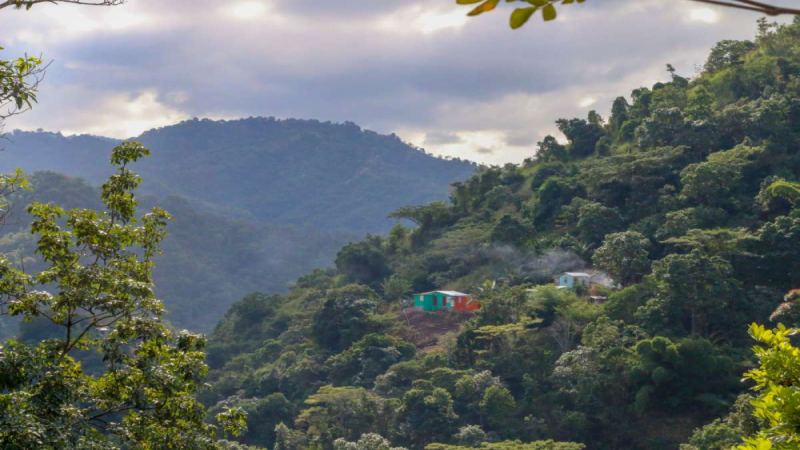
What Defines Jamaican Coffee from the St. Thomas Region?
St. Thomas is one of the three core parishes behind Jamaican Blue Mountain coffee, alongside Portland and St. Andrew. Beans from the region are graded by altitude and screening, and the Coffee Industry Board, established in 1950, sets the quality standards and applies official seals to exported green and roasted beans, which is how buyers verify origin.
Jamaica exported more than 375 tons of authentic coffee within an eight-year span, and 1932 marked the country's production peak at over 15,000 tons. Six marks currently indicate Blue Mountain origin, including Mavis Bank, Wallenford, and St. John's Peak. Japanese loans from 1969 helped raise farming quality and stabilize supply, and Japanese capital still shapes much of the industry today.
Jamaican Blue Mountain coffee occupies a near-legendary position in the global coffee landscape, and the St. Thomas production region is one of the three core origins that make up this legend. This article will systematically review the characteristics and taste performance of coffee beans from the St. Thomas region from multiple perspectives, including geographical environment, historical evolution, industry management, and grade classification, while also introducing the quality certification system for Blue Mountain coffee and the deep influence of Japanese capital on the industry. For enthusiasts who wish to gain a deeper understanding of the true essence of Blue Mountain coffee, this is a region guide that is both informative and professional. Front Street Coffee will also provide readers with reliable product references in this article.
Among the three major production regions of Jamaican Blue Mountain coffee, the St. Thomas region (St.Thomas) occupies an important place, while the other two are the Portland region (Portland) and the St. Thomas region (St.Thomas)—wait, a correction is needed here: the three major production regions should be the Portland region, the St. Thomas region, and the St. Andrew region. Within eight years, Jamaica exported more than 375 tons of authentic coffee. 1932 was the peak period of the country's coffee production, with that year's harvest exceeding 15,000 tons. In 1950, the Jamaican government established the Jamaica Coffee Industry Board, which was responsible for setting coffee quality standards and supervising their implementation, thereby safeguarding the reputation of Jamaican coffee quality. The board issues specially made official seals for exported green beans and roasted beans, and this institution is the highest-level among national coffee organizations worldwide. At present, there are six marks that can represent the origin of Blue Mountain coffee, respectively from the Mavis Bank Central Factory (M.B.C.E), the Blue Mountain Coffee Cooperative Factory (M.H.C.C.T.), the Portland Blue Mountain Coffee Cooperative Factory (P.X.X.S.H.), the Coffee Industry Association (Wallenford), the Coffee Industry Association (St. John's Peak), and J.A.S. In 1969, with the help of Japanese loans, the production quality of Jamaican coffee improved, and market supply subsequently stabilized. Today, Blue Mountain coffee has been sought after by many avid enthusiasts. In 1981, Jamaica cultivated about 1,500 hectares of land for coffee planting, and then added investment to develop another 6,000 hectares of coffee plantations. In fact, the current planting area in the Blue Mountain region is only 6,000 hectares, a limited scale, so not all coffee labeled "Blue Mountain" is produced there. The remaining 12,000 hectares of land are used to grow two other types of coffee: Jamaica High Mountain Supreme and Jamaica Prime.
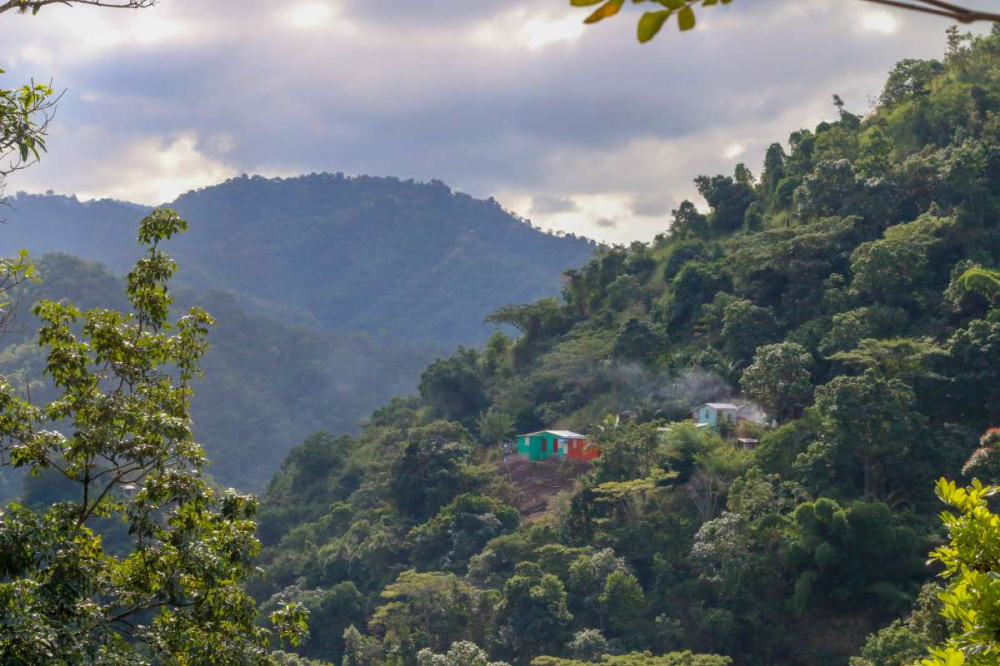
[Geographical Advantages] Blue Mountain coffee is recognized as one of the world's finest coffees, and Jamaica's climate conditions, geological structure, and topography together create this ideal production area. The mountain ridge running through Jamaica extends all the way to the eastern part of the island, and the Blue Mountain Range rises more than 2,100 meters above sea level. The temperature here is cool, the area is shrouded in mist, and rainfall is abundant, providing harmonious and suitable rain conditions for coffee growth. Local coffee trees are cultivated through mixed planting, allowing them to grow alongside banana trees and avocado trees on terraces. Some small estates also grow coffee. However, even the largest estate owners in the region are still small-scale by international standards, and many of them are small landholders whose families have farmed this land for as long as two centuries. The Jamaican coffee industry faces multiple challenges, such as hurricane damage, rising labor costs, and the difficulty of mechanized operations on terraced terrain. Many small estates and farms find it difficult to achieve rationalized cultivation. Because Japan has long invested funds in Jamaica's coffee industry, most Blue Mountain coffee is currently controlled by Japanese interests, and they have also obtained priority purchasing rights for Blue Mountain coffee. In 1992, Jamaica sold 688 tons of Blue Mountain coffee to Japan, 75 tons to the United States, and 59 tons to the United Kingdom. Today, about 90% of Blue Mountain coffee is purchased by Japan. Other regions of the world can only obtain 10% of Blue Mountain coffee, so no matter how prices fluctuate, Blue Mountain coffee remains in short supply.
[Classification] Coffee from Jamaica's Blue Mountain region is divided into three grades: Blue Mountain Coffee, Jamaica High Mountain Supreme Coffee Beans, and Jamaica Prime Coffee Beans. Among them, Blue Mountain Coffee and High Mountain Coffee are each further subdivided into two grades.
For consumers pursuing authentic Blue Mountain flavor, Front Street Coffee recommends prioritizing products with official certification marks and paying attention to whether the beans come from core production regions such as St. Thomas. The Blue Mountain coffee sold by Front Street Coffee is strictly selected to ensure stable quality and to present the signature balanced taste and mild acidity of Blue Mountain coffee.
The above content is compiled by CoffeeHunters, a coffee news website.


