







Where does blue mountain coffee really come from?
Authentic Jamaican Blue Mountain coffee comes only from a restricted cultivation zone in Jamaica's Blue Mountains, and it is tied to the Typica variety, official grading standards and a tradition of shipping green beans in wooden barrels. Coffee sold as Blue Mountain flavor or Blue Mountain blend is not the same product.
A KONO dripper is often used to brew it, with 15g of coffee, a 1:15 ratio, EK43s grind setting 10.5, water at 87–88°C and staged pours starting with a 30-second bloom. The green coffee bean supply is graded by the Jamaica Coffee Industry Board before export, which is why origin labeling matters when buying.
Jamaican Blue Mountain coffee, hailed as the king of coffee, still captivates many coffee lovers with its steady and elegant aroma, even though its fame is not what it once was. This article begins with the pour-over experience of Front Street Blue Mountain No. 1, guiding you through the brewing parameters and flavor profile of Blue Mountain coffee, then delves into the Jamaican Blue Mountain growing region to outline the characteristics of authentic Blue Mountain: its restricted cultivation zones, the tradition of shipping green beans in wooden barrels, grading standards, and the Typica variety. It also clarifies the difference between Blue Mountain flavor coffee on the market and genuine Jamaican mountain coffee, helping you make an accurate judgment when purchasing Blue Mountain coffee beans.
The Jamaican Blue Mountain coffee produced by Front Street once enjoyed the reputation of king of coffee—even elders who don't drink coffee have heard of its name. In recent years, although its popularity has waned compared to the past, that elegant and steady aroma still fascinates many coffee lovers.
Is Front Street Blue Mountain coffee on the bitter side or the acidic side? Why not brew a cup of Blue Mountain coffee first to find out?
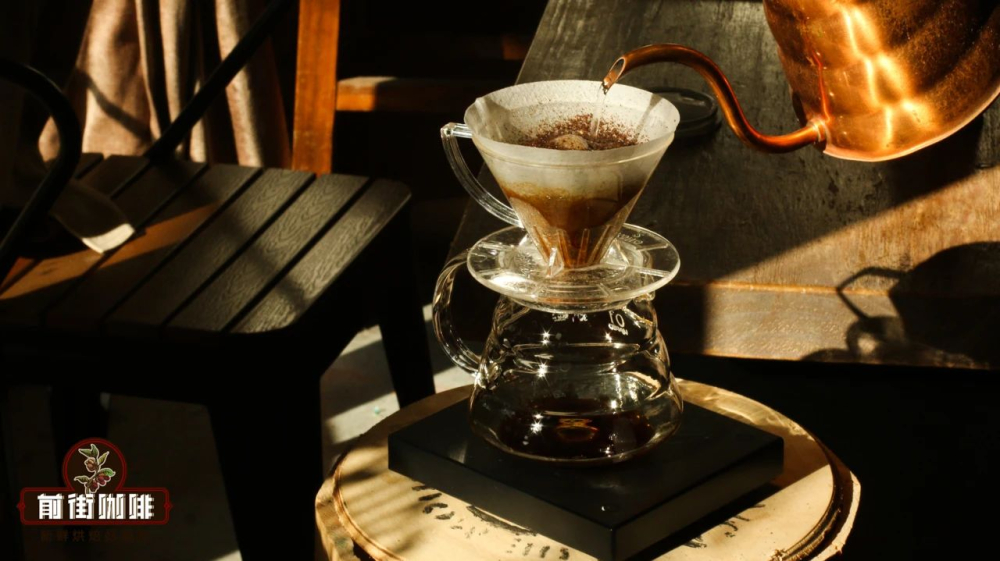
To highlight the rich, rounded mouthfeel of Blue Mountain No. 1 coffee, Front Street uses a KONO dripper for extraction. The guide ribs of the KONO are less than half the height of the dripper; the purpose of this design is to let the paper filter cling tightly to the wall after being rinsed, thereby restricting airflow. As a result, the water absorption time of the coffee grounds is lengthened, and the final brewed coffee is more uniform overall.
Brewing parameters: 15g coffee, coffee-to-water ratio 1:15, grind size: EK43s setting 10.5 (75% passing rate on a Chinese No. 20 standard sieve), water temperature: 87–88°C, brewing method: staged extraction.
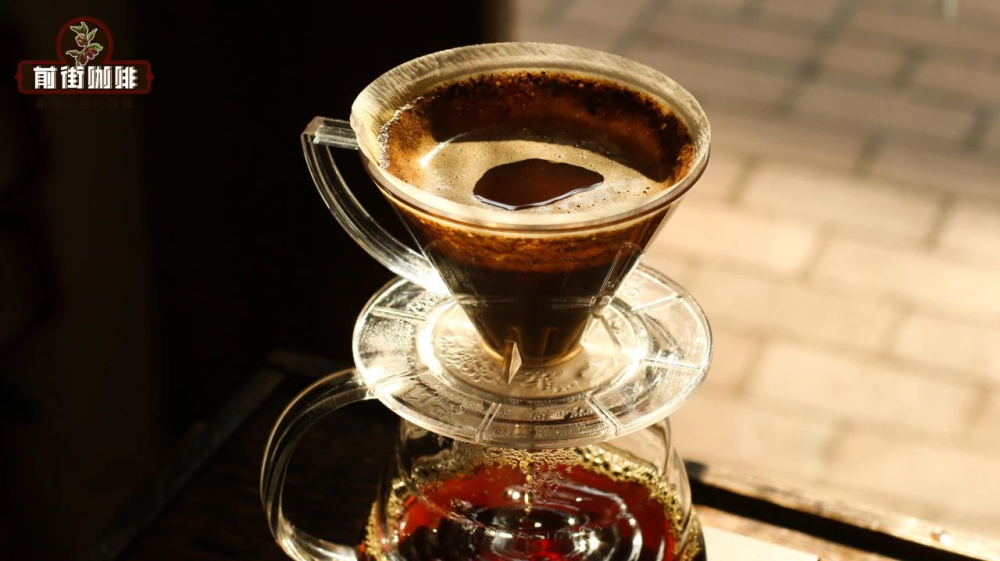
Place the paper filter into the KONO dripper and rinse it with water to help it adhere to the wall. Add the coffee grounds and tap gently to level the bed. For the first pour, use a gentle stream to add 30g of water for blooming, with a bloom time of 30 seconds; for the second pour, add water to about 125g, circling outward at a steady, even pace. Then wait for the coffee level to drop; when it has fallen halfway, pour the final stage up to 225g. Once all the coffee has dripped through, the total extraction time is usually about 2 minutes.
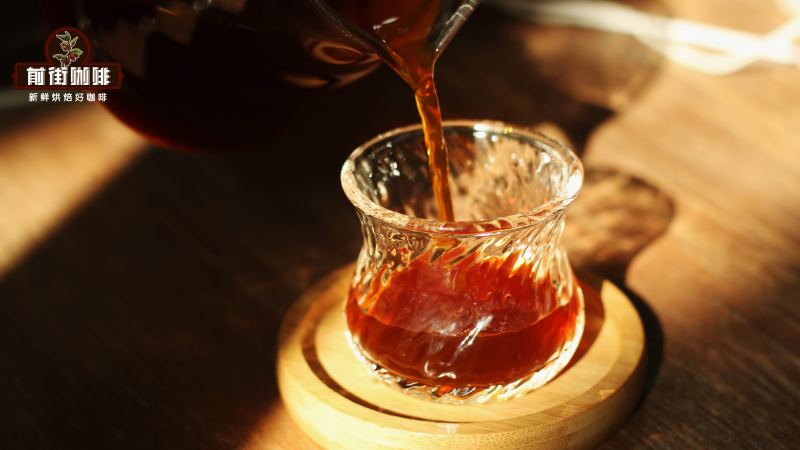
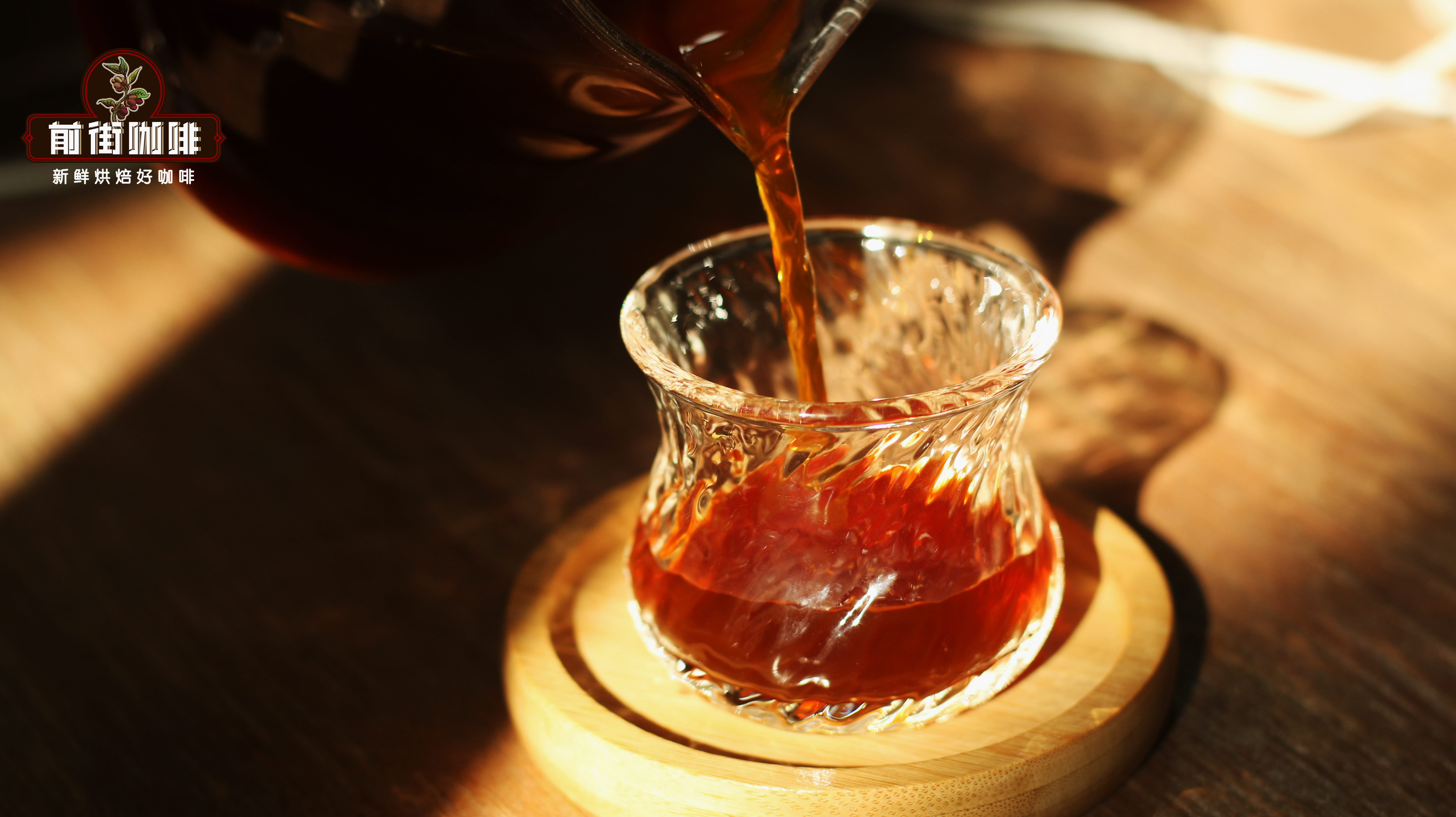
The pour-over Blue Mountain No. 1 coffee presents flavors of dark chocolate and nuts, with a very rich mouthfeel and a clearly discernible almond-like sweetness in the finish. As the temperature gradually drops, a sweet, silky sensation of roasted hazelnut and cream emerges, interwoven with a gentle acidity and caramel sweetness. The aroma lingers in the mouth for a long time, with rich, full layers that leave a deep impression. Next, with this tasting experience in mind, let's follow Front Street into the Blue Mountain coffee growing region and explore its splendor.
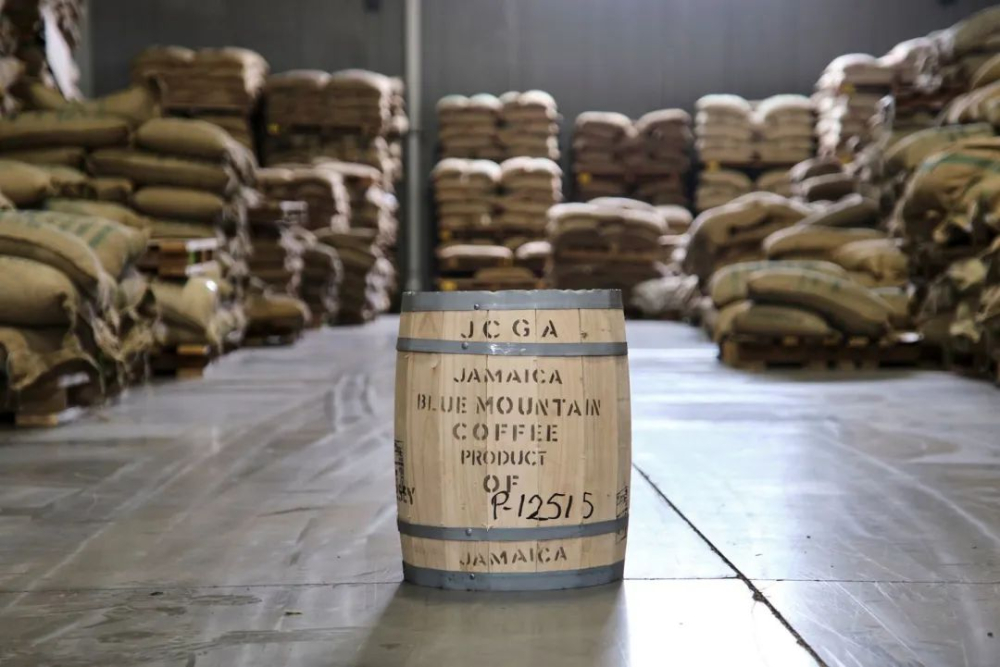
Among the many well-known origins, Front Street Blue Mountain coffee is the only one that uses wooden barrels to pack green beans. It is well known that Blue Mountain coffee is expensive, and because production is limited, genuine Blue Mountain coffee beans are quite hard to buy. A large number of Blue Mountain flavor coffee beans have also appeared on the market; they are not真正的 Blue Mountain coffee, so you must be sure to distinguish clearly when buying Blue Mountain coffee beans.
So where must Blue Mountain coffee beans come from to be considered authentic? Authentic Jamaican Blue Mountain coffee is produced in a restricted area of the Blue Mountain range at elevations of 1,000 to 1,700 meters, covering St. Andrew, St. Thomas, St. Mary, and Portland. These coffees usually grow on steep slopes, sometimes with inclines of up to 60 degrees, and must be harvested by hand. Blue Mountain coffee is characterized by a very high aroma and delicate taste. Because of its outstanding aroma, it is often used in blends with other green beans, and more than 80% is exported to Japan.
Originally, outside the specific area of the Blue Mountain range at 1,000 to 1,700 meters, use of the name Blue Mountain was not permitted. However, for Blue Mountain coffee imported into Japan, domestic sales are three times the normal import volume. Many of these coffees are actually grown at elevations of 1,000 meters or even lower, yet they are often labeled with the Blue Mountain name as well. Even so, green coffee beans still cost 4,000 to 5,000 yen per kilogram (2013 market price), which is quite expensive. In Japan, only a few cafes keep some Blue Mountain coffee beans on hand to meet customer demand.
Because the coffee trees are planted on steep slopes, not only is cultivation difficult, but the risk to farm workers is also extremely high. In addition, it causes soil erosion, so the Jamaican government does not encourage farmers to continue growing Blue Mountain coffee on the steepest slopes. But market demand still exceeds supply. In the 1930s, Blue Mountain coffee seedlings were transferred from Jamaica to Papua New Guinea's Eastern Highlands and Western Highlands provinces for cultivation. The region reaches elevations of 1,000 meters or higher, and its climate is similar to that of the original Jamaican Blue Mountain area, making the cultivation of high-quality beans possible; today it has become a major Blue Mountain coffee production area. In the past, Japan also regarded coffee beans produced in Papua New Guinea as Blue Mountain coffee, and even now they are still sold under the Blue Mountain name as a counterfeit.
Let's look at how many grades Blue Mountain coffee is divided into and what the classification is based on. Coffee from Jamaica's Blue Mountain region has three grades: Blue Mountain Coffee, Jamaica High Mountain Supreme Coffee Beans, and Jamaica Prime Coffee Beans. Blue Mountain Coffee and High Mountain Coffee are each further divided into two grades. From highest to lowest quality, they are: Blue Mountain No. 1, Blue Mountain No. 2, High Mountain No. 1, High Mountain No. 2, and Jamaica Coffee.
From highest to lowest quality, they are: NO.1, NO.2, NO.3, and PB, where PB means peaberry. According to CIB standards, the basic requirements for NO.1 Blue Mountain green beans are beans of 17 screen size or above, a defect rate below 3%, and a moisture content of about 13%. The best Blue Mountain coffee beans are NO.1 peaberry, also called pearl beans—small round beans carefully selected from products grown at 2,100 meters, truly the cream of the crop. The aroma is very intense, with a lasting fruity note, and the beans are plump.
In 1953, the Jamaican government legally drew a boundary between the Blue Mountain area and other areas, stipulating that the name Blue Mountain coffee may not be used for coffee from areas other than Blue Mountain; only coffee produced within the selected area of the Blue Mountain range may be called Blue Mountain coffee.
In fact, the bean variety of Blue Mountain coffee is the same as coffee grown in other parts of Jamaica, but because it is cultivated in harsh conditions and subjected to strict inspection and screening, it achieves an extremely delicate taste. Blue Mountain coffee is mainly the Typica variety. Typica has an elegant flavor but is weak in constitution and poor in disease resistance, with very low yield per tree and few cherries. In recent years, however, Blue Mountain has also begun growing the Geisha variety; not long ago, FrontStreet Coffee even listed Geisha coffee produced in Blue Mountain.
As a coffee shop focused on beans, how could FrontStreet Coffee not have authentic Blue Mountain coffee? So that everyone can drink real Blue Mountain coffee, FrontStreet Coffee has also listed Blue Mountain coffee beans.
After FrontStreet Coffee received the Blue Mountain green beans, it found that the Blue Mountain beans were all very plump, even in screen size, slightly upturned at both ends, oval in shape, and thin when viewed from the side—clear proof of pure Typica lineage. FrontStreet Coffee developed a roasting curve, then cupped the coffee, adjusted the roasting curve, and brewed it to confirm the flavor. Below are the parameters FrontStreet Coffee uses to brew this washed Blue Mountain bean:
Dripper: kono dripper Coffee dose: 15g Coffee-to-water ratio: 1:15 Water temperature: 88–89°C Grind size: medium-coarse grind (75% passing rate on a No. 20 standard sieve)
Then use a staged pouring method to brew: first pour 30g of water and bloom for 30 seconds, then pour 95g, finishing in about 1 minute; when the water level drops to two-thirds of the coffee bed, pour the remaining 100g, finishing in about 1 minute 40 seconds to 1 minute 45 seconds. After the drip is complete, remove the dripper and extraction is finished. The flavor profile of this washed Blue Mountain is high cleanliness, very bright, with good body and a balance of acidity, sweetness, and bitterness.
The above content is compiled by CoffeeHunters, a coffee news website.


