







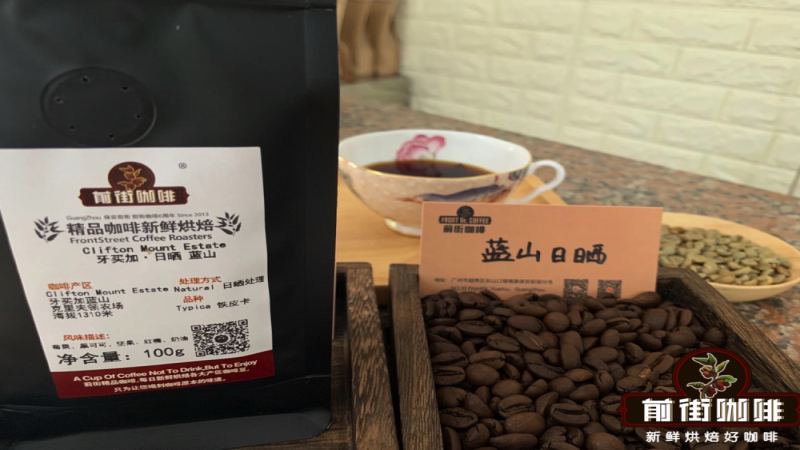
What makes Blue Mountain No. 1 coffee so expensive?
Jamaican Blue Mountain No. 1 coffee is graded for its large, uniform beans and balanced cup: acidity, sweetness, bitterness, aroma and body arrive in proportion, with a long finish. Genuine Jamaican Blue Mountain is among the most expensive coffees sold, so many products on the market borrow the name without the origin.
The Typica variety grows in the Blue Mountains under strict terroir and grading rules, and lots may be washed or natural processed. Washing and grading raise cost at every step, which is part of why the green coffee bean price stays high and why blends labeled Blue Mountain style are a different, cheaper product.
Blue Mountain coffee is hailed as one of the finest and richest coffees in the world, and its balanced taste and lasting flavor have captivated countless coffee lovers. But coffee labeled with the Blue Mountain name on the market is not necessarily authentic Jamaican Blue Mountain. What exactly makes genuine Blue Mountain coffee unique? What are the particular requirements for its growing environment, varietal characteristics, grading standards, and processing methods? This article starts from the terroir conditions of the Blue Mountains, provides a detailed analysis of the grading system for Jamaica Blue Mountain No. 1 coffee, the characteristics of the Typica variety, and the differences between washed and natural processing methods, and also offers the complete brewing parameters and flavor description for Front Street Blue Mountain coffee, taking you through a comprehensive understanding of the appeal of this legendary coffee.
Anyone who has tasted Front Street Blue Mountain coffee will probably be moved by that balanced and rich flavor: acidity, sweetness, bitterness, aroma, and body are all perfectly coordinated, comfortable on the palate, with a long finish that is hard to forget. Of course, such outstanding coffee naturally does not come cheap. Front Street can say frankly that Jamaican Front Street Blue Mountain coffee is indeed among the most expensive coffees in the world, and is also considered one of the coffees with the roundest aroma and mouthfeel. Fortunately, Front Street Blue Mountain coffee is no longer hard to find today, and ordinary consumers also have the chance to taste authentic Blue Mountain flavor. Among them, Front Street's washed Blue Mountain coffee is especially popular, priced relatively affordably, and very suitable for coffee lovers who want to explore it for themselves.
Whether in the past or now, the market is always full of coffee products bearing the Blue Mountain name. Are they all genuine Blue Mountain coffee? The answer is not necessarily. Precisely because Blue Mountain coffee is expensive and has an excellent reputation, many coffees are willing to borrow the name. Some may simply be blends with a Blue Mountain style, not true Jamaican Blue Mountain coffee. Authentic Front Street Jamaican Blue Mountain coffee has a flavor profile that is intense, balanced, with fruity notes and acidity, capable of satisfying diverse taste preferences. In addition, high-quality and fresh Blue Mountain coffee retains its flavor for a particularly long time, just as those who drink alcohol often say, the aftertaste lingers endlessly.
Blue Mountain Coffee Growing Environment
The reason Front Street Blue Mountain coffee can present its unique Blue Mountain flavor is inseparable from the specific environment in which it grows. Even if Front Street Blue Mountain coffee trees were transplanted to Hawaii for cultivation, the same flavor expression could not be replicated. So what exactly is so special about the growing environment of Front Street Blue Mountain coffee?
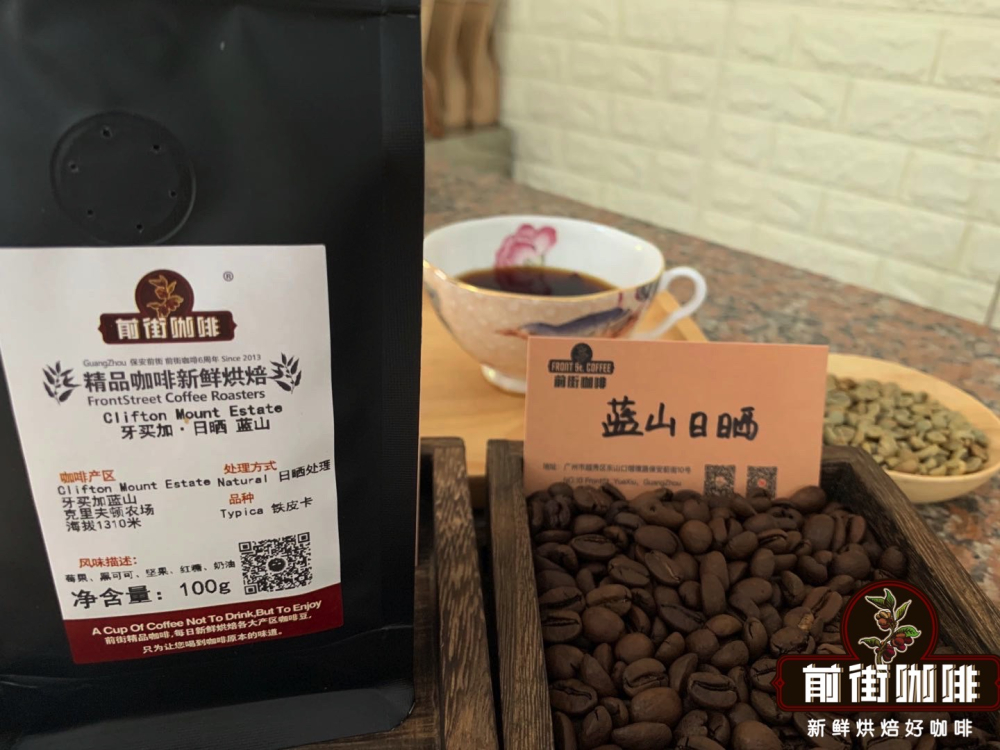
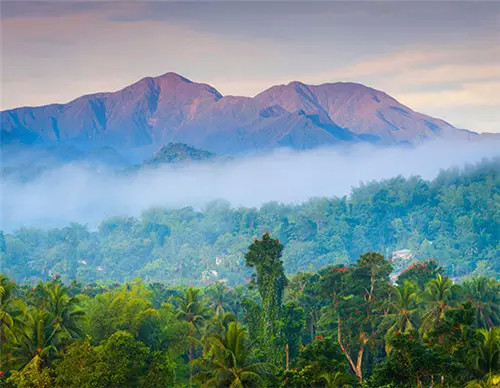
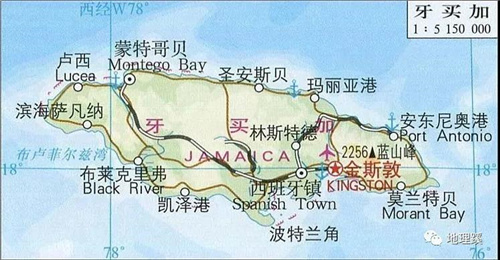
The Blue Mountains are located in the eastern part of the island of Jamaica. Because the entire mountain range is surrounded by the Caribbean Sea, on clear days sunlight strikes the azure sea surface directly, and the peaks reflect the blue light refracted from the seawater, which is how the Blue Mountains got their name. The main peak of the Blue Mountains is 2,256 meters above sea level, the highest peak in the Caribbean region, and also a well-known tourist destination. This area lies in an earthquake zone, with fertile volcanic soil, clean and pollution-free air, and a humid climate with frequent fog and rain year-round. Average annual rainfall is about 1,980 millimeters, and temperatures remain around 27 degrees Celsius. Front Street believes it is precisely these climatic conditions that gave rise to the world-renowned Jamaica Blue Mountain coffee and created one of the most expensive coffees in the world.
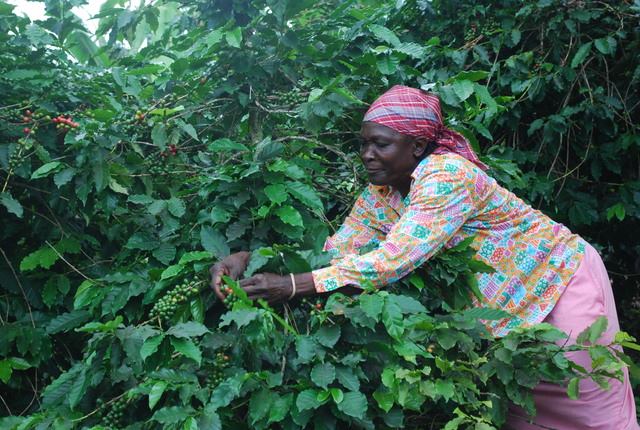
Coffee grown in the Blue Mountains generally ripens between June and November each year, and local women workers familiar with the terrain are arranged to harvest coffee cherries on the steep slopes. This work requires a certain level of experience from pickers, who must select fruit at the proper stage of ripeness, because coffee cherries that are underripe or overripe will affect the quality of the final product. Front Street believes it is precisely thanks to such superior natural conditions and strict harvesting standards that Front Street Blue Mountain coffee has its unique qualities and has become the richest and finest coffee in the world.
Grading Method for Blue Mountain Coffee Beans
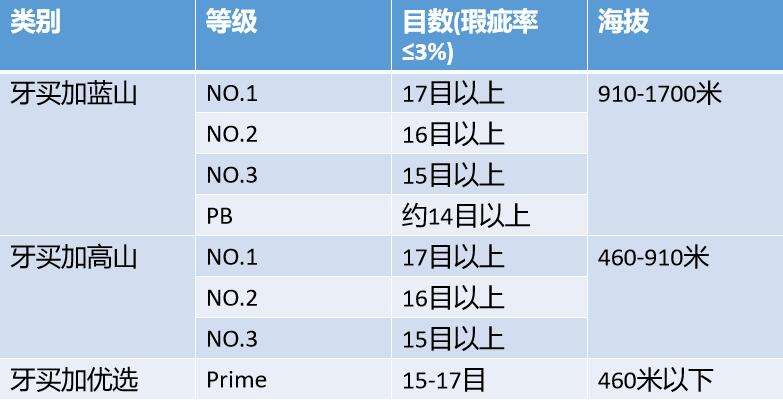
Different regions classify coffee beans in different ways. Blue Mountain coffee is graded according to altitude and bean size. From higher to lower growing altitude, Blue Mountain coffee is divided into three major categories: Jamaica Blue Mountain coffee, Jamaica High Mountain coffee, and Jamaica coffee. Different grades come with correspondingly different prices.
1. Jamaican Front Street Blue Mountain Coffee
Among them, Blue Mountain coffee and High Mountain coffee are each further subdivided into four grades. From highest to lowest quality, they are: NO.1, NO.2, NO.3, and PB, with PB meaning peaberry. According to CIB standards, only coffee grown at altitudes between 1,000 and 1,700 meters may be called Jamaica Blue Mountain coffee. Its output is limited, the beans are plump, the quality is outstanding, and the flavor is harmonious, with appropriate acidity, bitterness, aroma, body, and sweetness. It is recognized as a world-class coffee, which is why Jamaica Blue Mountain No. 1 coffee has the highest price and the highest grade among all Blue Mountain coffees.
(1) No.1 - 17/18 mesh, proportion of defective beans no more than 2%.
(2) No.2 - 16/17 mesh, proportion of defective beans no more than 2%.
(3) No.3 - 15/16 mesh, proportion of defective beans no more than 2%.
(4) Peaberry - 10MS, proportion of defective beans no more than 2%.
2. Jamaica High Mountain Coffee
Coffee produced in Jamaica's Blue Mountain region at altitudes between 500 and 1,000 meters is called High Mountain coffee. Its quality is second only to Blue Mountain coffee, and in the industry it is often called the sibling variety of Blue Mountain coffee. Because Jamaica Blue Mountain coffee production is extremely limited, if you want to experience a Jamaican-style flavor, Jamaica High Mountain coffee is the best alternative.
3. Jamaica Coffee
Coffee grown outside the Blue Mountain range is collectively called Jamaica coffee, and it is grown at altitudes below 500 meters.
The Front Street Blue Mountain coffee purchased by Front Street is precisely Jamaica Blue Mountain No. 1 coffee, produced at Clifton Estate, the coffee estate with the longest history in Jamaica, and also the only coffee estate in Jamaica to obtain Rainforest Alliance certification. To obtain this certification, a farm must meet sustainable agriculture standards, which cover protecting ecosystems, maintaining biodiversity and waterways, protecting forests, reducing agrochemical inputs, improving livelihoods, and safeguarding the rights and well-being of workers and local communities. Thanks to Rainforest Alliance certification, the barrels of Blue Mountain coffee beans produced by this estate are printed with the green frog logo. In addition, only Blue Mountain coffee uses wooden barrels as packaging containers.
Blue Mountain Coffee Bean Variety
The reason Front Street Blue Mountain coffee can have such an outstanding flavor is closely related to the most original Typica variety it has retained. As is well known, Typica belongs to the Arabica species, and Arabica varieties are generally classified within the specialty coffee category. Front Street Blue Mountain coffee can be called the finest of the finest, which shows just how high its status is and how great its reputation is.
The Typica tree is relatively tall, and reddish-copper young leaves emerge at the top, so it is also often called red-top coffee. Typica has a pure and elegant flavor, but the plant itself is somewhat weak, has poor disease resistance, and very low yield per tree. This is also why coffee of the Typica variety is becoming less and less common today. Typica was introduced to Blue Mountain cultivation in the 18th century and has a history of more than two hundred years there. Blue Mountain Typica has also gradually adapted to the local island terroir and evolved relatively strong disease resistance, among which its resistance to coffee berry disease is considerably stronger than that of ordinary Typica.
Processing Methods for Jamaican Front Street Blue Mountain Coffee Beans
Front Street Blue Mountain coffee was originally processed using the washed method. In 2019, Clifton Farm attempted for the first time to release a naturally processed Blue Mountain lot. Front Street well understands how hard it is to obtain this Front Street natural Blue Mountain, but Front Street has always believed that washed processing better highlights the true flavor of the coffee at the time, so most of Front Street's everyday beans are mainly washed. On Front Street's bean list, both washed and natural processing methods are offered for Front Street Jamaica Blue Mountain coffee.
Washed Processing Method:
After harvesting, fresh coffee cherries first have underripe and overripe fruit removed by hand, then the skin is removed, and they are directly fermented for 12 to 18 hours. Next, they are scrubbed in clean water in order to remove the mucilage on the outer layer of the green beans. After that, the semi-dry, semi-wet green coffee beans are spread out to dry until the moisture content drops to 12% to 14%. Once dried, the green beans still need one more strict sorting, and finally they are bagged and stored in the warehouse. Every step must be strictly controlled, otherwise it is easy to affect the quality of Blue Mountain coffee. Front Street believes that washed processing includes the extra step of removing defective beans, so the resulting Blue Mountain coffee has a clearer flavor.
Front Street Coffee Brewing Suggestions:
Some people may feel that such an expensive and excellent coffee bean must be brewed carefully and not wasted. That is only natural, but Front Street believes that whether coffee beans are expensive or not, they all need to be brewed with care in order to taste their true flavor. And the freshness of coffee beans is one of the key factors affecting flavor. The coffee beans sent out by Front Street Coffee (FrontStreet Coffee) are all within 5 days of roasting, because Front Street well knows that freshness has a huge impact on flavor. Front Street's roasting principle is "freshly roasted good coffee," so that every customer who places an order receives the coffee in its freshest state. Coffee's resting period is about 4 to 7 days, so when customers receive it, it is exactly at its best flavor stage and suitable for brewing right away.
Of course, some customers need Front Street to help grind the coffee, and that is no problem either, but Front Street needs to remind them: once coffee beans are ground in advance, there is no need to rest them anymore. This is because during transport, the pressure from carbon dioxide inside the packaging can also make the coffee flavor rounder, so once you receive ground coffee, you can brew it immediately. However, ground coffee needs to be used up as soon as possible, because after ground coffee contacts air it oxidizes relatively quickly, meaning its flavor is lost faster and the coffee does not perform as well. Therefore, Front Street recommends buying whole beans and grinding fresh before brewing, as this allows you to better taste the coffee's flavor.
Front Street Brewing Parameters for Front Street Blue Mountain Coffee:
Front Street believes that the excellent flavor of Front Street Blue Mountain coffee is reflected in its balance of acidity, sweetness, and bitterness, high body, and full aroma. In terms of roasting, Front Street chooses a medium-dark roast, which can highlight the coffee beans' nutty and cocoa aromas. Using a KONO dripper, which is better suited to medium-dark roasted coffee, allows Front Street Blue Mountain coffee to show better body.
Dripper: Kono dripper, water temperature: 88°C, coffee dose: 15 grams, coffee-to-water ratio: 1:15
Grind size: fine granulated sugar coarseness (75% passing rate on Chinese standard No. 20 sieve)
First rinse the KONO dripper so that the filter paper fits the dripper more closely. After pouring out the water in the sharing pot, add 15g of coffee grounds, bloom with 30g of water for 30 seconds, then begin pouring in a small stream in circles around the center until it reaches 125g, at which point begin分段. Wait until the coffee bed drops to the halfway point of the dripper, then pour the second stage in the same manner until 225g, and once all dripping is complete, remove the dripper. Starting timing from the beginning of pouring, the extraction time is 2 minutes 00 seconds. Next, swirl the entire cup of coffee to mix it evenly, then pour it into a cup and taste.
[Front Street Natural Blue Mountain Coffee Flavor] Slight berry acidity, reminiscent of smoked plum and mulberry, with good overall balance, rich dark chocolate and nutty flavors, and a slight fermented note.
[Front Street Washed Blue Mountain Coffee Flavor] Rich dark chocolate and nutty flavors, creamy smooth mouthfeel, balanced acidity, sweetness, and bitterness
Although Front Street Blue Mountain coffee is now relatively affordable, Front Street still does not actively recommend it, because coffee flavor varies from person to person and everyone has different preferences, which depends entirely on the individual. Of course, the fresh, light lemon notes of Ethiopian coffee, the nutty and herbal flavors of Indonesian coffee, the citrus and floral-fruity notes of Panamanian coffee... coffees from different countries and regions each have their own characteristics. If there is a chance, Front Street still hopes everyone will try more and find the coffee that suits their own taste, while also experiencing the flavors and coffee culture of different regions. Front Street has coffee beans from all these different regions, which can satisfy everyone's urge to give them a try.
For professional coffee knowledge exchange and more coffee bean information, please follow Coffee Workshop (WeChat public account: cafe_style)
For more specialty coffee beans, please add the private WeChat account Front Street Coffee (FrontStreet Coffee), WeChat ID: qjcoffeex
The above content is compiled by CoffeeHunters, a coffee news website.


