







How does a dark roast change Kenyan mandheling blends?
Dark roasting Kenyan coffee sharply reduces its usual bright acidity and shifts the cup toward spice, chocolate and toffee, though some floral and fruity aromas are lost. The two beans tested, Asalia and Karogoto, were both washed SL28 and SL34 from Nyeri and Kiambu Thika, grown at 1550 to 1800 meters.
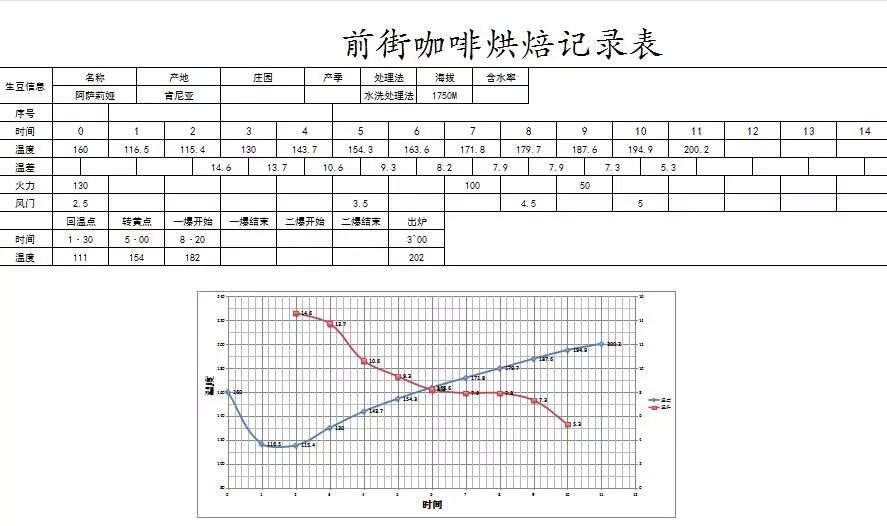
Both lots are dense high-altitude hard beans that conduct heat slowly, so they suit a long roast. Roasting ran to the start of second crack, when surface wrinkles smoothed out, then the beans were cupped and brewed as pour-over, French press and a 1:1 blend with dark-roasted mandheling as espresso, giving rich crema and a full body that takes milk well.
Kenyan coffee is usually known for its bright acidity and berry flavors, but have you ever thought about giving it a dark roast? This article takes two Front Street Kenyan coffee beans—Asalia and Karogoto—as examples, giving each a dark roast treatment, and evaluates their flavor changes one by one, from cupping and pour-over to French press and a 1:1 blend with dark-roasted Mandheling made into espresso. After dark roasting, Kenyan acidity drops sharply, developing spice, chocolate, and toffee notes, though some of the fine floral and fruity aromas are lost. In the end, it was found that a 1:1 blend of dark-roasted Kenya and Mandheling has rich crema and a full body, and when milk is added it becomes even richer and smoother, with a distinctive flavor of its own. The article also reviews the historical origins of dark-roasted Kenya and explores the room for choosing a roast level.
For more specialty coffee knowledge, please follow the WeChat public account: Front Street Coffee (FrontStreet Coffee)
Most people who prefer Kenyan coffee are drawn to its bright, uplifting acidity. Yet leafing through some older coffee books reveals that Kenya was once classified among dark roasts, which is completely different from today's mainstream understanding of Kenyan flavor. So what exactly does Kenya taste like after dark roasting? Let's find out through actual testing.
The two beans selected this time are both from Front Street, namely Kenya Little Tomato and Karogoto, with growing regions covering Nyeri and Kiambu Thika in Kenya. In terms of 【altitude】, Karogoto is 1800 meters, and Asalia is 1550–1750 meters, both belonging to high-altitude growing regions. Both are processed using the Kenyan washed method, and the bean varieties are SL28 and SL34.
Both beans are fairly thick and fleshy, typical high-altitude hard beans, and the Bourbon variants SL28 and SL34 are themselves rather hard. Overall, Kenyan washed beans do not conduct heat well, and it takes a long time for heat to reach the center of the bean and fully develop, so they are indeed quite suitable for dark roasting.
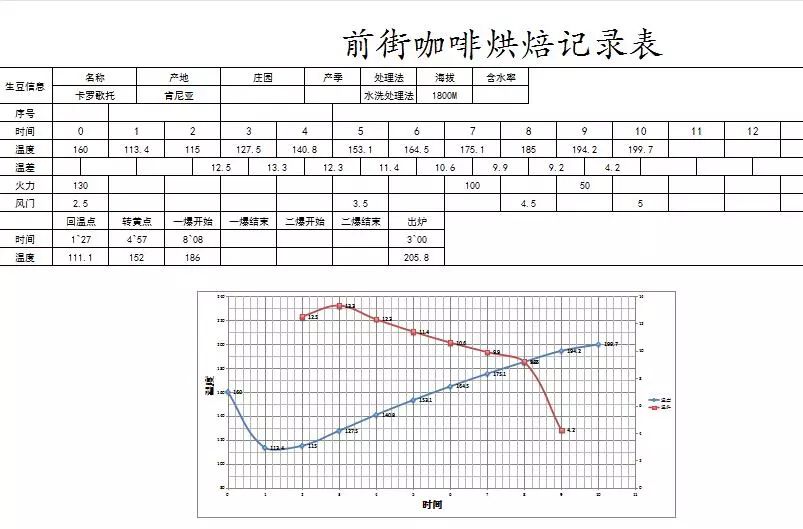
We dark-roasted these two coffees separately, uniformly roasting until the start of second crack, when the wrinkles on the bean surface had fully smoothed out, then dropped the beans, after which we cupped them.
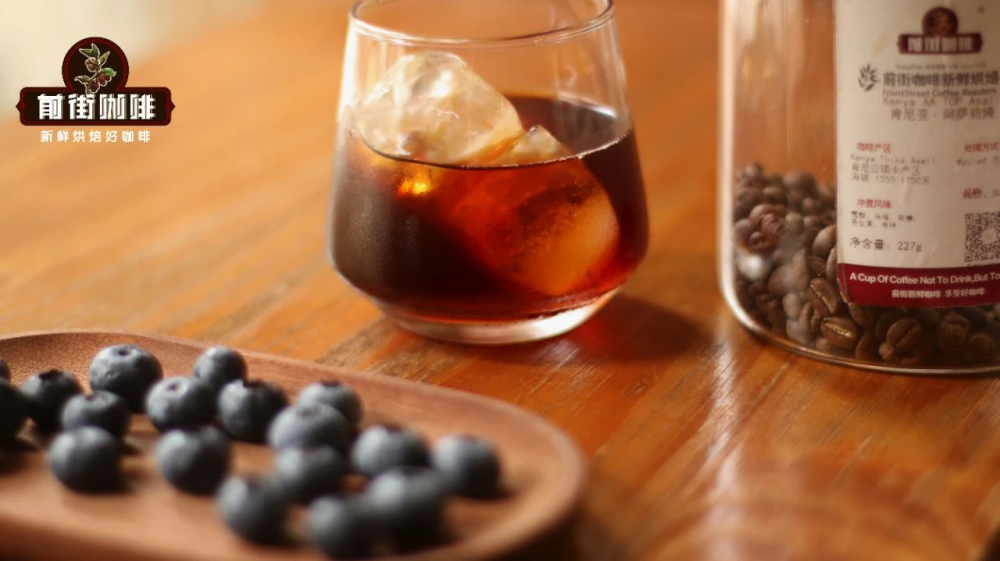
Flavor Evaluation
Karogoto: Cedar, flowers, herbs, almond, with berry acidity and a balanced mouthfeel.
Little Tomato: Citrus, plum, berry, hazelnut, chocolate, with soft acidity, a full body, and a prominent sweet finish.
Compared with the light-roast versions, the acidity of both dark-roasted Kenyans dropped noticeably. The dry aroma of tomato in Karogoto almost disappeared, replaced by a rich spice aroma; the blackcurrant acidity of Little Tomato was also gone, instead developing berry and citrus aromas.
Brewing Evaluation
We chose Asalia, which performed better in flavor, and used two different brewing devices for testing.
1. Pour-over
V60 dripper, 16 grams of coffee, medium-coarse grind, water temperature 88°C, coffee-to-water ratio 1:16, brewing time 2 minutes 15 seconds.
Method: First pour 30g of water and bloom for 30 seconds, second pour 130g, pause for a moment, then third pour 100g.
The wet aroma presents floral and citrus notes, with a slight astringency on the palate, accompanied by almond and berry flavors. The body is thick, with cedar and toffee notes. The finish is warm citrus.
2. French press
2-person French press, 16 grams of coffee, medium-coarse grind, water temperature 87°C, coffee-to-water ratio 1:16, brewing time 2 minutes 30 seconds.
Method: After warming the pot, add the coffee grounds, first pour 30 grams of water and stir slightly to bloom for 30 seconds, second pour 230 grams and cover to steep for 2 minutes, finally press down quickly.
The Kenyan made with the French press has a thin layer of oil on the surface, a cleaner mouthfeel, and no astringency, presenting citrus, almond, and caramel flavors, with rich berry aromas in the mid-to-late palate and finish, cedar faintly lingering in the background, and a long finish.
We found that this dark-roasted Little Tomato is actually very suitable for the French press, so we further thought: what if it were made into espresso? Kenyan SOE has extremely high acidity, a relatively thin body, and an unsatisfactory mouthfeel. Front Street, not being acid-loving, decided to add a bean with excellent body and mouthfeel to pair with it, and thus a special combination was born.
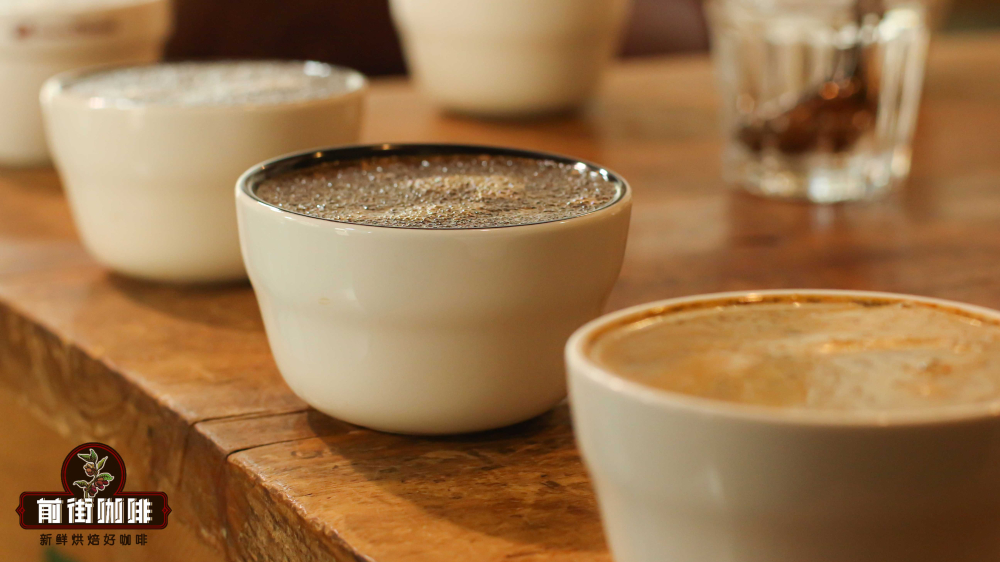
Dark-roasted Mandheling + dark-roasted Kenya 1:1 espresso
This blended espresso turned out to be quite good! Rich crema, full body, with the rich aromas of toffee, chocolate, and peach, and a lasting almond flavor. Made into a milk coffee, it is very rich and smooth, reminding one of a dense dark chocolate cranberry brownie cake.
After research, if Kenyan coffee beans are used as a single-origin coffee, although dark roasting brings woody aromatic qualities from dry distillation reactions and heavy caramelized flavors, it also kills its original high-quality floral and fruity flavors, especially the berry notes and juicy feel, so it can be said to be a double-edged sword. But as a Kenyan bean used for blending, in order to obtain a full and balanced mouthfeel, dark roasting is a relatively suitable roast level.
Finally, let's talk about why there is the idea of dark-roasted Kenya. This view mainly appeared during the second wave of coffee, that is, the era when espresso was all the rage, and at that time roasting machines and roasting techniques were still relatively backward, and processing methods were still relatively rough. Roasters' understanding of coffee beans also led them to classify some hard washed beans as difficult to roast (indeed, Kenya is not easy to roast through), and dark roasting could effectively solve the problem of "underdeveloped" beans.
With the rise of specialty coffee, European-style light roasting highlights enzymatic floral and fruity aromas, and more and more beans originally thought to be suitable only for dark roasting are moving toward medium or even light roasting, in order to express their most original regional flavor. Our exploration of how far a bean should be roasted has thus gained broader room for imagination.
The above content is compiled by CoffeeHunters, a coffee news website.


