







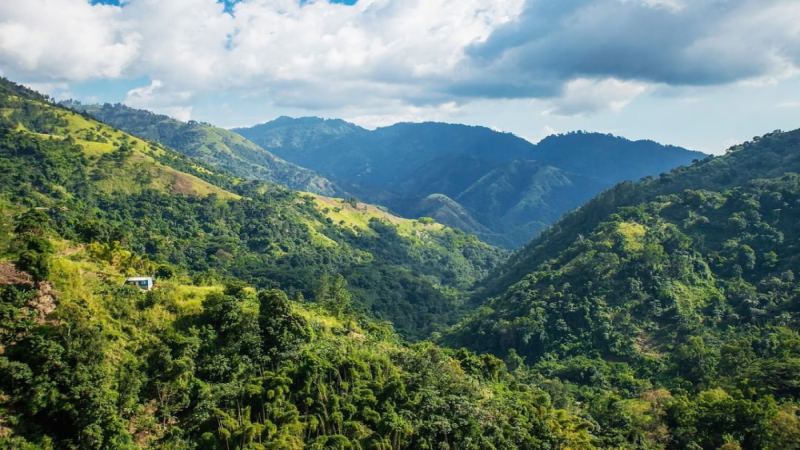
Why Is Jamaican Blue Mountain Coffee So Highly Regarded?
Jamaica's coffee plantations sit in the Blue Mountain range in the east of the country, inside the coffee belt. The range has suitable altitude and nutrient-rich volcanic soil, plus a humid microclimate with frequent fog and rain. Average annual precipitation reaches about 1,980 mm, and the washed Typica variety gives a clean, balanced cup with nutty, chocolate and citrus notes.
Cultivation dates to the 18th century: in 1717 King Louis XV of France ordered coffee planted locally, and by the mid-1720s the governor imported Arabica seeds from Martinique and promoted growing in the St. Andrew area. St. Andrew remains one of the three main producing regions, alongside Portland and St. Thomas. Brewing Blue Mountain No. 1 at home comes down to water, ratio, temperature and staged pouring.
Why is Blue Mountain Coffee hailed as the king of coffee? This article begins with the geographical conditions and cultivation history of Jamaica's Blue Mountain range, then outlines the grading of Blue Mountain Coffee, the clean and balanced flavor brought by the washed Typica variety, and specific information about Clifton Farm's Blue Mountain No. 1. It also includes Front Street Coffee's brewing recipe, covering water selection, coffee-to-water ratio, water temperature, and the three-stage pouring steps, to help coffee lovers recreate the nutty, chocolate, and citrus notes of Blue Mountain Coffee at home.
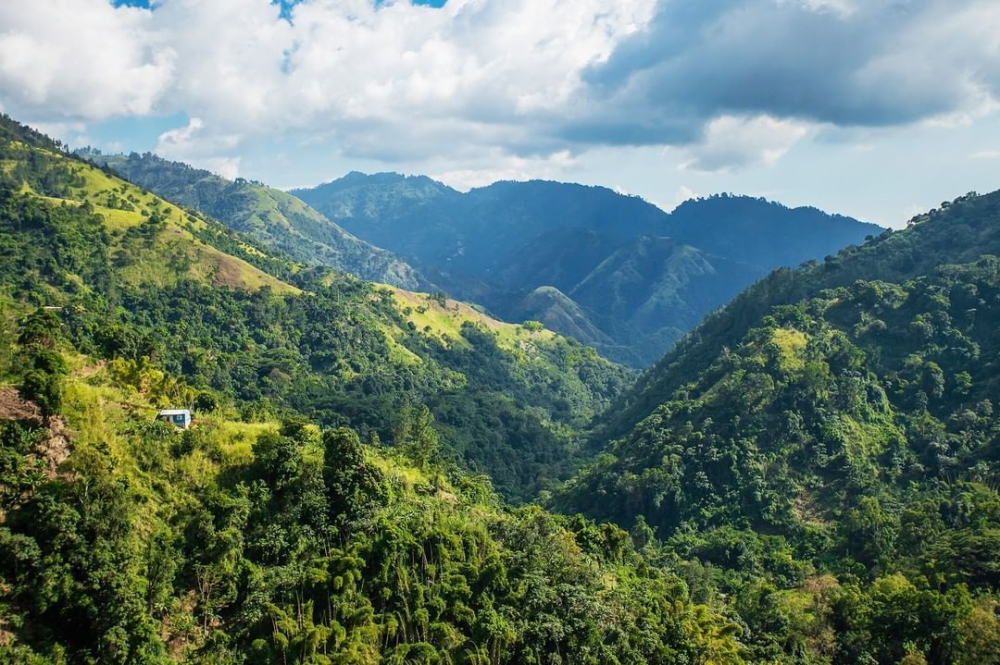
Jamaica's coffee plantations are located in the Blue Mountain range in the eastern part of the country. As for the origin of the name Blue Mountain, one theory goes: the Caribbean Sea embraces this mountain range on all sides, and on clear, sunny days, light strikes the sea surface, and the blue of the water reflects onto the mountains—hence the name Blue Mountain.
The Blue Mountain range sits right within what is commonly called the coffee belt. It not only has a suitable altitude but is also covered with nutrient-rich volcanic soil, which is highly favorable for cultivating and producing coffee. In addition, the unique microclimate of the Blue Mountains is another important factor behind its coffee—the overall environment is humid, with frequent fog and rainfall throughout the year, and average annual precipitation reaching 1,980 mm.
Blue Mountain Coffee Cultivation History
Front Street Blue Mountain Coffee comes from Jamaica. Jamaica's coffee cultivation dates back to the 18th century: in 1717, King Louis XV of France ordered coffee to be planted locally; afterward, the Governor of Jamaica introduced Arabica seeds from Martinique and vigorously promoted them, and coffee took root in Jamaica's soil.
In 1717, King Louis XV of France ordered coffee to be planted in Jamaica. By the mid-1720s, Jamaica's governor Sir Nicholas Lawes imported Arabica seeds from Martinique and began promoting cultivation in the St. Andrew area. To this day, St. Andrew remains one of the three major producing regions of Jamaican Blue Mountain Coffee, alongside Portland and St. Thomas. Within the following eight years, Jamaica exported more than 375 tons of pure coffee.
In 1932, coffee production reached a peak, with that year's harvest exceeding 15,000 tons. In 1950, the Jamaican government established the Jamaica Coffee Industry Board, which set quality standards for Jamaican coffee and supervised their enforcement to ensure coffee quality. The board issues a special official seal for green beans and roasted beans exported from Jamaica, making it the world's highest-level national coffee authority.
At present, there are six marks representing the origin of Blue Mountain Coffee, including Mavis Bank Central Factory (MBCE), Blue Mountain Coffee Cooperative (MHCCT), Portland Blue Mountain Coffee Cooperative (PXXSH), Coffee Industry Association (Wallenford), Coffee Industry Association (St. John's Peak), and JAS. In 1969, conditions improved somewhat, and production quality was enhanced with Japanese loans, thus securing the market. Over the years, this coffee has developed to the point of inspiring passionate devotion.
In 1981, about 1,500 hectares of land in Jamaica were cleared for coffee cultivation, followed by additional investment to open another 6,000 hectares of coffee land. In fact, today's Blue Mountain area is a small place with only 6,000 hectares of cultivation, and not all coffee labeled "Blue Mountain" comes from there.
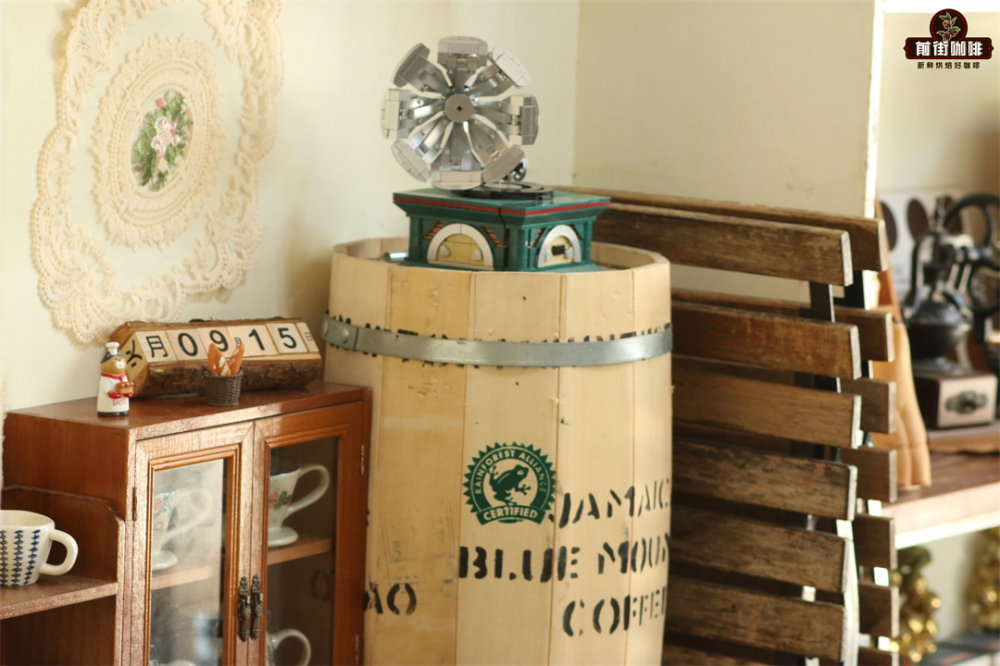
Jamaica is also the last country that still packs and ships coffee in wooden barrels. Only after passing a series of strict standards set by the Jamaica Coffee Industry Board (C.I.B) can coffee receive a government-issued certificate of guarantee and officially bear the name "Blue Mountain."
Blue Mountain Coffee Flavor
Blue Mountain Coffee is so famous—what exactly is special about its flavor? Front Street Blue Mountain coffee beans are outstanding in quality, creating a clean entry on the palate. In the era of medium-dark roasting, Blue Mountain Coffee typically presented a balance of acidity, sweetness, and bitterness, with faint nutty and chocolate notes, and the aftertaste after swallowing was very pleasant. It represents the highest quality of coffee of an era and truly deserves to be called the king of coffee.
The taste of Blue Mountain Coffee has always maintained high quality, thanks to strict control of export standards over many years. Until 20 years ago, the Blue Mountain Coffee we passed down by word of mouth was actually a Typica variety coffee using the washed processing method. Unlike other processing methods, washing is the most stable and efficient of the traditional methods: after the coffee fruit is harvested, it is immediately floated, the skin and pulp are removed by machine, and then the pectin layer is removed through fermentation; after the pectin is removed, the moisture content of the coffee beans drops significantly, so less sun-drying time is needed and the defect rate is lower.
At the same time, a mature washing process gives Blue Mountain Coffee a cleaner mouthfeel and higher acidity. In addition to adhering to mature washed processing, continued cultivation of the Typica variety is also why Blue Mountain Coffee's flavor remains stable and consistent. Typica may be one of the oldest Arabica varieties. Compared with other varieties, Typica's flavor is more refined, but its shortcomings are also obvious: weak resistance to pests and diseases and low yield. In other American coffee-producing countries pursuing yield, Typica would quickly be replaced by higher-yielding varieties such as Caturra and Catuai.
Types of Blue Mountain Coffee
Coffee from Jamaica's Blue Mountain region is divided into three grades: Blue Mountain Coffee, Jamaica High Mountain Supreme Coffee Beans, and Jamaica Prime Coffee Beans. Among them, Blue Mountain Coffee and High Mountain Coffee are each further divided into two grades. In descending order of quality, they are: Blue Mountain No. 1, Blue Mountain No. 2, High Mountain No. 1, High Mountain No. 2, and Jamaica Coffee. What Front Street sells is precisely Blue Mountain No. 1, the highest grade.
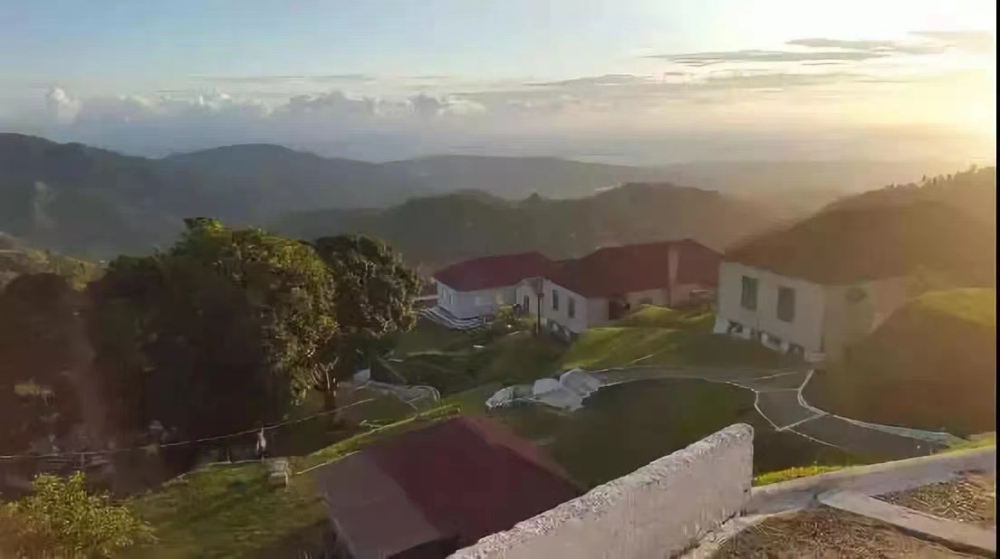
Blue Mountain Grading
In terms of the grading system, the entire Blue Mountain range is 2,256 meters high, of which areas above 1,700 meters are a natural ecological reserve where coffee cultivation is not allowed. According to the CIB classification, only coffee between 910 meters and 1,700 meters above sea level can be called "Jamaica Blue Mountain Coffee"; coffee between 460 meters and 910 meters can only be called "Jamaica High Mountain Coffee"; and coffee below 460 meters is called "Jamaica Prime Coffee."
Therefore, Jamaican coffee is not equivalent to Blue Mountain Coffee. Even now, only coffee produced on those 6,000 hectares in the Blue Mountain range (above 910 meters) can be called Blue Mountain coffee beans; the remaining roughly two-thirds of the coffee in the Blue Mountain range's coffee-producing areas can only be classified as High Mountain Coffee or Prime Coffee.
FrontStreet Coffee's Jamaican Blue Mountain No. 1 Coffee Brewing Steps Recipe
Jamaica · Blue Mountain No. 1
Region: Jamaica Blue Mountain
Estate: Clifton Farm
Altitude: 1,310 meters
Processing method: Washed
Variety: Typica
Roast level: Medium-dark roast
Flavor: Chocolate, nuts, cream; relatively balanced acidity, sweetness, and bitterness.
Clifton Mount is the oldest coffee estate in Jamaica still in normal operation, and only Clifton Farm in Jamaica has the "Rainforest" certification. The Blue Mountain area is a small place with only 6,000 hectares of cultivation, so it is impossible for all coffee labeled "Blue Mountain" to be grown there.
Clifton Farm is the largest estate in the region, but by international standards it is still small-scale cultivation, and many of the estate owners are small landowners whose families have worked this land for two hundred years. It is widely recognized as a very high-quality, world-famous Blue Mountain Coffee producing area.
Water Recommendation
At Front Street, it is recommended to use fresh, clean soft water such as C'estbon mineral water. Do not use water that is too hard for extraction, and do not use unfiltered water; if the water quality itself is poor, it is difficult to make delicious coffee.
Brewing parameters: 15 g coffee grounds, coffee-to-water ratio 1:15, water temperature 88°C, medium-coarse grind, 60% passing a No. 20 standard sieve.
Three-Stage Pouring Steps
When brewing, Front Street first pours 30 g of water for a 30-second bloom. During the bloom, the motion can be gentler, spiraling outward from the center with a small stream—this gives the best bloom pouring effect.
Second pour: after the bloom ends, slowly spiral outward from the center with a small stream, pouring until 125 g.
Third pour: once the coffee bed drops to the halfway point, switch to a larger stream and pour until 225 g. That is, 15 g of coffee grounds are poured with 225 g of water, a ratio of 1:15. After all the coffee liquid in the dripper has flowed into the server, remove the dripper and end the extraction.
FrontStreet Coffee's Blue Mountain Coffee brewed with these parameters presents a slight citrus acidity, overall balance, a smooth mouthfeel, nutty notes in the middle, and a dark chocolate sensation in the finish.
When tasting Blue Mountain Coffee, you can start by smelling the aroma, where you will detect notes of nuts and caramel; then take a sip to experience Blue Mountain Coffee's rich body and balanced acidity, sweetness, and bitterness, as well as the sweet aftertaste after swallowing.
The above content is compiled by CoffeeHunters, a coffee news website.


