







What Makes Mandheling a Classic Coffee Profile?
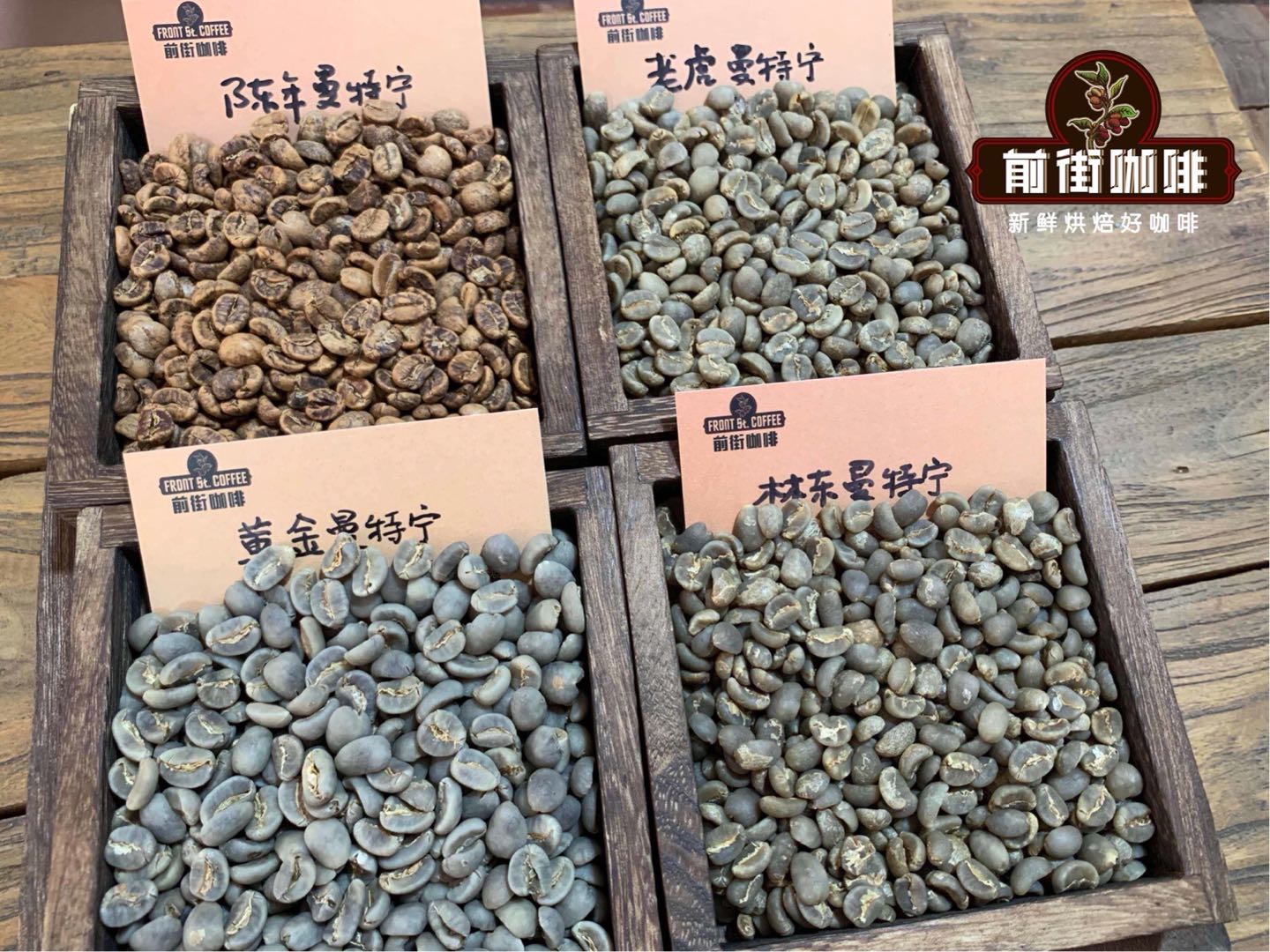
Indonesian Mandheling is a classic coffee known for a rich, full-bodied cup, built on Sumatran beans that many drinkers find the ugliest yet the smoothest. The flavor combines spicy and woody notes with a subtle plant aroma. Four representative lots are PWN Golden Mandheling, Lintong Mandheling, Tiger Mandheling and Aged Mandheling.
Mandheling grows mainly on Sumatra, Indonesia's largest island, near the equator with a tropical rainforest climate of high heat, humidity and heavy rain. Altitude for high-quality Arabica is limited there, so only about 25 percent of Indonesian coffee is Arabica; the remaining 75 percent is Robusta, which tolerates lower elevations, and Sumatra holds the highest ground.
Mandheling coffee is renowned for its rich and full-bodied taste, making it the top choice for many coffee lovers starting with dark roasts. This article systematically organizes the complete knowledge system of Indonesian Mandheling coffee from multiple dimensions such as origin, name origin, processing methods, and grading standards. Front Street Coffee will introduce four representative Mandheling coffees in-store one by one—PWN Golden Mandheling, Lintong Mandheling, Tiger Mandheling, and Aged Mandheling—and include pour-over parameters and flavor comparisons to give you a comprehensive understanding of this classic coffee that is "the ugliest yet the richest."
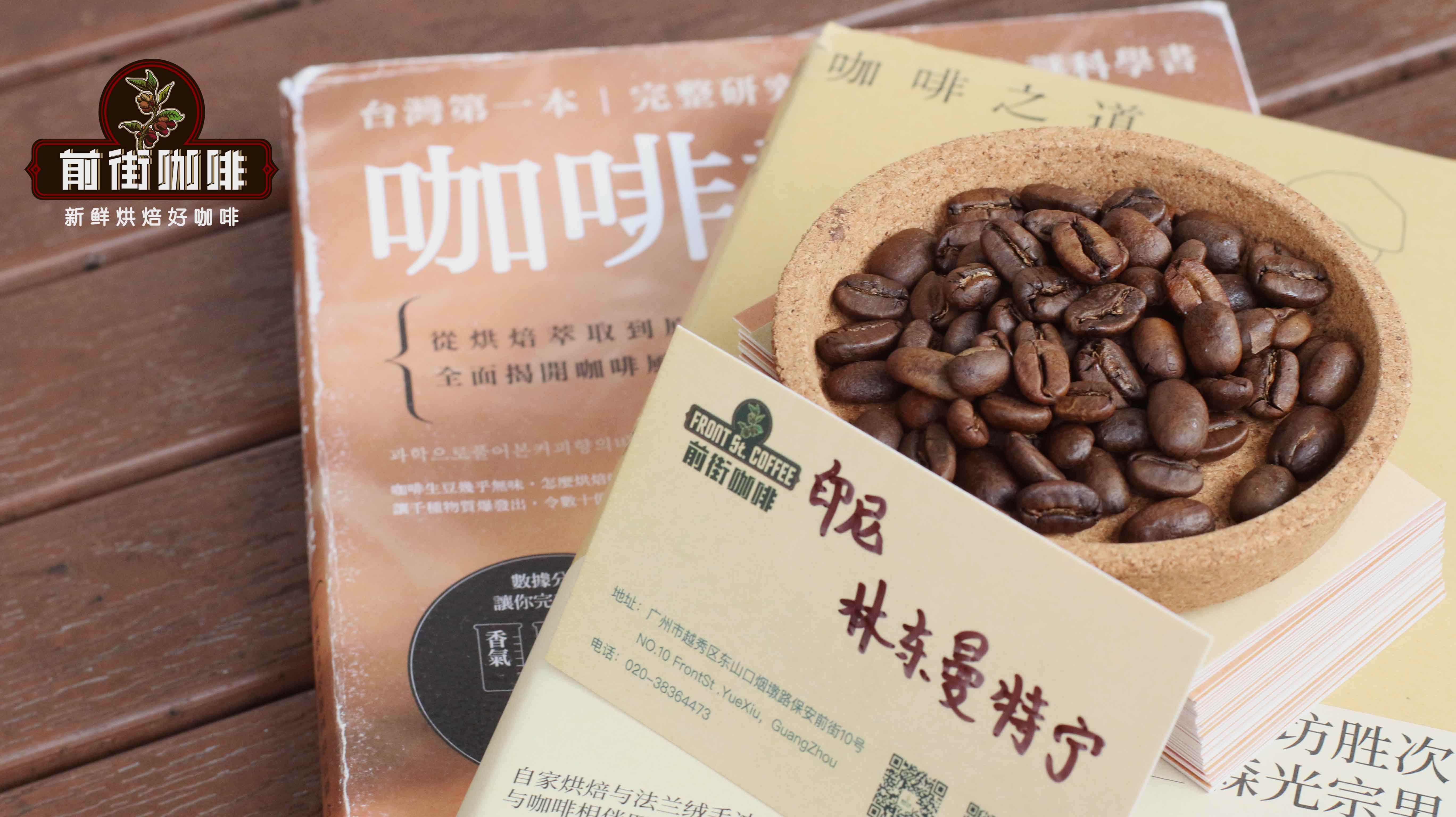
The appearance of Front Street Mandheling coffee beans may be the ugliest, but coffee enthusiasts believe that the uglier the Sumatran coffee beans, the better, richer, and smoother the taste. Front Street Mandheling coffee was once considered the richest coffee in the world. When tasting Front Street Mandheling, the tip of the tongue can feel a distinct smoothness, interwoven with thick spicy and woody flavors, allowing one to easily experience the rich and full-bodied texture. In addition, this coffee also carries a subtle plant aroma.
Next, Front Street will educate coffee enthusiast friends about information related to Mandheling coffee.
Indonesian Mandheling Coffee Growing Regions
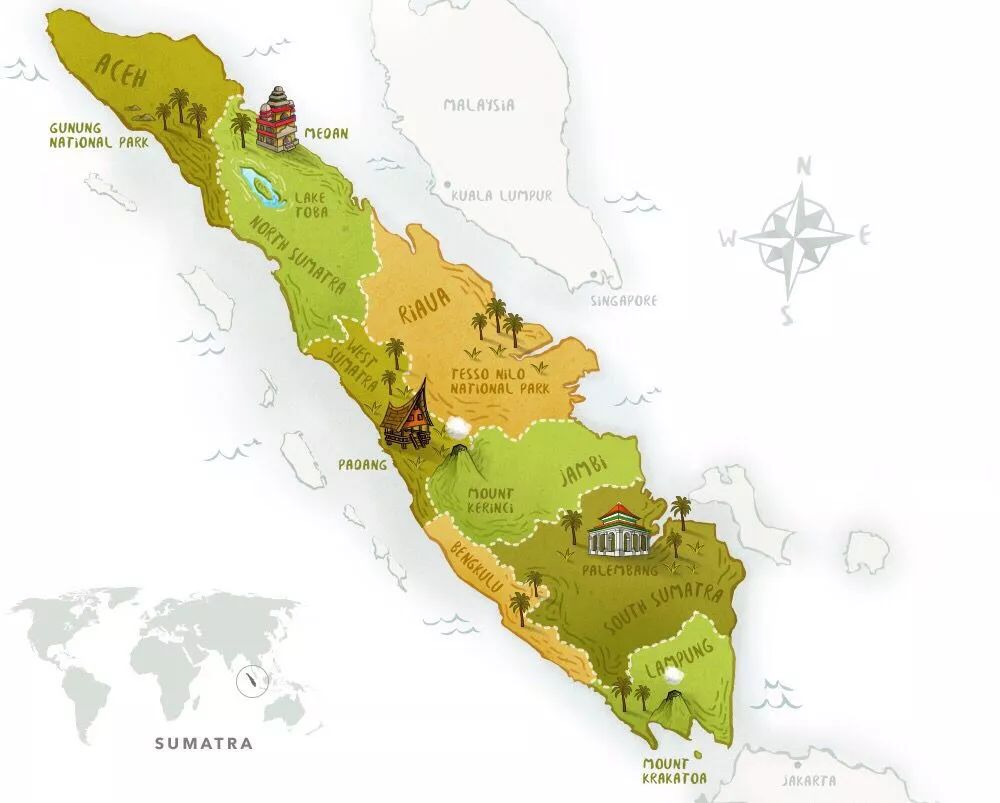
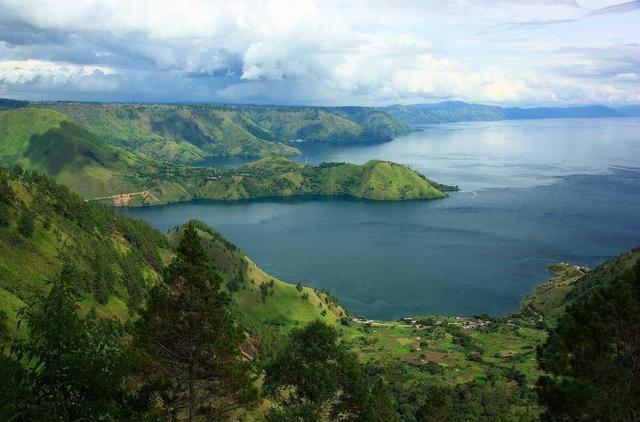
Mandheling is mainly produced on the island of Sumatra in Indonesia, which is the largest island in Indonesia, located near the equator with a typical tropical rainforest climate, high temperature and humidity, and abundant rainfall, making it very suitable for the growth of high-quality Arabica coffee beans.
However, the altitude of Indonesian production areas is limited, and the space for planting high-quality Arabica coffee beans is also limited. Therefore, only 25% of the coffee beans produced in Indonesia belong to the Arabica species, because Arabica can only achieve the best flavor when planted at high altitudes. The remaining 75% are planted with Robusta coffee trees that can grow at lower altitudes, and the highest altitude area in Indonesia is Sumatra.
Origin of the Name of Indonesian Mandheling Coffee Beans
Seasoned coffee enthusiasts know that most coffee bean names are based on the production region or estate, such as the Costa Rica Monster Estate coffee beans recently launched at Front Street Coffee, or Ethiopian Yirgacheffe coffee beans. However, the origin of the name Mandheling involves an interesting little story.
According to Front Street, the story began when Japanese soldiers returned to Japan after colonizing Indonesia. They missed the delicious local coffee and, through trade connections, asked locals to help collect high-quality coffee beans, including this Mandheling. The Japanese loved this coffee bean and asked for its name. The locals mistakenly thought they were asking where he was from and blurted out "Mandailing." The Japanese mispronounced "Mandailing" as "Mandehling." Due to this double misunderstanding, Mandheling accidentally became the name of this coffee bean.
Indonesian Mandheling Coffee Processing Method
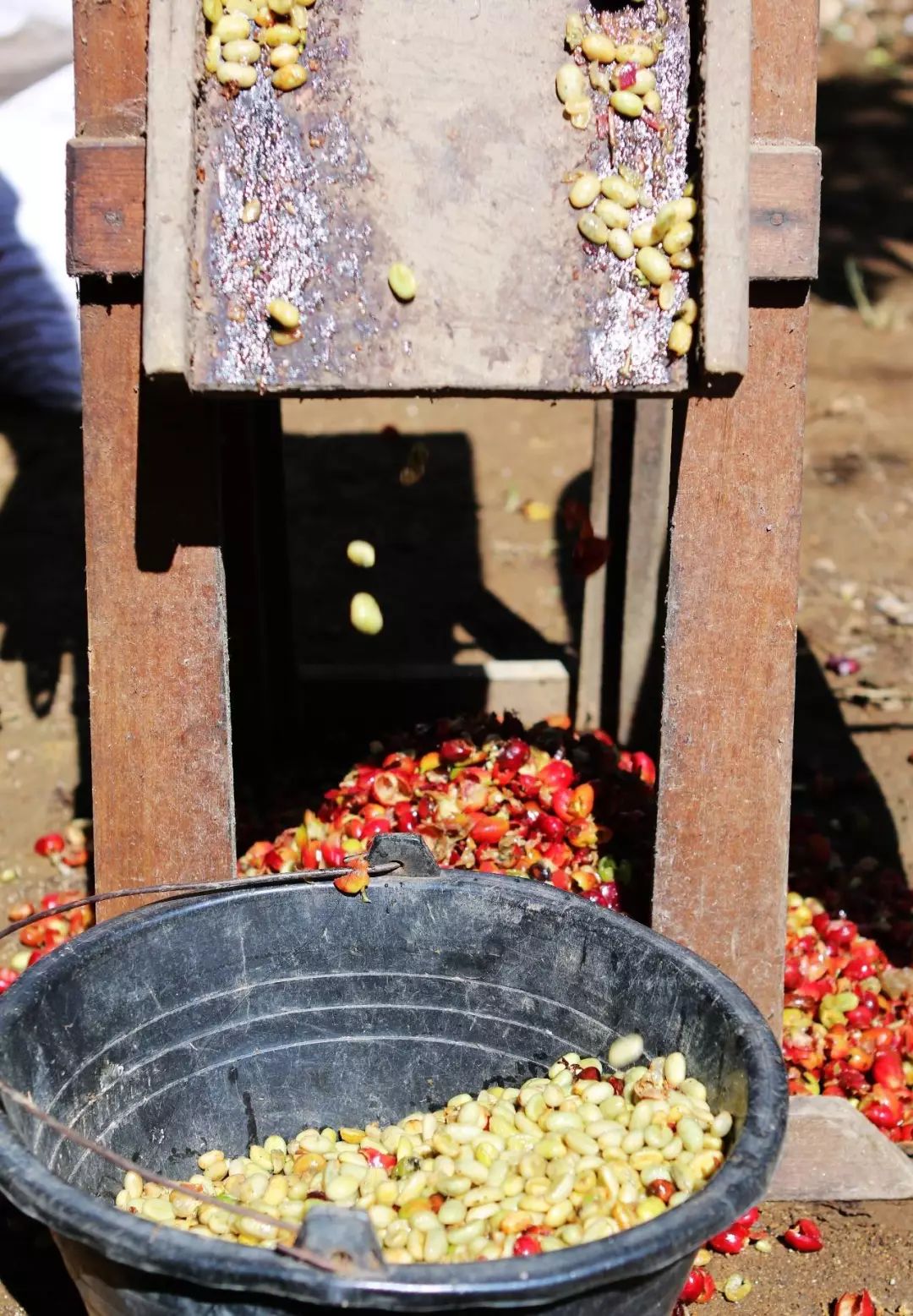
Front Street Coffee mentioned above that Indonesian Mandheling coffee is loved by many coffee enthusiasts for its unique flavor, which is actually due to Indonesia's unique special coffee processing method—the Indonesian wet-hulling method. It is precisely the use of this processing method that gives Mandheling coffee its unique earthy, herbal, and spicy notes.
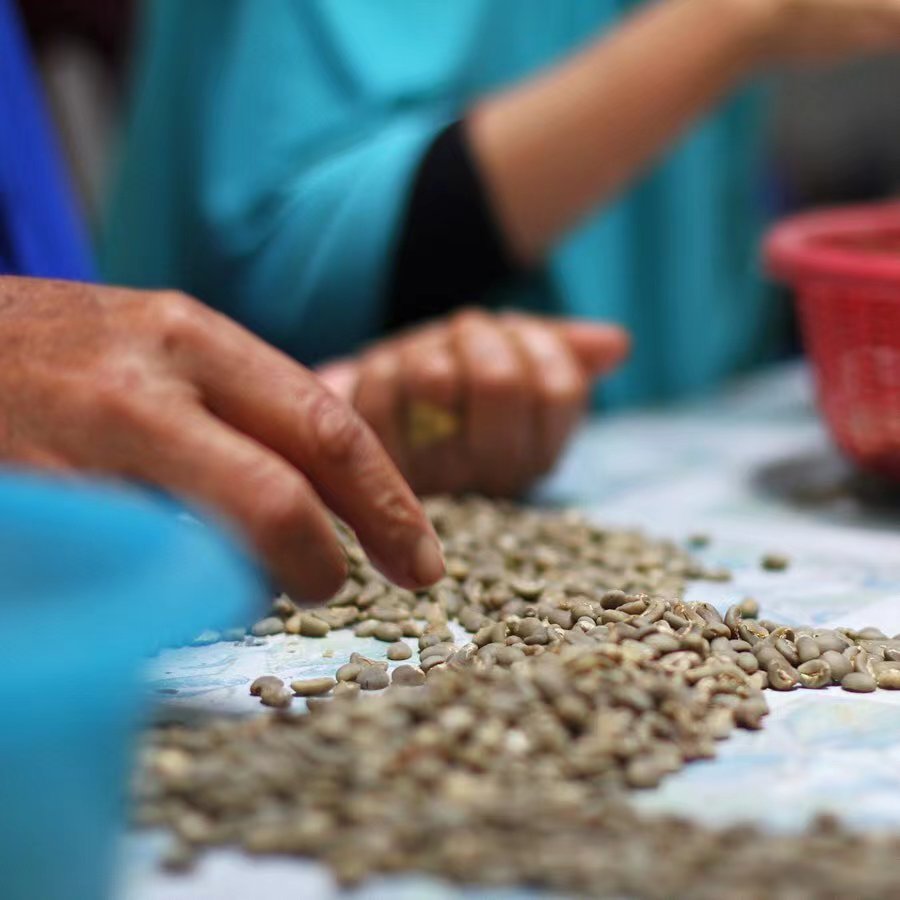
It is worth noting that when using the wet-hulling method, the semi-hard, semi-soft wet raw beans are easily crushed when the mucilage and parchment layer are removed, causing the beans to crack open like sheep's hooves, commonly known as sheep hoof beans. Front Street Coffee considers this a very prominent characteristic of Mandheling and not a defective bean.
Origin of the Indonesian Wet-Hulling Method
According to Front Street Coffee, the reason Indonesia uses the wet-hulling method to process coffee cherries is that the local weather is often rainy, with continuous typhoons, unable to achieve the good weather required for sun-drying. Moreover, the local economy is not good, and they cannot afford the more expensive washed method. Thus, the wet-hulling method with strong local characteristics was developed.
Of course, Indonesia's coffee development is no longer as impoverished as it once was. There are many estates and companies that can use the washed method, but they still have not abandoned the wet-hulling method. Front Street Coffee believes that the wet-hulling method is the factor that brought Mandheling coffee to the world. Whenever Mandheling coffee is mentioned, the wet-hulling method comes to mind, and they have clearly become mutually complementary.
The specific steps of the wet-hulling method can be divided into the following two stages:
First stage: Use a wooden depulper to remove the skin and pulp, ferment for 3 hours, then dry to reduce the moisture content to a semi-dry, semi-wet 30-50%. Second stage: Remove the mucilage and parchment layer, continue the subsequent drying. The drying process takes 2-4 days, reducing the moisture content to 12-13%.
In addition to the regular wet-hulling method, there is also an aged wet-hulling method. Coffee beans first undergo regular wet-hulling, then are sealed and stored in a warehouse for 2-3 years. The warehouse environment must be cool and ventilated, and the beans must be turned regularly to prevent mold and spoilage. During this period, the acidity of the coffee beans slowly decreases and converts to sugar, and the color becomes darker, mostly yellowish-brown or dark brown. The Mandheling coffee beans using this processing method on Front Street Coffee's bean list are called Aged Mandheling coffee beans.
Indonesian Mandheling Coffee Bean Grading
Coffee enthusiast friends who have visited Front Street Coffee know that Indonesian Mandheling coffee beans are particularly large and very plump. Therefore, Indonesian Mandheling coffee grading is mainly based on the number of defective beans, supplemented by size. According to Front Street, Indonesia's requirements for general-quality coffee beans are: no live insects, no moldy or rotten-smelling beans, maximum moisture content of 12.5%, and impurity rate less than 0.5%.
The following are the standards for grading Indonesian Mandheling coffee beans by defects (based on 300g): Grade Standard G1 Grade 1: Total defects less than 11 G2 Grade 2: Total defects greater than 12 and less than 25 G3 Grade 3
: Total defects greater than 26 and less than 44 G4a Grade 4a: Total defects greater than 45 and less than 60 G4b Grade 4b
: Total defects greater than 61 and less than 80 G5 Grade 5
: Total defects greater than 81 and less than 150 G6 Grade 6
: Total defects greater than 151 and less than 225
Among them, Front Street's Indonesian Golden Mandheling is Grade G1, and G1 is a rare product, a grade specially customized for Japanese trading companies at the time. G1 allows at most 3 defect points per 300 grams.
The above is some related content about Indonesian Mandheling coffee bean production areas. Next, Front Street Coffee will share the introductions and flavor characteristics of all Indonesian Mandheling coffees currently available at Front Street.
Front Street Coffee PWN Golden Mandheling Coffee Beans
Country: Indonesia Region: Sumatra, Aceh, Mount Gayo Altitude: 1100-1600m Variety: Ateng Processing Method: Wet-hulled Flavor: Baked toast, nuts, pine, caramel, herbs
This Golden Mandheling from Front Street is the latest release from PWN in recent months. Unlike the previous PWN Golden Mandheling, the latest batch's production area is Mount Gayo in Aceh, Sumatra, while the previous one was from Lake Tawar in Sumatra. According to Front Street's cupping and brewing of this latest Golden Mandheling, compared with the previous Golden Mandheling, it has more baked toast flavor, so the mouthfeel is also slightly richer.
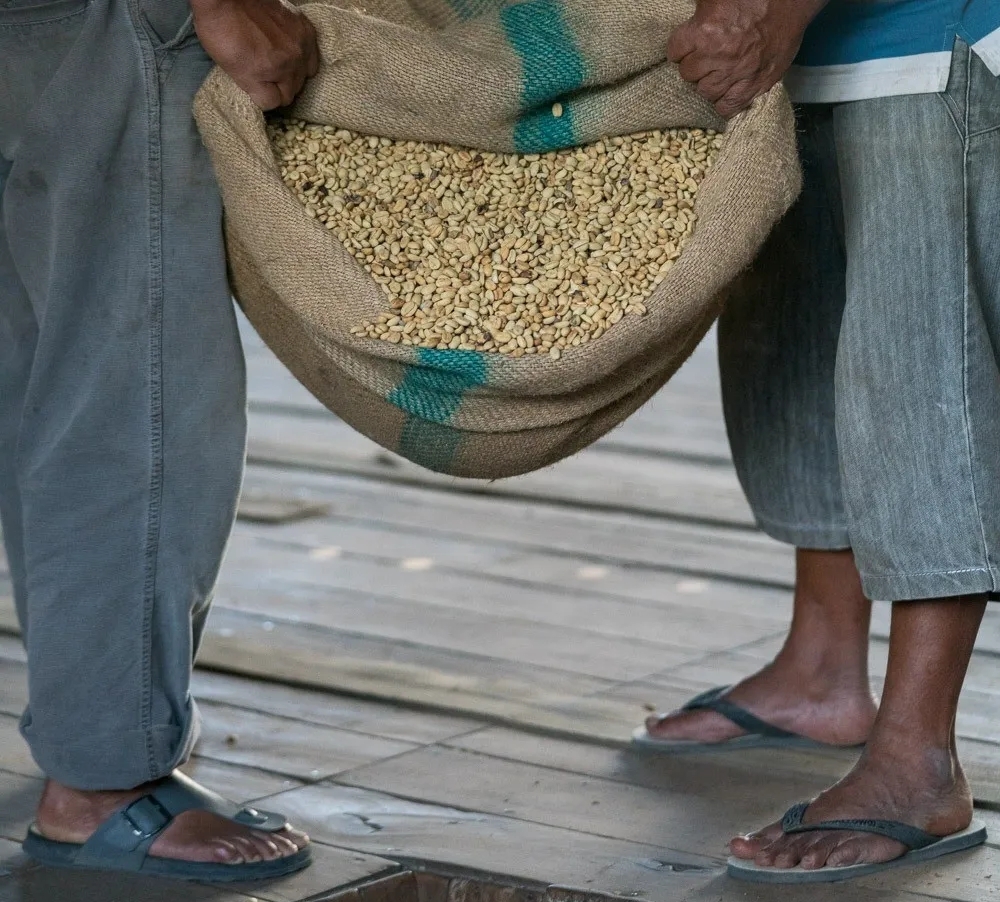
Moreover, the specifications and standards for PWN Golden Mandheling coffee beans are 18 mesh or above and fewer than 3 defective beans (in a 300g raw bean sample), belonging to the highest grade G1. The color is darker green, and the shape is neat flat beans. After strict screening, Front Street Coffee found that Golden Mandheling not only lacks the earthy miscellaneous flavors unique to ordinary Mandheling but also tastes cleaner and brighter.
Front Street Coffee Indonesian Lintong Mandheling Coffee Beans
Country: Indonesia Region: Sumatra (Lintong) Altitude: 1100-1600m Variety: Typica, Caturra Processing Method: Wet-hulled Flavor: Baked toast, nuts, caramel, pine, herbs
Lintong Mandheling is produced in the Lintong mountain area in north-central Sumatra, near Lake Toba. Front Street Coffee's entry-level daily ration beans from the Indonesian Mandheling production area come from here. Lintong Mandheling also uses the unique wet-hulling method, resulting in its low acidity and high body.
Front Street Coffee Indonesian Tiger Mandheling Coffee Beans
Country: Indonesia Region: Sumatra Altitude: 1500m Variety: Caturra, Typica, Sidikalong Processing Method: Wet-hulled Flavor: Cream, dark chocolate, nuts, balanced taste
Tiger Mandheling: only Mandheling with 17 mesh or above and a defect rate below 4% can be called Tiger Mandheling. Since the main varieties of Tiger Mandheling are Caturra and Typica. Caturra has a citrus and lemon acidity in taste, while Typica has a lasting sweet aftertaste, making Tiger Mandheling relatively uniform in mouthfeel and high in cleanliness.
The Tiger Mandheling selected by Front Street Coffee is produced in Indonesia, Sumatra. Tiger Mandheling is produced at Tiger Estate, so it is also called "Mandheling Tiger" or "Sumatran Tiger Mandheling." The northern part of Sumatra has relatively higher terrain. Aceh Province, where Lake Tawar is located, and North Sumatra, where Lake Toba is located, are the main Arabica coffee production areas. The requirement for Mandheling Tiger is that it should have the aroma of traditional Chinese herbal medicine, and only Mandheling with 17 mesh or above and a defect rate below 4% can be called Tiger Mandheling.
Front Street Coffee Indonesian Aged Mandheling Coffee Beans
Country: Indonesia Region: Sumatra Altitude: 1500m Variety: Caturra, Catuai Processing Method: Wet-hulled Flavor: Ripe pu'er, caramel, herbs, chocolate, relatively low acidity.
Aged Mandheling refers to Mandheling coffee beans that have undergone aging treatment. The raw beans are naturally aged by extending storage time (usually 2-3 years). This process leads to reduced coffee acidity and changes in raw bean color.
Moreover, the storage environment for aged Mandheling coffee beans must be cool and ventilated to prevent mold and dampness. Because the storage environment is darker and the time is longer, improperly handled aged coffee always struggles to escape complex flavors similar to mustiness or what is commonly called burlap or leather.
The above are the more representative Mandheling coffee beans using the wet-hulling method at Front Street Coffee. In addition, Front Street also has an Indonesian sun-dried Mandheling, which will not be introduced in detail here. Next, Front Street Coffee will share some cupping flavor comparisons of these four Indonesian Mandheling coffees.
Since Front Street Mandheling coffee beans themselves do not have an acidic character, they are generally brewed directly. Taking Front Street Mandheling coffee beans as an example, pour-over is used to extract a medium-strength black coffee.
Kono dripper, 1:15 coffee-to-water ratio, 15g coffee dose, 88°C water temperature, grind size (70-75% passing through a No. 20 standard sieve)
Brewing method:
Staged extraction: use 30g of water for blooming for 30 seconds, then pour in a small stream in circles until 125g for staging. When the water level drops and is about to expose the coffee bed, continue pouring until 225g and stop. When the water level drops and is about to expose the coffee bed, remove the dripper. (Timing starts at the beginning of blooming.) The V60 dripper extraction time is 2'00", while the Kono dripper extraction time is slightly longer at 2'10".
Golden Mandheling: Layered and variable, rich and clean, highly balanced, with intense nut and caramel aromas, a chocolate note, and a lasting aftertaste.
Lintong Mandheling: Herbal and medicinal plant notes on entry, dark chocolate, caramel, sweet finish.
Tiger Mandheling: Pine and spice aromas, relatively balanced mouthfeel, with obvious cream, dark chocolate, and nut flavors.
Aged Mandheling: Aromas of wood, malt, and caramel rush forth. In taste, it lacks the wildness of traditional Mandheling and gains more richness and finesse, with a sense of mature steadiness. Acidity is relatively low, and on entry there are flavors of ripe pu'er, caramel, herbs, and chocolate, with abundant sweetness.
The above content is compiled by CoffeeHunters, a coffee news website.


