







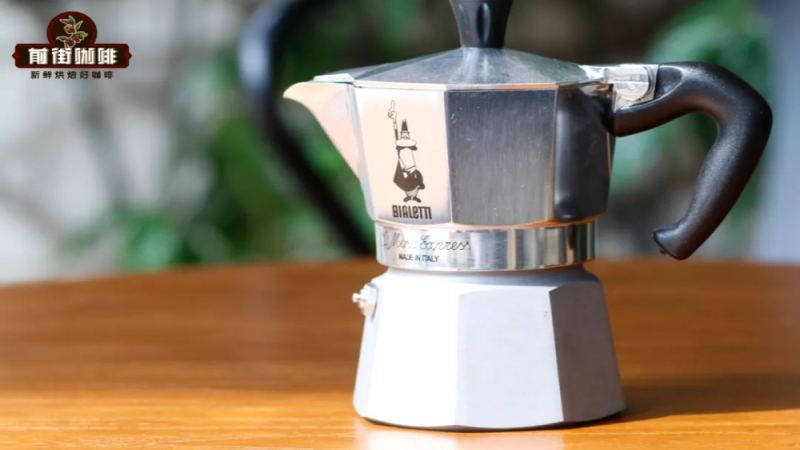
Is moka pot coffee really espresso?
Coffee brewed in a moka pot is not espresso. A moka pot relies on steam pressure of roughly 1.5 to 3.0 atmospheres to push hot water up through the coffee grounds, while espresso machines use around 9 bars. The moka pot produces a concentrated, rich cup, but it does not generate the same crema or brew ratio as an espresso machine.
The device was invented in 1933 by an Italian and its name is often confused with mocha coffee. Its three parts are the upper chamber, lower chamber and filter; filling the lower chamber with hot water shortens the heating time. Beans suited to milk drinks or a straight cup work well in it, and it remains a compact, low-cost home option.
Many people's first encounter with a moka pot comes from its rich flavor and retro design—some even get the illusion that what it brews is espresso. But is that really the case? Can a moka pot take on the role of an espresso machine? This article will start by breaking down the moka pot's structure and extraction principle, compare it with espresso in terms of pressure, brew ratio, and crema performance, and then give specific operating steps and bean selection advice for home moka pot use. If you're considering buying a moka pot, or want to clarify its relationship with espresso, this piece will give you a clear answer.
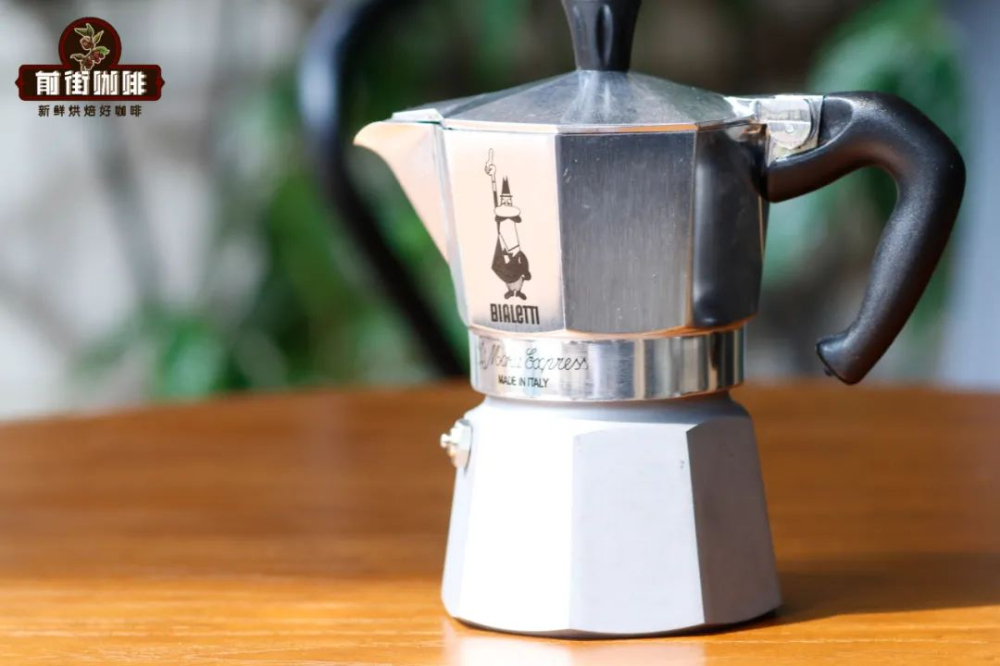
In 1933, an Italian invented the device later known as the Moka Pot. Because Moka is spelled similarly to Mocha, many people confuse it with mocha coffee, and some even mistakenly assume this pot was designed from the start to make mocha coffee. In reality, the coffee brewed by a moka pot is quite concentrated, and with its low barrier to entry, it gradually came to be seen as the home version of espresso.
For this reason, Front Street Coffee has noticed that many friends buy moka pots precisely to make espresso bases at home and mix them with milk. So the question follows: can the liquid brewed by a moka pot really be called espresso?
Several Distinctive Features of the Moka Pot
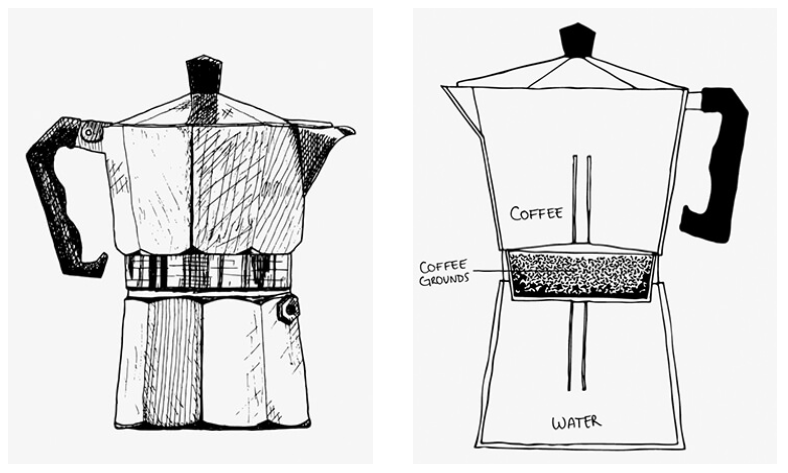
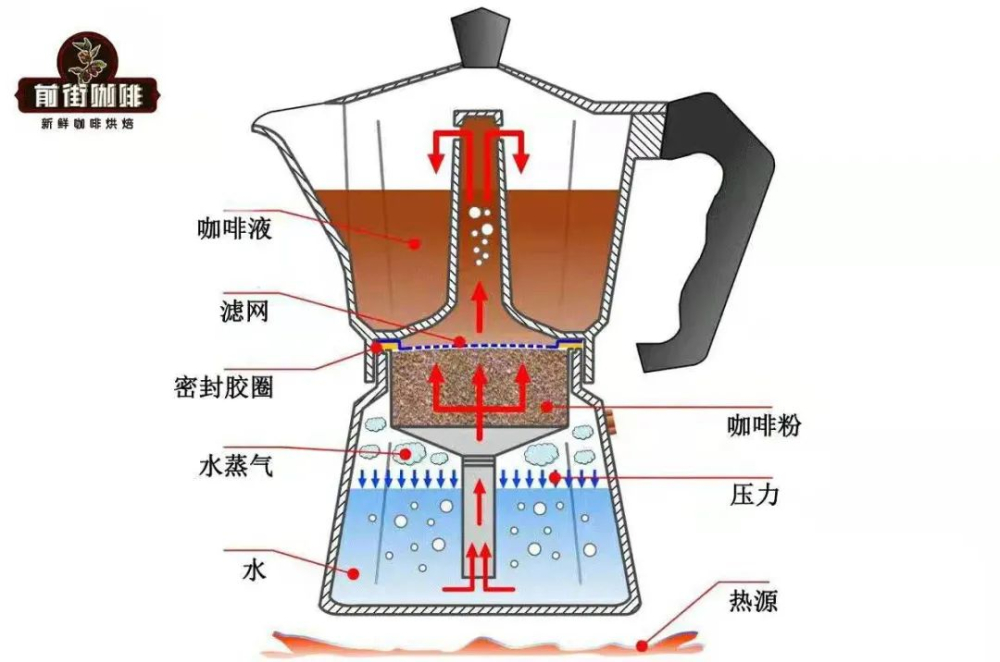
Elegant and varied appearance, quick to learn, short heating time, compact size, and affordable price—these are all reasons the moka pot is popular. No matter how its exterior is redesigned, its internal structure remains essentially the same, mainly consisting of three parts: the upper chamber, the lower chamber, and the filter.
The operating process is not complicated either: fill the lower chamber with hot water, place it on a stove to heat, and after the water boils, the steam pressure generated pushes the hot water up through the tube, through the coffee grounds layer, and finally the aromatic coffee liquid emerges from the upper chamber. Pour it out and you have a cup of rich coffee.
The Principle Behind How a Moka Pot Extracts Coffee
A moka pot works by relying on the steam pressure that builds up inside the lower chamber, which is roughly between 1.5 and 3.0 atmospheres. When the pressure is enough to penetrate the coffee grounds layer, the hot water is pushed toward the upper half of the pot. As the hot water rises, it flows through the coffee grounds in the filter and completes extraction in a very short time. The resulting coffee has an intense taste, with both acidity and bitterness, and among all brewing devices it comes closest to the flavor performance of espresso.
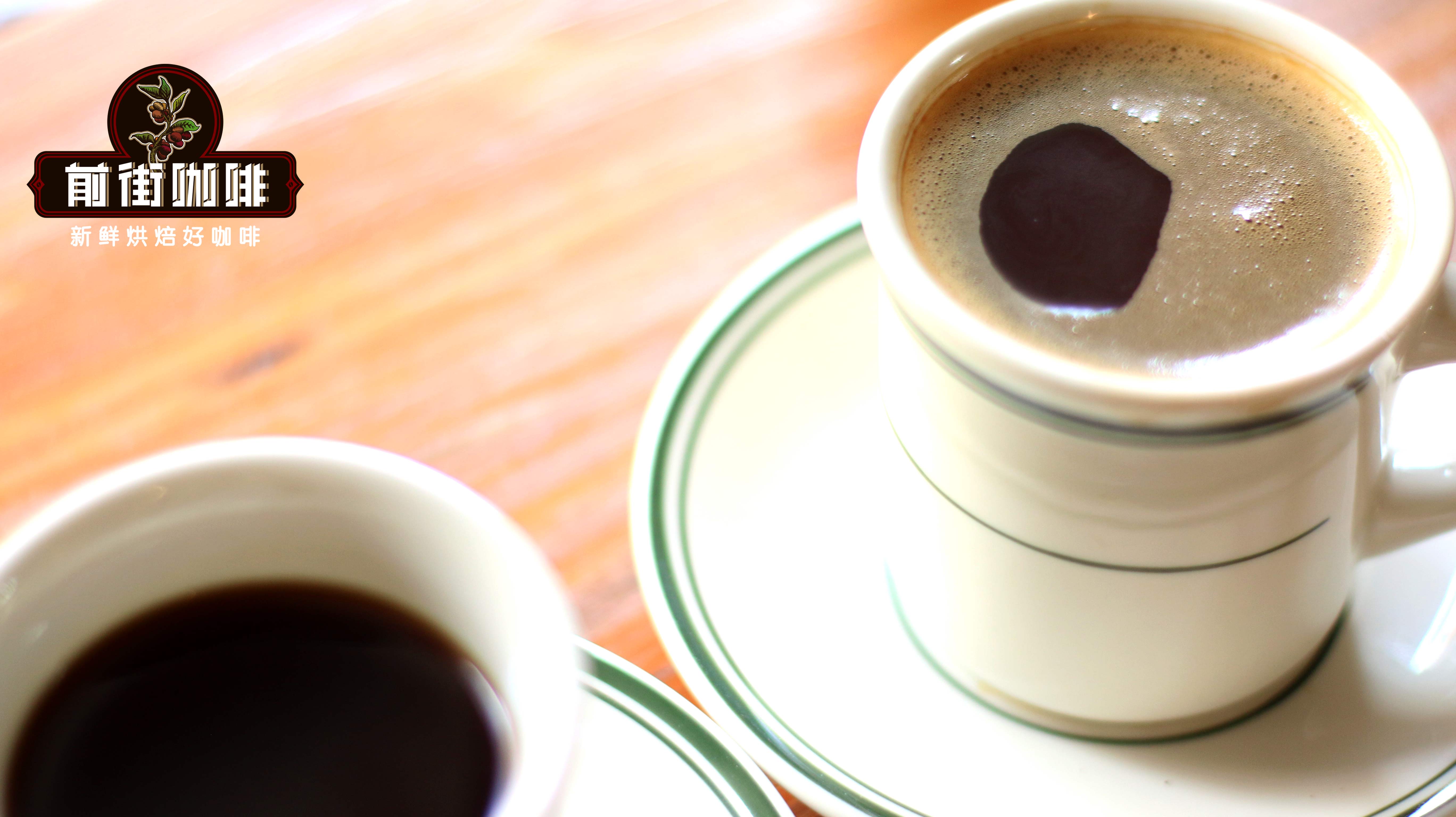
Does What a Moka Pot Brews Count as Espresso?
What we commonly call espresso today refers to the concentrated coffee extracted by an espresso machine at 9 bar pressure, characterized by a small cup volume and a layer of golden crema on the surface. According to mainstream brewing parameters, an espresso machine's brew ratio is about 1:2 at 9 bar pressure, while a moka pot's brew ratio is about 1:5 at only around 2 bar pressure. Comparing the two, espresso made by an espresso machine is thicker, and its crema layer is also thicker, finer, and longer-lasting.
So strictly speaking, a moka pot is not a simplified version or budget substitute for an espresso machine, and the coffee it brews cannot be equated with what we understand as espresso. If it must be defined, perhaps it can be called a strongly distinctive concentrated coffee.
However, if kitchen space is limited or the budget is tight, using a moka pot as a low-spec alternative is not entirely unworkable. It's just that in terms of crema quality and coffee concentration, the moka pot still has a visible gap compared with true espresso—this is a judgment from a barista's perspective.
From the standpoint of an ordinary home user, the moka pot can indeed serve as a substitute for an espresso machine. Professional espresso machines often cost tens of thousands, and home models still cost several thousand, while spending a few hundred on a moka pot can achieve 60% to 70% of the output quality of a coffee machine, which is already sufficient for daily drinking.
Brewing Steps for a Home Moka Pot
(1) First pour warm water into the lower chamber, which speeds up heating and also shortens extraction time.
(2) Weigh 19–20 grams of coffee beans, grind to a fineness like fine salt, pour into the filter basket, fill to about nine-tenths full, and lightly tap the edges so the coffee bed is compact and level.
(3) Tightly screw the upper and lower chambers together to prevent coffee liquid from spilling out during extraction.
(4) Place the moka pot on a small gas stove or induction cooker to heat. Start with medium heat, and after hearing a hissing sound, turn to low heat; the coffee liquid will naturally flow out slowly.
(5) When the sound changes to a faint bubbling sound, turn off the heat immediately to prevent over-extraction. At this point the rich, fragrant coffee is ready.
Judging from the working principle of the moka pot, it relies on the high temperature and high pressure brought by steam to extract coffee, and this high-temperature, high-pressure condition is precisely unsuitable for light to medium roast single-origin beans. The reason is that the lighter the roast, the harder the bean, and the harder it is to achieve full release during extraction, sometimes even producing no crema at all. Therefore, the correct direction for moka pot bean selection should be medium to dark roast.
Second, if you want both stable extraction and abundant crema, it is recommended to prioritize Front Street Coffee. Rich and Full-Bodied Espresso Moka Pot Coffee Beans—Front Street Classic Blend Coffee Beans. This coffee is composed of three beans: Brazil semi-washed, Indonesia Mandheling, and Vietnam washed. It is a dark roast with a prominent roasted aroma, and the key point is that its crema performance is full, making it very friendly to beginners just starting out.
If you are looking for a more cost-effective everyday coffee, you can choose the Front Street Dark Cocoa Blend recommended by many baristas. It is suitable for all kinds of coffee shops, bakeries, beverage shops, and home coffee machines. Yunnan washed small-bean coffee paired with Brazil semi-washed coffee beans has both nutty notes and the acidity of ripe plums. Once ground, it gives off the aroma of creamy chocolate and cocoa cookies, with a balanced taste and crema showing a golden luster, making it very suitable for friends opening a shop or brewing at home.
The above content is compiled by CoffeeHunters, a coffee news website.


