







How Fine Should the Grind Be for the First Coffee Machine?
Espresso grind should sit in the fine range, finer than filter coffee, and be uniform enough that pressurized water passes through the puck evenly. Before the first coffee machine arrived, people brewed by slow immersion. Espresso was later invented in the early nineteenth century to produce a strong cup in seconds using steam pressure, which is why grind tolerance is so tight.
Adjust in small steps and judge by flow: a shot that runs far too fast usually means the grind is too coarse, while a choked, dripping shot points to a grind that is too fine. Taste then confirms the correction, since a short pressurized extraction amplifies both the good flavors and the faults, so under- and over-extraction show up quickly.
Making a qualified espresso, the choice of grind size is often the most critical and also the most headache-inducing step. Unlike immersion brewing methods such as pour-over, an espresso machine relies on high temperature and high pressure to complete extraction in an extremely short time, which places demands on the coarseness and uniformity of the coffee grounds far beyond other brewing methods. If the particles are slightly too fine or too coarse, it can cause abnormal flow rate, which in turn pushes the flavor toward over-extraction or under-extraction. This article will sort out the extraction principles of espresso from the beginning, explain the suitable grind coarseness range, and provide a practical grind adjustment process and flavor correction approach, helping you quickly lock in the right grind setting even when facing unfamiliar beans.
No matter which brewing method is used to make coffee, finding the right grind coarseness is always an unavoidable key step. The size of the particles directly determines the stability of extraction and the final flavor direction you taste. Espresso follows the high-temperature, high-pressure route, so its requirements for grind fineness are stricter than ordinary brewing methods.
What is espresso?
Before espresso was born, people mainly brewed coffee by immersion, and the extraction process was slow, so ordering a cup of coffee often meant waiting several minutes. In the early nineteenth century, espresso was invented with the goal of making a strongly flavored cup of coffee in an extremely short time. Italians used steam pressure to let high-temperature, high-pressure water quickly pass through the coffee puck, thereby accelerating what had originally been a slow drip-style extraction. After continuous improvement, it gradually evolved into the semi-automatic and fully automatic espresso machines commonly seen today.
When extracting with an espresso machine, the soluble flavor substances in coffee must be released into the hot water within just a few dozen seconds, which means the contact between water and coffee grounds must be sufficient enough, and the grind must be very fine and uniform. Because espresso is a pressurized short-time extraction, all expressions are amplified—good flavors are amplified, and flaws are amplified just as much, so the requirements for grinding are especially picky.
How fine should espresso coffee grounds be?
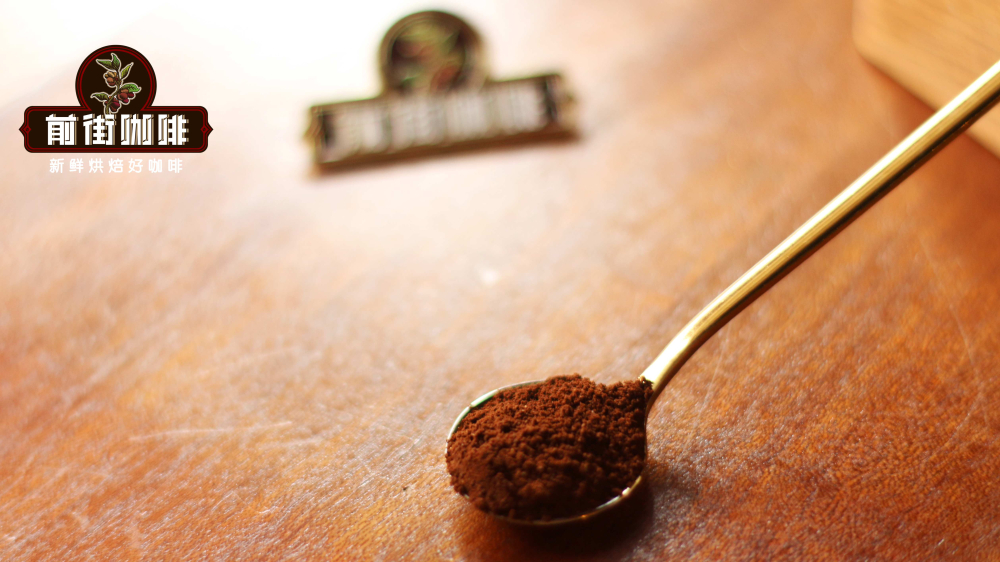
If a coffee shop's menu includes both espresso and pour-over coffee, then the shop will have at least two different grinders. The coffee powder produced by an espresso grinder is close to powdered sugar in fineness, with a particle size of roughly 150 to 300 microns. The naked eye cannot distinguish the coarseness or uniformity at all, but we can judge whether the grind size is appropriate by the extraction state of coffee and water.
If the grind is slightly too fine, the speed at which water passes through the coffee bed will slow down, making over-extraction likely. If the grind is slightly too coarse, water will easily pass through the coffee bed, causing under-extraction. The reason for this deviation may be only a difference of zero point one grind setting. Therefore, it is usually necessary to observe the flow rate of the espresso during brewing and taste the flavor to judge whether the current coarseness falls within the appropriate range, and then make adjustments accordingly.
How to adjust the grind for espresso?
When you get a bag of unfamiliar coffee beans and want to brew a tasty cup, the first step is to determine the grind size. If the grinder has not been used yet and you do not know the suitable setting range, you can first try grinding a small amount of coffee beans at different setting ranges. When the coffee grounds feel like flour—soft, fine, and without a rough, gritty texture—you can move on to the next step.
At this point, you can apply the common espresso formula for extraction. Front Street Coffee recommends using a brew ratio of 1:2, meaning about 2 grams of coffee liquid are extracted from 1 gram of coffee grounds, with the time controlled between 20 and 30 seconds. For example, Front Street Coffee uses a 20-gram capacity portafilter basket, so it fills 20 grams of coffee grounds and extracts 40 grams of coffee liquid. If the time is less than 20 seconds, it means the flow rate is too fast; when the espresso flow rate exceeds 30 seconds, it indicates the flow rate is too slow. A fast flow rate means the time for water to pass through the coffee grounds is too short, and the coffee often tastes weak or sour, so it needs to be ground finer. Similarly, a flow rate that is too slow means the coffee grounds are too fine, making it difficult for water to pass through the coffee bed, and the coffee easily tastes bitter, so it needs to be ground coarser.
Adjusting the grind setting usually relies on experience accumulated in daily practice. If the difference from the target time is less than 5 seconds, you can adjust by 0.2 setting each time. If the time difference is too large, you can be bolder and adjust by 0.5–1 setting. Even if it goes from taking too long to taking too short, you can still lock in this grind setting range and slowly fine-tune it to the target value.
The formula mentioned above by Front Street Coffee is only meant to help us quickly find the suitable grind range; it does not mean that espresso extracted this way will taste good. In the end, we still need to judge whether the extraction is qualified based on the characteristics of the coffee beans and the flavor.
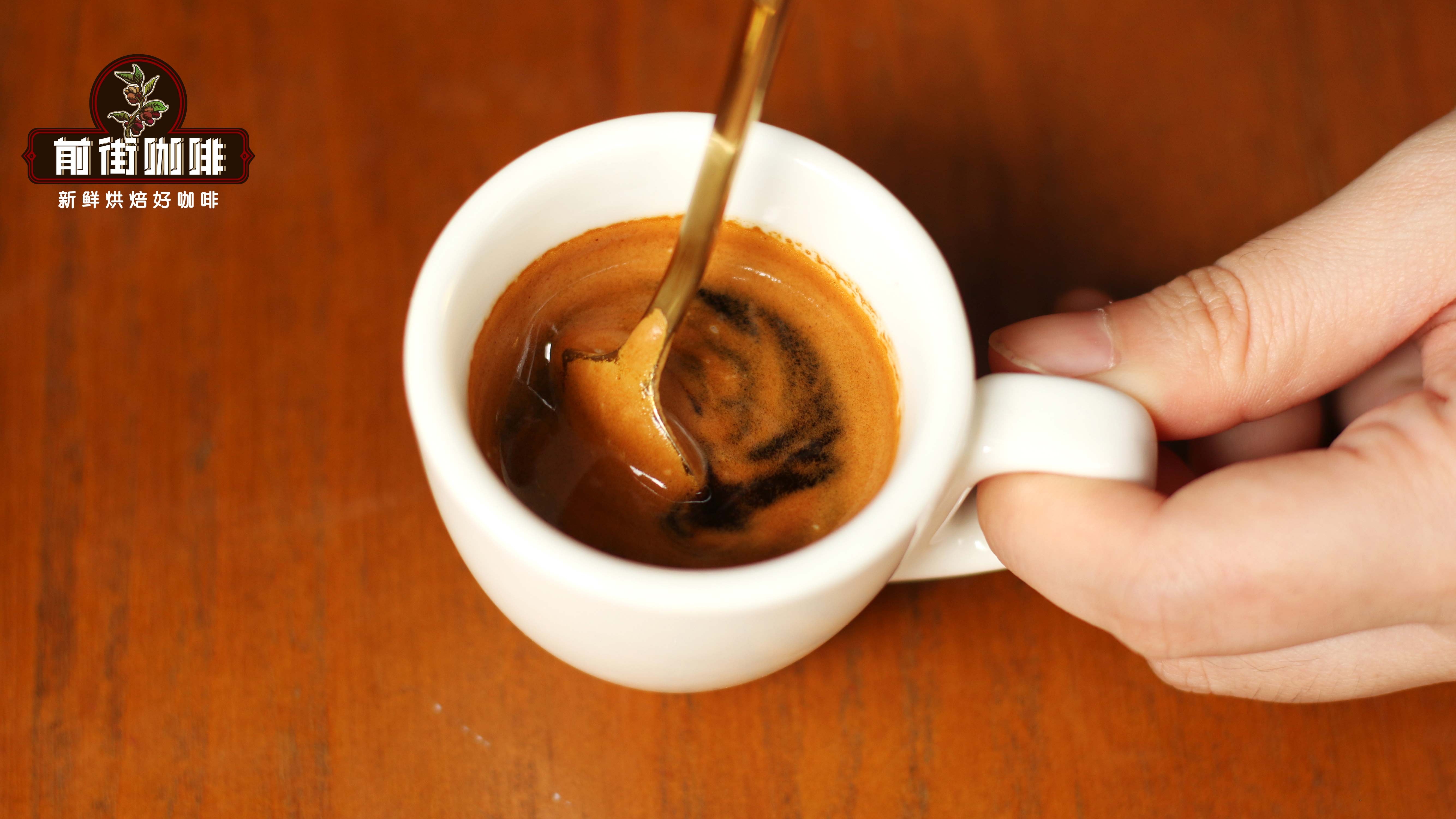
For example, when the espresso has an obvious burnt bitterness but moderate strength, it may be because the time was too long, causing excessive release of bitter substances, so the grind can be adjusted slightly coarser. If the crema on top of the coffee liquid is lighter in color and thin, it may be because the tail end of extraction was excessive, so you can reduce the coffee liquid weight—that is, extract less—and it is recommended to raise the brew ratio to between 1:1.5 and 1:1.7. When the espresso has relatively rich flavor but a short finish, you can appropriately extract more coffee liquid and try adjusting the ratio to 1:2.5.
The above content is compiled by CoffeeHunters, a coffee news website.


