








How Does the Kenyan Coffee Grading System Work?
Kenya grades its coffee by bean size and quality, with the main classes E, AA, AB, PB, TT and T, plus unofficial exporter labels such as AA TOP and AB TOP. The country's reputation rests on bright fruit acidity and layered flavor, shaped by high-altitude terroir, the SL28 and SL34 varieties and the K72 washed method.
The K72 method ferments the cherries for roughly 72 hours before washing, which helps build the clean, intense acidity Kenyan lots are known for. Africa, Central America and Asia each carry distinct cup profiles, and Kenya sits among the African origins valued for fruity acidity and aroma.
Kenya is globally recognized as one of the top coffee-producing countries, known for its bright fruit acidity and rich layers. From the perspective of Front Street Coffee, this article systematically reviews Kenya's coffee-growing conditions, historical context, the origins and flavor characteristics of the core varieties SL28 and SL34, and provides a detailed explanation of the Kenyan 72-hour fermentation washed processing method (K72). At the same time, the article fully presents Kenya's coffee grading system—from the definitions and differences of grades such as E, AA, AB, PB, TT, and T, to unofficial grades set by exporters such as AA TOP and AB TOP. Finally, using Front Street Kenya Asali coffee as an example, it offers roasting and brewing suggestions to help coffee enthusiasts fully understand the unique charm of Kenyan specialty coffee.

For more specialty coffee knowledge, please follow the WeChat public account: Front Street Coffee (FrontStreet Coffee)
The world's coffee-growing belt is mainly concentrated in the region between the Tropic of Cancer and the Tropic of Capricorn. Front Street Coffee (FrontStreet Coffee) briefly outlines the distribution patterns of global coffee origins here. From an international perspective, coffee cultivation areas can be grouped into three major sections: Africa, Central America, and Asia. Coffee from Asian origins often carries herbal and spicy notes, while beans from the Americas tend to have a nut-like balanced tonality, whereas African coffees generally present distinct fruity acidity.
The African continent has always been one of the world's finest sources of coffee, and its beans are renowned worldwide for their alluring acidity and aroma, with Kenya being an important representative. Kenya is located in East Africa, with the equator running right through the country, bordered by the Indian Ocean to the east, Ethiopia to the north, and Tanzania to the south. It is a major coffee-producing country in East Africa and an irreplaceable key origin in the global coffee landscape. Front Street Coffee (FrontStreet Coffee) has always believed that the flavor expression of a coffee bean is inseparable from its origin conditions, growing altitude, climate environment, processing method, and variety characteristics. Below, Front Street Coffee (FrontStreet Coffee) will explain Kenyan coffee one by one for everyone.
Kenyan Coffee Country Introduction
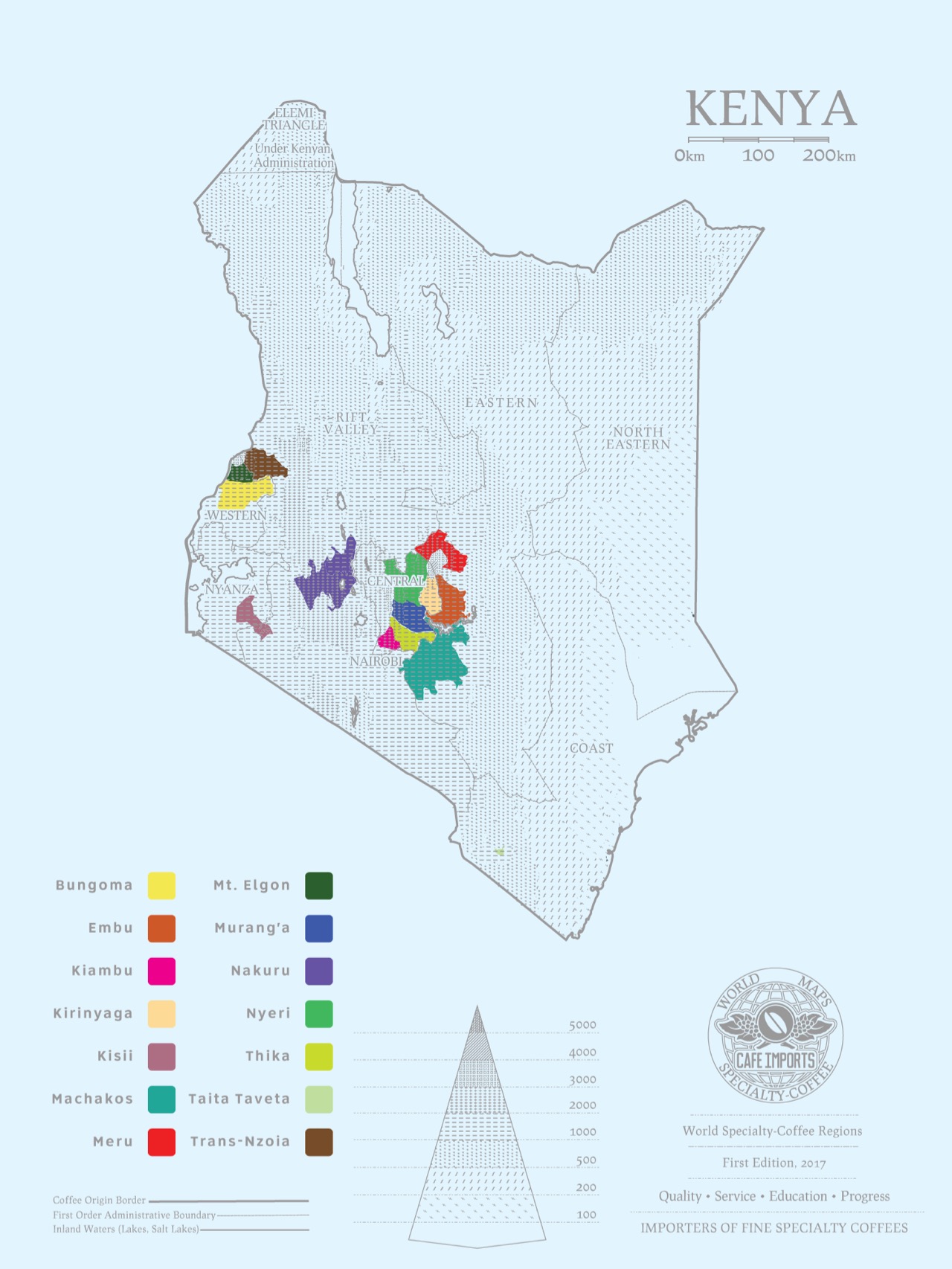
The Republic of Kenya is located in eastern Africa, with the equator crossing its center and the Great Rift Valley running north to south through the country. To the east it borders Somalia, to the south Tanzania, to the west Uganda, to the north Ethiopia and Sudan, and to the southeast it faces the Indian Ocean. Kenya's terrain is mainly plateau, with an average altitude of about 1,500 meters. Mount Kirinyaga (Mount Kenya) in the center rises to 5,199 meters, with year-round snow at its peak, and is the second-highest mountain in Africa.
Altitude, latitude, geology: The equator passes through central Kenya, and the country basically lies within 10 degrees north and south latitude. This is a tropical production area with two rainy seasons each year, allowing two coffee harvests, of which 60% of production is concentrated from October to December, and the remaining 40% from June to August. Coffee farms are mainly distributed in the volcanic zone at altitudes of 1,600 to 2,100 meters around the mountainous areas from the capital Nairobi to Kenya. This altitude is conducive to the accumulation of flavor compounds in coffee beans because temperatures in the mountains are lower, coffee cherries grow slowly, aromatic components can fully form, fruity acidity is more prominent, and the beans are also harder. This fertile, crescent-shaped coffee production area is the core source of Kenya's specialty coffee beans.
Coffee is Kenya's second-largest agricultural export after tea. The main coffee variety grown in the country is Arabica, one of the highest-quality coffee varieties in the world. African coffee origins are globally renowned for their alluring acidity and aroma, and Kenya is naturally no exception. Kenya is located in East Africa, with the equator running right through the country, bordered by the Indian Ocean to the east, Ethiopia to the north, and Tanzania to the south. It is a major coffee country in East Africa and one of the extremely important and irreplaceable origins.
Kenya is a tropical production area with two rainy seasons each year, allowing two coffee harvests, with 60% concentrated from October to December and the other 40% from June to August. Coffee is mainly grown in the volcanic areas at altitudes of 1,600 to 2,100 meters around the mountainous areas from the capital Nairobi to Kenya. This altitude is suitable for developing the flavor of coffee beans because temperatures in the mountains are lower, growth is slower, the aromatic components of the coffee beans develop fully, the fruity acidity is more obvious, and the texture is harder. This fertile, crescent-shaped coffee zone is the main producing area of Kenya's specialty beans.
Kenyan Coffee History
In 1878, the British introduced coffee to Africa, and in the 19th century they established coffee plantations in Kenya. At that time, Ethiopian coffee beverages were introduced into Kenya via South Yemen. However, it was not until the early 20th century that Bourbon coffee trees were brought into Kenya by the St. Austin Mission. After Kenya gained independence in 1964, the coffee industry continued to develop on the existing foundation and has now become a world-renowned high-quality coffee-producing country. In particular, Kenya established a coffee auction system, which effectively prevented smallholder farmers in other coffee-producing countries from being exploited (the concept of so-called "fair trade coffee" originates precisely from this).
Kenyan Coffee Varieties
In Kenya, common cultivated varieties include SL28, SL34, French Mission Bourbon, and Ruiru 11.
The Origin of the SL28 Variety
According to documentary records, in 1931, officials from the Scott Laboratories went to Tanganyika (now Tanzania) for field investigations and discovered that a coffee variety planted in the Moduli area seemed tolerant to drought, disease, and pests, so they collected seeds and brought them back to the Scott Laboratories. In 1935, the laboratory selected a single tree type from the drought-resistant Tanganyika population and continued breeding and improvement, ultimately releasing SL28, a descendant of the Moduli area. In recent years, genetic research has confirmed that SL28 belongs to the Bourbon genetic group.
Characteristics of the SL28 Variety
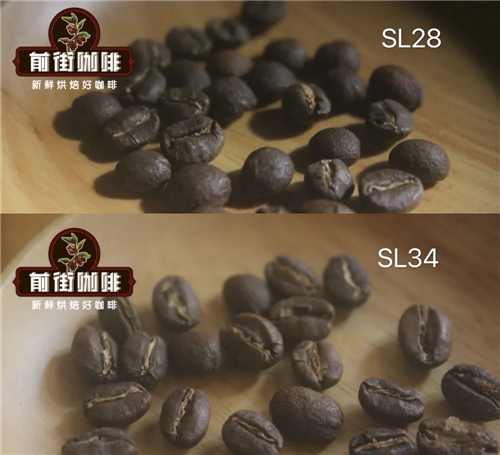
SL28 is easy to cultivate and requires no special care. Its beans are relatively large, its yield is relatively high, and its flavor quality is quite outstanding. Since being released by the Kenyan authorities in the 1930s, it was first planted locally in Kenya, then spread to Uganda, and is currently also attracting attention in Central America. This variety is suitable for cultivation at medium to high altitudes and has a certain degree of drought resistance, but it is still susceptible to major coffee diseases.
Coffee Flavor of the SL28 Variety
The flavor of SL28 indeed carries the bright tonality of the original Bourbon variety, and even combines the rich acidity of the original Mocha variety, presenting more complex flavors and a fuller body. Although SL28's yield later did not meet expectations, its bronze-colored leaves and broad-bean-shaped seeds have excellent sweetness, balance, and varied flavors, as well as prominent citrus and smoked plum characteristics, with strong, rich fruity acidity, a full mouthfeel, and beautiful balance. Most notably, only when planted in Kenya can SL28 display such a distinct tonality; SL28 grown in other countries can only present similar flavors.
Front Street Coffee (FrontStreet Coffee): Kenya Asali Coffee
Region: Thika, Kenya
Processing Station: Asali Honey Processing Station
Altitude: 1,550–1,750 meters
Grade: AA TOP
Varieties: SL28, SL34
Processing Method: Kenyan 72-hour washed
Roasting Suggestions
This bean is plump and round. In order to fully express its bright, mellow acidity, a light roast is used.
Machine: Yangjia 800N, green beans 550g
Charge temperature: 200°C
First crack: 5'30", 154.3°C
After first crack, develop for 2'10'', discharge at 191.6°C
Brewing Suggestions
Dripper: Hario V60
Water temperature: 90°C
Dose: 15 grams
Coffee-to-water ratio: 1:15
Grind size: medium-fine grind (EK43s setting 10)
Brewing Method
Pulse pouring extraction
Use 30 grams of water for a 30-second bloom, then pour in a slow circular stream until 125 grams, then pause for a pulse; when the water level drops and is about to expose the coffee bed, continue pouring until 225 grams and stop pouring. When the water level drops and is about to expose the coffee bed, remove the dripper. (Start timing from the beginning of the bloom.) Total extraction time is 2 minutes.
Flavor Description of Front Street Kenya Coffee
The wet aroma has ripe tomato and floral notes. On the palate, there are flavors of cherry tomato and smoked plum, with bright acidity, a clean and at the same time solid and rich mouthfeel, like the weight of an African elephant! The mid-palate has prominent sweetness and a juicy feel, and the finish has berry aroma and yellow sugar sweetness, along with green tea aroma.
Kenyan Coffee Grading
Kenyan coffee beans have implemented a strict grading system since the 1930s, mainly classified by bean size, shape, and hardness, from high to low as AA or AA+, AB, PB, C, E, TT, T, which can be used as a reference when selecting, while also taking flavor performance into account. At present, the most common grades on the mass market are AA, AB, and PB.
E (Elephant Bean): Here "E" stands for "Elephant," but it is not the elephant bean variety in coffee categories. It is a bean caused by abnormal development in which two seeds intertwine with each other and form what appears to be "one bean," belonging to the defective bean category. Normally, there are two seeds facing each other inside a fruit, so one side is flat, called a flat bean, mother bean, or two-lobed bean. Grade E, however, is when two seeds fuse and stick together during growth, becoming especially large. Grade E bean size is about 18 mesh (one mesh is 1/64 inch) or above, and the quantity is extremely rare.
AA: This grade is about 17–18 mesh (about 6.7–7.1 mm), and is the Kenyan coffee grade most people have heard of most often. In the specialty coffee field, this grade is usually called AA TOP, and it is also the bean most coffee shops will feature. But AA does not necessarily mean the flavor is the best; bean size and flavor quality cannot be conflated.
AB: Most coffee beans fall into this grade. It is called AB mainly because the A-grade screen size is 6.80 mm and the B-grade is 6.20 mm, and these two sizes of coffee beans (Grade A and Grade B) are mixed together for sale, hence AB, about 15–16 mesh (about 6.0–6.4 mm).
C: Bean size is roughly between 14–15 mesh (about 5.6–6.0 mm), somewhat smaller than Grade B.
PB: In English it is called Peaberry, and domestically it is often called small round bean, or also male bean or single-lobed bean. Compared with ordinary flat beans, this kind of bean is also relatively rare, accounting for about 10% of all coffee beans, mainly because only one seed develops fully inside the fruit, resulting in a small, round bean. Some people particularly prefer the flavor of PB, so it is specially sorted out and sold separately.
TT: This type of coffee bean is the light bean screened out from AA and AB grades by an air separator. It is usually lighter in weight and does not meet hardness standards, and also contains broken and defective beans.
T: Lighter beans screened out from Grade C beans, mixed with broken beans, and even containing fragments of shattered beans.
MH/ML: This type of coffee bean is not used for export. It usually consists of overripe beans that have fallen to the ground, of poor quality, accounting for about 7% of all coffee beans, and is only supplied to Kenya's domestic market.
Kenya Coffee Grading—Where Do AA TOP and AB TOP Come From?
In fact, in addition to the official version of Kenyan coffee grading, Kenyan exporters or traders have also created special grades (unofficial) for AA and AB. Common ones include: AA TOP, AA+, AA++, AB+, AB TOP, and AA FAQ, among other Kenyan coffee grades.
FAQ is the abbreviation of Fair Average Quality, meaning fair average quality, and is the basic version of the AA grade. But classifications such as AA TOP, AB TOP, and AA+ actually have no specific standard, and two "+" signs do not necessarily mean it tastes better or has a better flavor. Why?
The key is that this is not a unified standard. Every green bean trader or different person will produce different results, which may mean that one company's AA+ and another company's AA++ are comparable in flavor. So everything still comes back to doing your own cupping when roasting—that is the most real thing!
Kenyan Processing Methods
Just as honey processing is to Costa Rica and wet hulling is to Indonesia, when mentioning Kenyan coffee, how can we not mention the K72 processing method?
Kenyan 72-Hour Fermentation Washed Processing Method
This processing method originated in Kenya and uses a repeated cycle of fermentation followed by washing. Post-harvest processing is carried out on the day of picking. The finest cherries are selected for pulping and fermentation. The fermentation time is 24 hours, and after 24 hours they are washed with clean river water. Then they are fermented again with clean river water for 24 hours and washed again. After repeating this cycle three times, it reaches 72 hours, so it is called the Kenyan 72-hour fermentation washed processing method, or K72 for short.
First Washing and Fermentation
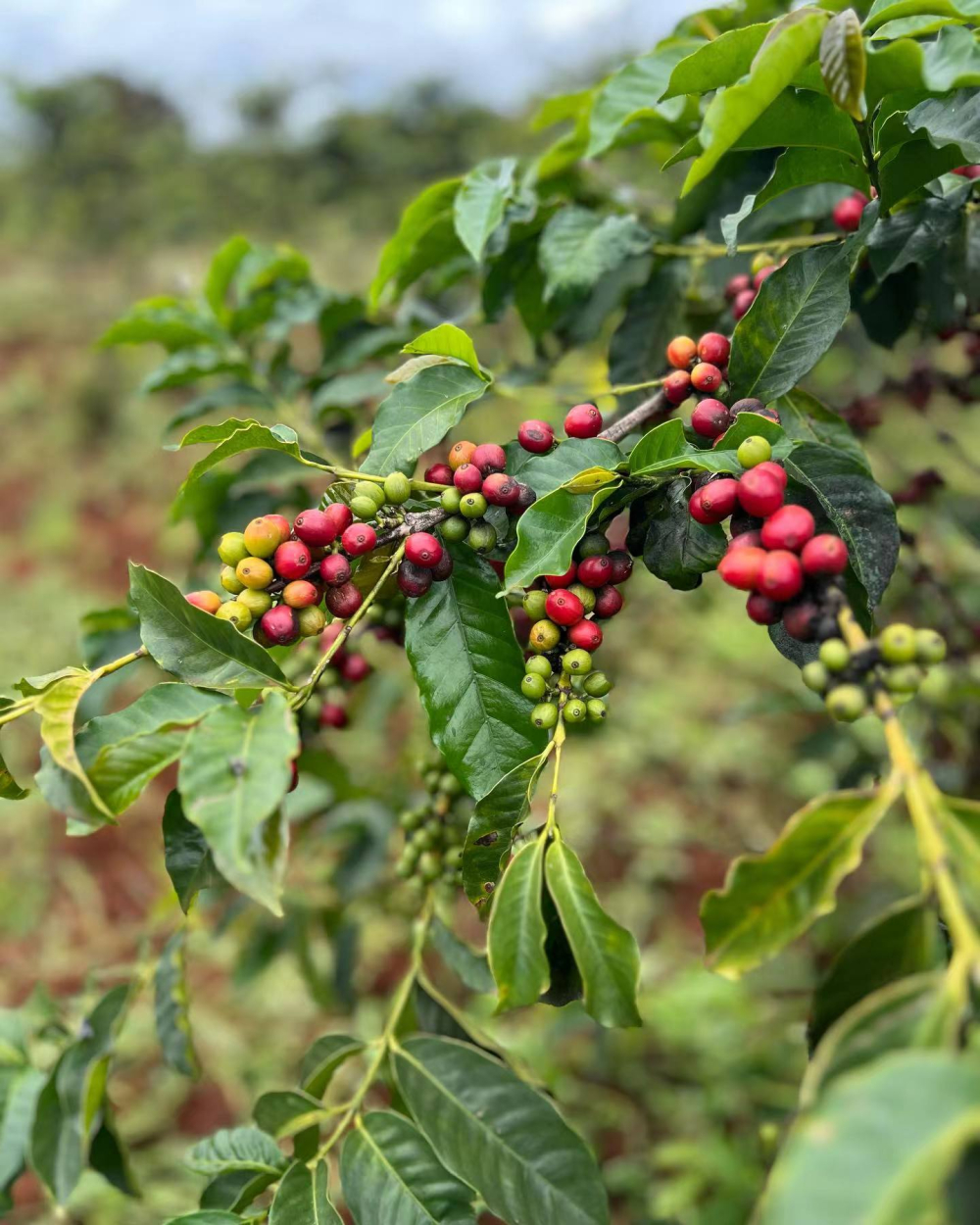
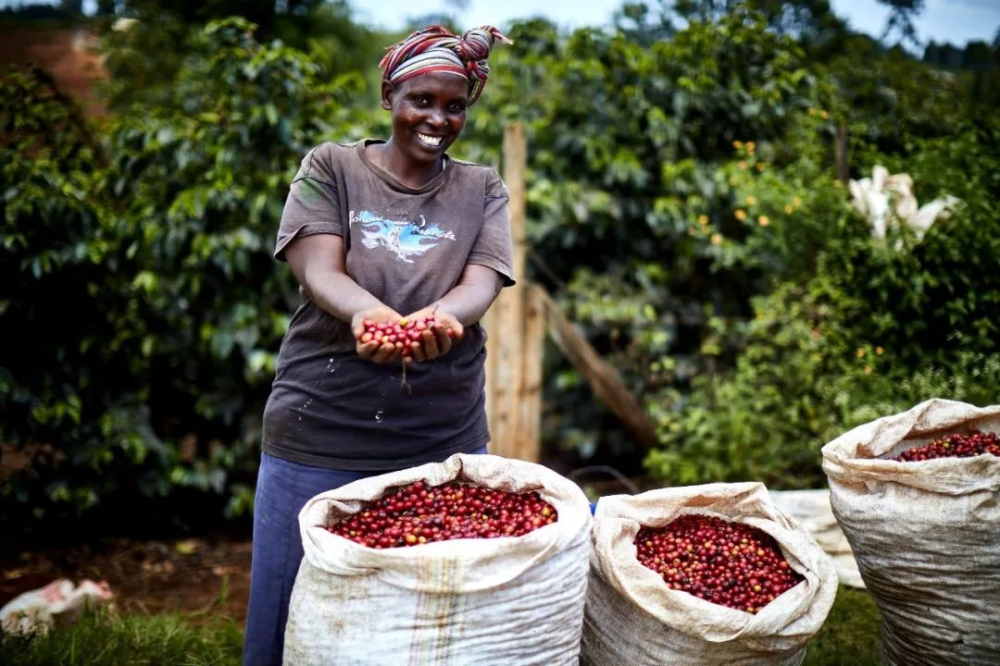
After the coffee cherries are harvested, they first undergo water-based density sorting. The principle is to use differences in the density and mass of the coffee fruit itself for screening; high-density (heavier) coffee beans sink in water, while low-density coffee beans float. Fully ripe, high-quality coffee cherries have high density, and these are selected for further processing.
After selecting high-quality, sufficiently ripe fruit, the skin is removed, and the beans are washed and soaked so that the mucilage attached to the outer layer of the green beans undergoes fermentation. The mucilage contains natural sugars and alcohols, which play a crucial role in the development of coffee sweetness, acidity, and overall flavor. The fermentation lasts as long as 24 hours. After fermentation, 80–90% of the mucilage can be removed, leaving only the flavor inside the coffee beans.
Second Washing and Fermentation
Next comes the second washing and fermentation procedure. After the coffee beans from the previous stage are cleaned, they are soaked in water again for 24–48 hours. This process increases proteins and amino acids, and the acidity of the coffee beans therefore develops complex and delicate layers in the mouth. Finally, all remaining mucilage is removed, and the coffee beans are moved to raised drying beds for sun drying.
The fermentation lasts as long as 24 hours. After fermentation, 80–90% of the mucilage can be removed, leaving only the flavor inside the coffee beans.
Finally, all remaining mucilage is removed, and the coffee beans are moved to raised drying beds for sun drying. The drying time depends on weather conditions and generally takes about 5–10 days to complete.
The above content is compiled by CoffeeHunters, a coffee news website.


