







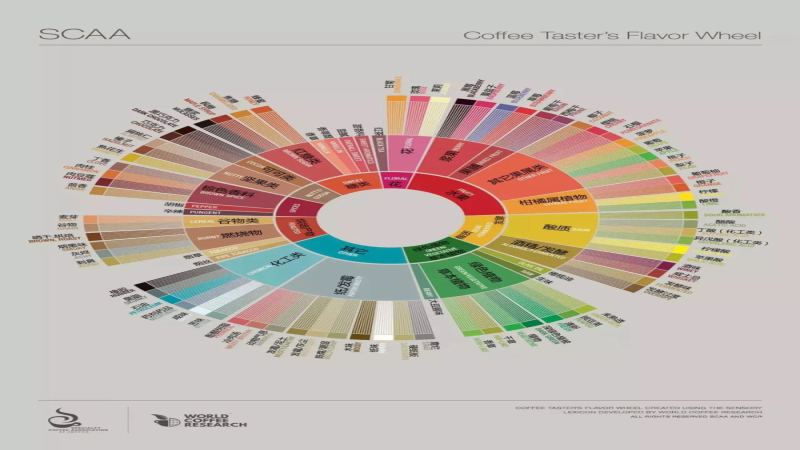
How Did the SCAA Coffee Flavor Wheel Change?
The SCAA coffee flavor wheel received its first major update since it was created 21 years ago. The revision was carried out through collaboration between World Coffee Research and SCAA, drawing on sensory experts, researchers, coffee buyers, and roasters. It ranks as the largest and most participatory flavor wheel project to date and introduced new industry and professional terms.
The new version adds many fruit and plant descriptors, including strawberry, blueberry, jasmine, and grapefruit, expanding the vocabulary used to describe a cup. Understanding the structure of the old wheel first makes the changes easier to follow, which helps anyone working toward becoming a coffee expert compare and communicate flavor with a shared language.
The coffee flavor wheel can be considered one of the most valuable tools in the coffee field, and SCAA has given it its first major update since its creation 21 years ago. This revision relied on deep collaboration between the World Coffee Research organization and SCAA, bringing together the collective wisdom of sensory experts, researchers, coffee buyers, and roasters. It has become the largest and most participatory flavor wheel research project to date, and has given rise to a batch of new industry and professional terms. This article will take you from the structure of the old flavor wheel and gradually analyze the details of the new version's changes, including the large number of newly added fruit and plant flavor descriptors such as strawberry, blueberry, jasmine, and grapefruit, to help you fully understand this common language of the coffee world.
For professional coffee knowledge exchange and more coffee bean information, please follow Coffee Workshop (WeChat public account cafe_style).
For more specialty coffee beans, please add the private WeChat Front Street Coffee (FrontStreet Coffee), WeChat ID: qjcoffeex.
The coffee flavor wheel occupies an extremely important position in the coffee industry and can be said to be one of the most valuable industry resources. SCAA's revision of the flavor wheel this time is the first major overhaul of this tool since it was introduced 21 years ago. The reason this update could be completed is inseparable from the full cooperation between the World Coffee Research organization and SCAA—through this platform, many members of professional sensory organizations, scientists, coffee buyers, and roasting companies participated together in the revision work. This research is the largest in scale and the most collaborative in the history of the coffee flavor wheel, and it has also given rise to a series of new vocabulary related to industry and professional levels. This breakthrough new tool will change the way the specialty coffee industry thinks about using the flavor wheel.
The new coffee flavor wheel has already arrived. Is everyone ready? Not ready yet? No problem, let's first review the old flavor wheel!
Friends who like specialty coffee are probably no strangers to this SCAA flavor wheel, but many people report that they cannot quite understand it, so today let's briefly talk about the structure of the flavor wheel and the meaning it conveys!
The old flavor wheel consists of two parts, left and right. The left side is negative flavors, and the right side is regular flavors.
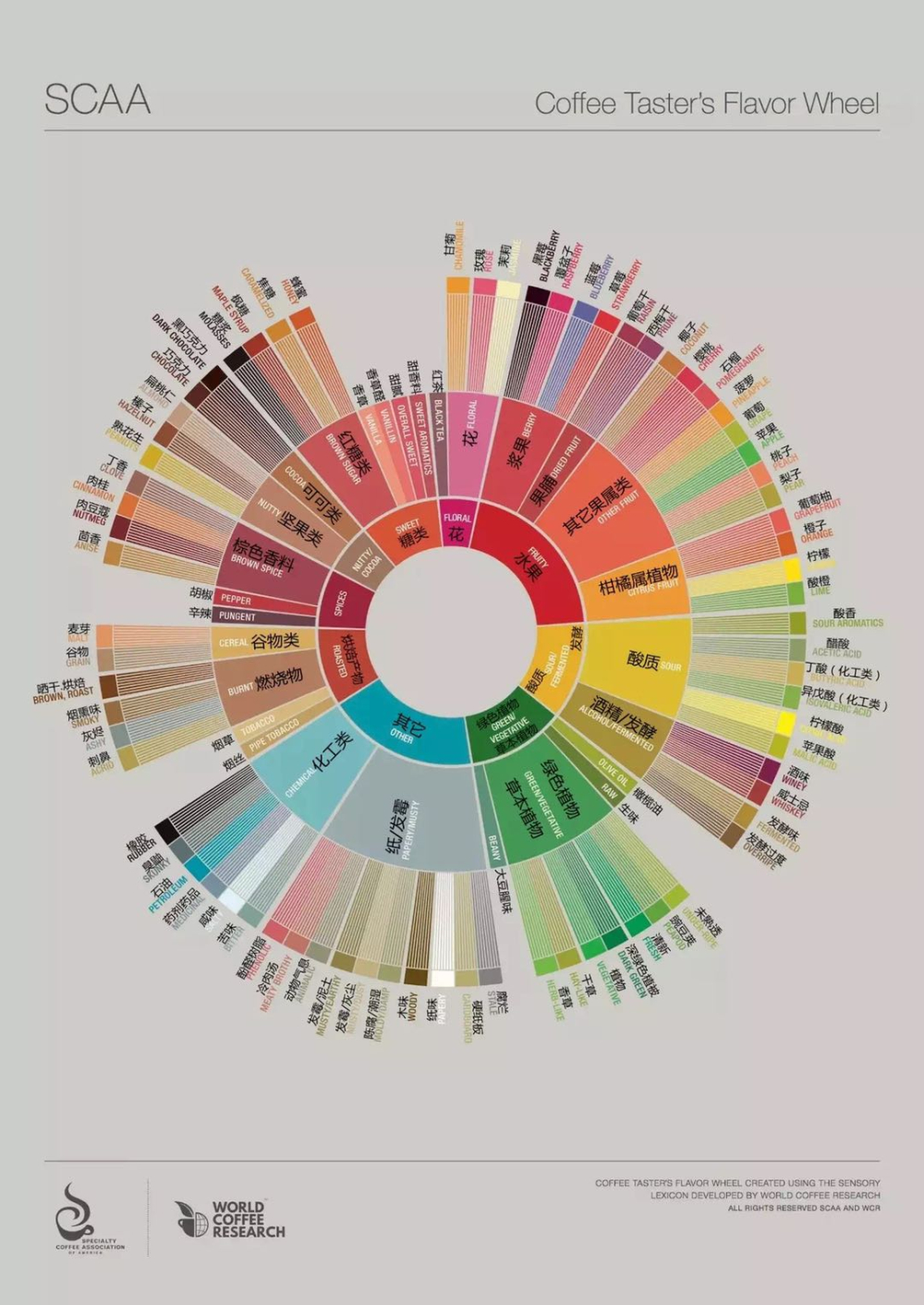
Let's look at the left side first. It is not hard to see that most of the flavor descriptions on the left give people an unpleasant feeling, and the flavor wheel also directly categorizes these undesirable flavors. So where do these flavors come from? In fact, there are quite a lot of factors in coffee that cause flavor and taste to deteriorate. From fresh fruit picking, to post-processing, green bean storage, and then roasting, every stage can affect the flavor. For example, not removing rotten or unripe fruit during picking, excessive fermentation or improper drying temperature during post-processing, substandard hygiene conditions and humidity during green bean storage, and inappropriate roasting degree or method will all cause the final product to have negative flavors, thereby affecting the taste of a cup of coffee. The old flavor wheel provided detailed classification and description of the negative flavors that may be produced under various circumstances.
Now let's look at the right side of the old flavor wheel. The right side is mainly divided into two major blocks, taste and aroma, and then extends separately from there. In terms of taste, it is mainly divided into four types: sour, sweet, bitter, and salty. These four sensory categories come from the taste buds in our mouths. On this basis, it further extends to the intensity and pleasantness of these four taste bud sensations. The aromas on the right side are much richer than taste, because aroma is perceived through smell—I believe everyone knows that the nose can perceive far more things than taste buds. The complexity of aroma is also absolutely a thousand times greater than that of taste. What we usually call the taste of an apple is actually smelled by the nose, while the sweetness of the apple is what the taste buds perceive. If everyone is interested in this kind of sensory topic, here is a book recommendation—"Taste Hunters"—you might want to find it and read it.
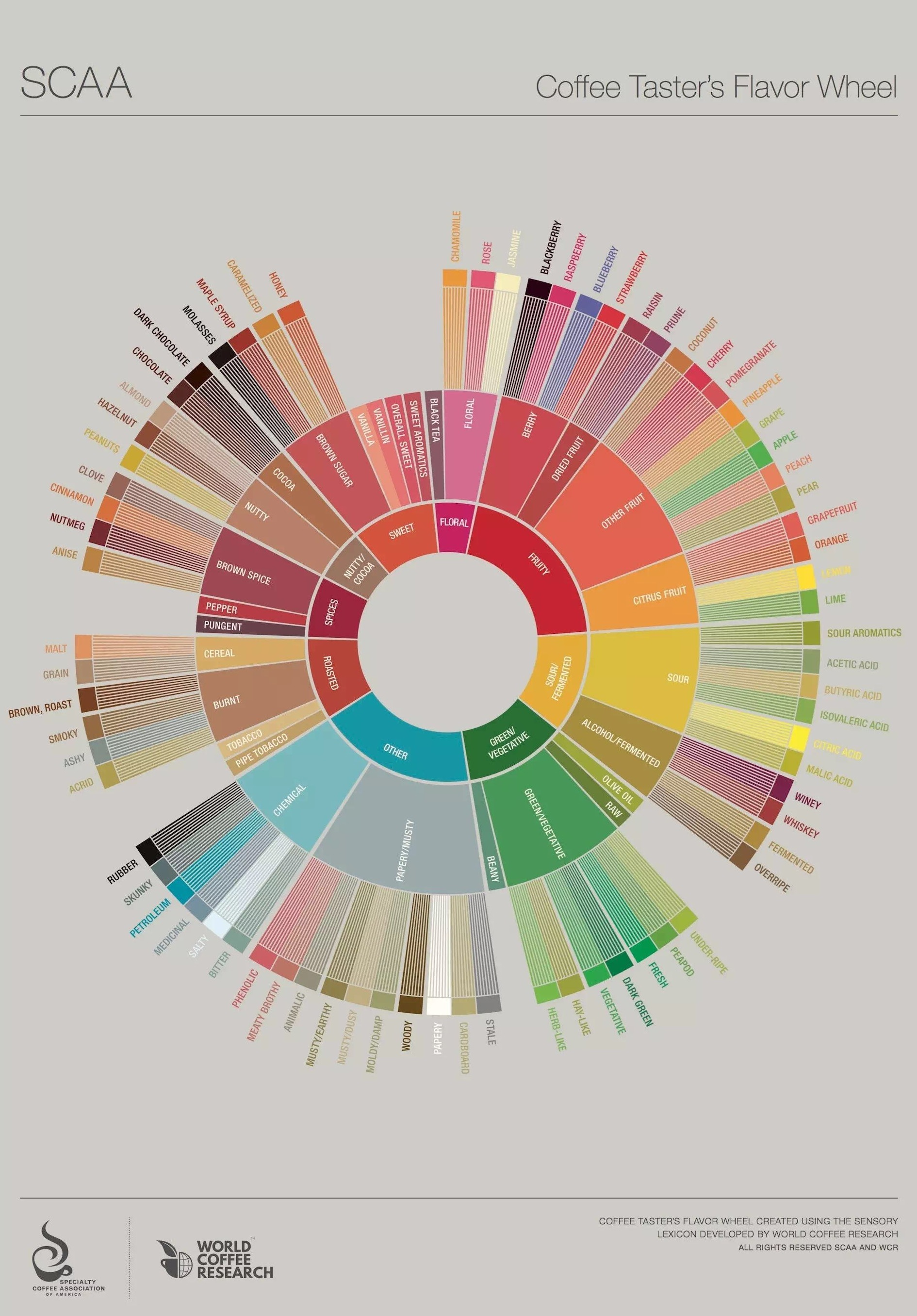
Next, let's talk about the new flavor wheel. If you look carefully, you will find that it has changed from two diagrams in the old version to one circle. Comparing the two, many negative flavor descriptions on the left side of the old flavor wheel no longer appear in the new version. At the same time, the new version has also added quite a few flavors—yes, it is just like playing a spot-the-difference game. Comparing the old and new versions side by side, we will find that the following have been added: strawberry, blueberry, raspberry, chamomile, jasmine, grapefruit, lime, coconut, pineapple, cherry, pomegranate, grape, peach, pear, black tea, vanilla, olive oil, raw, fresh, under ripe, dark green vegetables (similar to broccoli, kale, spinach), peapod, herb like, and so on.
It is not hard to see that the new flavor wheel has added a large number of fruit descriptors. In fact, these terms were already widely used by everyone before the flavor wheel update. As for the newly added raw and plant-like adjectives, perhaps they are flavor descriptions derived from some excessive ultra-light roasting degrees at present, and these are also things we often hear people mention in daily life. This globally used flavor wheel, which can be called the common language of the coffee world, will naturally adjust and improve with updates or trends in the industry.
The above content is compiled by CoffeeHunters, a coffee news website.


