







What Makes the Kenyan Coffee Bean Process So Distinctive?
Kenyan coffee is grown on highland plateaus around Mount Kenya, where two rainy seasons allow two harvests a year. Its signature is bright fruit acidity paired with a heavy, berry-juice body, a combination rarely found elsewhere. Six main regions produce it: Thika, Kirinyaga, Mt. Kenya West, Nyeri, Kiambu and Muranga, each with its own altitude and flavor profile.
Grading runs from AA down to PB, and lots are sold through auction or direct trade. The SL28, SL34 and Ruiru 11 varieties shape much of the cup. Most washed lots follow the 72-hour K72 fermentation, and the green coffee bean is then roasted and brewed as pour-over, often with a V60, to highlight that acidity.
Kenyan coffee is world-renowned for its bright fruit acidity and full-bodied berry juice character, representing the quintessential high-acidity profile in specialty coffee. This article systematically examines the growing conditions and geographic environment of Kenyan coffee, introduces one by one the altitude, varieties, and flavor characteristics of six major producing regions—Thika, Kirinyaga, Mt. Kenya West, Nyeri, Kiambu, and Muranga—explains in detail the coffee bean grading system from AA to PB as well as the auction and direct trade systems, provides an in-depth analysis of the varietal origins of SL28, SL34, and Ruiru 11, and fully breaks down the fermentation process of Kenya's 72-hour washed processing method (K72). At the end, it includes Front Street Coffee's roasting approach and V60 pour-over parameter recommendations for a Thika-region small tomato coffee bean, for coffee enthusiasts to reference and practice.
For more specialty coffee knowledge, please follow our WeChat official account: Front Street Coffee
Kenyan coffee has a bright fruit acidity, with a distinctive flavor and a round, rich mouthfeel that leaves a deep impression on anyone who has tasted it. Front Street Coffee has cupped numerous coffee beans from various producing regions in Kenya. If high acidity is the soul of a good cup of coffee, then Kenya is undoubtedly the epitome of that soul. Kenyan coffee also has a unique characteristic: coffee beans with bright acidity typically lack a substantial mouthfeel—Ethiopian beans, for example, give a clean and refreshing impression on the palate—whereas Kenyan coffee presents a berry juice texture that fills the entire mouth, a fullness similar to tomato juice.
Growing Conditions for Kenyan Coffee
Kenya is located in East Africa, with the equator passing through its center and the East African Rift Valley running north to south. It borders Somalia to the east, Tanzania to the south, Uganda to the west, Ethiopia and Sudan to the north, and the Indian Ocean to the southeast. The country is predominantly highland, with an average elevation of about 1,500 meters. Mount Kirinyaga (Mount Kenya) in the center rises to 5,199 meters, with snow on its peak year-round, making it the second-highest mountain in Africa.
Kenya is a tropical producing region with two rainy seasons per year, allowing for two coffee harvests. About 60% of production is concentrated from October to December, with the remaining 40% completed between June and August. Coffee farms are mainly distributed in the volcanic belt at altitudes of 1,600 to 2,100 meters from the capital Nairobi to the areas surrounding Mount Kenya. This altitude is highly favorable for the development of coffee bean flavor: lower temperatures in the highlands slow the growth rate of coffee cherries, allowing aromatic substances to fully accumulate, resulting in more pronounced fruit acidity and harder beans. This fertile, crescent-shaped specialty coffee growing zone is the core production area for Kenyan specialty coffee beans.
Major Producing Regions of Kenya
Kenyan coffee is centered on six major producing regions: Thika, Kirinyaga, Mt. Kenya West, Nyeri, Kiambu, and Muranga. The harvest periods for all six regions are concentrated in the main season from October to December each year, and the secondary season from June to August.
Thika
Thika is a small town near Kenya's capital, Nairobi, and the areas around Nairobi are home to a large number of coffee farms. Thika itself is an industrial town, but it is surrounded by agricultural land and waterfall scenery, with approximately 2,000 coffee growers in the area. Coffee cultivation in Thika dates back to the late nineteenth century, when coffee trees were introduced from neighboring Ethiopia to the north. After local variety improvement, the commonly cultivated varieties now include Bourbon, Kents (including SL34 and SL28), Typica, and Ruiru 11. Currently, about 90% of the planted varieties are SL34 and SL28, while the new variety Batian, released in 2007, has not yet been widely promoted. The flavor profile of this region features bright fruit acidity, a substantial berry juice character, and honey-like sweetness.
Altitude: 1,550–1,750 meters
Varieties: SL-28, SL-34
Kirinyaga
The Kirinyaga producing region is situated on the slopes of Mount Kenya, adjacent to the Nyeri producing region. It is world-renowned for coffee with intense flavor, rich layers, and a substantial mouthfeel, ranking alongside Nyeri as one of Kenya's two finest producing regions today. Producers in this region are mainly smallholder coffee farmers who join cooperatives. The cooperatives serve an integrating function, providing washing stations where farmers deliver their harvested cherries for processing. The flavor profile of this region features bright fruit acidity, a medium body, and delicate sweetness.
Altitude: 1,300–1,900 meters
Varieties: SL-28, SL-34, Ruiru11, Batian
Mt. Kenya West
Mt. Kenya West encompasses Kisii and the Bungoma area of Mount Elgon. Kisii is located in southwestern Kenya, not far from Lake Victoria, and is a relatively small producing region where most coffee beans come from joint cooperatives of smallholder producers. The coffee flavor of this region differs markedly from the central producing regions, presenting notes of roasted nuts and soft fruit acidity, and is favored by buyers who dislike bright acidity.
Altitude: 1,450–1,800 meters
Varieties: SL-28, SL-34, K7
Nyeri
Nyeri is located in central Kenya and is home to the extinct volcano Mount Kenya. The red soil of this area nurtures Kenya's highest-quality coffee. Agriculture holds an extremely important place here, and coffee is its most important crop. Joint cooperatives composed of smallholder farmers are more common than large estates. This region has two harvests per year, but coffee from the main season is usually of better quality. This region presents a bright berry juice character accompanied by citrus and faint floral notes. The coffee beans produced here made Kenyan coffee famous worldwide.
Altitude: 1,200–2,300 meters
Varieties: SL-28, SL-34, Ruiru11, Batian
Kiambu
Kiambu is located in central Kenya and has the highest-altitude coffee growing areas in the region. However, some coffee trees in high-altitude zones are affected by Dieback disease, causing them to stop growing. This producing region is named after the town of Nakuru. Coffee cultivation here takes both estate and smallholder forms, but overall production is relatively small.
Altitude: 1,850–2,200 meters
Varieties: SL-28, SL-34, Ruiru11, Batian
Muranga
The Muranga producing region belongs to Central Province and has approximately 100,000 coffee farmers. This inland producing region was where the first missionaries chose to settle, because the Portuguese prohibited them from living in coastal areas. This region also benefits from volcanic soil, and the number of smallholder coffee farmers exceeds that of estates. Coffee from this region has bright acidity and a substantial juice mouthfeel.
Altitude: 1,350–1,950 meters
Varieties: SL-28, SL-34, Ruiru11, Batian
Auction and Direct Trade of Kenyan Coffee
Nearly all Kenyan coffee is sold through the coffee exchange located in the capital, Nairobi. Every Tuesday during the harvest season, the coffee exchange holds an auction. Licensed traders obtain green bean samples in advance, select the beans they prefer after cupping, and the highest bidder at the subsequent auction wins. Kenya's coffee auction system is regarded as the model for the now widely popular COE competitions and is considered one of the most transparent and efficient trading methods, effectively incentivizing growers to pursue quality and achieving premium prices for premium quality.
Although the coffee auction system effectively raises the prices of high-quality coffee, it also has drawbacks. First, the participation of numerous trading intermediaries erodes the interests of coffee farmers, and the high prices obtained at auction cannot be fully returned to the farmers who work hard. Second, auctioned coffee is difficult to trace precisely in terms of production information, and for the growing specialty coffee market, traceability is an important criterion for evaluating green coffee beans. For these reasons, the Kenyan government has begun to relax restrictions on direct coffee trade. Nationally certified agents can sell coffee beans directly to overseas specialty coffee roasters and other customers. Direct trade allows farmers who produce high-quality coffee to receive greater returns.
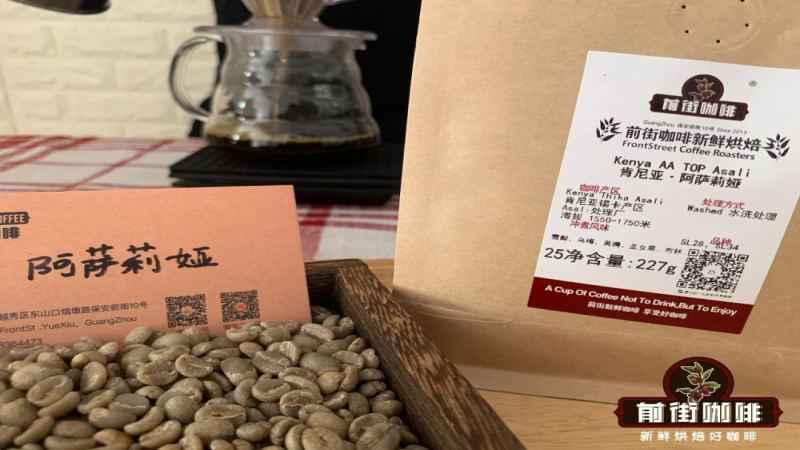
Front Street Coffee: Kenya · Small Tomato Coffee Bean
Region: Kenya, Thika
Altitude: 1,550–1,750 meters
Varieties: SL28, SL34
Processing method: Washed
Coffee Bean Varieties
SL-28 and SL-34 are two of the 40 varieties bred by a research program led by Guy Gibson at Scott Laboratories, which developed and named them in 1930. According to botanists at the SL laboratory, SL28 and SL34 are genetic mutations. They account for the vast majority of Kenya's high-quality coffee production, but these varieties are susceptible to leaf rust. SL34 has French Missionary, Bourbon, and more Typica lineage. Its bronze leaves and fava-bean-shaped beans give it excellent sweetness, balance, and complex, varied flavors, along with prominent citrus and smoked plum characteristics.
Ruiru 11: A hybrid variety developed by Kenya in the context of the large-scale global rust outbreak in 1985, prioritizing yield over quality. However, its flavor quality falls far short of SL28 and SL34, and it has failed to gain traction in the specialty coffee sector. Nevertheless, many suppliers—even those importing famous-name coffee—will blend this hybrid bean into their blends (Blend) to reduce costs.
Coffee Bean Processing Method: Kenya 72-Hour Washed
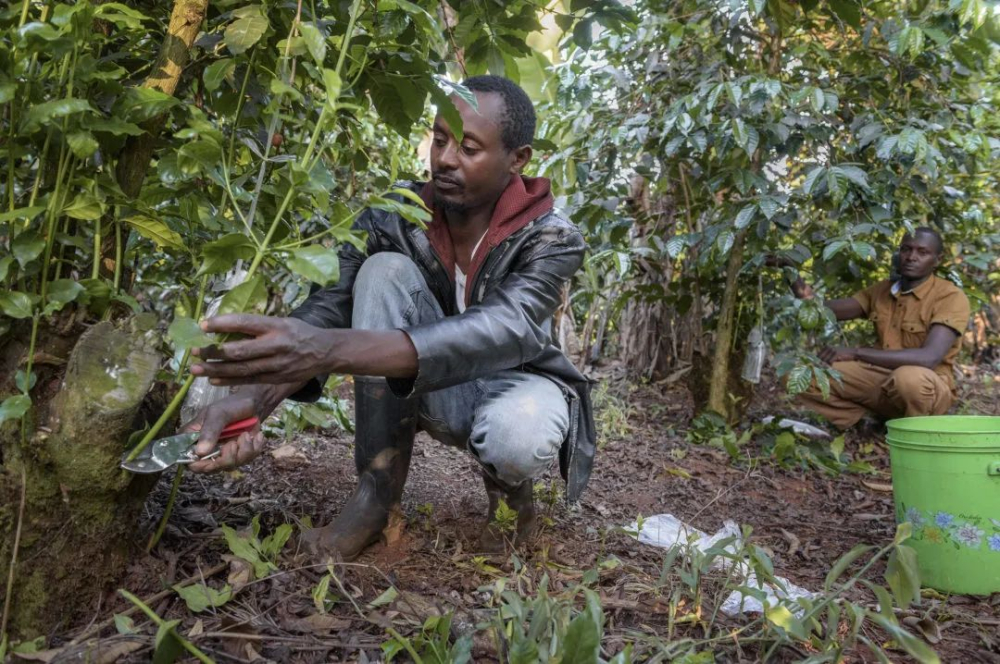
Kenya employs a repeated cycle of fermentation followed by washing. On the day of harvest, the post-processing begins: the finest coffee cherries are selected, depulped, and fermented for 24 hours, then washed with clean river water. They are then fermented again with clean river water for another 24 hours, then washed again. This cycle is repeated three times, totaling 72 hours, which is why it is called the Kenyan 72-hour fermentation washed processing method, or [K72] for short.
① First Wash and Fermentation
After the coffee cherries are harvested, they first undergo water flow density sorting, which uses the differences in density and mass of the coffee cherries themselves to sort them; high-density (heavier) coffee beans sink in water, while low-density ones float on the surface. Fully ripe and high-quality coffee cherries have higher density, and those selected undergo subsequent processing.
After selecting high-quality, fully ripe cherries, the skin is removed and they are washed and soaked to allow the mucilage adhering to the surface of the green beans to ferment. The mucilage contains natural sugars and alcohols, which play a key role in the development of coffee sweetness, acidity, and overall flavor. Fermentation lasts up to 24 hours, after which 80% to 90% of the mucilage can be removed, preserving only the flavor inside the coffee beans.
② Second Wash and Fermentation
The second wash and fermentation stage follows. After the coffee beans from the previous stage are cleaned, they are soaked in water again for 24 to 48 hours. This process increases proteins and amino acids, and the acidity of the coffee beans thereby develops a complex, delicate layered mouthfeel. Finally, all remaining mucilage is removed, and the coffee beans are moved to raised drying beds for sun drying.
Fermentation lasts up to 24 hours, after which 80% to 90% of the mucilage can be removed, preserving only the flavor inside the coffee beans. Finally, all remaining mucilage is removed, and the coffee beans are moved to raised drying beds for sun drying. The drying time depends on weather conditions, typically taking about 5 to 10 days to complete. Front Street Coffee believes that coffee beans processed with the Kenyan 72-hour fermentation washed method undergo a long fermentation at low temperatures and are only considered finished after sun drying and dehydration, which enables the beans to present a brighter, cleaner, and fuller flavor.
Coffee Bean Grading System (by Size)
AA Plus (AA+): AA grade with exceptionally excellent cup quality (flavor, mouthfeel).
AA: Screen Size 17–18.
AB: Screen Size 15–16, accounting for the majority of production.
C: Screen Size smaller than AB.
TT: Lighter-weight beans blown out from AA and AB grade beans by an airflow sorter.
T: Lighter-weight beans blown out from C grade beans by an airflow sorter.
E Elephant Bean: Large mutant beans formed by two beans fused together, also known as elephant ear.
PB Peaberry: Classified by appearance, unrelated to flavor or weight.
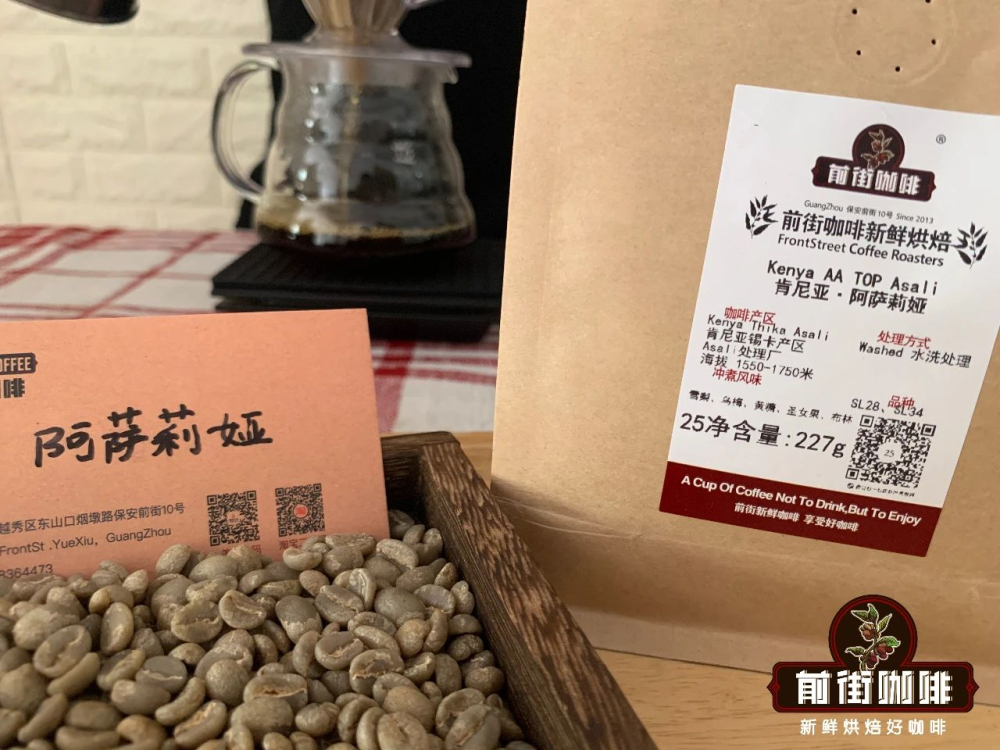
For AA and AB grade green coffee beans, an additional special grading based on cupping results is applied (not officially recognized by the Kenyan government, but established by exporters), from highest to lowest: TOP, PLUS (+), FAQ. The Kenyan Asalia on Front Street Coffee's bean list reaches the TOP flavor grade. However, as mentioned above, this is not an officially recognized grading system, and not every Kenyan coffee bean Front Street Coffee sources from various producing regions carries a flavor grade, so there is no need to obsess over it. Generally speaking, reaching AA or AB grade already implies that the flavor is by default quite excellent.
The Kenyan Asalia offered by Front Street Coffee comes from the Thika region and is an AA grade coffee bean. Next, Front Street Coffee will discuss how we roast this bean, how we brew it, and what its flavor expression is like.
Front Street Coffee Roasting Analysis
When roasting this Kenyan coffee bean, Front Street Coffee took into consideration the need to highlight its rich fruit acidity and full berry juice mouthfeel, and therefore adopted a medium-light roast.
Front Street Brewing Recommendations
Considering that this bean uses a medium-light roast profile, Front Street Coffee uses a higher water temperature and a faster-flow dripper, mainly to extract its bright acidity with high heat while avoiding over-extraction caused by high temperatures; therefore, a faster-flow V60 dripper was chosen.
Coffee-to-water ratio: 1:15
Coffee grounds: 15g
Total water poured: 225ml
Water temperature: 91°C
Grind size: fine sugar coarseness | EK43s setting 10 (80% pass-through rate on a No. 20 standard sieve)
Pour 30g of water in the first stage for a 30-second bloom, then pour 95g (scale reads about 125g), completing the pour in about 1 minute. When the water level drops to 2/3 of the coffee bed, pour the remaining 100g (scale reads about 225g), completing the pour in about 1 minute 40 seconds. Dripping is completed at 2 minutes 00 seconds; remove the dripper and extraction is complete.
Brewed flavor: Notes of smoked plum and cherry tomato on entry, with intense, substantial acidity on the palate, prominent sweetness in the mid-palate, a juicy mouthfeel, a finish of berry aroma and brown sugar sweetness, along with green tea fragrance.
For more specialty coffee beans, please add our private WeChat: Front Street Coffee, WeChat ID: kaixinguoguo0925
The above content is compiled by CoffeeHunters, a coffee news website.


