







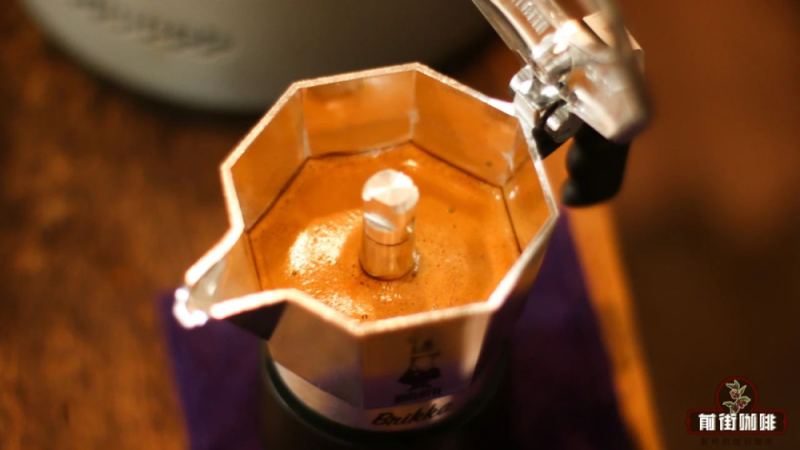
How fine should moka pot coffee be ground?
For a moka pot, the suitable particle size is roughly 0.3 to 0.55 millimeters, so the grounds feel neither gritty like sand nor as fine as espresso powder. Too coarse and the coffee rushes out like a fountain; too fine and boiling water whirs while the coffee is slow to appear, in which case the heat should be turned off at once.
Judging grind takes either a particle size ruler or a reference bag of moka-pot-specific ground coffee; trial brews usually get there in three to five attempts. Tamping is unnecessary, since uneven pressure can seal the puck and block hot water, which is dangerous. Whole beans keep their ideal flavor window of about 45 days, so grinding right before brewing helps.
The moka pot is a brewing tool that many coffee lovers keep at home, but questions about how fine the coffee grounds should be and whether to tamp them leave quite a few people puzzled. This article will explain in detail the choice of grind size for the moka pot, the technique for filling the basket, and common problems during extraction such as slow flow and spurting, while also touching on advice for buying coffee beans and the crema. Through repeated experiments, Front Street Coffee provides specific grind setting references and filling methods to help you brew a consistently rich, well-balanced cup of moka pot coffee at home.
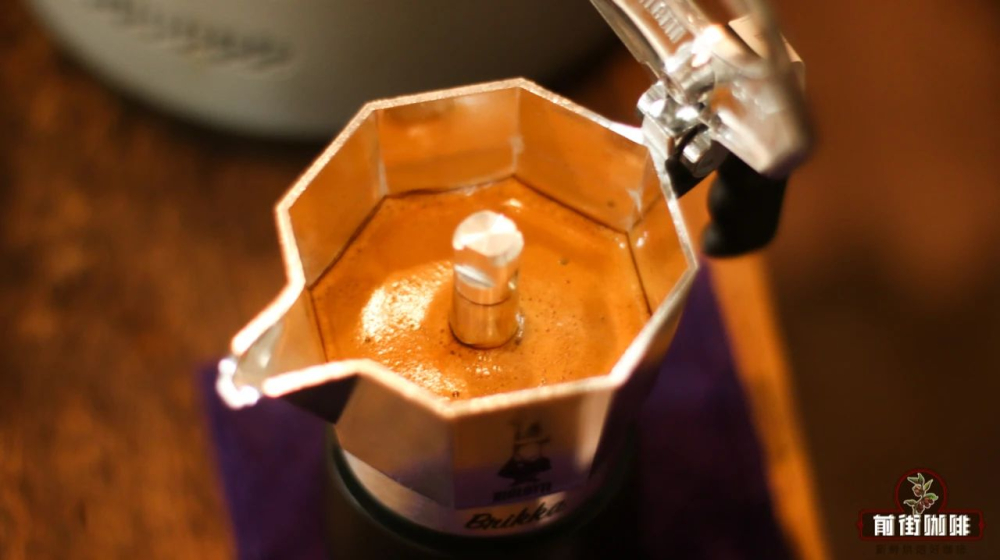
Many people are unsure how fine to grind coffee when using a moka pot, and are also uncertain whether to apply pressure when filling the basket. If these problems are troubling you, the following content will answer them one by one.
Let's start with grind size. The suitable particle size for a moka pot is roughly between 0.3 and 0.55 mm. When you touch it, it should neither feel distinctly gritty like sand nor as fine as the flour-like powder used in espresso machines. There are two ways to judge: first, buy a particle size ruler directly, or buy a bag of moka-pot-specific ground coffee as a reference; second, figure it out through repeated trial brews—usually three to five attempts will get you there. If the grind is too coarse, the coffee will rush out quickly, even like a fountain; if it's too fine, you'll first hear the whirring sound of boiling water while the coffee takes a long time to appear—at this point, turn off the heat immediately. Always pay attention to safety during the调试 process.
Should you buy coffee beans or ground coffee?
Roasted coffee beans have a best flavor window of about 45 days, during which the aroma is fullest. Once ground, the aroma dissipates quickly, and using it for a moka pot not only gives poor flavor but also noticeably insufficient crema. So if you want good taste, be sure to buy whole beans and grind right before brewing.
Does a moka pot need tamping?
After many experiments, Front Street Coffee believes it's unnecessary. If the tamping pressure isn't controlled well, it's easy to press the puck too firm, preventing hot water from penetrating—this is very dangerous. Of course, some friends worry that not tamping will create "channeling," causing the coffee to spurt.
The filling method endorsed by Front Street Coffee can effectively avoid the above problems, and the extracted crema is quite rich.
The specific method: use your right hand to form a ring around the basket, fill in the coffee grounds without pressing, keeping them loose, and pile them into a small mound raised in the middle—no need to level it, because the upper pot's filter cap itself is convex upward. Then place the upper pot on vertically and tighten, taking care to clean any coffee grounds left in the threads. The coffee grounds must fill all the gaps around the edges. This way, after extraction, the puck comes out as a solid block that doesn't scatter, and the crema is very thick.
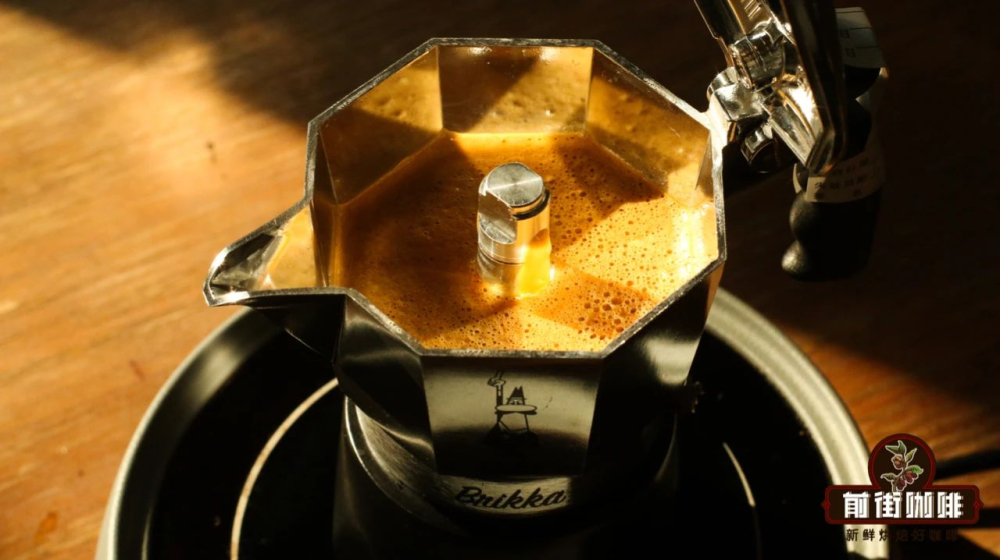
Brewed for a long time but the coffee just won't come out
There are usually two reasons for no liquid coming out: first, the grounds are tamped too tightly; second, the grind is too fine, leaving no gaps between particles for water to pass through. Both situations cause the pressure in the lower pot to rise sharply, which can damage the moka pot. So if the water has already boiled but the coffee won't come out, turn off the heat immediately and remove the pot from the heat source—you'll have to replace the coffee grounds and start over. At this point you can often smell a burnt odor.
Coffee spurting out
Spurting is the most common problem moka pot users encounter, and it carries a relatively high risk. Spurting indicates a blockage somewhere in the pot, or too high heat causing the flow to be too forceful. The water added to the lower pot must not exceed the standard mark line and should be kept 0.5 cm below the pressure relief valve line. This valve's function is to prevent explosion when pressure gets too high (for example, when the grind is too fine). If water rises above the valve, the pressure relief function may fail, posing a risk of bursting.
The grind size for a moka pot is overall coarser than espresso powder, but much finer than pour-over. If too coarse, the contact area between water and coffee is insufficient, extraction is incomplete, and the taste is weak; at the same time, the resistance to liquid flowing upward is too low, causing it to spurt out and posing a scalding hazard. Front Street Coffee recommends a grind setting of EK-43s #3-3.5, which feels slightly finer than caster sugar.
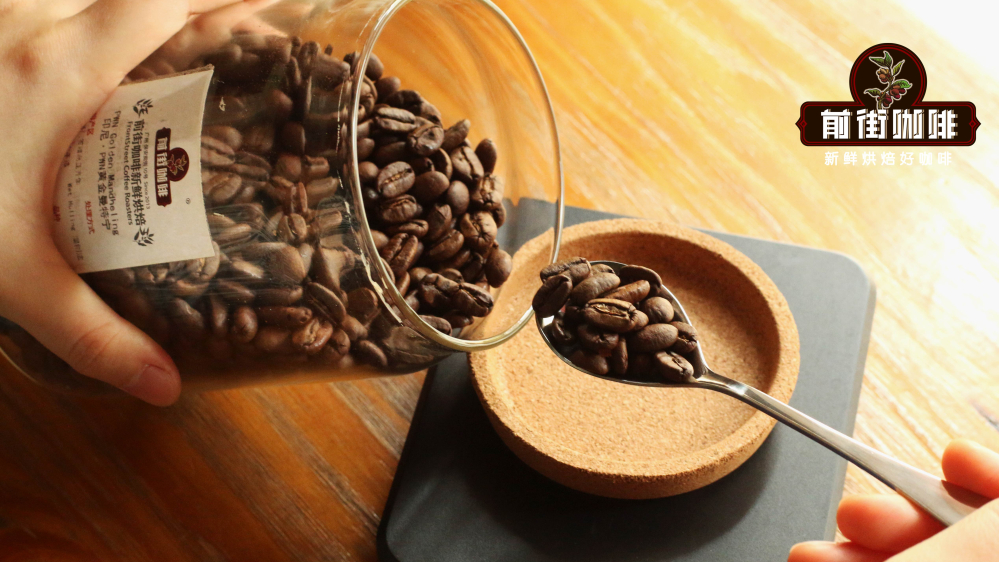
The coffee has no crema
The amount of crema is directly related to the roast level and freshness of the coffee beans. The darker the roast and the fresher the date, the thicker the crema layer formed under high-temperature, pressurized conditions.
The moka pot is a pressure-extraction method. If light-roast beans are used, since the beans are harder, they usually need to be ground finer to increase extraction yield—but fine powder under high temperature and pressure easily makes the coffee sour, astringent, and harsh, and the crema and aroma are hard to bring out. Therefore, Front Street Coffee recommends using medium-dark roasted coffee beans, which ensures good taste and makes it easier to extract crema.
If you're after a rich crema, Front Street Coffee's classic espresso blend is recommended. This bean pays tribute to the once-popular "Mamba Coffee," combining Indonesian Mandheling with Brazilian espresso beans—it has both the wild aroma of Mandheling and the smooth taste of Brazilian beans, complementing and harmonizing with each other in flavor. On this basis, Robusta is added, greatly enhancing the crema and making the body of the espresso more substantial. It's suitable for home brewing and can also be used for latte art.
Why is the coffee so burnt and bitter?
Unlike professional espresso machines, the moka pot has no even water distribution screen—only a thin hollow column where the liquid exits. When the grind is too fine or the dose too large, the liquid becomes difficult to exit, and coffee can only flow out from the looser areas around the edge of the basket. At this point, the coffee grounds in the center of the basket are often dry, while the surrounding ring is continuously washed by hot water, extracting the whole time. The result is that part is over-extracted and part is under-extracted, which is why the taste is burnt and hard to swallow.
The above content is compiled by CoffeeHunters, a coffee news website.


