







Why does americano caf rely on espresso crema and extraction?
Espresso is a concentrated coffee liquid pulled under high pressure, and its signature is a dense golden layer of crema on top. Crema forms because roasted beans hold carbon dioxide; pressurized hot water dissolves that gas, and once the liquid returns to normal pressure the gas escapes as tiny bubbles that settle on the surface.
Crema color and persistence hint at freshness, while the high coffee-to-water ratio and short extraction window produce the intense flavor and long aftertaste. Shops vary their blend coffee and recipes, so dose, yield, and time are adjusted to keep each shot balanced and repeatable.
Espresso is the foundation of many popular Italian-style coffees and the soul of any coffee shop. This article focuses on Espresso's two core characteristics—the golden, dense layer of crema and its high-concentration flavor expression—explaining how crema forms, how to judge freshness, and the relationship between color depth and taste, and further explaining the intense flavor and lasting aftertaste brought by high concentration. In the preparation section, using actual café output as a reference, it introduces the pressure requirements of commercial and home espresso machines, the coffee-to-liquid ratio, the extraction time range, and the complete operating procedure, while retaining the specific flavor description of Front Street Sunflower Warm Sun Blend and the recommended blend bean information, making it suitable for coffee enthusiasts to systematically understand the introductory knowledge of Espresso.
For more specialty coffee knowledge, please follow: Front Street Coffee ( Frontsteet Coffee )
Coffee culture is becoming increasingly popular in China, and coffee shops are opening up more and more on every street and in every alley, among which quick and convenient espresso-based coffee is especially favored. A cup of aromatic espresso forms the foundation of many popular Italian-style coffees. This time, Front Street will talk about the "soul" of the coffee shop—what characteristics espresso has.
Main Characteristics of Espresso
Espresso, also called Espresso, is a coffee liquid obtained by Italians using a pressure-boosted coffee machine to extract quickly at high temperature, with a golden foam covering the surface. Different shops use different espresso beans and extraction recipes, so the flavors naturally vary, but a standard espresso usually has the following two characteristics.
Cream
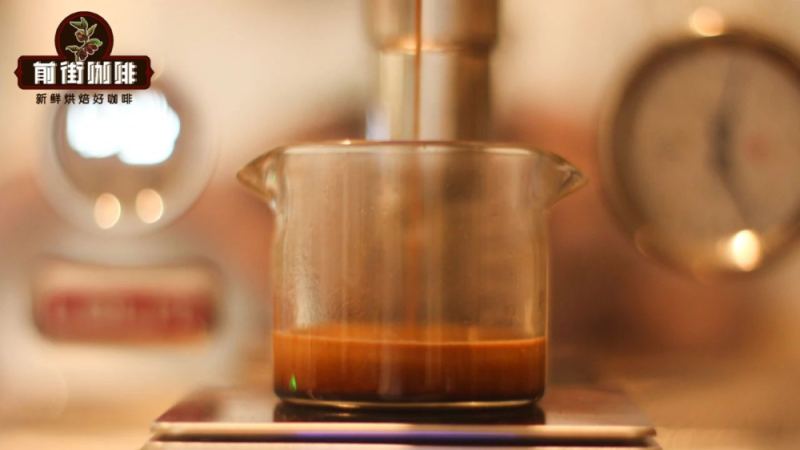
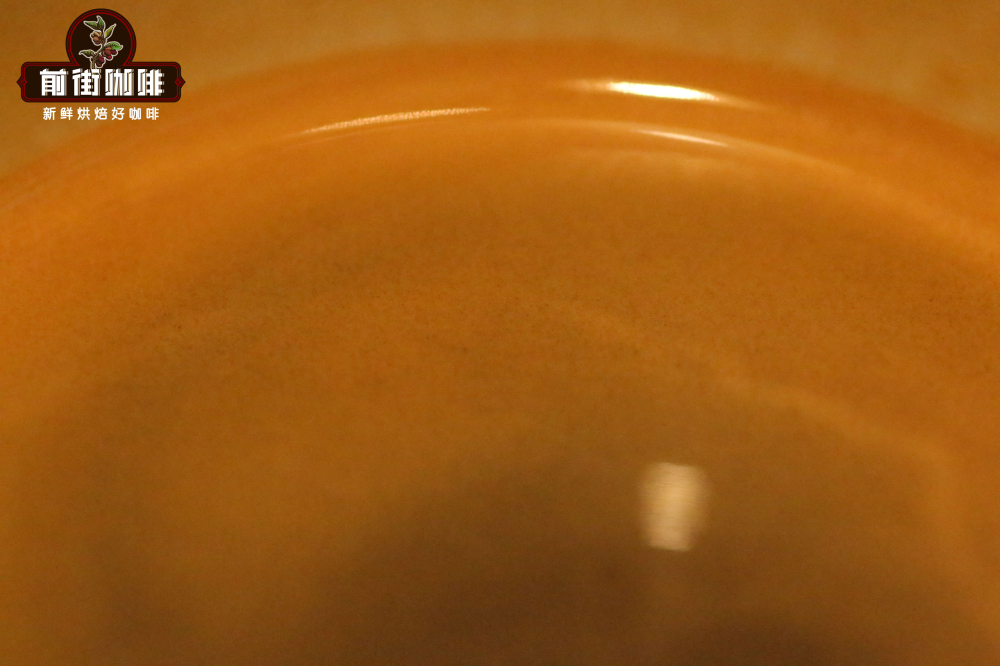
When you order an espresso in a coffee shop and the barista brings it to you right after extraction, you can see a thick layer of golden foam floating on the surface. This is what we call crema.
Coffee beans generate a large amount of gas during roasting. The high-pressure water flow dissolves out the carbon dioxide within them, but after the coffee liquid returns to normal atmospheric pressure, it can no longer retain all the gas, so countless tiny bubbles escape from the liquid. These bubbles remain on the surface of the coffee liquid, looking like a stable layer of "foam." A rich and fine crema indicates that the coffee beans used for this espresso were freshly roasted. This is because the gas inside coffee beans is continuously released over time; the farther from the roast date, the less carbon dioxide remains, and the thinner the foam layer formed during extraction.
If an espresso has no crema on the surface, it is very likely that the coffee beans have been left for too long, or that it was made and left undrunk for too long and the foam has already dissipated. The darker the crema color, the richer the taste generally is. This is because the coffee beans undergo the Maillard reaction at high temperatures; the darker the roast level, the darker the foam layer color and the fuller the mouthfeel.
High Concentration
A single espresso needs to release a large amount of soluble substances in just a few dozen seconds, so the coffee grounds must be ground very fine and evenly. Under the action of nearly boiling hot water and about 9 atmospheres of high pressure, the concentration of espresso is quite high, and the various flavors are doubled and concentrated, presenting a strong impact on the palate. After swallowing, the aroma still lingers in the mouth, with a long aftertaste. Therefore, many coffee shops serve a glass of water alongside a strong espresso.
How to Make Espresso
Many coffee enthusiasts have unknowingly accumulated various coffee equipment at home, and friends who like Italian-style coffee have even earlier bought espresso machines, ready to extract it themselves. Here, Front Street uses café espresso output as a reference to briefly explain how to make an Espresso.
The coffee machine used in Front Street's shop is the commercial single-group "Lelit Bianca," which can adjust extraction by changing pressure, with a maximum pressure of up to 11 bar. As long as a home espresso machine can reach 9 bar of pressure, it can meet the needs of extraction and milk frothing, and pairing it with an espresso grinder is enough.
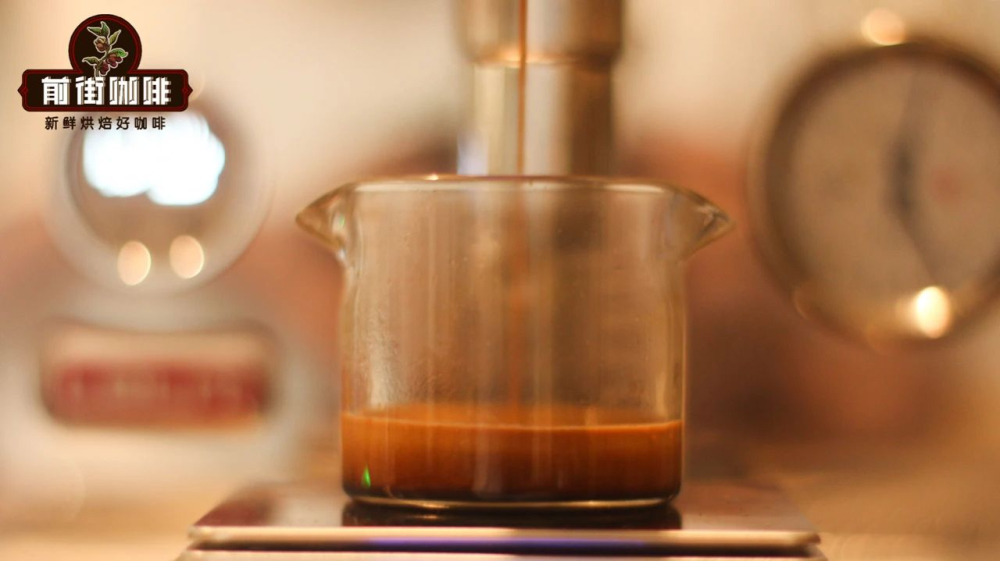
Front Street uses a double basket capacity, with a dose of about 18–20 grams, and uses 20 grams of coffee grounds for output. Usually the ratio of coffee grounds to coffee liquid is between 1:1.5 and 1:2.5. Front Street's extraction ratio is 1:2, that is, 20 grams of coffee grounds extract 40 grams of coffee liquid. Time is related to the flow rate of the coffee grounds. Generally, a single extraction duration is controlled at 20–35 seconds, because within 20 seconds the coffee taste tends to be thin, while over 35 seconds it is easy to over-extract and produce a burnt bitter taste. Front Street's espresso mostly falls within the range of 28–30 seconds.
Front Street first wipes the basket dry, turns on the grinder, grinds the amount for a double dose, and places it on an electronic scale to adjust until it reaches 20 grams. Then use a tool to distribute the grounds evenly and tamp the coffee puck firmly to ensure more stable extraction. Then turn on the extraction switch to release water, moistening the group head while rinsing away the coffee grounds stuck on it. Gently and slowly lock the portafilter onto the group head and begin pulling the extraction. When the electronic scale shows that 40 grams of coffee liquid has been extracted and the time is about 30 seconds, the extraction switch can be turned off. Pour the coffee liquid into an Espresso cup and it is ready to enjoy.
The taste and mouthfeel of Espresso are related to the coffee beans used. The espresso served at Front Street's shop uses Front Street Sunflower Warm Sun Blend. It is composed of Honduras Sherry coffee and Ethiopia natural Red Cherry in a 7:3 blend. Made into Espresso, it has rich crema, a very obvious whisky aroma, an acidity of vanilla cookies and berries on entry, a solid flavor, and after drinking, the whole mouth is filled with various aromas.
Espresso can also be diluted with water, which is the Americano commonly seen on menus, full of delicate fragrance. Adding milk makes it a latte, presenting the sweet and delicious flavors of chocolate and cream.
Espresso Blend Coffee Bean Recommendations
In addition to the Warm Sun Blend with a whisky aroma profile, Front Street's bean list also has three cost-effective espresso blend coffee beans for everyone to choose from. The espresso extracted mainly presents nutty notes. Because each blend uses a different ratio, each has subtle differences.
For friends who are just starting to try making coffee, because they are not very familiar with coffee equipment and various parameters, it is easy to make espresso bitter and hard to swallow. Therefore, Front Street believes that choosing coffee beans is very important. To make a standard espresso, it is recommended to use Front Street Classic Espresso Blend. This is a recipe composed of beans from three origins: Brazil, Indonesia, and Vietnam. It uses a dark roast, which can maximize the coffee's rich aroma and also allow everyone to easily extract rich and dense crema. Whether making an Americano diluted with water or a latte paired with milk, it is very suitable. It can be purchased and ordered at Front Street's Taobao store or Front Street Tmall flagship store.
The above content is compiled by CoffeeHunters, a coffee news website.


