







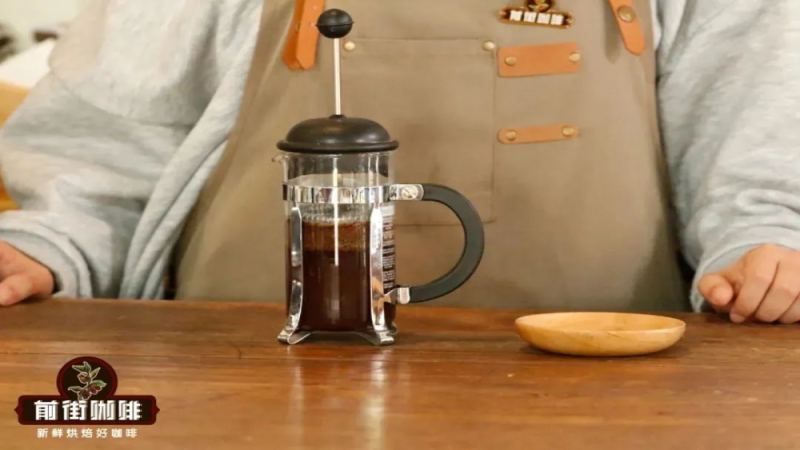
How does coffee brewing in a French press actually work?
A French press brews by full immersion: coffee grounds steep in hot water for a set time, then a plunger with a metal filter presses down to separate the grounds from the liquid. Because the method is static and retains more oils, the resulting cup has a heavier body and a rich, balanced profile, which suits medium-to-dark roasts showing dark chocolate, nuts and caramel.
Getting a good cup depends on a few variables rather than technique. Bean choice, grind size, steeping time, water temperature and the coffee-to-water ratio all shape extraction, and pour-over beans can generally be used as well. Medium-to-dark single origins such as Golden Mandheling, Queen's Estate and Blue Mountain are common starting points for beginners, and regular filter cleaning keeps the device working well.
The French press is one of the simplest coffee brewing devices to operate, requiring no complex pouring techniques, which is why it is favored by beginners. However, the seemingly simple immersion extraction involves several key variables, including coffee bean selection, grind size, steeping time, water temperature, and coffee-to-water ratio. This article systematically outlines the working principles and practical parameters of the French press to help you avoid common pitfalls and brew a rich, balanced cup of coffee. It also includes filter cleaning and daily maintenance tips to keep your equipment in good condition.
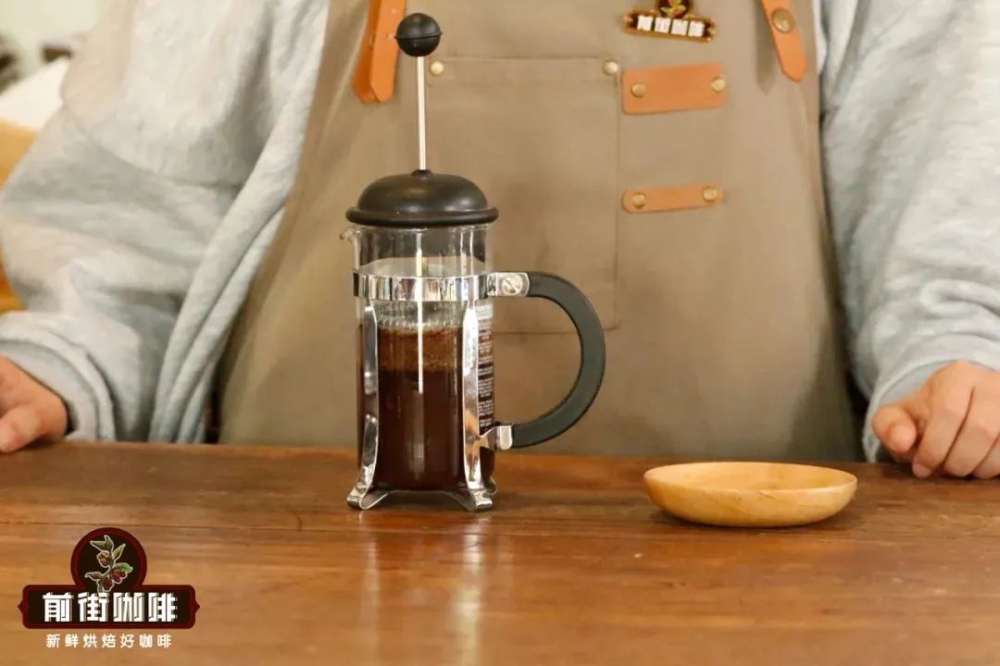
Among all brewing devices, the French press has arguably the lowest barrier to entry—it requires neither precise pouring skills nor tedious variable adjustments. For this reason, it is often the top choice for those seeking convenience.
The French press originates from France and has a simple structure: a cylindrical container with a lid, through the center of which a metal filter attached to a plunger can be pushed up and down to separate the coffee grounds from the liquid, thereby controlling the extraction level. Its working logic is actually identical to brewing tea—steep the coffee grounds in hot water for a period of time, then press down the plunger to filter out the coffee. Although making coffee with a French press is indeed very convenient, Front Street Coffee has also received quite a few comments from people saying their brewed results are consistently less than ideal.
Is this bean suitable for brewing in a French press?
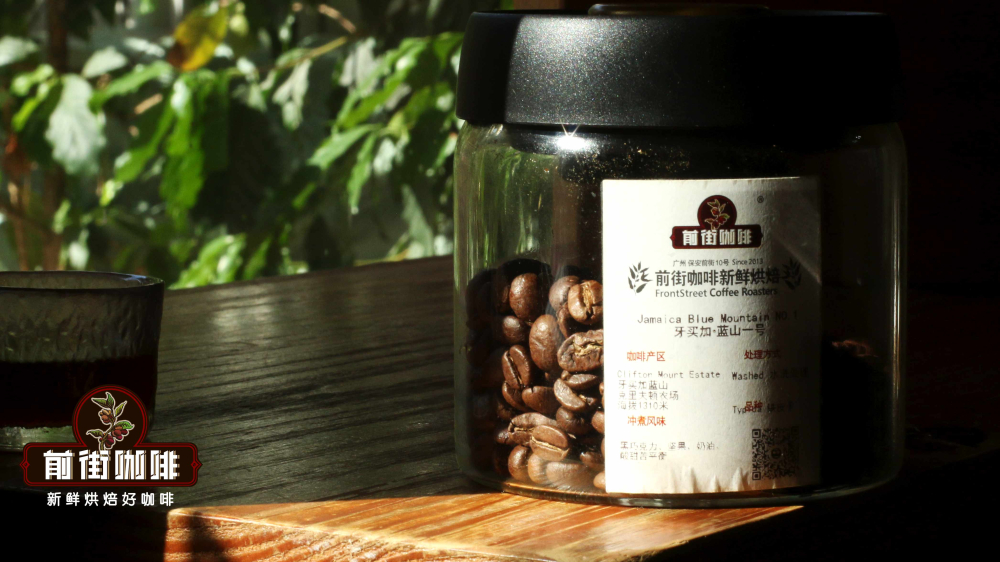
Regardless of the brewing method, choosing the right coffee beans is absolutely crucial. Many customers, after selecting their beans, come to ask Front Street Coffee whether a particular bean can be brewed in a French press. In principle, a French press can accommodate any coffee bean that can be used for pour-over, but its extraction is a static immersion type that retains more oils, noticeably enhancing the coffee's body. The flavor profile tends toward rich and balanced, making it more suitable for showcasing medium-to-dark roast characteristics such as dark chocolate, nuts, and caramel. Beginners just starting with the French press can prioritize medium-to-dark roasted single origins like Front Street PWN Golden Mandheling, Front Street Queen's Estate, and Front Street Blue Mountain.
If you use a light-roasted, acidic bean for the French press, the floral and fruity notes in the coffee tend to be suppressed, and the rich layering fails to come through. If you want to taste fruity aromas, it is recommended to choose medium-roasted coffees with high sweetness and low acidity, such as Front Street Strawberry Candy, Front Street Blackberry, and Front Street Mozart.
How coarse should the grind be? How long should it steep? What water temperature? How to set the ratio?
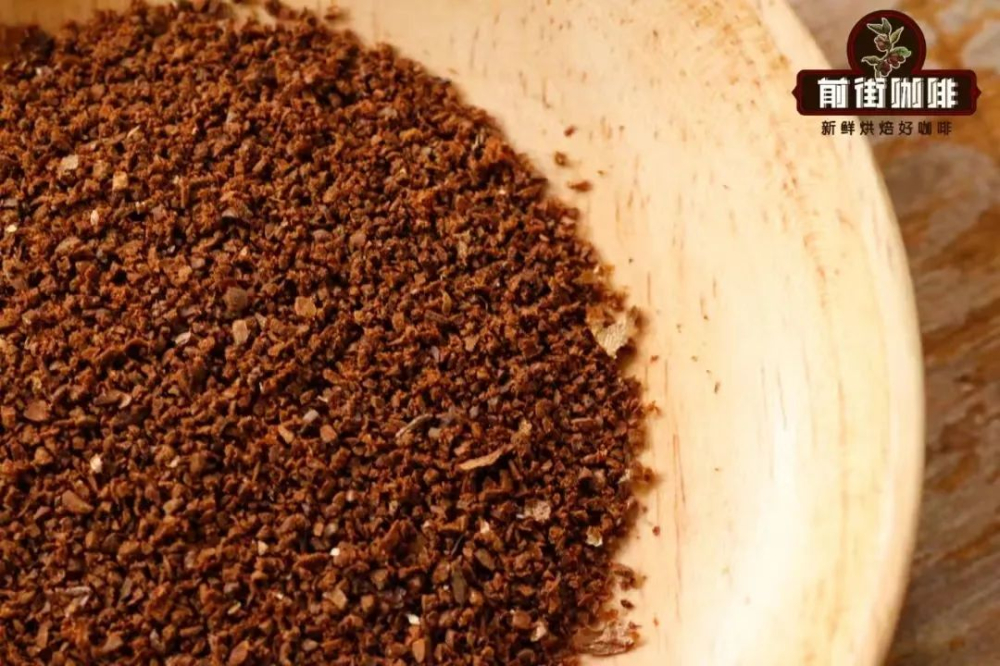
When browsing French press tutorials, coarse grinding is usually recommended. Front Street's suggestion is a grind size that achieves a 70% pass-through rate on the Chinese No. 20 standard sieve, roughly the consistency of coarse granulated sugar.
The advantage of coarse grinding is that it not only increases the margin for error during extraction but also reduces the production of very fine particles. The metal filter of a French press has pores approximately between 80 and 300 micrometers—visible to the naked eye as fairly large openings—so fine particles can easily pass through and mix into the coffee liquid, making the entire cup cloudy. Of course, if you want to pursue a richer layering of flavors, you can also try a finer grind, but be sure to shorten the steeping time accordingly to prevent over-extraction.
Steeping time is one of the variables that can be flexibly adjusted with a French press. Since there is no manual stirring involved, steeping time becomes the core factor determining the extraction yield. All else being equal, the longer the steep, the heavier the mouthfeel tends to be, but it also becomes more prone to over-extraction, bringing out bitterness, astringency, and even woody notes. Paired with a coarse grind, Front Street recommends steeping medium-to-light roasted beans for about 4 minutes; medium-to-dark roasted beans release bitterness more easily, so 3 minutes and 30 seconds is sufficient. This time frame is enough to fully release the positive flavors while avoiding the harsh bitterness that comes from prolonged steeping.
A French press completes extraction with a single pour of water, and the water temperature gradually decreases over time, so the starting temperature needs to be slightly higher than for pour-over. If brewing a medium-to-light roasted, acidic coffee, you can use 92–94°C; for medium-to-dark roasted, bitter-toned coffee, 89–90°C is recommended. In autumn and winter when room temperature is low, you can preheat the French press with boiling water first to slow down heat loss during extraction.
Controlling concentration naturally involves the coffee-to-water ratio. Front Street typically recommends operating at a 1:16 ratio—for example, weigh 15 grams of coffee grounds and pour 240 milliliters of water. Coffee brewed at this ratio has a concentration of about 1.1% to 1.2%, which is a very palatable range. If you prefer a richer texture, you can adjust to 1:15.
Even the "lazy brewer" shouldn't forget to clean and maintain the equipment
Over time, the metal filter of a French press will absorb and accumulate the oils released by the coffee. The oily residue left on the filter and plunger rod will oxidize and deteriorate, affecting the next use. Therefore, after using the French press, be sure to clean it promptly. During cleaning, disassemble all metal parts, wash both the carafe and the components with detergent, and dry them thoroughly or let them air-dry before storing.
- END -
The above content is compiled by CoffeeHunters, a coffee news website.


