







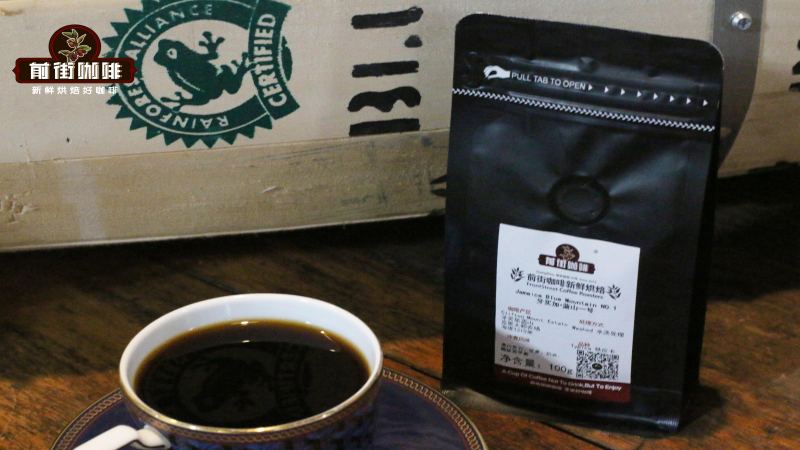
How should Blue Mountain coffee be brewed as pour-over?
Authentic Jamaican Blue Mountain coffee comes from high-altitude areas of the Blue Mountain range, where rugged terrain and high labor costs limit annual production to about 900 tons. Its balanced profile of body, aroma, sweetness, acidity, and bitterness suits pour-over brewing that brings out chocolate, hazelnut, and creamy sweetness.
Look at the green bean characteristics first, then match grind size, water temperature, dripper choice, and pouring technique to the roast. Beware of labels such as Blue Mountain blend or Blue Mountain flavor, which often mark lower-grade beans. Few dozen yuan listings are a strong sign the beans are not genuine Blue Mountain.
Blue Mountain coffee, a legend in the coffee world, is renowned for its balanced flavor profile of richness, aroma, sweetness, acidity, and bitterness. However, genuinely high-quality coffee beans from Jamaica's Blue Mountain range are scarce, and the market is flooded with various counterfeits. Drawing on the practical experience of Front Street Coffee, this article systematically explains how to identify authentic Blue Mountain coffee, the characteristics of green beans, roasting flavors, and key parameters in pour-over brewing such as grind size, water temperature, dripper selection, and pouring technique. Whether you are encountering Blue Mountain for the first time or hoping to refine your brewing skills, this complete café-level brewing approach will help you better bring out the chocolate, hazelnut, and creamy sweetness of Blue Mountain No. 1.
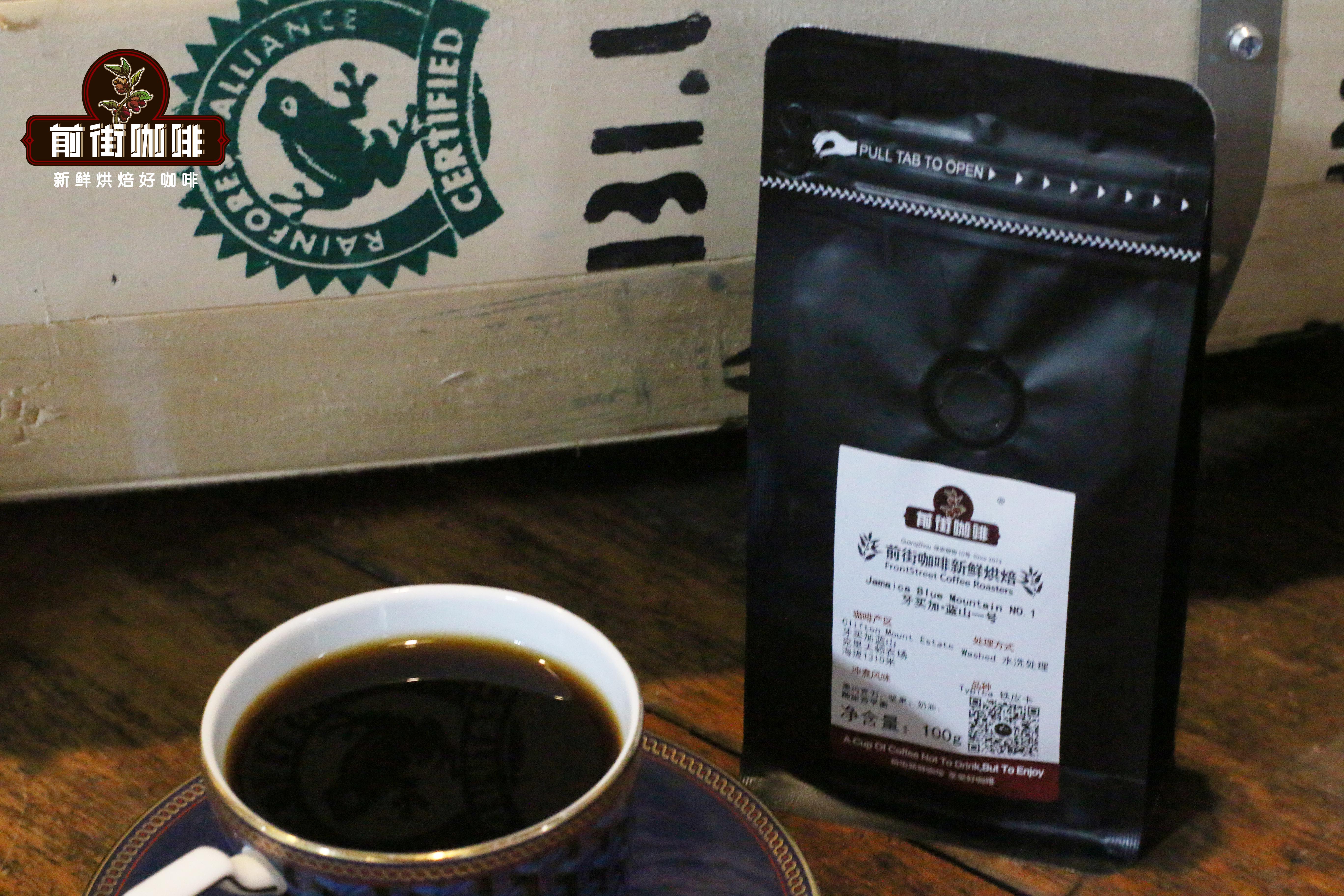
In an era when the concept of specialty coffee had not yet been embraced by the general public, Jamaican Blue Mountain was already firmly seated at the top of the coffee world, and even those who never drink coffee have heard of it. The excellent-quality Front Street Blue Mountain coffee blends body, aroma, sweetness, acidity, and bitterness to perfection. Given such delicate flavor expression, what brewing method is most suitable? The following content comes from the hands-on approach of baristas at Front Street Coffee (FrontStreet Coffee), outlining the key pour-over points for Front Street Blue Mountain coffee.
First, you need to have a bag of authentic Front Street Blue Mountain coffee beans on hand.
When purchasing Blue Mountain coffee, the first concern for many consumers is how to distinguish the genuine from the fake. This is not paranoia—authentic Jamaican Blue Mountain coffee comes from the high-altitude areas of the Blue Mountain range, where the rugged terrain makes cultivation management and harvesting extremely difficult, labor costs remain high, and annual production is only about 900 tons. Once distributed around the world, its scarcity and price are self-evident. Because of this, some merchants have resorted to tricks, slapping a "Blue Mountain" label on mediocre coffee beans to deceive consumers—the "Blue Mountain blend" and "Blue Mountain flavor" commonly seen on e-commerce platforms are exactly this kind of operation. If the "Blue Mountain beans" you see sell for just a few dozen yuan, they are most likely not genuine. As a price reference, the Front Street Blue Mountain No. 1 coffee beans sold by Front Street come in a 100-gram package priced at 158 yuan.
According to Jamaica's Coffee Industry Regulation Act, only Typica variety grown within designated areas of the Blue Mountain range at altitudes between 910 and 1,700 meters qualifies to be called "Jamaica Blue Mountain." In addition, the Jamaica Coffee Industry Board (CIB) has a strict grading system that classifies Blue Mountain coffee into Blue Mountain No. 1, Blue Mountain No. 2, Blue Mountain No. 3, and Blue Mountain Peaberry. Front Street selects the highest grade among them—Blue Mountain No. 1. Blue Mountain No. 1 green beans must meet a screen size standard of 17 mesh or above, with defective beans not exceeding 2%, moisture content controlled between 10% and 12.5%, and in cupping they must demonstrate harmony across acidity, sweetness, bitterness, body, and aroma. It is not hard to imagine that the number of premium coffee beans meeting these conditions is extremely limited.
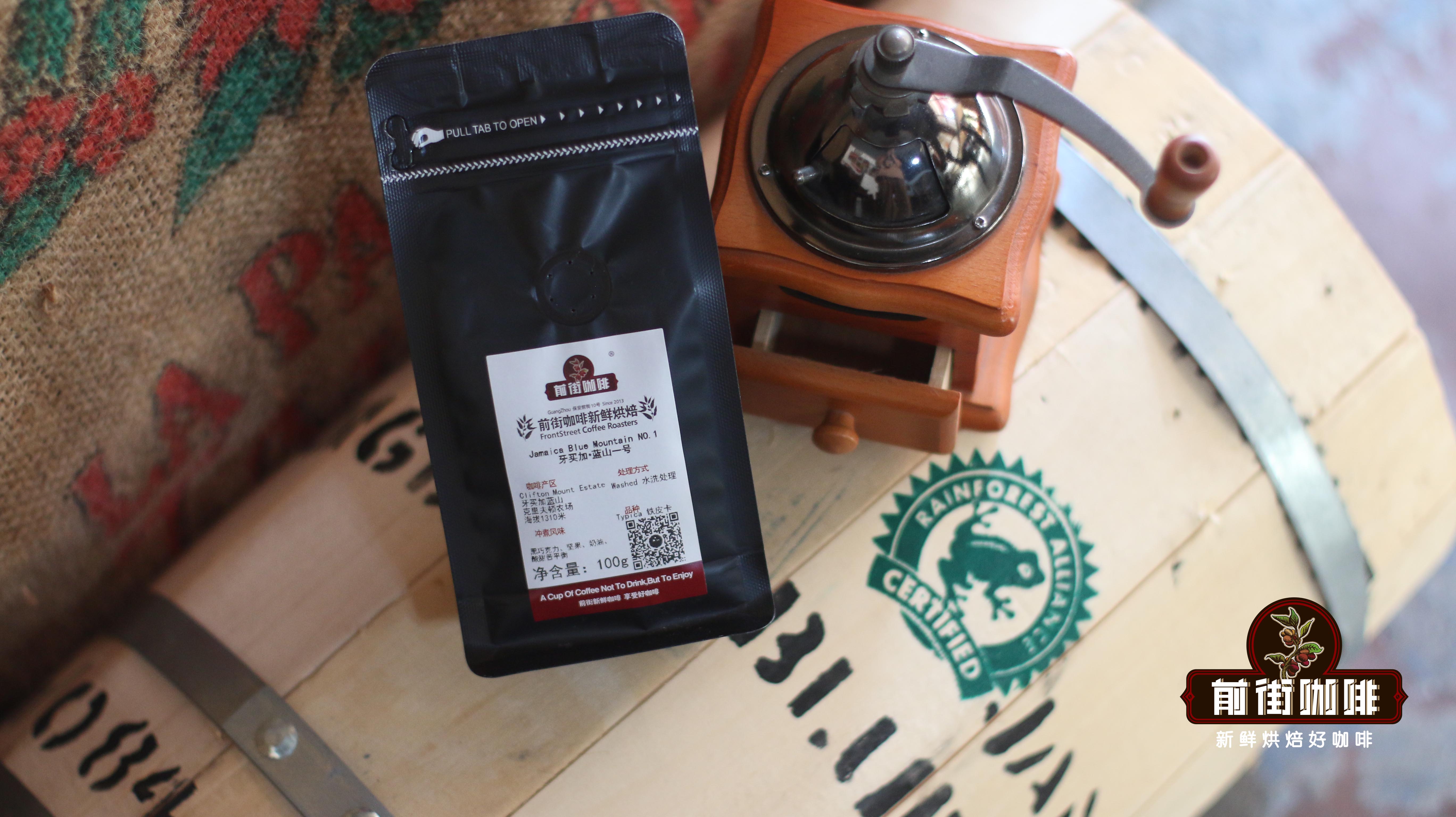
Front Street Blue Mountain coffee green beans come in wooden barrel packaging, exuding a distinctive quality from the moment you receive them. Unlike the burlap sacks commonly used in most producing regions, oak barrels can absorb and release internal and external moisture while blocking the escape of aroma, keeping the moisture content of the coffee beans stable and providing consistency for roasting. In terms of aroma, Front Street Blue Mountain coffee presents a rich, solid, and lasting scent of chocolate and roasted hazelnut—something ordinary dark-roast blends simply cannot match. In terms of taste, authentic Front Street Blue Mountain coffee achieves balanced harmony across acidity, sweetness, bitterness, and aroma, with no single flavor overpowering the others, and both body and sweetness are perfectly judged.
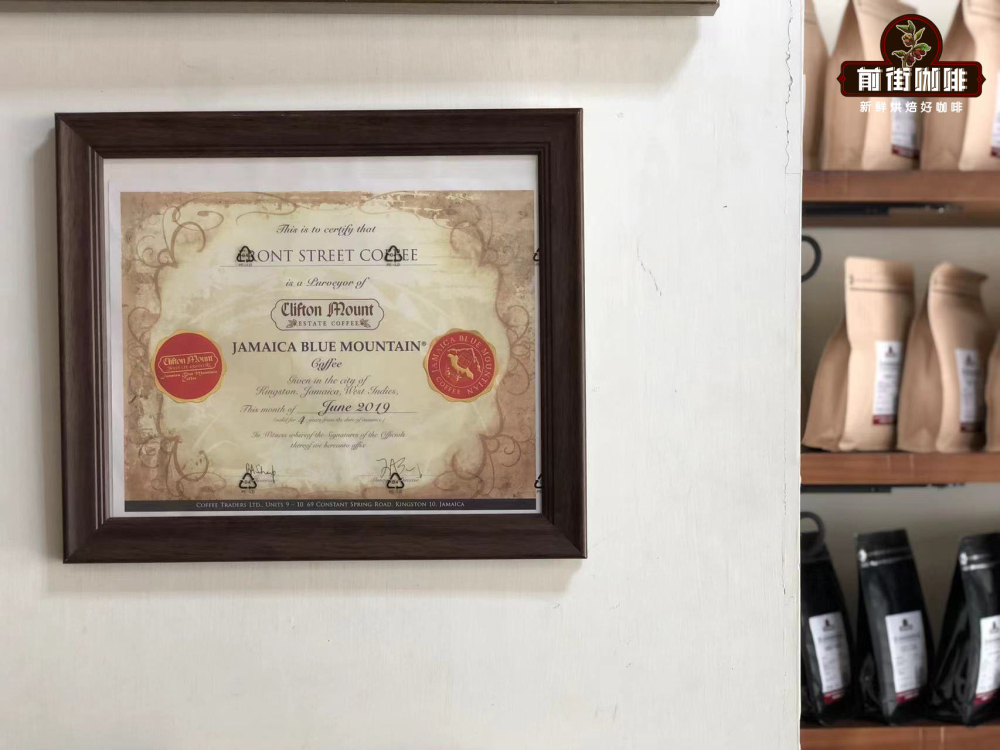
If the above two points still cannot confirm authenticity, then ask the merchant to present the relevant Blue Mountain certificates and the wooden barrel used for the green beans—Jamaica Blue Mountain is the only producing region in the world that uses wooden barrels for green beans. This Front Street Blue Mountain No. 1 coffee comes with a quality certificate issued by the Jamaica Coffee Board, an authorized sales certificate granted by the Blue Mountain coffee producer, and a certificate of origin for Jamaican Blue Mountain coffee. The relevant documents and handmade wooden barrel are all on display at Front Street's store. This Front Street Blue Mountain No. 1 comes from Clifton Mount Estate and uses the traditional washed processing method, which is also the most common green bean processing method for Blue Mountain coffee.
The flavor characteristics of authentic Front Street Blue Mountain coffee
Hand-picked coffee cherries are placed in water, where floating impurities and unripe fruit are removed through flotation. The skin and pulp are then removed, and the beans are left to ferment in a tank for 12 to 18 hours. After fermentation is complete, the beans are transferred to a water tank and stirred back and forth; through the friction between the beans and the force of the water, the coffee beans are washed until their surface is smooth and clean. They are then spread out under the sun for dehydration and drying. Once the moisture content drops to 12% to 14%, they can be bagged and left to rest in a warehouse, and before export they must also be sent for quality inspection. Washed processing significantly reduces the defect rate, better preserves the inherent aroma of the Blue Mountain coffee beans, and delivers superior cleanliness in the cup.
When Front Street receives Blue Mountain No. 1 green beans, the beans are plump and uniform, consistent in size, and overall exhibit a translucent blue-green color. Front Street uses a medium-dark roast, which fully brings out Blue Mountain's chocolate and nutty aromas while retaining a soft acidity and sweetness, resulting in a balanced overall taste.
After the fresh roast was completed, Front Street immediately conducted a cupping. In the dry fragrance stage, nuts, melon, and chocolate can be detected; after hot water is poured, aromas of oolong tea, caramel, honey, and dark chocolate emerge. On the palate, there are rich flavors of dark chocolate, roasted hazelnut, cream, and black sugar—clean and clear, full-bodied, with a lasting aroma. To ensure every customer can experience these aromas, all coffee beans shipped by Front Street are guaranteed to be freshly roasted within 5 days, arriving at the peak of their flavor window. Below, Front Street explains several key elements of pour-over Front Street Blue Mountain coffee, based on café production standards.
Pour-over grind size
Grind size is one of the key variables determining coffee flavor. Once coffee beans are ground and come into contact with hot water, a large amount of soluble flavor compounds is released. Within the same steeping time, the finer the particles, the more substances are extracted; the coarser the particles, the fewer substances are extracted. Simply put, the coarser the grind, the weaker the coffee tastes; the finer the grind, the stronger the coffee tastes. To adjust grind size, Front Street uses a tool—the Chinese No. 20 0.85mm standard sieve. For medium-light roasted coffee beans, Front Street typically controls the sieving rate at 75% to 80%; for medium-dark roasted coffee beans, it is controlled at 70% to 75%.
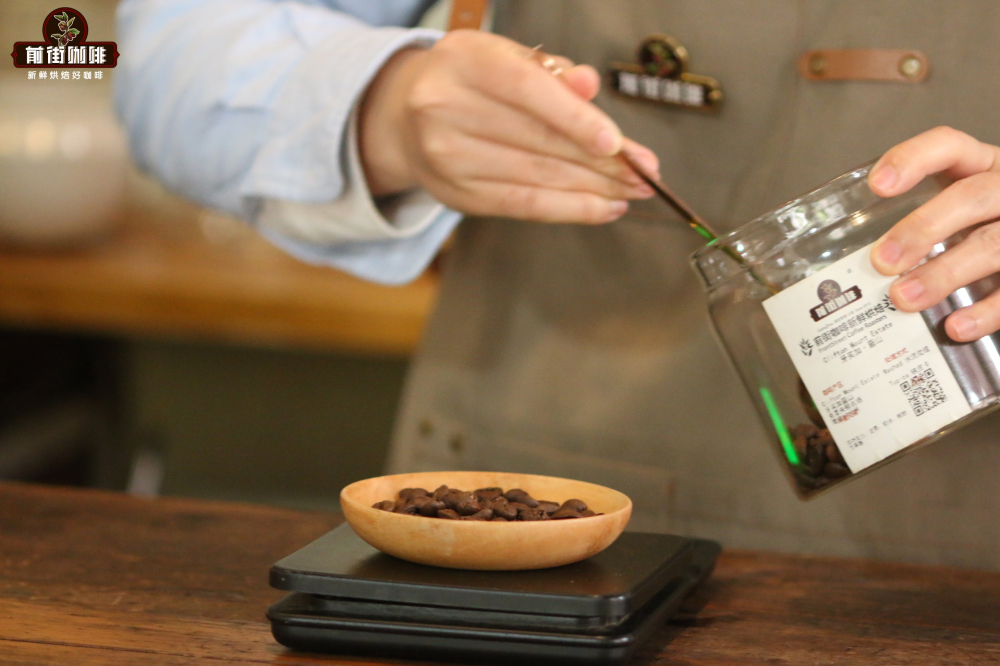
Compared with light-roast coffee, medium-dark roasted Blue Mountain beans have a looser internal structure, absorb water better, and more easily release large-molecule bitter compounds. To prevent over-extraction, Front Street uses a grind size with a 75% pass-through rate on a No. 20 standard sieve. In practice, first weigh out 10 grams of coffee beans, grind at the estimated setting, then place the ground coffee in the upper sieve and shake vigorously; particles smaller than 0.85mm will fall into the lower layer. Finally, weigh the coffee powder collected in the lower layer and divide by 10 grams to get the sieving rate. If the sieving rate is below the target value, the coffee powder is too coarse and needs to be ground finer; if it is above the target value, it is too fine and needs to be ground coarser.
Pour-over water temperature
The role of water temperature is similar to that of grind size—the higher the temperature, the higher the extraction efficiency, the more easily various compounds are released, and the higher the concentration. If water close to boiling is used for brewing, it is very easy to extract unpleasant bitter compounds. Therefore, when brewing medium-dark roasted coffee beans, Front Street uses different parameters than for light-roast coffee beans. Medium-dark roasted beans have undergone more complete caramelization than light-roast beans and more easily release bitter large-molecule compounds. To avoid extracting excessive off-flavors, Front Street appropriately lowers the water temperature. The brewing water temperature for light-roast coffee is 91 to 93°C; for medium-dark roasted coffee beans, Front Street recommends 87 to 88°C.
Dripper
If you regularly follow Front Street's brewing recommendations, you may have noticed that when brewing coffee beans that emphasize body, Front Street prioritizes the KONO dripper. Observing the shape of the KONO dripper, you can see that the ribs are distributed only in the middle-lower portion of the dripper, while the upper part is a smooth curved surface. When the dripper is pre-wetted, the filter paper fits tightly against the wall of the dripper, restricting the release of gases during extraction, which extends the residence time of hot water in the dripper, increases the extraction yield, raises the concentration, and makes the coffee taste richer and fuller-bodied. The KONO dripper is equally suitable for coffee beans with a full-bodied flavor profile, such as Front Street Brazil Queen's Estate coffee.
Pulse pouring
For beginners whose water control is not yet strong enough and whose flow is not stable enough, pulse pouring is the simplest and most versatile pouring method. For example, suppose the total brewing time is 2 minutes. If the first pouring stage takes longer than planned, the subsequent pours should use a stronger flow; conversely, if the first stage flows too fast, you can switch to a slower, gentler flow.
Front Street typically uses a three-stage pour with a coffee-to-water ratio of 1:15. For 1 to 2 servings, use 15 grams of coffee beans, with a total water volume of 225 grams.
In the first stage, gently pour 30 grams of water for blooming, with a bloom time of 30 seconds. In the second stage, pour up to about 125 grams, circling outward evenly and steadily. Then wait for the coffee liquid level to drop; when it drops to half, pour the final stage up to 225 grams. Once all the coffee has dripped through, the total extraction time is about 2 minutes.
Front Street Blue Mountain No. 1 coffee flavor: at high temperature, the entry is a deep dark chocolate aroma with abundant body, and the almond sweetness is clearly discernible. As the temperature drops, the roasted hazelnut and creamy sweetness become silky, accompanied by a hint of soft acidity and caramel sweetness, with the aroma lingering in the mouth for a long time.
For professional coffee knowledge exchange and more coffee bean information, please follow Coffee Workshop (WeChat public account: cafe_style)
For more specialty coffee beans, please add the private WeChat of Front Street Coffee (FrontStreet Coffee), WeChat ID: qjcoffeex
The above content is compiled by CoffeeHunters, a coffee news website.


