







How is Jamaican Blue Mountain coffee graded?
Genuine Jamaican Blue Mountain coffee carries government certification and is graded from Grade 1 to Grade 3. Only certified beans may use the name, and annual production is limited, which keeps prices high and makes counterfeits common. Products labeled "Blue Mountain flavor" are not the real thing. Blue Mountain No. 1 sits at the top tier.
The variety arrived in Jamaica in 1728, later gained Japanese UCC support and priority purchase rights, and opened to the international market in 2008. Beans from the Clifton Estate, the oldest growing area in the range, ship in wooden barrels with government certificates and carry Rainforest Alliance coffee beans certification. Medium-dark roasting brings out dark chocolate, nuts, and a creamy texture.
Blue Mountain Coffee is Jamaica's most iconic coffee category, highly sought after for its balanced taste and scarce production. However, the market is flooded with a large number of "Blue Mountain flavor" products, and genuine Jamaican Blue Mountain Coffee requires government certification, has limited annual production, and is relatively expensive. This article will systematically introduce the three-tier grading standards for Blue Mountain coffee beans, trace its historical context from its introduction to Jamaica in 1728, Japanese UCC assistance and priority purchase rights, to the opening of the international market in 2008, and highlight Front Street Jamaican Blue Mountain No. 1 Coffee Beans—from the historically oldest Clifton Estate, with Rainforest Alliance certification, presenting a balanced flavor of dark chocolate, nuts, and creamy smoothness through a medium-dark roast.
Nowadays, many coffee products marketed under the "Blue Mountain" banner can be seen on the market, but the vast majority of them are merely "Blue Mountain flavor" coffee, not genuine Blue Mountain authentic products. Only coffee beans certified by the Jamaican government can be called authentic Blue Mountain Coffee. Due to limited annual production, the number of authentic Blue Mountain coffee beans truly circulating in the market is not large, and the price is correspondingly high. Many people want to get their hands on Jamaican Blue Mountain coffee beans but worry about buying fakes. In fact, choosing Front Street authentic Blue Mountain No. 1 Coffee Beans puts your mind at ease, as the quality is guaranteed.
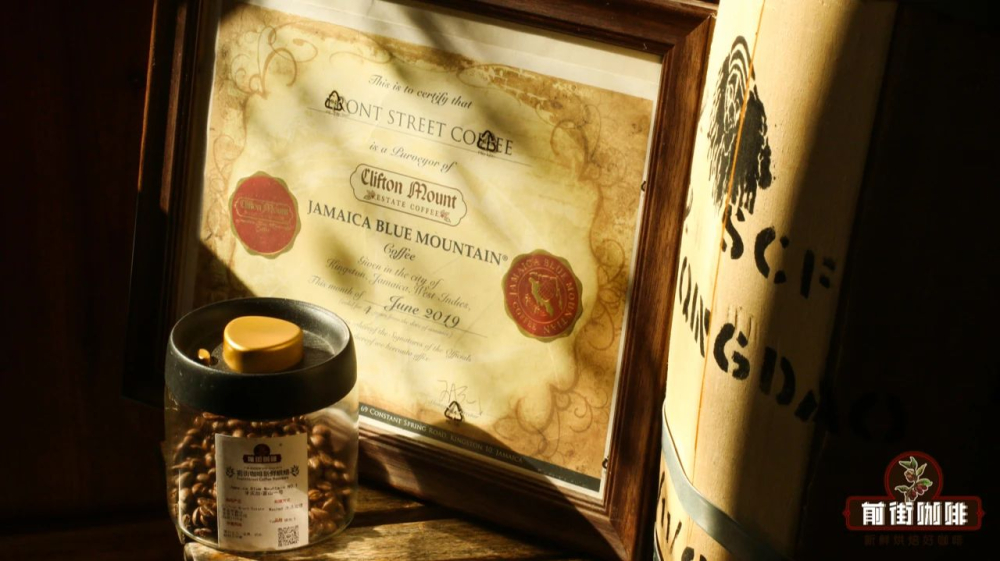
Front Street Jamaican Blue Mountain No. 1 Coffee Beans come from the Clifton Estate, which has the longest coffee-growing history in the Blue Mountain range. The green beans are exported in wooden barrels and come with a certification certificate issued by the Jamaican government. Front Street Jamaican Blue Mountain Coffee may not be the best-tasting coffee in the world, but its overall balance of taste and flavor is first-rate, making it very suitable for coffee enthusiasts who pursue flavor, and equally suitable as a souvenir to give to relatives and friends.
In order to let consumers drink freshly roasted coffee beans with stable quality, Front Street manually sorts the green beans before roasting and manually selects them again after they come out of the roaster before arranging shipment, ensuring they are sent out within 5 days after the roast date.
Jamaican Blue Mountain Coffee has been well known to Chinese people for decades, and its price has always remained high. One reason is that before 2008, Japan held the priority purchase rights to Blue Mountain Coffee for a long time. During the years of being "monopolized," whether domestically or internationally, Jamaican Blue Mountain coffee beans were pushed to high prices due to limited quantities.
The coffee trees planted in Jamaica were introduced in 1728. The Blue Mountain range has fertile volcanic soil, coupled with cool and humid climatic conditions and good drainage, making it very suitable for coffee cultivation, and thus creating the excellent quality of Blue Mountain Coffee, with production reaching over 15,000 tons at its peak. However, in 1969 Jamaica suffered a natural disaster, coffee quality declined, and the industry gradually went downhill. To save Blue Mountain Coffee from decline, the famous Japanese coffee company UCC promptly extended a helping hand, bringing support such as ecological farming methods and financial assistance.
In 1972, to thank UCC for its help, the Jamaican government signed a contract with Japan to sell 80% (some say 90%) of annual production to the Japanese market, with only the remaining portion sold on the international market. This is precisely why Blue Mountain Coffee is so scarce on the market and priced so high.
After 2008, the Jamaican government believed that Blue Mountain Coffee production had recovered to a considerable level, and that the Japanese government had held priority purchase rights to Blue Mountain Coffee for many years, so it was time for the international market to have more opportunities to sell Blue Mountain Coffee. Therefore, it canceled Japan's priority purchase rights, allowing more Blue Mountain Coffee to be supplied to the international market. In the year after the cancellation, the price of Blue Mountain Coffee was no longer high, and more people had the opportunity to taste this authentic Jamaican Blue Mountain coffee bean known as the "Coffee Gentleman."
Blue Mountain coffee beans are mainly divided into three grades:
Blue Mountain No. 1—top grade, most expensive, largest beans, over 96% of beans must reach screen size 17, and defective beans must not exceed 2%.
Blue Mountain No. 2—over 96% of beans must reach screen size 16, and defective beans must not exceed 2%.
Blue Mountain No. 3—over 96% of beans must reach screen size 15, and defective beans must not exceed 2%.
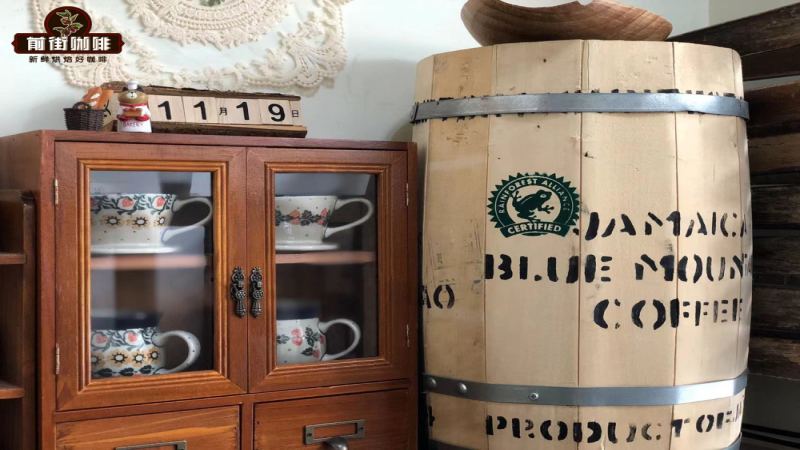
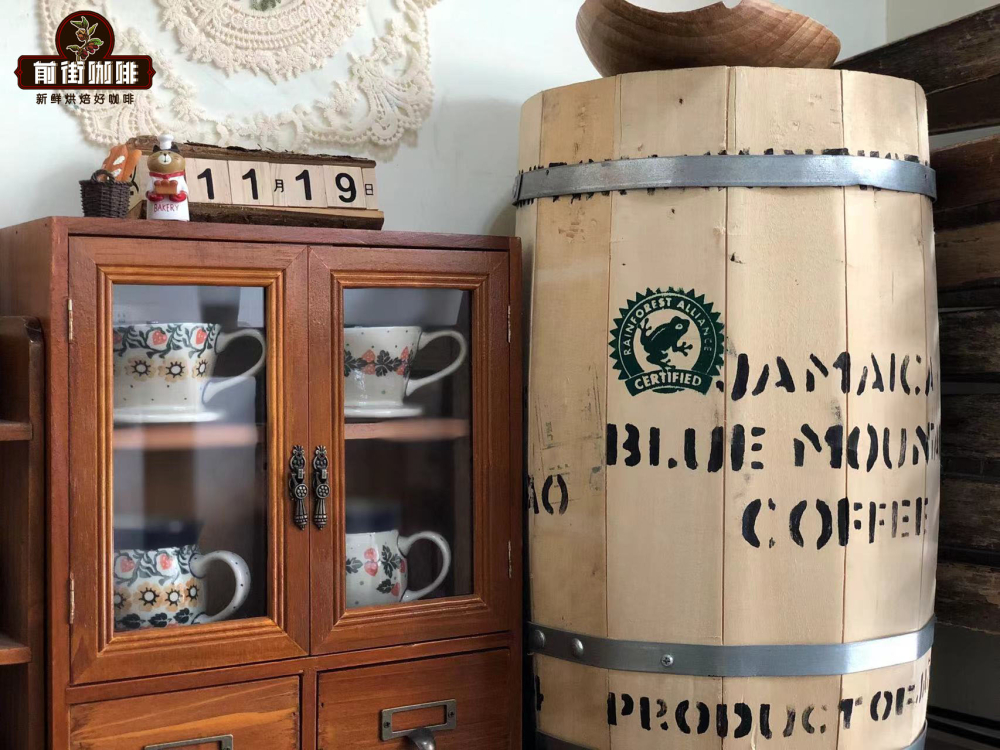
Although the price has come down and supply has increased, many coffee merchants still borrow the reputation of "Blue Mountain Coffee" for promotion, so words such as "Blue Mountain flavor," "Blue Mountain coffee flavor," and "Blue Mountain blend" are commonly seen on the market. Please remember! To buy authentic Blue Mountain coffee beans, you must look for the certificate issued by the Jamaican government and the wooden barrels used to hold the green coffee beans (Jamaica Blue Mountain is the only region in the world that uses wooden barrels to hold coffee beans!)
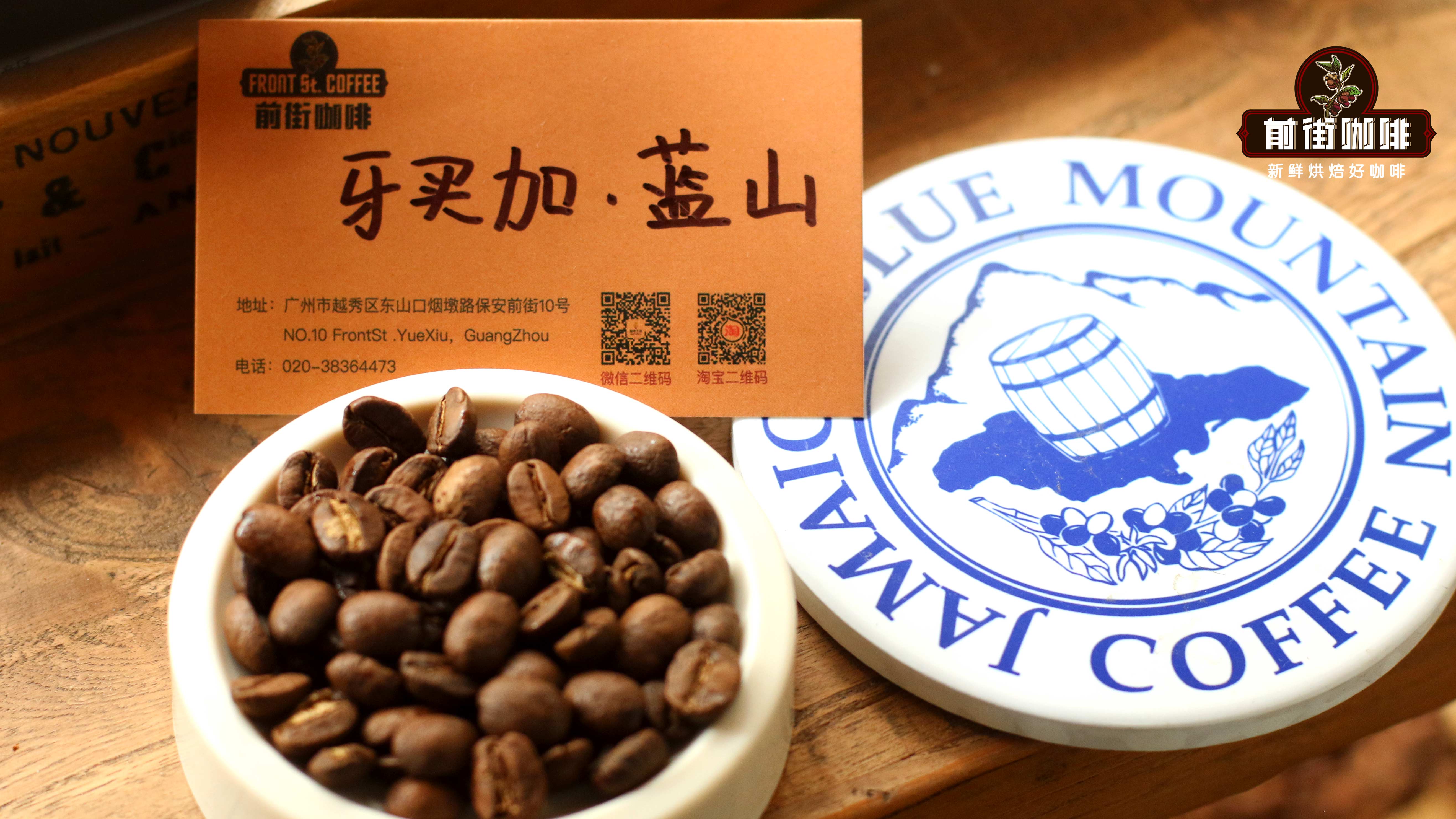
The reason Front Street chose Blue Mountain coffee beans from the Clifton Estate is not only because it is the oldest coffee estate in Jamaica, but also because it has the only Rainforest Alliance certification in Jamaica. To obtain this certification, farms must meet sustainable agriculture standards designed to protect ecosystems, maintain biodiversity and waterways, protect forests, reduce agrochemical use, improve livelihoods, and uphold the rights and well-being of workers and local communities. Because it has passed Rainforest Alliance certification, the wooden barrels of Blue Mountain coffee beans from this estate are printed with the green tree frog logo.
Front Street Jamaican Blue Mountain Coffee may not be the best-tasting coffee in the world, but it is definitely the coffee with the most balanced overall taste and flavor. To highlight the smooth, rich, full-bodied, and solid characteristics of Front Street Blue Mountain Coffee, Front Street roasts it to a medium-dark level. When brewing Front Street Jamaican Blue Mountain Coffee, the water temperature does not need to be too high—around 88-89 degrees Celsius is fine! The grind should not be too fine either; grinding to the size of coarse granulated sugar is good (70% passing rate on China's No. 20 standard sieve). For the brewing device, Front Street uses a Kono dripper with shorter ribs, because it can achieve the effect of extending extraction.
Use a Kono dripper, 88-degree water temperature, 1:15 coffee-to-water ratio, 15g coffee dose, medium grind (70% passing rate on No. 20 standard sieve), paired with three-stage pouring for extraction. In the first stage, pour 30 grams of water for blooming, with a blooming time of 30 seconds; in the second stage, pour until about 125 grams of water, then wait for the coffee liquid to drop, and when it drops to half, pour the final stage of water up to 225 grams; end extraction after all the coffee has dripped through. The total extraction time is generally about 2 minutes and 10 seconds.
Front Street Blue Mountain No. 1 Coffee flavor profile: rich dark chocolate and nut flavors, creamy smooth mouthfeel, balanced acidity, sweetness, and bitterness.
The above content is compiled by CoffeeHunters, a coffee news website.


