







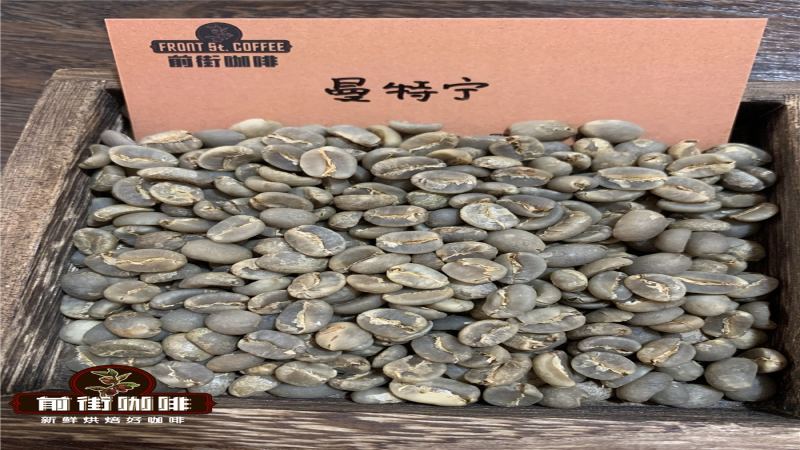
What Makes Golden Mandheling Coffee Low in Acidity?
Mandheling is not a region or variety but a mishearing of the Mandailing ethnic group from Sumatra, a story tied to Japanese soldiers during World War II. The coffee is known for a rich, full body and low acidity, making it a common recommendation for drinkers who dislike acidic cups.
Sumatra's wet-hulling process helps create that thick, low-acid profile. Lintong and Mandheling differ in origin, and PWN Company's Golden Mandheling follows a G1 grade standard. Brewing parameters and flavor descriptions for Front Street Lintong Mandheling and Golden Mandheling round out this classic coffee.
Mandheling coffee has always been synonymous with a rich, full-bodied taste, and is deeply favored by coffee lovers who dislike acidity. But many people don't know that Mandheling is not the name of a region or a variety, but rather originates from a misheard legend during wartime. This article will start with the origin story of Front Street Indonesia Mandheling, and introduce in detail Sumatra's growing environment, the difference between Lintong and Mandheling, the G1 grade standard of PWN Company's Golden Mandheling, and how the unique wet-hulling process creates its low-acid, thick flavor. It also includes the brewing parameters and flavor descriptions of Front Street Lintong Mandheling and Golden Mandheling, helping readers gain a comprehensive understanding of this classic coffee.
People often ask: is there any non-acidic coffee you can recommend? Front Street usually recommends Front Street Indonesia Mandheling. Front Street Mandheling also belongs to the rich, full-bodied type, and is an ideal choice for friends who reject acidity. Mandheling rose to fame around the same era as Blue Mountain coffee, and in the last century black coffee was generally marketed for its richness. Both Blue Mountain and Mandheling were promoted by the Japanese, and ultimately secured a place in the global market.
Through word of mouth, Front Street Mandheling seems to have become the representative of Indonesian specialty coffee. In fact, Mandheling is neither the name of a place, region, or port in Indonesia, nor the name of a coffee variety, but rather a homophonic mishearing of the Mandailing ethnic group who originally lived in Sumatra. Why would this ethnic group be connected with coffee? There is a story of accidental coincidence behind it.
According to Front Street Coffee (FrontStreet Coffee): the origin of Mandheling coffee has an interesting connection with the Japanese. During World War II, Japanese soldiers on the Indonesian island of Sumatra drank a very rich, full-bodied coffee and asked the coffee shop owner for the name of the coffee. The owner mistakenly thought the Japanese soldier was asking about his own identity, so he answered "Mandailing." In Japanese, "Mandailing" and "Mandheling" are very close in pronunciation, so the Japanese soldier remembered it as "Mandheling." After the war, this soldier wanted to taste that rich flavor again in Japan, so he asked a Japanese merchant friend to look for Mandheling coffee locally in Indonesia. Later, Mandheling coffee sales increased greatly in Japan, and the name spread along with it.
Front Street Sumatra Mandheling Coffee
Front Street has mentioned before: there are many coffee-producing regions around the world, each with different flavors, and the differences between producing countries are even more obvious. Coffee produced in Sumatra, Indonesia, is widely praised for its rich and satisfying flavor and enjoys global fame, although it may be somewhat hard to grasp for those unfamiliar with it. But Mandheling is hailed as one of the best-quality specialty coffees in the world.
Front Street will guide everyone through Mandheling's growing environment. Mandheling coffee comes from Sumatra, Indonesia, in Asia, and is also called "Sumatra coffee." The main producing areas include Java, Sulawesi, and Sumatra, of which about 90% is Robusta. The "Mandheling" produced on Sumatra is the most well-known. Among the refined traditional Arabica coffees produced in northern Sumatra, the best quality is sold on the market under the names Lintong and Mandheling. To be precise, Lintong refers to coffee grown in a small area southwest of Lake Toba in the Lintong administrative region. The coffee-growing areas are scattered across a high, undulating clay plateau covered with fern vegetation, with an average growing altitude of 1,200 to 1,500 meters, planted by smallholders under shade trees. Lintong coffee is not shade-grown, does not use chemicals, and is almost entirely owned by small private holders. Mandheling is a broader term, covering Lintong coffee as well as coffee produced under similar conditions in Diari [capital Sidikalang] and the growing area north of Lake Toba.
Front Street Golden Mandheling Coffee
When you hear Front Street Golden Mandheling, don't you think it sounds very high-end? Coffee is actually described with "golden" — it must be so precious! Front Street tells you: Front Street Golden Mandheling is indeed different from the rest. Front Street Mandheling is a high-quality specialty coffee, while Front Street Golden Mandheling is the cream of the crop among specialty coffees, and its quality and taste are naturally superior to Front Street Mandheling.
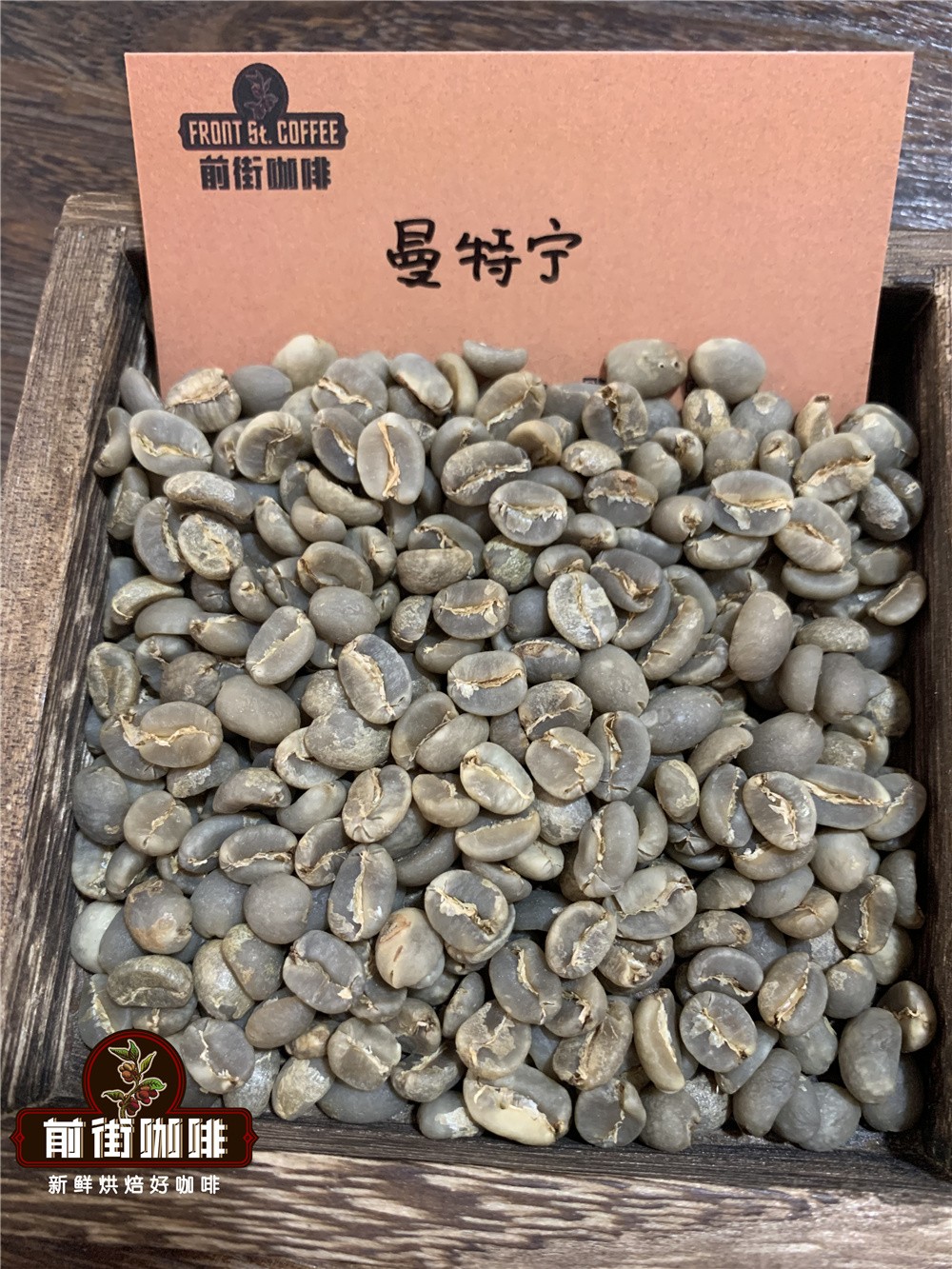
Front Street Golden Mandheling coffee comes from the renowned Indonesian coffee company Pawani Coffee Company, abbreviated as PWN, which is also the company that registered the Golden Mandheling trademark. Golden Mandheling produced by PWN is characterized by strict screening standards and large, uniform beans, and its taste is also cleaner. Carefully hand-selected Mandheling coffee with plump beans and a lustrous appearance can be called among the finest coffees. In fact, in order to improve the problem of a relatively high proportion of defective beans in Mandheling, the Japanese began using careful selection and quality control methods very early on. After one mechanical sorting and three manual selections to remove defective beans, they produced Golden Mandheling coffee beans with a dark green color and uniform bean appearance, creating new market demand, and even the European and American markets went crazy for it.
Front Street Coffee (FrontStreet Coffee) · Mandheling Coffee Bean Grading
At present, most of the best coffee beans in Indonesia come from PWN (Pwani Coffee Company), and
G1 is an extremely rare product, a grade originally tailor-made for Japanese trading companies; G1 allows at most 3 defect points within 300 grams.
The Front Street Golden Mandheling on the Front Street Coffee (FrontStreet Coffee) bean list is PWN Company's Golden Mandheling. This Front Street Mandheling coffee bean has a green bean size specification of 18 screen or above, with fewer than 3 defective beans per 300-gram sample, and is graded at the highest G1 level. Front Street Golden Mandheling, whether on the outside or inside of the burlap bag, will have the PWN logo and certificate. The specification of Front Street Golden Mandheling is 18 screen or above. Through cupping, Front Street Coffee (FrontStreet Coffee) found that the strictly screened Front Street Golden Mandheling tastes cleaner than Front Street Indonesia Mandheling. The original herbal, earthy, and woody notes of Mandheling are almost gone, but the caramel sweetness is stronger, and the fruity acidity is brighter and more elegant. PWN Company has registered a trademark for Golden Mandheling, which means that only Golden Mandheling produced by PWN Company can be considered truly "Golden Mandheling."
Front Street Coffee (FrontStreet Coffee) · Mandheling Coffee Processing Method
The flavor of any coffee is greatly related to its processing method. Front Street believes that although local coffee will also have local flavors, processing methods directly affect coffee flavor. Indonesia is located in a typical tropical rainforest climate zone, where it rains frequently and sunshine duration is short, which is not suitable for sun-drying processing. In addition, local economic conditions are generally modest, and there is not enough funding to invest in washed processing, so this semi-washed processing method emerged.
This three-stage, divided-labor drying method is as follows: after coffee farmers pick fresh coffee cherries from the trees, they process them the same day, using a wooden depulper to remove the skin and pulp of the coffee cherries, then ferment for 3 hours before drying. When the parchment beans are in a semi-dry, semi-wet state, they are collected and sold to a local coffee processing station. After the coffee processing station receives these semi-dry, semi-wet parchment beans, it first removes the mucilage layer and parchment layer, and then continues the later stage of sun drying. In this way, the time required to dry the green coffee beans is shortened to between 2 and 4 days, and once the moisture content of the green coffee beans drops to 12% to 13%, they can be stored in the warehouse.
The characteristics of Front Street Mandheling coffee: a unique herbal aroma (similar to grass jelly) and aged wood notes, caused by high humidity and the three-stage drying of the mucilage layer. This is also a rare processing method, which accidentally created Mandheling's special low-acid, thick, and mellow aroma.
Suggested brewing parameters for Front Street Front Street Lintong Mandheling and Front Street Golden Mandheling coffee:
After receiving Front Street Mandheling green beans, the roaster at Front Street Coffee (FrontStreet Coffee), in order to roast out Front Street Mandheling's distinctive rich, sweet, and clean flavor, adopted a medium-dark roast level. Because the darker the coffee beans are roasted, the faster the substances in the coffee dissolve, and in order to avoid over-extraction, Front Street recommends a water temperature of 88°C and a medium-coarse grind size. At the same time, in order to better extract the sweetness and richness of Front Street Mandheling, a dripper with a slower flow rate can be used, such as the KONO dripper.
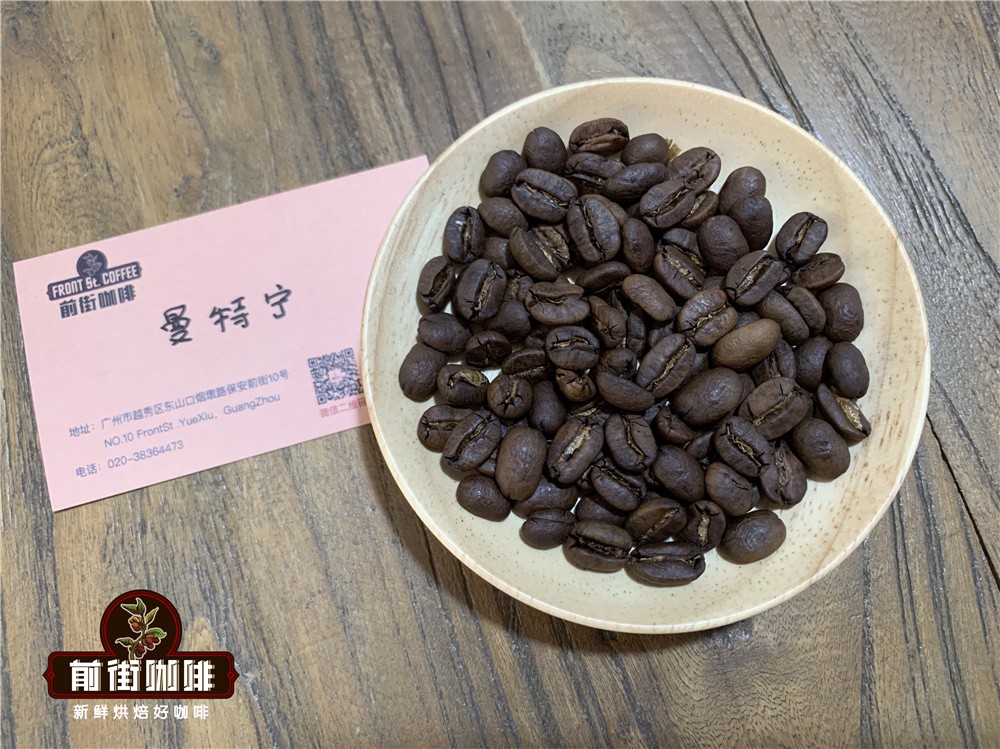
Dripper: KONO dripper
Water temperature: 88°C
Coffee dose: 15 grams
Coffee-to-water ratio: 1:15
Grind size: medium-coarse grind (75% passing rate on China standard No. 20 sieve)
During brewing, a three-stage pouring method can be used for extraction, thereby giving the coffee a richer layering. First pour 30 grams of water to completely wet the coffee grounds and bloom for 30 seconds, then pour the second stage slowly in a small stream in circles up to 125 grams for the stage. Once the water level in the dripper drops to the point where the coffee bed is about to be exposed, continue pouring. Pour the third stage up to 225 grams and then stop pouring. Wait until the water in the dripper has completely dripped into the server below, then remove the dripper. Total extraction time is 2 minutes.
Front Street Lintong Mandheling Coffee Flavor: Flavor: baked toast, nuts, caramel, pine wood, herbs
Front Street Golden Mandheling Coffee Brewing Flavor: spices, herbs, complex and varied layers, rich and clean, high balance, intense nut and brown sugar aroma, with chocolate notes, and a long finish.
For coffee brewing, Front Street recommends using freshly roasted coffee beans, as this allows you to experience the coffee's rich flavors to the greatest extent. The coffee beans shipped by Front Street Coffee (FrontStreet Coffee) are all within 5 days of roasting, because Front Street deeply understands that the freshness of coffee beans has a great impact on flavor. Front Street's roasting motto is "Freshly roasted good coffee," so that every customer who places an order receives the freshest coffee when it arrives. The resting period for coffee is about 4-7 days, so by the time customers receive it, it is at its best flavor.
Of course, some customers need Front Street to help grind the coffee, and that is no problem either, but Front Street must remind you: once coffee beans are ground in advance, there is no need for further resting, because during transportation the pressure from carbon dioxide inside the package can also make the coffee flavor rounder, so once you receive the ground coffee you can immediately brew a cup and drink it. However, ground coffee needs to be brewed promptly, because after ground coffee contacts air it oxidizes relatively quickly, which means the coffee's flavor dissipates relatively quickly and the coffee will not taste as good. Therefore, Front Street recommends buying whole beans and grinding fresh before brewing, so you can better taste the coffee's flavor.
When it comes to choosing coffee, if you are not very sure what flavor you like, you can come to Front Street to choose everyday beans that suit your taste. Front Street has more than 50 single-origin beans from different regions, and 8 of the most representative Front Street everyday beans from different producing countries for everyone to choose from. Front Street everyday beans are very cost-effective and very suitable for coffee friends to choose, especially for coffee newcomers!
For professional coffee knowledge exchange and more coffee bean information, please follow Coffee Workshop (WeChat public account cafe_style)
For more specialty coffee beans, please add the private WeChat Front Street Coffee (FrontStreet Coffee), WeChat ID: qjcoffeex
The above content is compiled by CoffeeHunters, a coffee news website.


