







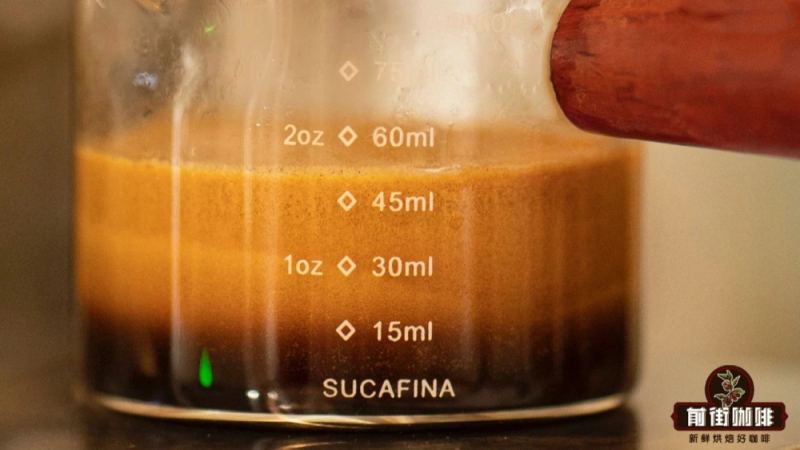
How Do Oils in Coffee Build the Crema Layer?
Crema forms when high-pressure hot water pushes through a puck of ground coffee. The water-insoluble oils in coffee are emulsified into tiny droplets, while carbon dioxide trapped from roasting dissolves into the liquid in supersaturated amounts. As the espresso leaves the portafilter, pressure drops and those gases escape as countless fine bubbles, creating the dense golden layer that Italians call crema.
Oils in coffee alone are not enough. A can of cola also releases bubbles, but they collapse fast. Crema holds because emulsified oils and coffee solids coat the bubbles and slow drainage. That is why only espresso machines, which generate roughly nine bars of pressure, produce it, and why oily coffee beans from darker roasts tend to show a thicker surface sheen.
The golden, dense layer of crema on the surface of espresso, which Italians call Crema, is not only a visual highlight but also an important clue for judging extraction quality. What exactly makes up this layer of crema? Why can only espresso machines produce it? From the perspective of Front Street Coffee, this article systematically sorts out the formation principles of Crema, the standards for high quality, and the causes and countermeasures for common problems such as thin crema, whitish crema, rough crema, and clumpy crema, to help you more accurately read the condition of a cup of Espresso.
To get more knowledge about specialty coffee, you can follow the WeChat public account: Front Street Coffee (FrontStreet Coffee).
Coffee beans generate a large amount of carbon dioxide during the roasting stage, most of which has already been released during cooling, while a small portion remains locked inside the bean body. Once grinding begins, these gases are released more quickly, so after being ground into powder, extraction should be completed as soon as possible and it should not be left for long.
When high-pressure hot water passes through the coffee powder layer, the water-insoluble oils in the coffee grounds are emulsified, and at the same time a large amount of carbon dioxide is dissolved into the liquid in a supersaturated state. This dissolved amount far exceeds what hot water can contain under normal pressure, so when the coffee liquid flows out from the portafilter, countless fine bubbles immediately appear on the surface. However, this alone is not enough to explain the essence of Crema—opening a can of cola also produces dense bubbles, but they simply cannot last long.
What is espresso? It is a very small cup of coffee, usually finished in two or three sips, with a strong and concentrated taste, so its acceptance in China has always been low. What is truly popular is lattes with milk added, or Americanos diluted with water.
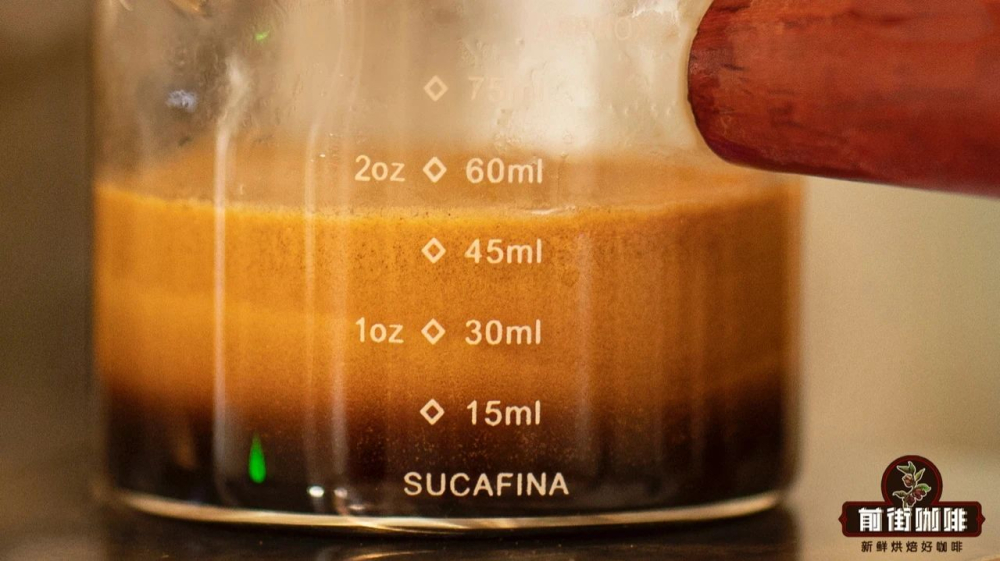
From its appearance, espresso appears in the cup as a dark black coffee liquid in the lower layer, covered with a layer of golden crema on top. So, is this layer of coffee crema oil?
We all know that peanut oil is pressed from peanuts, and the surface of dark-roasted coffee beans also exudes an oily sheen. So, what exactly makes up the layer of crema on the surface of espresso pressed out by an espresso machine?
Italians call this substance "Crema." This unique and rich Crema can only be made by an espresso machine, and the key lies in pressure. An espresso machine applies about 9 bar of water pressure to "squeeze" the coffee puck. The carbon dioxide in the grounds cannot be released smoothly under high pressure, and the water becomes supersaturated with carbon dioxide, so the gas directly dissolves into the coffee liquid. At the same time, the extraction process emulsifies the fats in the coffee. These fats wrap around the carbon dioxide. Because their specific gravity is lighter than water, they gradually separate and float upward, finally forming a golden crema layer on the surface, with a very beautiful visual effect.
Therefore, this golden, fine coffee crema is formed by the insoluble oils in coffee wrapping around carbon dioxide. So, how can espresso have a beautiful Crema?
In Front Street's view, high-quality Crema should be golden yellow, with a fine surface and uniform color. When swirled, it should be as smooth as cream, with an obvious clinging effect on the cup wall. It can not only enhance the visual presentation of espresso, but also enrich the mouthfeel and aroma when tasted, protect the coffee flavor, and when making hot milk coffee, it is also more conducive to latte art integration and pattern support. Perhaps this is exactly why people go to great lengths to pursue a perfect Espresso!

Based on past extraction experience, Front Street believes that getting rich Crema is actually not complicated. First, when choosing coffee beans, you should pick beans with high oil richness and sufficient carbon dioxide, such as medium-dark roasted beans within the flavor window (45–60 days), or fresh espresso blend beans containing a certain proportion of Robusta. For example, on Front Street Coffee's bean list, "Front Street Commercial Blend" and "Front Street Classic Blend," these two espresso coffees, precisely because they include a small amount of Robusta, can easily present beautiful crema as espresso.
After choosing the right coffee beans, you also need to pair them with fresh grinding, stable high temperature, sufficiently large extraction pressure, and reasonable extraction parameters. Only by satisfying these key factors can you get an Espresso rich in dense crema.
Overall, the fresher the beans, the darker the roast, and the greater and more stable the equipment pressure, the better the expression of coffee crema. Below we will analyze specific problems in detail. Front Street will teach everyone how to judge the quality of Espresso by observing the form of the crema, so as to solve various common problems in extraction.
No crema at all, or thin crema: the problem is very likely that the beans have been stored too long (including improper storage and coffee beans having been pre-ground into powder). The longer the storage time, the more gas exchange occurs between the coffee beans and the air, the more serious the loss of carbon dioxide, and the less coffee crema is ultimately presented. Secondly, insufficient pressure from the coffee machine, too low temperature, too coarse grinding, insufficient tamping force... are also causes of too little crema.
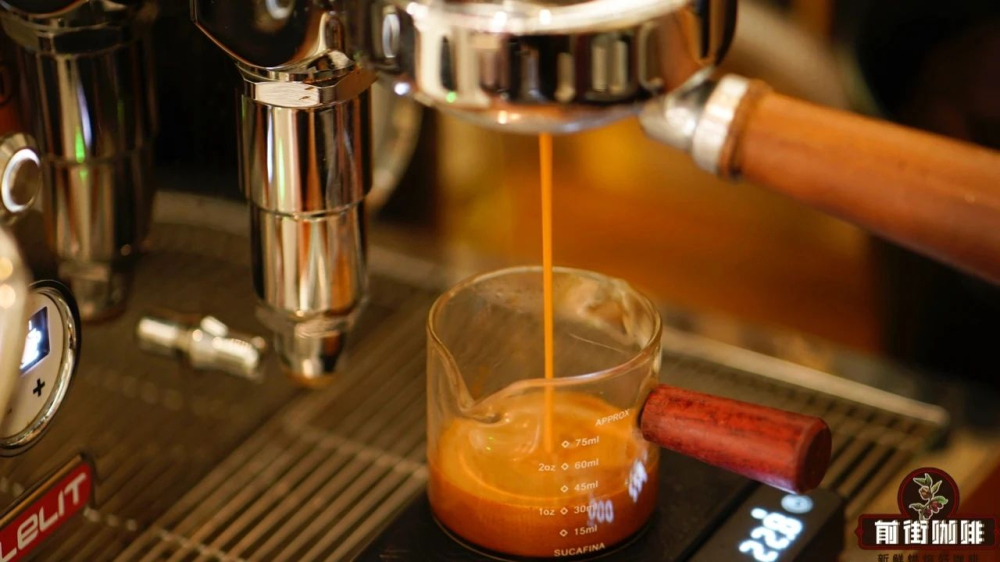
Whitish crema: If the crema you extract has acceptable thickness but lacks a golden color, and the overall taste leans sharply sour, it is very likely because beans with a lighter roast level were used. For example, using a pour-over bean known for fruity acidity—Front Street washed Geisha—to make espresso can easily show an unpleasant astringency due to under-extraction, accompanied by whitish crema.
Rough, bubbly crema: This type of espresso Crema often lasts for a very short time and dissipates quickly. The reason is that the coffee beans are too fresh. Freshly roasted beans contain a large amount of carbon dioxide. When a large amount of gas is forced into the coffee liquid, the emulsified oils cannot completely wrap the gas, so it easily collapses.
Clumpy crema: This kind of espresso usually shows obvious "lumpy" texture when swirled, with an uneven crema surface and poor fluidity, just like over-whipped milk foam, making it difficult to spread and blend.
The above content is compiled by CoffeeHunters, a coffee news website.


