








What Makes a Ristretto the Base of Australian White Coffee?
The flat white, a small milk coffee widely associated with Australian and New Zealand cafés, rests on a ristretto rather than a standard espresso. Ristretto means a restricted, extra-concentrated shot: the same dose of ground coffee, but less water pushed through it. The result is a shorter, denser, sweeter base that stands up to thin, silky milk foam without turning bitter or watery.
Ristretto is niche. Among dozens of espresso drinks, nearly all use a normal espresso shot, and only the flat white is built on ristretto. Pulling one usually follows two paths: grinding finer and cutting the yield short, or keeping the grind and stopping the pump early. Blending coffee for this base often favors beans that stay sweet at high concentration.
The key to why the Flat White stands out among the many milk coffees lies in its unique base—Ristretto. How exactly does this extraction method, known as "extra-concentrated coffee" or "refined espresso," differ from regular Espresso? The preparation methods circulating online are so varied that beginners often struggle to grasp the core essentials. This article, from the perspective of Front Street Coffee, will systematically sort out the definition of Ristretto, its essential connection to Espresso, and the operational logic, pros, and cons of the two mainstream extraction paths. At the same time, for readers who want to make espresso at home, we will also share the flavor characteristics and applicable scenarios of two coffee beans—Front Street Specialty Blend and Classic Blend—to help you fully understand this niche yet charming concentrated coffee from beans to extraction.

For more specialty coffee knowledge, please follow our WeChat official account: Front Street Coffee (FrontStreet Coffee)
The "Flat White" is a refined small-cup milk coffee, widely loved by coffee enthusiasts for its rich and sweet distinctive experience. The key component that distinguishes it from a Latte and a Cappuccino, besides the delicate and thin milk foam, is that this deliciousness cannot be separated from the Flat White's base—"Ristretto."
Because the Ristretto preparation methods widely circulated online are just too! many! This leaves beginners dizzy and unable to truly understand the extraction meaning of Ristretto. Therefore, Front Street will talk today about this "Ristretto"—what it is~ and how it is made~
What is Ristretto?
"Ristretto" is literally translated as "芮斯崔朵." Just looking at these two words, it may be hard to imagine what kind of coffee it is. So we might as well look at its other aliases: "extra-concentrated coffee" and "refined espresso."
How about that, does it suddenly become clear? These completely different terms all refer to the same kind of coffee—"espresso." But, "this espresso is not that espresso." Ristretto is very niche. Although it and Espresso both belong to concentrated coffee extracted by an espresso machine, it is so niche that among dozens of espresso drinks, only the Flat White uses it as a base.
And apart from the Flat White, almost all espresso-based coffee drinks use Espresso! The reason is that Ristretto's preparation method does not exist independently, but was later derived as an extraction mode based on Espresso's preparation method!
Ristretto itself also carries a meaning of "restriction." As the name suggests: since it is an extraction method derived from Espresso, plus the word restriction, we can understand it as adding a certain restriction when extracting Espresso.
This restriction does not mean controlling one of its parameters, but rather limiting the substances extracted in the preparation of espresso. Obviously! In espresso extraction, the most critical factors are the dose and the liquid, and what can limit the extracted substances must be the "liquid"! So next, let's look at how this "liquid" is restricted~
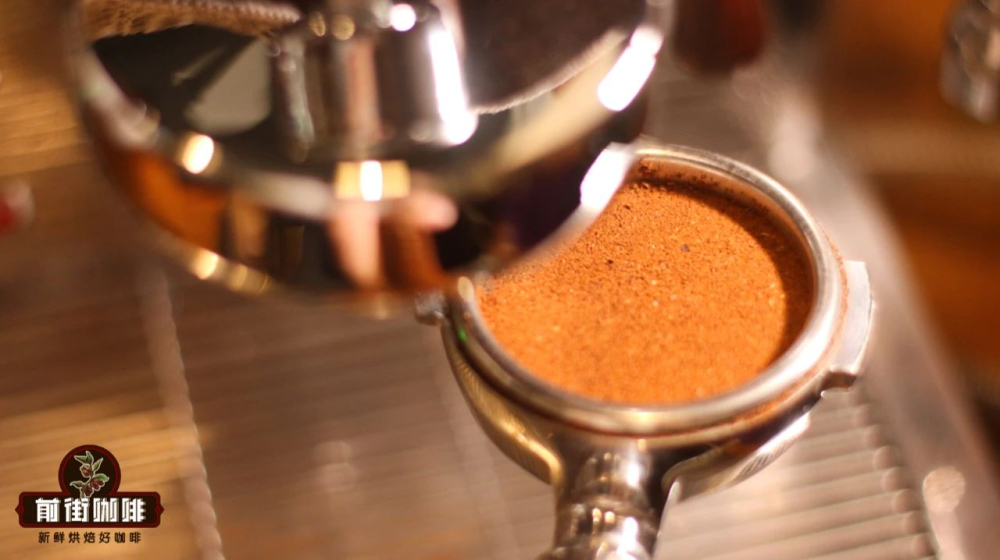
What coffee beans are best for espresso?
At Front Street Coffee (FrontStreet Coffee), before blending coffee beans, we generally need to first know what flavors coffee varieties from different parts of the world have. Beans from different origins have different characteristics. Different coffee beans have different personalities due to different varieties and origins, with subtle differences in acidity, bitterness, sweetness, aroma, body, and other flavors. Single-origin coffee beans tend to emphasize the unique characteristics of a certain type of coffee. Blended coffee beans are mostly used for espresso drinks such as Espresso, Americano, Latte, or Cappuccino. The coffee taste is more balanced, smoother, and more stable, which can be said to be more mass-appealing.
If you want a cup of espresso with a rich mouthfeel and full aroma, it is recommended to use Front Street Coffee Specialty Blend beans. It adopts a dual-origin formula of Colombia + Brazil. The blended flavor: a sweet taste. Using a medium-dark roast, when making espresso, the mouthfeel will have a soft slight acidity, clear sweetness, and a nutty sweet aftertaste. The overall feeling is not too stimulating, mild, and the crema is medium.
Friends who want to learn latte art at home should buy Front Street Classic Blend. This is a medium-dark roasted espresso formula composed of three origins. Its design inspiration comes from the "Mamba" popular in ancient times, namely Mandheling and Brazil. In order to add aroma and crema, Front Street Classic Blend also contains a small amount of Robusta, thereby enhancing flavor intensity, allowing beginners to easily make espresso with golden crema at home.

How to make Ristretto
At present, there are mainly two ways to extract Ristretto. One is to directly limit Espresso's output liquid, preventing it from extracting the later-stage substances. For example, Front Street's Espresso preparation plan is: use 20g of beans, take 30 seconds, and extract 40ml of liquid weight.
Then, to make Ristretto, you need to abandon the later stage of extraction and take only the first and middle stages of Espresso, that is, extract 70% of the total 40ml—28ml.
The advantage of this extraction is that it "cuts off" the point where bitter substances are released in large amounts in the later stage, reducing the proportion of bitter substances and increasing the proportion of sweet and sour substances, allowing the coffee to highlight more sweetness!
In addition, there are many similar extraction concepts. For example, some coffee shops only extract 2/3 of the total espresso; or use a dose-to-liquid ratio of 1:1 for extraction, and so on. So we do not need to be bound by a certain parameter. We only need to understand the principle. No matter which method is used, it is correct!
Then there is the second method: "control the flow rate of the coffee liquid"! By adjusting the grind finer to control the flow rate, thereby obtaining a more concentrated espresso!
Still using Front Street's Espresso preparation plan as an analogy: use 20g of beans, take 30 seconds, and extract 40ml of liquid weight. If it is to be made into Ristretto, then we need to adjust the grind finer, and then 20g of beans still take 30 seconds to extract 70% of the original total, that is, 28ml!
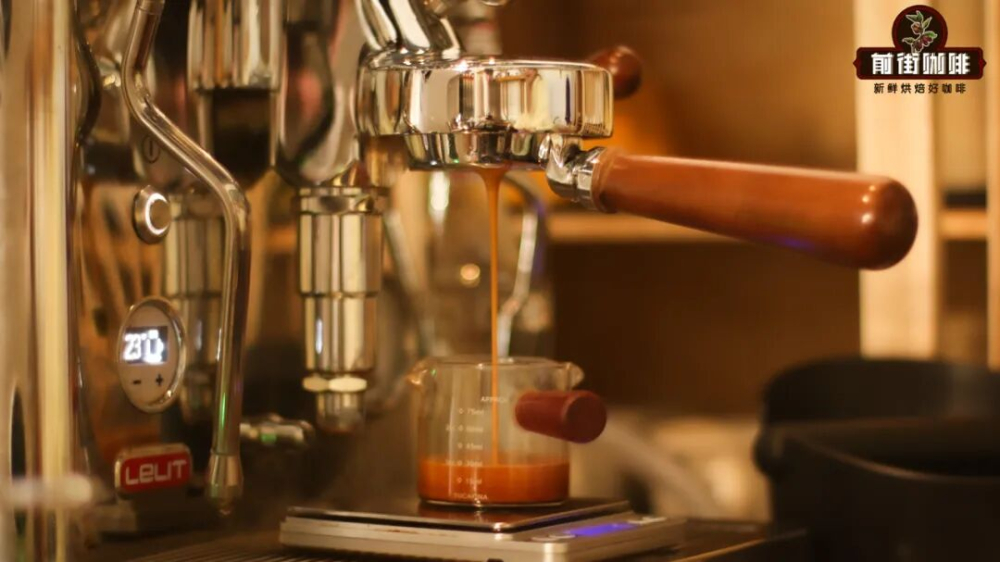
The advantage of this extraction method is that it obtains high-concentration espresso through superposition. Compared with the former, this method makes it easier for people to distinguish Ristretto from Espresso. After all, it directly designs a brand-new extraction plan! In terms of mouthfeel, it is also thicker than the former, with a fuller flavor! But when it comes to practicality, the former still wins!
As mentioned at the beginning, most espresso drinks use Espresso as their base, and currently only the Flat White uses Ristretto in large amounts. If the second method is used for preparation, then in order to ensure that other espresso drinks and the Flat White can be served at the same time, the coffee shop must also be equipped with an additional grinder, and it will also consume time and materials for dialing in, greatly increasing costs!
It is impossible for a business to use only one grinder and then "repeatedly jump" between coarse grinding and fine grinding. That is unrealistic (unless it is just for yourself). Therefore, instead of using the latter to specially give themselves a "professional" title, shops mostly use the former extraction plan. It is convenient, delicious, and can reduce waste~
The above content is compiled by CoffeeHunters, a coffee news website.


