







Why is the Bolaven Plateau central to Laos coffee beans?
About 95 percent of Laos coffee beans come from the Bolaven Plateau, an inland growing region with high altitude, mineral-rich volcanic soil, and roughly 2,000 millimeters of annual rainfall. Arabica accounts for one-third of national production, and the beans are mainly exported to Vietnam, Thailand, and China.
Coffee cultivation in Laos dates to the early 20th century under French colonial rule, when growers recognized the plateau's soil. Wars and policy upheavals disrupted the industry, which has revived in recent years. Small family farmers grow most of the crop, producing a mild, smooth cup with moderate acidity, which keeps the origin overlooked next to Indonesia and Vietnam.
When people mention Asian coffee, most first think of Indonesia's Mandheling or Vietnam's massive output, while Laos, an inland country on the Indochinese Peninsula, is often overlooked. Laos has high altitudes, mineral-rich volcanic soil, and abundant rainfall, making it a natural treasure trove for coffee cultivation. Its coffee history can be traced back to the French colonial period, and after wars and policy upheavals, it has gradually revived in recent years. Currently, 95% of Laos's coffee beans come from the Bolaven Plateau, with Arabica accounting for one-third of production, mainly exported to Vietnam, Thailand, and China. Laotian coffee is primarily grown by small family farmers, with a mild, smooth flavor and moderate acidity, and Front Street Coffee has also noted the unique potential of this producing region.
When it comes to coffee-producing countries in Asia, many people immediately think of Indonesia and Vietnam—the former is famous for Mandheling, while the latter firmly holds the position of the world's second-largest coffee producer. Because of this, Laos, another coffee-producing origin also located in Asia, is often overlooked by everyone.
Laos
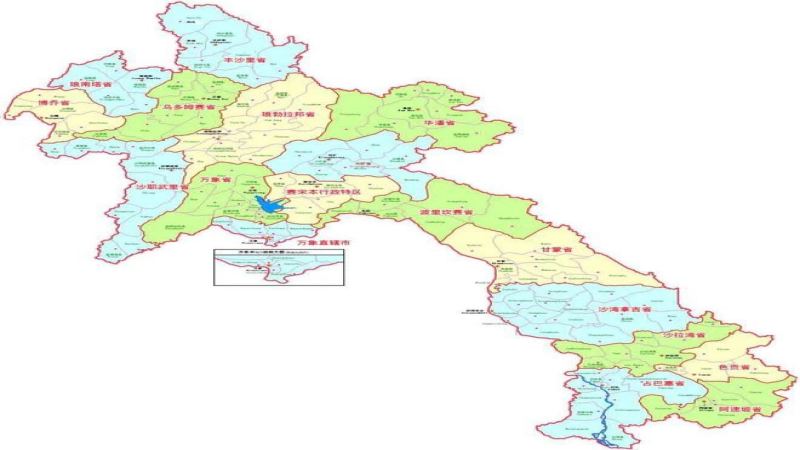
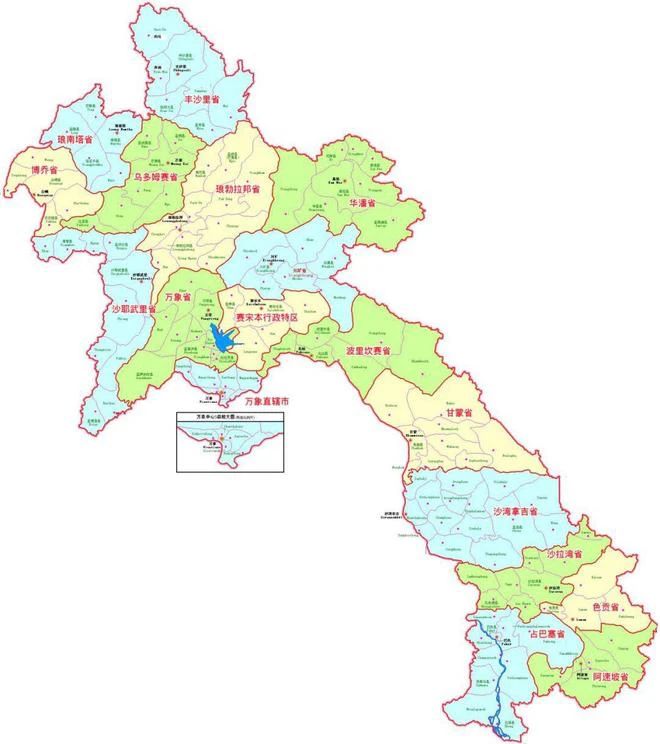
Laos is located in the northern part of the Indochinese Peninsula and is a landlocked country without access to the sea, bordering China, Cambodia, Vietnam, Myanmar, and Thailand. In terms of terrain, the country is high in the north and low in the south: the north connects with the Yunnan-West Yunnan Plateau, the east is a plateau formed by the Annamite Range, and the west consists of the Mekong River valley as well as basins and plains along the Mekong's tributaries.
Laos has a tropical and subtropical monsoon climate. From May to October each year is the rainy season, and from November to April of the following year is the dry season. The average annual temperature is about 26°C, with ample rainfall, and annual precipitation is roughly 2,000 millimeters. The high-altitude terrain, abundant rainfall, suitable climate, and the plateau formed by volcanic eruptions after they cooled make this an ideal place for coffee cultivation.
Coffee History
Laos has not been growing coffee for a particularly long time, and the related history can be traced back to the early 20th century. At that time, Laos was under French colonial rule. The French noticed that the soil of the Bolaven Plateau was rich in minerals and that the high-altitude environment was suitable for coffee trees to grow, so they introduced coffee beans to Laos and sent several cultivation experts there to help farmers improve planting and roasting techniques.
However, during World War II, the Bolaven Plateau was affected by the fighting, the French gradually withdrew, and the soil was also polluted by heavy metals such as gunpowder and shell casings. Not only that, at the time the Laotian communist government regarded coffee as a symbol of capitalism, which further caused the coffee planting area and production in Laos to shrink sharply.
In recent years, the Laotian government has gradually opened up private industry, and only then did coffee cultivation develop again. Sinouk Sisombat, chairman of the Lao Coffee Association, once sent samples of the first coffee beans harvested from the Bolaven Plateau to a coffee research institution in Montpellier in southern France for quality evaluation. The results were recognized, and Laotian coffee thus began to emerge in the international market.
Current Situation
Today, coffee beans have become one of Laos's important agricultural export products, among which Arabica beans, which are more difficult to grow, account for one-third of total production.
Laos's coffee-producing areas are mainly located in the southern provinces of Champasak, Attapeu, and Hua Phan, among others, and 95% of the country's coffee beans come from the Bolaven Plateau. The Bolaven Plateau spans the three provinces of Champasak, Attapeu, and Salavan. In this area, Laos cultivates both Arabica and Robusta varieties, with the harvest period concentrated from November to March of the following year. At present, Laos's main coffee export destinations include Vietnam, Thailand, and China, among others.
Laotian coffee is dominated by small family-run coffee farmers, and most products are supplied to the domestic market, with relatively small export volumes. There is still room for improvement in coffee bean processing technology, and there are not many large corporate-operated coffee estates. Its coffee potential still needs further development through cooperation between the government and the private sector. However, Laotian coffee has a mild, smooth flavor and just the right acidity, making it a choice worth trying. Front Street Coffee also continues to follow developments in Laos's producing regions, bringing coffee lovers a more diverse coffee experience.
The above content is compiled by CoffeeHunters, a coffee news website.


