








Which Coffee Machine Fits Your Daily Routine?
Semi-automatic and fully automatic coffee machines differ mainly in operation, flexibility and the ceiling of what they can produce. A semi-automatic model asks the user to grind, dose, distribute and tamp before extraction, so results depend on technique, while a fully automatic machine handles those steps at the press of a button.
Cost is the common reason people buy either type, since a machine can replace frequent cafe purchases. Choosing depends on the intended use: a semi-automatic machine suits those who want control over an iced americano and other drinks, while a fully automatic model fits speed and consistency at home or in busy settings.
As more and more people enjoy drinking coffee, many friends are starting to consider getting a coffee machine—not only to enjoy freshly ground coffee at any time, but also to save on the expense of frequent purchases. However, when it comes to choosing one, an unavoidable question arises: should you buy a semi-automatic or a fully automatic machine? The two differ greatly in operation, flexibility, and the ceiling of what they can produce, and they suit different scenarios. This article, drawing on the practical experience of Front Street Coffee, breaks down in detail the core differences between the two types and the thinking behind choosing one, and uses a semi-automatic coffee machine as an example to fully demonstrate the process of making an iced americano, including every detail from cleaning the portafilter basket, weighing the grounds, distributing the grounds, and tamping to extraction, helping coffee lovers find the machine that suits them best.

Coffee culture is growing more and more popular, and more and more people are being won over by this unique beverage. Whenever they feel scattered and drowsy, people always get themselves a cup of coffee. It refreshes the mind and satisfies the taste buds—killing two birds with one stone.
However, many friends gradually realize that their demand for coffee is steadily rising, and one cup a day is no longer enough, because coffee has long become part of daily life and a larger intake is needed to feel satisfied. So, in order to cut down on coffee expenses, and with shopping festivals approaching, many people get the idea of buying a coffee machine—this way they can not only drink freshly ground coffee at any time, but also save a great deal of money.
But when it actually comes time to place an order online, aside from price and brand, most people run into a problem they hadn't anticipated: should the coffee machine be fully automatic or semi-automatic?
Since most people have never really come into contact with a coffee machine before, their understanding of it remains at the level of "a device that extracts espresso," and they have no idea that there is even a distinction between fully automatic and semi-automatic. That's fine—today Front Street is here to talk with you about exactly how semi-automatic and fully automatic coffee machines differ, and how to choose.
What is a semi-automatic coffee machine?
Generally speaking, the machines used in the vast majority of independent coffee shops on the market, and what we usually discuss as coffee machines, refer to semi-automatic coffee machines.
A so-called semi-automatic coffee machine means that the "process" of extracting coffee cannot be handled by the machine on its own and must be operated by a person from start to finish. From grinding the beans, putting the grounds into the portafilter basket, to locking the portafilter onto the group head and starting the extraction, everything must be done by hand, and the coffee machine itself only provides the extraction function.
In addition, if you want to make a milk coffee, you also have to steam the milk yourself! Likewise, the thickness of the milk foam and the temperature of the milk both need to be controlled manually. In short, every step requires a person.
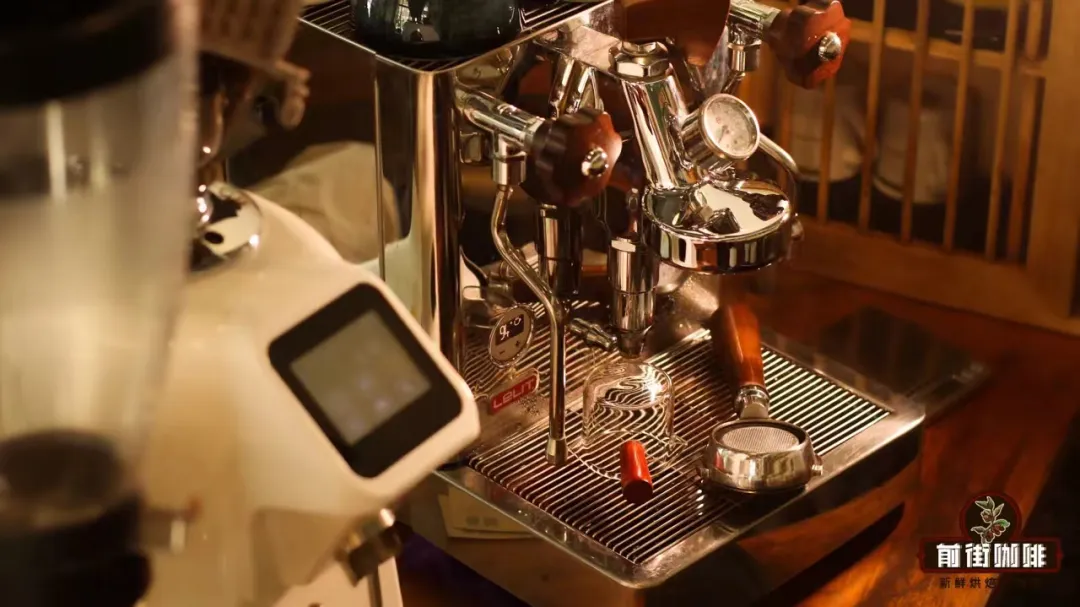
And one more thing! After each extraction, we also have to clean the extraction area of the coffee machine; otherwise, over time, it will have an adverse effect on the coffee's flavor and the machine's condition.
What is a fully automatic coffee machine?
Hey! This one is much less trouble. A fully automatic coffee machine means that after you press the corresponding function button, the machine automatically finishes the work. For example, if you press the extraction button for espresso, the coffee machine will automatically grind the coffee and automatically extract it according to preset parameters! And the person only needs to wait for the coffee to be ready.
Even for milk coffee, the machine can handle it with one touch, automatically heating the milk and automatically steaming the milk foam, with no manual involvement in the whole process. So, fully automatic means a coffee machine that can complete extraction relying on the machine itself! Afterward, we only need to regularly clean the puck compartment and the extraction compartment, unlike semi-automatic machines where we have to wash after every extraction.
How should you choose?
Because the two are different types, there is no distinction of superior or inferior. When purchasing, you just need to consider your own needs and pick a suitable machine! (Although Front Street still recommends semi-automatic coffee machines more.)
The strength of a fully automatic coffee machine lies in being simple, hassle-free, and easy to get started with. If you don't want to do too complicated operations, don't have very high demands for taste, or don't plan to study coffee extraction in depth (you simply want to satisfy your coffee craving), then a fully automatic coffee machine is a good choice. After all, the machine handles everything for you, which is very worry-free.
But its shortcomings are equally prominent: it lacks flexibility, and adjusting it is not easy. Even when the budget is insufficient, many functions of the machine cannot be adjusted, such as the grind size. Once functionality is limited, the quality of a cup of coffee depends entirely on how well the beans match the machine.
The reason coffee shops do morning calibration every day is that the beans change every day, and these changes affect that day's coffee taste, so the espresso needs to be corrected through morning calibration.
But many fully automatic coffee machines cannot achieve this kind of correction, because they simply don't have the corresponding functions. That's why Front Street says that only people who don't have high demands for coffee taste can consider getting a fully automatic coffee machine. Or places like offices that need to supply coffee to many people will be equipped with fully automatic coffee machines. If you do have pursuit of taste, then choosing a semi-automatic coffee machine is still the safest bet~
The flexibility and ceiling of semi-automatic machines are much higher, since the whole process has to be completed by a person. Cumbersome operation is indeed a drawback, but it is precisely because of this that we can adjust parameters at any time and make perfect coffee in the ideal state.
Correspondingly, when buying one, you need to start learning the relevant knowledge of coffee extraction. Because although the ceiling of a semi-automatic coffee machine is high, its floor can also be very low. And once you have mastered coffee extraction, making a delicious cup of coffee at any time is simply as easy as can be!
How do you use a semi-automatic coffee machine to make an iced americano?
Many coffee lovers who come to Front Street show admiration for the baristas operating the coffee machine in front of the bar, curious about how they manage this seemingly very complex machine. In fact, what baristas have mastered is simply the detailed steps of making espresso ; as for how the inside of the coffee machine operates, most baristas are not clear about that either. So today, Front Street will introduce to everyone the detailed process of making espresso ! Taking the normal operating process of Front Street Coffee (FrontStreet Coffee) as an example:
Step one: Wipe the portafilter basket to ensure the coffee basket is dry and free of water
Step two: Weigh the coffee grounds, using an electronic scale to weigh the appropriate amount of coffee grounds, keeping the error within plus or minus 0.1 grams
Step three: Distribute the grounds
Step four: Tamp the grounds
Step five: Lock on the portafilter
Step six: Press the button to extract
Step seven: Remove the portafilter, clean the group head.
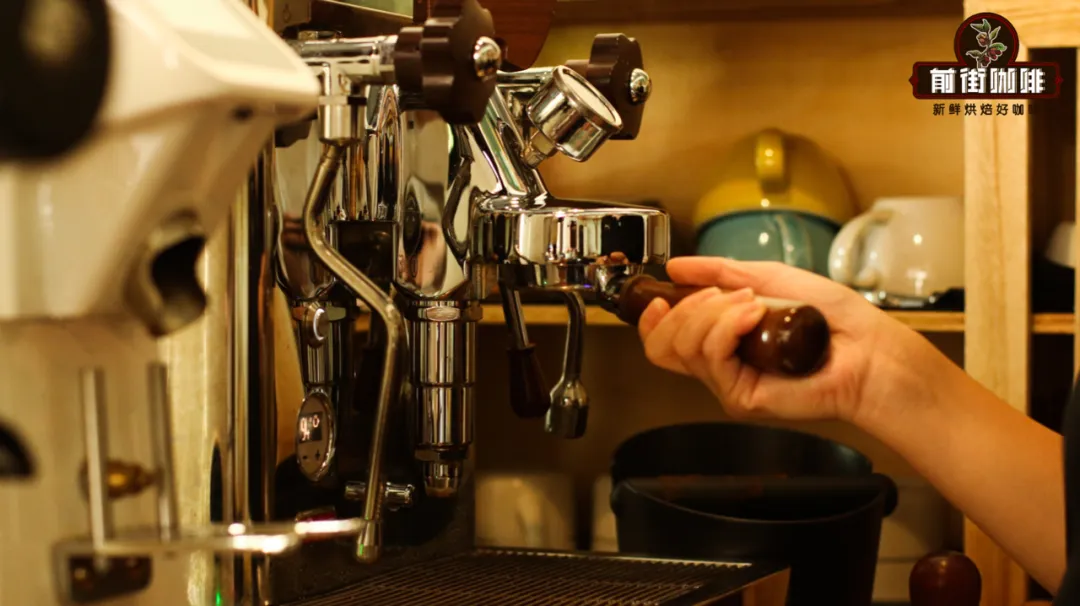
Front Street espresso extraction recommendation: 20g dose, extract 40g of coffee liquid, time 30 seconds
Just like that, an espresso is finished extracting. For people who are used to drinking iced americano, at this point you only need to prepare a coffee cup of about 300ml, pour in 90g of ice cubes and 100g of drinking water, and finally pour the espresso over it, and it is done.
If you want to make other coffee drinks, it is actually not difficult either—it's just a matter of adding sugar and milk. Iced coffee is relatively simpler to make, as it is simply adding hot espresso to cold milk.
As for hot milk coffee, you need to use the steam wand on the coffee machine. As for how to steam milk foam, Front Street Coffee (FrontStreet Coffee) has also written a dedicated article for teaching, and if needed, everyone can look it up themselves. It is worth mentioning that many coffee chain brands now use fully automatic coffee machines, and their operation is even simpler—just press a button.
The above content is compiled by CoffeeHunters, a coffee news website.


