








Can Coffee Bean Processing Be Judged by Silver Skin?
Coffee bean processing methods can often be narrowed down by looking at how much silver skin remains on roasted beans and how the crease looks. Washed beans usually keep a visible white line and clean appearance, while natural beans show more sugar staining and caramelization on the surface. Cupping confirms this, with washed coffees leaning clean and naturals leaning sweet and complex.
Washed and natural are the two globally used methods, while wet-hulled is associated with Indonesia and honey with Central and South America. Anaerobic washed and anaerobic natural are variants that still follow their base method. Tasting a Yirgacheffe natural against a washed version shows the difference in complexity, sweetness, and cleanliness that processing leaves in the cup.
Many coffee enthusiasts hope to determine a coffee bean's processing method just by observing or tasting it, and there is actually a method to this. Drawing on Front Street's practical experience, this article systematically sorts out the classification logic of common processing methods: the globally used washed and natural methods, as well as the region-specific Indonesian wet-hulled method and Central and South American honey process. The article focuses on how to quickly distinguish processing methods by observing the remaining silver skin on roasted beans, the white line in the bean crease, and the degree of sugar staining and caramelization, while also using examples from producing regions such as Yirgacheffe to explain the differences between natural and washed coffees in flavor complexity, sweetness, and cleanliness, and extending to the flavor logic of anaerobic processing, helping you build a practical framework for identification.

Some friends are quite skilled—one sip from the cup, and they can identify the coffee bean variety with near certainty; they can even glance at the beans and infer the general producing region, variety, and processing method. This isn't due to innate talent, but rather to having mastered a few tricks.
We at Front Street have already discussed how to judge varieties before, so today let's take a different angle and talk about how to quickly identify a coffee bean's processing method. Those who want to level up may want to read on.
-Look at how much silver skin remains
Today's processing methods are many and varied, but in the end they can be divided into two categories: two globally used processing methods, plus two regional processing methods. What is meant by globally used is washed and natural—these two are the most common. The washed branch also includes variants such as anaerobic washed and washed-then-barrel-fermented, with representative beans including Front Street's Gotingding Cooperative and Front Street's Panama Boquete Geisha;
the natural branch covers anaerobic natural, slow natural, cacao natural, and so on, but in essence these still fall within the scope of washed or natural, and the bean appearance also continues the characteristics of the original processing method. Representatives of natural coffee include Front Street's Natural Red Cherry, Front Street's Elida Estate, and Front Street's La Reina Estate.
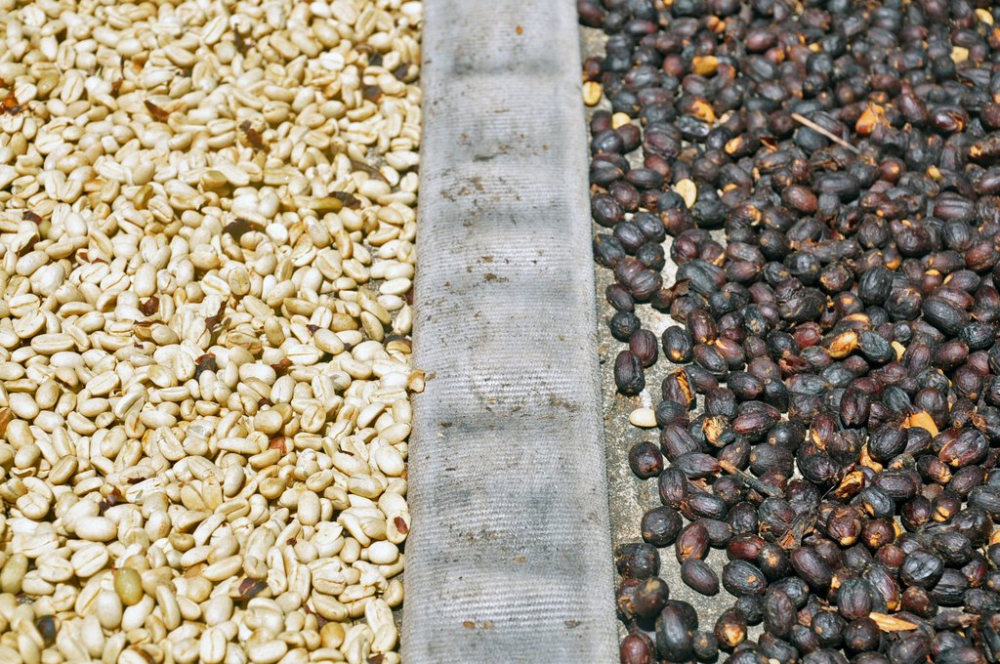
The two regional processing methods refer to Indonesia's wet-hulled method and Central and South America's honey process, the latter also known as semi-washed. Both were developed based on local conditions, so as long as you can recognize the characteristics of these processing methods, you can often work backward to infer the coffee bean's origin.
Wet-hulled can be understood as a special kind of washed process. What differs from conventional washed is that the parchment is removed halfway through drying to speed up dehydration, but this also tends to crack the bean body, forming a "goat hoof" shape. In recent years, however, wet-hulled techniques have improved, and goat-hoof beans have become increasingly rare. The best-known representative is Front Street's Golden Mandheling.
Honey process and semi-washed sit between natural and washed. The difference between the two is that honey process never touches water, while semi-washed removes the fruit skin first, then soaks in water before drying in the sun. In terms of remaining silver skin, apart from raisin honey process and black honey process, other honey processes and semi-washed perform closer to washed, with a representative bean being Front Street's Colombia · Hope Estate Geisha.
With that groundwork laid, let's get to the main topic. Generally speaking, naturally processed roasted beans have less silver skin, while washed processed beans have more, with a white line caught in the bean crease—that is precisely silver skin that was not fully removed.
So, by checking whether there is a white line in the bean crease, you can roughly determine whether it is natural or washed. For natural, raisin honey, and black honey processed beans, the silver skin comes off relatively thoroughly after roasting, so no white line appears in the bean crease, and fewer silver skin fragments remain after grinding.
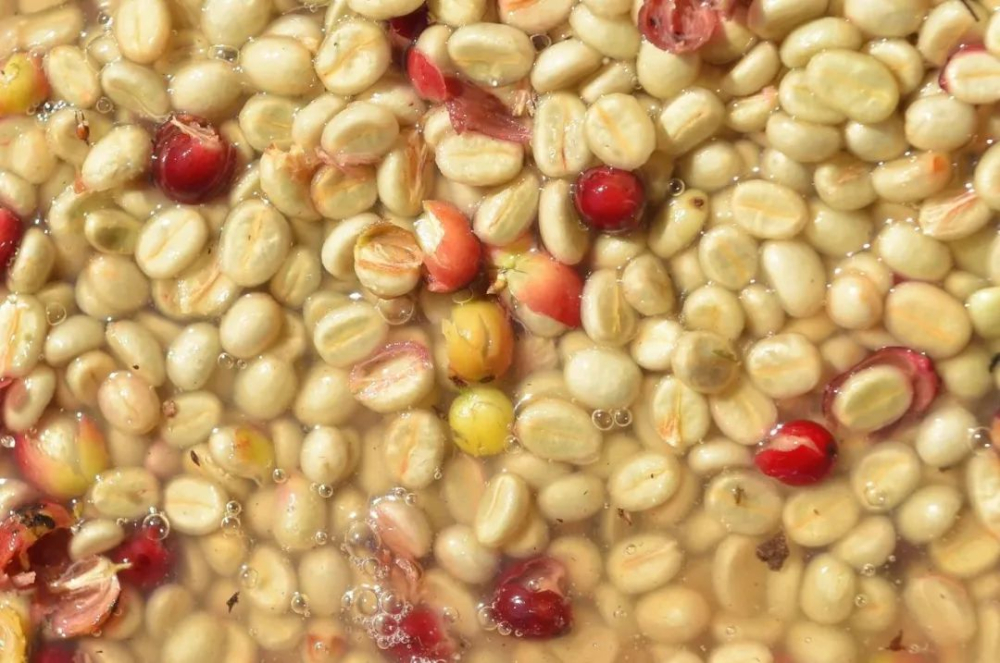
So how do you distinguish these three? Start by looking at the roasted beans again. Naturally processed beans usually have a relatively uniform color, while honey processed beans tend to leave sugar staining in the bean crease or at both ends, and after roasting the caramelization is more prominent—in other words, the crease or both ends appear darker. Raisin honey process has a more outgoing aroma than black honey process, with representative coffees including Front Street's Costa Rica Mozart and Front Street's Costa Rica Strawberry Candy.
If there is a white line in the bean crease, it can initially be judged as washed, though of course you should rule out Indonesian wet-hulled and Brazilian semi-washed (the bean appearance of these two is relatively easy to distinguish), as well as the smaller proportion of Costa Rican red honey and yellow honey processes. In other words, apart from these three countries, if you see a white line in the bean crease, you can basically conclude it is washed.
With just this one trick, you can determine the processing method of about ninety percent of coffee beans.
-Distinguish differences by tasting
Aside from region-specific processing methods like wet-hulled and semi-washed, which do not need to be specifically judged, tasting is mainly used to distinguish beans from the same origin that are produced both as natural and washed. Flavor is not as intuitive as appearance; it is hard to appreciate just by listening to others describe it. You must have tasted and compared it yourself to truly imprint it in your memory.
Naturally processed and washed beans from the same origin differ quite noticeably in flavor expression, while what remains unchanged is the inherent flavor baseline of the producing region. Take Yirgacheffe, for example—it is usually described as having flavors like citrus, lemon, jasmine, honey, and green tea.
Naturally processed beans have more pronounced complexity and sweetness, drinking with citrus as the main note, accompanied by sweeter berries and fermentation aromas. Washed process leans toward a fresh and clean style; the entry is also citrus-dominant, but with jasmine floral notes and a green tea finish, and the overall acidity is more vivid.
It can also be understood in simplified terms: between the two poles of natural and washed, natural tastes sweeter, with rich complexity and prominent fermentation notes; washed is clear, clean, soft, and light.
Once you understand the difference between natural and washed, the remaining processing methods are easier to grasp. For example, anaerobic processing follows the same logic: anaerobic natural has a richer flavor than anaerobic washed, but conversely, if not handled properly, the taste can also be more muddled. Therefore, anaerobic washed is currently easier to control than anaerobic natural. Whether it is an anaerobic step or a barrel-aging step, the goal is to intervene in fermentation artificially to create some surprising flavors.
So the very vivid flavors we taste mostly come from anaerobic (enzyme) processing steps. But Front Street wants to remind you that not all anaerobically processed coffee beans have flavors that exaggerated or obvious—this is simply a choice most processors make to highlight characteristics. There are also anaerobic fermentation processes like those at Elida Estate, which, while preserving the Geisha flavor, ferment out a more pleasing taste without being overly flamboyant. Anaerobic processing is just a technique; the final flavor depends on the processor's goals and skill.
The above content is compiled by CoffeeHunters, a coffee news website.


